
 Karl Marx has long been criticized for his so-called ecological “Prometheanism”—an extreme commitment to industrialism, irrespective of natural limits. This view, supported even by a number of Marxists, such as Ted Benton and Michael Löwy, has become increasingly hard to accept after a series of careful and stimulating analyses of the ecological dimensions of Marx’s thought, elaborated in Monthly Review and elsewhere. The Prometheanism debate is not a mere philological issue, but a highly practical one, as capitalism faces environmental crises on a global scale, without any concrete solutions. Any such solutions will likely come from the various ecological movements emerging worldwide, some of which explicitly question the capitalist mode of production. Now more than ever, therefore, the rediscovery of a Marxian ecology is of great importance to the development of new forms of left strategy and struggle against global capitalism.
 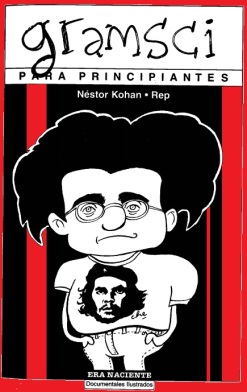 Documental ilustrado por Canal Encuentro de Argentina sobre el libro “GRAMSCI PARA PRINCIPIANTES” de Néstor Kohan e ilustraciones de Miguel Rep. Biografía política del marxista revolucionario italiano y principal pensador comunista. Síntesis de sus CUADERNOS DE LA CÁRCEL El poder y la revolución como ejes del marxismo. La lucha por la hegemonía socialista y las relaciones de fuerza en la lucha de clases sociales. La herencia política y cultural de Lenin y las enseñanzas de Marx contra el mercado capitalista y en defensa del comunismo. Gramsci analizado desde América Latina y a contracorriente de la socialdemocracia, el posmarxismo y el neoliberalismo.
 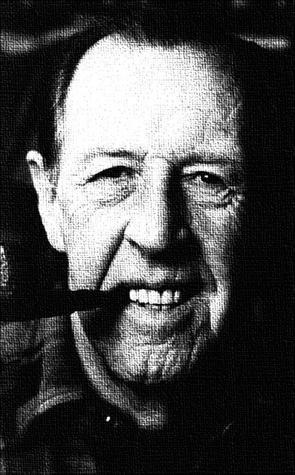 Raymond Williams es de sobra conocido como precursor de los estudios culturales, es decir, como un marxista preocupado por las cuestiones culturales cuyos trabajos parecen haber (mal) envejecido. Si el conocimiento de este autor se queda tan a menudo aquí, Daniel Hartley propone, al contrario, redescubrir a Williams como un marxista particularmente innovador, cuyas penetraciones teóricas siguen siendo de actualidad. En este texto, Hartley esclarece tres conceptos de Williams que hacen de él un autor decisivo para hoy: la complejidad, la inmanencia y la larga revolución. Al confrontar a Williams con la crítica althuseriana de su tiempo (Terry Eagleton), Hartley lo presenta como un pensador de las densidades materiales, culturales y económicas que dan a la tradición socialista una dimensión trágica, es decir, en puridad, estratégica.
 Para aclarar el nuevo escenario político que se va configurando en América Latina entrevistamos a Claudio Katz economista, investigador del CONICET, docente universitario y, ante todo, militante de izquierda. En tus trabajos sobre Sudamérica hablás de la dualidad que ha caracterizado la última década. ¿En qué ha consistido esa dualidad?
 El contexto es el de la dictadura franquista. Sacristán nace en 1925, dentro de una dictadura, la de Primo de Rivera. A sus seis años llega la República, el gran acontecimiento de renovación cultural y política de España. Pero la renovación da un vuelco en 1936, con el estallido de la Guerra Civil, cuando Sacristán tiene 11 años. La victoria de los militares golpistas, cuando Sacristán ha cumplido 14 años, significa que vuelve la dictadura, esta vez sobre una España en escombros, los producidos por tres años de terrible guerra civil. En este contexto de país en ruinas, dominado por militares, eclesiásticos y falangistas, termina su bachillerato, y, como a tantos españoles de su generación, le tocará vivir la dictadura de Franco durante 40 años. Sólo podrá vivir nueve años de posfranquismo, que tampoco le trató muy bien, ya que la conferencia de rectores de universidad se negó a concederle una cátedra en 1980. Sacristán llegó a catedrático en 1984, un año antes de su muerte.
 Lima, 14 diciembre, 1989.
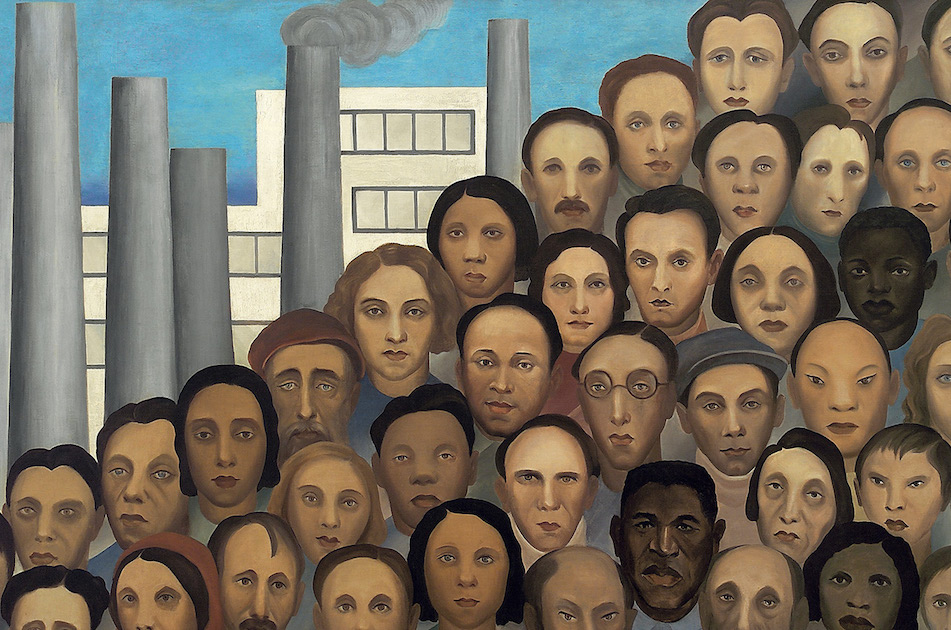 Erik Olin Wright on class, socialism, and the meaning of Marxism
 Con la amable autorización de la revista
  El tema sobre el cual me gustaría discutir con ustedes es el tema de la relación del pensamiento de Marx y Engels y del marxismo, de manera más amplia, con el romanticismo. Tengo que empezar explicando qué entiendo yo por romanticismo, porque si no, no queda claro por qué veo una relación muy importante, significativa, del pensamiento de Marx con el romanticismo.
 Aún a riesgo de parecerle ridículo, déjeme decirle
 Intervención de Adolfo Sánchez Vázquez en el Congreso «Materialismo histórico y teoría crítica» desarrollado en septiembre de 2002 en la UCM.
  Escritora, activista y profesora de la Universidad de Hofstra de Nueva York, Silvia Federici es una referente en la economía feminista. Hablamos con ella durante el V Congreso Estatal de Economía Feminista [1] sobre cuestiones como el sistema capitalista, las alternativas soñadas y en marcha, la lucha salarial, el trabajo doméstico, la quema de brujas y el imaginario popular.
 Text from
 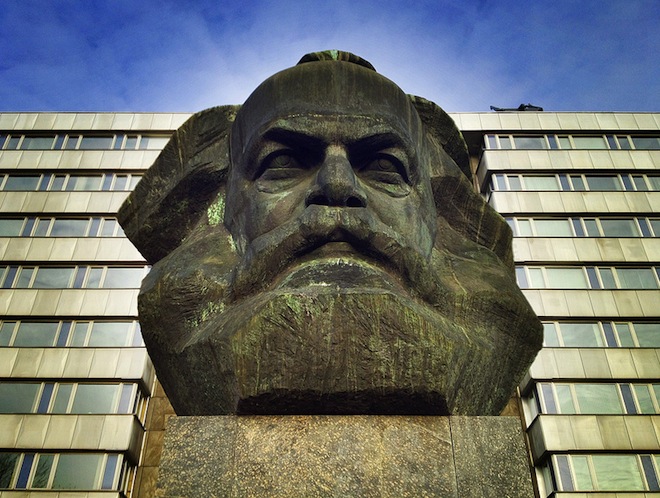 The objective of the following observations is to offer a rough overview of central ways of reading Marx’s theory. These are to be presented – by means of a few selected topics – as Marxisms that can be relatively clearly delimited from one another, and the history of their reception and influence will be evaluated with regard to the common-sense understanding of “Marxist theory.”
A distinction will be made between the hitherto predominant interpretation of Marx, primarily associated with political parties (traditional Marxism, Marxism in the singular, if you will), and the dissident, critical forms of reception of Marx (Marxisms in the plural), with their respective claims of a “return to Marx.” The first interpretation is understood as a product and process of a restricted reading of Marx, in part emerging from the “exoteric” layer of Marx’s work, which updates traditional paradigms in political economy, the theory of history, and philosophy. Systematized and elevated to a doctrine by Engels, Kautsky, et al, it succumbs to the mystifications of the capitalist mode of production and culminates in the apologetic science of Marxism-Leninism. The other two interpretations, specifically Western Marxism as well as the German neue Marx-Lektüre (“new reading of Marx”), usually explore the “esoteric” content of Marx’s critique and analysis of society, often consummated outside of institutionalized, cumulative research programs, by isolated actors in the style of an “underground Marxism.”
In order to characterize both ways of reading, some strongly truncated theses, limited to a few aspects, must suffice. In particular the ambitious proposition, first formulated by Karl Korsch, of an “application of the materialist conception of history to the materialist conception of history itself” – one that goes beyond the mere presentation of intellectual history, towards an immanent theoretical critique that critically considers the connection between historical forms of praxis and theoretical formations of Marxism – cannot be carried out here. In addition, a consideration of those readings which are critical of Marx or Marxism can also be disregarded here, insofar as their picture of Marx usually corresponds to that of traditional Marxism.
I therefore begin with the hegemonic interpretative model of traditional Marxism, and only at the end of my presentation will I conclude with a few positive determinations of what I regard as the fundamental systematic intention of Marx’s work. I do this primarily because a differentiated reading of Marx’s work can only be gained in the course of the learning processes of Western Marxism and the neue Marx-Lektüre. Leer más…


















 marxismocritico.com