
Archivo
«Bajtín desenmascarado. Réplica a las críticas del libro»: Jean-Paul Bronckart y Cristian Bota
 La difusión de la obra Bakhtine démasqué, y de las dos traducciones publicadas, ha suscitado hasta ahora una veintena de recensiones (ver referencias en la bibliografía), que van desde el ataque virulento a la aprobación y al reconocimiento pasando por textos que compaginan reproches y comedidos homenajes, o simplemente se limitan a hacer un resumen de los hechos.
Con este artículo respondemos a las críticas y contestamos sobretodo a los diversos reproches que se nos han hecho. Pero antes de exponer nuestras réplicas pensamos que será útil evocar las circunstancias que nos han llevado a realizar un trabajo de investigación cuyo resultado ha sido este libro, recordar las tres grandes cuestiones a las que hemos intentado dar respuesta, así como volver a formular las conclusiones obtenidas en nuestro trabajo sobre el estatus y la importancia de la concepción de los textos/discursos elaborada en la URSS entre los años 1920/1930.
LA GÉNESIS DE NUESTRAS PREGUNTAS Y DE LA INVESTIGACIÓN
Ambos (el uno y el otro, desde ahora, JPB y CB) trabajamos en el ámbito de las ciencias del lenguaje formando parte de un grupo de investigación creado y dirigido por JPB en la Universidad de Ginebra; un grupo que ha llevado a cabo trabajos de epistemología de psicología del lenguaje y de didáctica de las lenguas a partir de una perspectiva interaccionista básicamente inspirada en la obra de Vygotski.
«Jean-Paul Bronckart y Christian Bota (2011) – Bajtín desenmascarado. Historia de un mentiroso, una estafa y un deliro colectivo -«: Reseña de Hélène Maurel-Indart
«El caso Bajtín: ¿el fin de un tabú?».- El examen riguroso, completo y convincente al que proceden Jean Paul Bronckart y Cristian Bota sobre la paternidad de Bajtín respecto a ciertos textos de Volóshinov y Medvédev era muy esperado. El tema es complejo y persisten, según los mismos autores, zonas oscuras sobre ciertos aspectos. Sin embargo, tras la lectura de este libro-investigación comprendemos cómo pudo construirse a partir de los años 1960 la figura de M. Bajtín en detrimento del reconocimiento de los aportes hechos por Volóshinov y Medvédev, fallecidos demasiado tiempo atrás como para poder defenderse y hacer valer la autenticidad y originalidad de sus respectivas obras. Apoyándose al mismo tiempo en elementos biográficos e históricos en la primera parte y en el análisis comparativo de los textos en la segunda, los dos especialistas de Bajtín se entregan a una auténtica demostración.
«Del caso Bajtín al caso Vigotsky. Marx pensador de la individualidad humana»: Lucien Sève
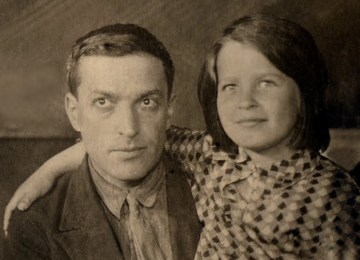 Con el regreso, en este texto sobre el «caso Bajtín» y la obra largo tiempo ignorada de Vigotsky, el filósofo Lucien Sève recuerda la riqueza del marxismo soviético de los años 1920. Al componer una rica herencia intelectual, olvidada o deformada bajo los efectos del la estalinización del movimiento comunista, muestra el aporte decisivo de Marx a la comprensión de la individualidad y de la subjetividad. Este texto fue inicialmente publicado en otoño de 2012 en el número 15 de la revista Contretemps.
¿Quién no ha oído hablar de ese monumento ruso del pensamiento de vanguardia contemporáneo que es Mijail Bajtín? Aún muy joven (nació en 1895), publicó trabajos que han marcado la historia naciente del pensamiento marxista del siglo XX: un libro importante sobre El freudismo (1927), un ensayo que hizo época El método formal en los estudios literarios (1928) y, en rápida sucesión en 1929, un notable Dostoievski, así como una obra fundamentalmente innovadora, Marxismo y filosofía del lenguaje –cuatro obras mayores en tres años, productividad de excepción–. Detalle curioso: tres de estos libros aparecieron bajo la firma no de Bajtín, sino de Valentin Volóshinov en El freudismo y Marxismo y filosofía del lenguaje, y de Pavel Medvédev en El método formal en los estudios literarios. Los bajtianos nos han explicado este misterio de diversos modos. Extremadamente generoso, Bajtín habría ofrecido un regalo a sus dos amigos necesitados de publicaciones, asociándolos a obras en cuya confección sus roles habrían sido como mucho marginales. O bien, rechazando las modificaciones de los textos que imponía el editor, en una Unión Soviética en vías de stalinización, Bajtín habría pedido prestado el nombre a sus amigos… Algo por todos aceptado: la paternidad de estas obras pertenece sin duda a Bajtín1.
«De l’affaire Bakhtine au cas Vygotski. Marx penseur de l’individualité humaine»: Lucien Sève

Foto del inexistente «Círculo de Bajtín»
Revenant dans ce texte sur l’ «affaire Bakhtine» et l’oeuvre longtemps méconnue de Vygotski, le philosophe Lucien Sève met en évidence la richesse du marxisme soviétique des années 1920. Composant un riche héritage intellectuel, oublié ou déformé sous l’effet de la stalinisation du mouvement communiste, il permet pourtant de montrer l’apport décisif de Marx à la compréhension de l’individualité et de la subjectivité. Ce texte a initialement été publié à l’automne 2012, dans le numéro 15 de la revue Contretemps.
Qui n’a entendu parler de ce monument russe de la pensée d’avant-garde contemporaine qu’est Mikhaïl Bakhtine? Fort jeune encore (il naît en 1895), il fait paraître des travaux qui ont marqué l’histoire naissante de la pensée marxiste au XXe siècle : un livre important sur Le freudisme (1927), un essai qui fit époque sur La Méthode formelle en littérature (1928) et coup sur coup en 1929 un très remarqué Dostoïevski ainsi qu’un ouvrage foncièrement novateur, Marxisme et philosophie du langage – quatre livres majeurs en trois ans, productivité d’exception. Détail curieux : trois de ces livres ont initialement paru sous la signature non de Bakhtine mais de Valentin Volochinov pour Le freudisme et Marxisme et philosophie du langage, de Pavel Medvedev pour La Méthode formelle en littérature. Les Bakhtiniens nous ont expliqué ce mystère de diverses façons : extrêmement généreux, Bakhtine aurait fait là un cadeau royal à ses deux amis en mal de publication, les associant à des œuvres dans la confection desquelles leur rôle aurait été au mieux tout à fait subalterne; ou bien : refusant d’avaliser les modifications de texte qu’imposait l’éditeur, dans une Union soviétique en voie de stalinisation, il aurait demandé à ses amis de lui servir de prête-nom… Une chose nous est en tout cas donnée par tous pour établie : la paternité de ces œuvres appartient sans doute possible à Bakhtine1.
«Volver a la historia»: César de Vicente Hernando sobre el libro de Jean-Paul Bronckart y Christian Bota, «Bajtín desenmascarado»
Jean-Paul Bronckart y Christian Bota [2011].- Bajtín desenmascarado, Madrid, Antonio Machado Libros, 2013, 491 páginas
En una de las escenas del Marat-Sade de Weiss, el revolucionario francés dice: “Y lo que oyes una, y otra, y otra vez es lo que crees”, y por eso, sigue diciendo, las gentes se contentaban con la imagen de aquel hombre martirizado y crucificado, y los poderosos la utilizaban para mantenerlos en su ignorancia, evitando así que “se levantaran contra sus señores que los gobernaban en nombre de un mandato divino”. Es una impecable descripción del funcionamiento primero de la ideología, de su grado cero. La imagen actúa como mediación, como fetiche, y oculta la realidad. Naturalmente Weiss se refiere aquí a la religión y al uso de Cristo como forma de dominación, pero el mecanismo no difiere del empleado, según describen los autores de este libro, del usado para colocar a Mijail Bajtín como icono de pensamiento crítico, ocultando la realidad. El subtítulo del libro lo plantea abiertamente: “historia de un mentiroso, una estafa y un delirio colectivo”. Mentiroso, porque Bajtín engañó al declarar que varias obras de otros autores (Voloshinov y Medvedev), las obras conocidas como “los textos disputados”, eran suyas (básicamente El marxismo y la filosofía del lenguaje, Freudismoy El método formal en los estudios literarios). De la misma manera que mintió al inventar datos biográficos, grados académicos y al tergiversar sus posiciones políticas, presentándose como una absoluta víctima de los sucesivos gobiernos soviéticos, etc. Estafa, porque los autores de este libro demuestran que “el irresistible ascenso de Bajtín” está fundado en un fraude perpetrado por distintos críticos en diferentes momentos, que analizan en el capítulo 3 del libro: Ivanov (en 1973/1975), Todorov (en 1981) y Clark y Holquist (en 1984), y consistente en convertir a Bajtín en un gran filósofo a pesar de que su obra propia no se sostiene; inventando la condición de “discípulos” para Voloshinov y Medvedev, a pesar de que fueron ellos los verdaderos filósofos, y creando de la nada un inexistente “Círculo Bajtín” que pudiera dar consistencia al personaje diseñado, a pesar de que históricamente sólo hubo un círculo en el que Bajtín estuviera: el de Medvedev. Delirio colectivo, porque esta ideación -sin historia que pudiera respaldarla- de una obra, este inventado intelectual –que se apropia del trabajo intelectual ajeno-, se transfiere a todo un conjunto de seguidores, investigadores y críticos de todo el mundo, que copian las tesis de los estafadores creyéndolas ciertas (aunque los autores de este libro atacan también su falta de actitud crítica ante lo que eran contradicciones evidentes) y desarrollan todo una serie de trabajos en la línea de un maestro que, en realidad, no tenía línea.
«Jean-Paul Bronckart et Cristian Bota, Bakhtine démasqué. Histoire d’un menteur, d’une escroquerie et d’un délire collectif»: Yan Hamel
 «But the truth is, nothing delights me more than a biography of one of the truly great that proves he or she was an absolute shit».
Mordecai Richler, Barney’s Version
Il ne fait aucun doute que l’accablant pavé cosigné par Jean-Paul Bronckart et Cristian Bota a tout ce qu’il faut pour donner aux Barney Panofsky de ce monde les plaisirs de lecture pervers dont ils se délectent : on y apprend en effet non seulement que le théoricien au nom de qui sont associés les concepts de polyphonie, de carnaval et de chronotope fut un menteur, un escroc et l’instigateur d’un « impressionnant délire collectif » (p. 275), comme l’indique le transparent sous-titre de l’ouvrage, mais aussi que Bakhtine fut un thuriféraire de Staline très marqué à droite, qu’il méprisa le marxisme, écrivant pour des organes slavophiles et religieux dont l’idéologie était « radicalement réactionnaire1 » (p. 408), qu’il éprouva une constante « aversion pour les connaissances humaines » (p. 371), qu’il occupa sur le terrain intellectuel une « position effective […] avoisin[ant] l’autisme » (p. 376), qu’il eut des idées se caractérisant à la fois — et plutôt contradictoirement — par la « banalité » et par la capacité à produire de « sérieux dégâts philosophiques » (p. 367), qu’il écrivit des textes d’une « médiocrité intrinsèque » (p. 554) et fit des déclarations « dramatiquement stupides » (p. 571), qu’il s’inscrivit dans « une perspective régressive et destructrice » (p. 408), qu’il plagia sans vergogne à tous les râteliers, qu’il fut toutefois incapable d’« articuler de manière cohérente les cadres théoriques des divers auteurs qu’il plagiait » (p. 301), qu’il reprit « mollement » le « thème du dialogisme » (p. 223) à Volochinov, qu’en s’emparant des trois grands textes disputés2 il fit preuve d’« un répugnant cynisme » (p. 257), qu’il fut perclus de ressentiment et d’amertume à l’endroit des deux génies dont il s’est approprié les oeuvres (p. 555), qu’il laissa spécieusement croire à l’existence d’un Cercle de Bakhtine, que ses textes de vieillesse furent « largement remaniés par d’autres » (p. 143), qu’il élabora dans ses écrits de jeunesse des thèses « simplificatrices et confuses (voire proprement inintelligibles) » (p. 117), qu’il fut toujours trop paresseux pour terminer un travail et que, pour toutes ces raisons, il provoqua « l’un des plus spectaculaires exemples d’intoxication intellectuelle qu’ait connu le XXe [siècle] » (p. 269).
«Vygotsky, Bakhtin, Goethe: Consciousness and the dynamics of voice»: John Shotter
 ABSTRACT: All our higher mental functions are mediated processes, says Vygotsky (1986), and signs are the basic means used to master and direct them. But how can this be if our words and other signs work only in a purely representational, ‘picturing’ fashion, for they still need interpreting as to their meaning? The ‘inner observation’ problem remains unsolved. Our significant expressions must also work on us in another way: by the living expressions of others producing spontaneous bodily reactions from us. Thus the relation between thought and language is not to be found in patterns discoverable in transcripts of already spoken words, but in the dynamic influences exerted by our words in their speaking. Vygotsky (1986) speaks of our utterances as having an affective-volitional intonation in their voicing, while Bakhtin (1993) talks of them as having an emotional-volitional tone. This means, as I will elaborate in my talk, that not only it is possible to possess a transitional understanding of ‘where’ at any one moment we are placed in relation to another person’s expressions, but to possess also at that moment an action guiding anticipation of the range of next ‘moves’ they may make. Thus, as I see it then, thinking and consciousness is a socially responsive elaboration of our animal sensitivities to, and awareness of, events occurring in our relations to the others and othernesses in our surroundings. Thus, far from it being a special, private, inner theater or workshop of the mind, its emergence depends completely on the dynamical intertwining or intermingling of our ‘inner lives’ with the ‘inner’ lives of those around us. This view of thinking chimes in with Goethe’s [1749-1832] views quoted below, as well as with his account of a special kind of thinking he calls exact sensorial imagination. In this view, our thinking and consciousness becomes no more strange to us than the fact of our ‘livingness’ – a fact that is at once both ordinary, in the sense of being very familiar to us in our daily practical lives, as well as being quite extraordinary to us in our intellectual lives, due to the current inappropriateness of our academic modes of thought and talk. My talk, then, will be just as much concerned with an exploration of the move away from mechanical modes of thought to those appropriate to living processes, as it will be about thinking and consciousness.
«Talk of sayin, showing, gesturing, and feeling in Wittgenestein and Vygotsky»: John Shotter
 ‘There is a strongly musical element in verbal language. (A sigh, the intonation of voice
in a question, in an announcement, in longing; all the innumerable gestures made with
the voice.)’ (Wittgenstein, 1981, no.161).
‘The child’s self-motion, his own gestures, are what assign the function of sign to the
object and give it meaning‘ (Vygotsky, 1978, p.108).
Traditionally in the social and behavioral sciences, seeking a single, unified, orderly account of things, we have spoken and written about ourselves as disembodied, isolated, self-contained individuals. We think of ourselves as existing in a fixed world of objects that we come to know, primarily, in a visual-intellectual manner, through our observations of them. As such, we have assumed that we can only come to know our own true nature in such a world by our empirical testing of our possible representations of it for their accuracy. However, unlike computers and other machines, as living, embodied beings, we cannot be wholly indifferent to the world around us. We must, to an extent, continuously react and respond to it, spontaneously, whether we like it or not, and in so doing, we must of necessity, relate and connect ourselves to our surroundings in one way or another.
Below, influenced both by Wittgenstein and Vygotsky (as well as Volosinov and Bakhtin), I want to explore the consequences of us talking of human activity from within a new vocabulary that takes our living, embodied nature seriously, from within what I shall call a relational rather than an individualistic way of talking. For, just as the child, ‘with the help of the indicative function of words,… begins to master his (sic) attention, creating new structural centers in the perceived situation (Vygotsky, 1978, p.35), so we also, as investigators, can draw our own attention to otherwise unnoticed features of our own conduct, through the introduction of a new vocabulary, a new way of talking.
«Bakhtin, Alterity, and Ideology»: Luis Radford
 Commentary on the Chapter by Richard
Barwell, “Heteroglossia in Multilingual
Mathematics Classrooms”
Mathematics classrooms are sites of encounter for different voices, perspectives, and ideas. Those differences become even more visible when the object of difference is language. In his chapter, Barwell draws on Bakhtin’s concept of heteroglossia to explore the tensions that underpin multilingual classrooms. He enquires about how those tensions influence the teaching and learning of mathematics and the implications that they may have for equity in mathematics teaching. In my comments, I would like to dwell upon the question of language in the mathematics classroom and on some issues about equity.
1 Language in the Mathematics Classroom
One way or another, for one reason or another, since the time of Babylonian schools, institutional educations have always faced the question of linguistic diversity. However, the manner in which this diversity has been addressed and understood has not always been the same. Contemporary schools seem to be led to address this diversity along the lines of contemporary concerns about equity and social justice. These concerns, of course, are a token of social and political interests in coming to grips with cultural diversity, brought forward by unprecedented migratory movements of a global scale.
«Del Signo al Sentido: aproximaciones para un estudio semiótico de la conciencia»: Vicente Mario Sisto
 I. INTRODUCCIÓN
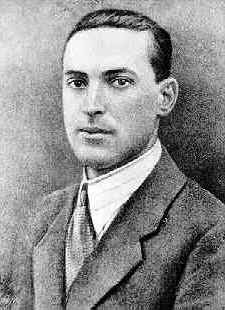
Resulta vívida la descripción introspectiva que realiza el semiólogo soviético Mijail Bajtin. Bajtin intenta descubrir la conciencia en su esencia más pura, para ello procede a retirar de ella uno a uno los elementos que la cubren, para así lograr definirla. La conciencia pareciera estar plena de palabras, las que resultan ser materia óptima para corporeizar los contenidos de ésta, tales como pensamientos e incluso sensaciones y deseos. Basta con acomodarse, cerrar los ojos e intentar no pensar en nada específico, y así concentrarnos en nuestra respiración y en lo que escuchamos. No tardaremos en darnos cuenta que no es posible simplemente sentir los sonidos, siempre, en su aparecer en la conciencia irán acompañados por su ‘etiqueta’, un bocinazo aparece como «bocinazo», el ladrido de un perro aparece como «perro», y no como una simple vibración en mi aparato auditivo, y si lo fuera así probablemente aparecería como «vibración» (la palabra).
Así si intentamos eliminar de la conciencia esta capa, nos encontramos en la situación del niño que busca pelar una cebolla. Bota la primera capa, luego la segunda y sigue así hasta que se encuentra que en sus manos no ha quedado nada. Nada de nada. Sin signos pareciera no existir conciencia posible.
El presente trabajo intenta descubrir, de un modo más sistemático, esa constitución sígnica que es condición necesaria para la existencia de procesos psicológicos superiores, y por consiguiente, de la conciencia misma. De lo anterior resulta necesario investigar acerca de las peculiaridades que asume la conciencia al componerse semióticamente; de ahí que sea relevante una exploración acerca de las características de los signos y sus posibilidades de significación y referencia. Realizar tal exploración revelará, a su vez, la necesidad de un estudio de la cultura, en tanto relación y origen de tal conciencia constituida semióticamente.
«La construcción narrativa de la identidad a través del conflicto y la ventrilocuación»: M. Esteban, J.Mª Nadal e I. Vila
 Resumen
El objetivo del siguiente trabajo es analizar el discurso de indígenas y mestizos a partir de una perspectiva pragmática. En particular, vamos a explorar la idea de que estos discursos están constituidos por muchas voces. En otras palabras, se muestra la polifonía, para utilizar una idea de Bakhtin. Según este enfoque, la identidad se desarrolla a través de la integración de voces ajenas que se produce a través de narraciones. En este sentido, la identidad surge de rellenar con la propia intención las palabras de los demás. Siguiendo la etnografía de la comunicación nuestra unidad de análisis es el acto de habla (el acto de significado) que se produce en un contexto. Sugerimos que la ventrilocuación de las ideas de otras personas y los conflictos son temas relevantes para el estudio de la construcción narrativa de la identidad.
Palabras clave: identidad, narración, historias de vida, ventrilocuación, Bakhtin.
«Saussure, Voloshinov y Bajtín revisitados. Estudios históricos y epistemológicos»: Dora Riestra (comp.)
 Que la atribución de la autoría de El marxismo y la filosofía del lenguaje a Mijaíl Bajtín no solo es un error sino que una “maquinación”, o que la lectura más difundida de Saussure no es más que una “explotación” estructuralista, reduccionista e incluso equivocada son solo dos de las sugerentes tesis de lectura que este texto presenta. La compilación de la argentina Dora Riestra incluye trabajos de Cristian Bota, Jean Paul Bronckart, Ecaterina Bulea, Irina Ivanovna y Patrick Sériot, que aportan significativamente a la relectura y a la contextualización histórica de teorías que hoy tienen una radical relevancia en las ciencias del lenguaje, el análisis del discurso y la didáctica de las lenguas. La propuesta del texto –histórica e interpretativa, más que filológica– es poner en perspectiva y resolver los problemas epistemológicos y metodológicos que reviste el uso de estos conceptos, de circulación frecuente en los contextos académicos y universitarios actuales.
«La semiosis como producto de acciones de lenguaje en la dinámica de las lenguas»: Dora Riestra
 La metodología que propone Juan Magariños desde la semiótica de los bordes como instrumento específicamente adecuado para explicar el carácter inherentemente histórico de todo enunciado y/o fenómeno constitutivo de su ámbito de conocimiento; o sea, la necesariedad de disponer de las operaciones metodológicas de una semiótica con capacidad para explicar el proceso de cambio que afectó al enunciado y al fenómeno, como requisito indispensable para alcanzar una explicación aceptable de su objeto de estudio, nos lleva a considerar: 1) en primer lugar, el movimiento en la acción de comprender, es decir, aprehender conceptualmente el cambio en la semiosis como estados sucesivos; 2) en segundo lugar, la hipótesis de que no se puede explicar el significado de ningún fenómeno sin tener en cuenta el enunciado del que procede y el enunciado al que dará lugar para generar la necesaria transformación histórica de la mirada del intérprete; 3) en tercer lugar la cuestión del cambio como necesidad expresiva que se explica por la finalidad puede aportar en el análisis semiótico del carácter de las ciencias humanas en relación con el objeto de investigación.
En este campo de estudios semiológicos y semióticos, las metodologías disciplinares continúan orientando las investigaciones en las teorías lingüísticas y psicológicas en la segunda mitad del siglo XX. De los cruces producidos entre las teorías funcionalistas y los enfoques cognitivos se resituaron las nociones de texto y discurso como centro de la actividad comunicativa humana; al mismo tiempo, los enfoques pragmáticos delimitaron nuevos objetos de investigación, cuyos marcos en muchos casos aún están definiéndose. También se originaron desprendimientos disciplinares entre las llamadas ciencias del discurso como el análisis del discurso, la teoría de la enunciación, las teorías sobre tipos de discursos.
«Language for the Other: Constructing Cultural-Historical Psycholinguistics»: Marie-Cécile Bertau
 Cultural-historical psycholinguistics addresses language activity in its social as well as in its psychological function with corresponding verbal forms. Language is thus situated within the life activity of situated and positioned, mutually oriented societal individuals, it is not abstractable from these individuals, nor from their activity. This notion of language is at the core of the proposed ‘psycholinguistics of alterity’ (Bertau 2011), constructed firstly through a historical and conceptual analysis, secondly in a theoretical way involving empirical results from diverse fields of language investigation. The aim of our contribution is to introduce the main elements of this construction, we will hence follow the same rationale. In a first step, Humboldt’s language philosophy and its reception by Russian linguists is addressed. Dialogicality of language and thought processes is the core notion which is taken up and developed in Russia and in the Soviet Union by several thinkers. Vygotsky’s specific language psychology is seen within this context of ideas, constituting the framework for considering the relation between language and thought. Building on Humboldt’s philosophy of language, Russian dialogical linguistics and cultural-historical psychology as formulated by Vygotsky, the theoretical system addressing language as activity of socially organized and self-other positioned individuals is presented in a second step.
«On Signs and Representations. A Cultural Account»: Luis Radford
 «l’écriture, la lettre, l’inscription sensible ont toujours été considérées par la tradition occidentale comme le corps et la matière extérieurs à l’esprit, au souffle, au verbe et au logos».
J. Derrida, De la grammatologie, 1967, p. 52.
1. The ghost of the metaphysics of pre-sence
One of the oldest discussions on the relationships between language and ideas is found in Plato’s dialogue Cratylus.
In this dialogue, Plato deals with several conceptions of language. One of them is defended by Hermogenes, the poor brother of the rich Callias, who claims that names and language are merely conventional —like, he says, the names of slaves, that may be given and changed at pleasure. Another conception of language is held by Cratylus, who maintains that there is a perfect match between the things and their names. The name or the sign of a thing, according to Cratylus, discloses or uncovers the true nature of the thing. In fact, Cratylus goes further, for, in a certain passage of the dialogue, he affirms that all truth and knowledge derive from language and names. Then, Socrates, with his usual subtle spirit of controversy, replies that if knowledge comes from names, then the names must have preceded the things. «But», he adds conclusively, «how could he [who gives names to things] have learned or discovered things from names if the primitive names were not yet given?» (Cratylus, 347b).
Reading Marx’s Capital with David Harvey

Free Öcalan


Fundación Infancia y Aprendizaje

Colección de libros Marxismo Crítico

Historical Materialism


CIPEC (Centro de Investigación en Pensamiento Crítico)

Centro para la Investigación como Crítica Práctica

Memoria Revista de Crítica Militante

Revista Laberinto






Marx desde cero





 marxismocritico.com