
Archivo
«Hacia una psicología cultural. Origen, desarrollo y perspectivas»: Moisés Esteban Guitart
 Resumen
El presente trabajo expone los fundamentos de la psicología cultural definida como un modo de hacer psicología que parte de la premisa que mente y cultura se constituyen mutuamente. Con el objetivo de superar cuatro reduccionismos (reducción a lo racional, a lo individual, a lo interno y a lo innato), la psicología cultural postula que la vida mental incluye aspectos intelectuales y afectivos, su origen es sociocultural, se distribuye entre las personas y los artefactos que utilizan, y tiene que ver más con los cuentos, mitos, relatos, historias y narrativas culturales que con los genes y neurotransmisores. Se afirma que la unidad de análisis es la vivencia o el modo cómo las personas valoran, perciben, interpretan aquello que les sucede y les rodea. Una vivencia que construye la cultura, las formas explícitas e implícitas de vida compartida, y que a la vez es construida por ella. Finalmente, se sugieren algunas consideraciones aplicadas que se derivan de un enfoque psicocultural.
Palabras clave: Psicología cultural – Vygotski – vivencia – significado – psicología del
desarrollo
«Actividad lingüística y construcción de conocimientos»: Jean Paul Bronckart
En este artículo se refuta, en primer lugar, la posición de la tradición lógicogramatical según la cual el lenguaje sería tan solo un reflejo secundario de las estructuras cognitivas y, con apoyo de las obras de Humboldt, Coseriu y Saussure, se sostiene, por el contrario, que la actividad del lenguaje es creadora de las significaciones propiamente humanas. En el marco de la corriente de análisis textual proveniente de Voloshinov, se demuestra luego la existencia de “tipos de discurso”, cuyo rol decisivo es servir de interfaz entre las representaciones individuales y las representaciones colectivas.
Se postulan tres tesis sobre el desarrollo de los conocimientos: la interiorización de los signos de la lengua es la condición de la constitución de las unidades del pensamiento; la interiorización de las relaciones predicativas es la condición de la constitución de las operaciones cognitivas y el dominio de los tipos de discurso es la condición del desarrollo de las formas de razonamiento. En una advertencia final, tomando como base a Piaget, se concluye que, no obstante, los seres humanos tenemos la capacidad de desprendernos de las exigencias lingüísticas y socioculturales y que, por lo tanto, conviene evitar cualquier forma de reduccionismo social.
«Lo inconsciente: una perspectiva desde la psicología sociohistórica»: Carl Ratner
 Muchos académicos, incluidos filósofos sociales de la escuela de Frankfurt y psicoantropólogos, han dicho que un abordaje cultural o sociohistórico de la psicología no podría explicar completamente los fenómenos psicológicos. Según ellos, la psicología cultural puede comprender la organización sociohistórica de los fenómenos conscientes tales como actitudes o costumbres, pero no puede explicar los procesos inconscientes arcanos, subterráneos. Así, la psicología sociohistórica debe complementarse con los conceptos freudianos que comprenden lo inconsciente. Hace poco, Dorothy Holland (1992), una psicoantropóloga, se ha quejado de que la teoría cognitivo-social no aborda los fenómenos inconscientes tales como la «censura» y el «conflicto psíquico», y se dedica a importar otras teorías tales como el psicoanálisis para llenar este hueco.
Voy a participar en este debate. Procuraré demostrar que un análisis psicológico sociohistórico puede iluminar fenómenos llamados inconscientes1.
«Les arrels filosòfiques i antropològiques de la «psicologia cultural» de Jerome Bruner»: Josep Maria Domingo Curto
 El psicóleg nord-america Jerome Bruner, nascut a Nova York I’any 1915, ha esdevingut amb el pas del temps un dels patriarques vius més consolidats i respectats de tota la psicologia mundial. I això no ha estat per casualitat. El seu caràcter inquiet, entusiàstic, alegre i quasi infantil, podríem dir, per la seva gran capacitat de sorprendre’s davant dels descobriments més insignificants realitzats per les ciències humanes, l’han dut a explorar amb infatigable constancia la ment humana des de les perspectives més innovadores o inversemblants. Però, juntament amb aquesta amplitud de mires, que s’escau perfectament amb els seus trets caracteriológics, potser el nom i l’obra de Jerome Bruner no haurien tingut el ressò internacional que han acabat adquirint si no hagués estat, en primer lloc, perquè ha sabut envoltar-se dels prohoms de les ciències i les lletres més eminents de la segona part del segle xx (Jakobson, Chomsky, Quine, Luria, Miller, Piaget, Sartre, Oppenheimer, Bohr, Tinbergen, Gombrich, Searle, Von Neumann, etc.), així com de sòlids col·laboradors que l’han acompanyat en les seves aventures científiques; i, en segon lloc, perquè ha sabut trobar el veritable sentit pràctic i humanístic de la ciència psicològica amb aportacions crucials en els terrenys de la percepció, l’evolució mental, la instrucció pedagògica, I’autoconsciència o la psicologia popular i transcultural, entre d’altres. Cal afegir, tanmateix, que probablement la difusió i el reconeixement de la seva obra haurien estat encara més notables si Bruner no hagués topat amb un enemic tan poderós i resistent dins el seu propi camp de batalla, com és la psicologia acadèmica hegemònica d’inspiració positivista.
“Much Learning does Not Teach Understanding” (A Conversation with Vasili Davydov): Karl Levitin
 Professor Davydov, your books, articles and public statements suggest that present-day psychology needs new, drastically different methods and is therefore on the eve of a radical change of theory, and hence in practical application. Can you elaborate on that idea?
To begin with, I must say that contemporary psychology has split into a number of disciplines each having its own object of study. They are general psychology, psychophysiology, peer group, developmental and educational psychology, social, medical, the psychology of law, the psychology of labour, art, sport, and so on. In looking for answers to the questions put forth by life, psychologists are forging ahead with their investigations and have come up with a lot of valuable results. In a sense, such differentiation of psychological disciplines is useful as it gives deeper insights into the psychological laws of whatever happens to be the particular object of study. On the other hand, it results in the loss of something general that should unite all psychological studies. For a long time now the prevalent trend has been to allow not relative but complete autonomy to every branch of what used to be the one psychological tree: let everyone do his own job and forget about what the man next door is doing. And the connection between the psychology of art, peer group psychology, and psychology of labour, for example, is considered a problem of no particular interest, or else a task for another discipline.
«La actividad humana en la Psicología Histórico-cultural»: Rosalia Montealegre
 Resumen
«Agency and Vygotskyan theory»: Arturo Escandón
By introducing a ‘complex mediated act’ as the unit to account for the development of higher psychological functions, Vygotsky opened a way for a non-deterministic account of agency whereby the individual is acted upon and acts upon society.
A talk given on September 2010
«Vygotsky & the Concept of Consciousness»: Andy Blunden
 Vygotsky’s Immanent Critique of Reflexology
VYGOTSKY came to psychology by way of aesthetics. At the time, in the wake of the Russian Revolution, aesthetics was the scene of intense ideological struggles between Symbolists and Formalists and Phenomenologists. Vygotsky claimed that aesthetics had to be based on psychology and this is how he came to Psychology, more in tune with semiotics than medicine. This was not the usual training for the psychology of the time, dominated by reflexology and other variants of physiological behaviourism.
But in his first speech to the Congress of Psychoneurology in 1924, Vygotsky spoke in the language of reflexology, building up to a point where he declared:
“Consciousness is only the reflex of reflexes. If to claim that consciousness too has to be understood as a reaction of the organism to its own reactions, one has to be a bigger reflexologist than Pavlov himself. So be it” (1997).
«Entrevista con Pablo del Río Pereda acerca de Vygotski: su obra y su actualidad»: Maria Isabel Batista Serrão e Flávia da Silva Ferreira Asbahr
 «Creo que el éxito superficial que hoy conoce la obra de Vygotski es peligroso. Al aparecer su obra con las Obras Escogidas en los años ochenta, como sacada de la cámara frigorífica de la censura, ha conocido un éxito inesperado en occidente. Un éxito que tiene dos peligros. El más obvio, pero no por ello menos atrayente para muchos, es la trivialización: las ideas vygotskianas se han simplificado para encajarlas en la sintetización pedagógica de curricula de psicólogos y maestros; en eso no es una víctima especial ni el primer autor decuartizado intelectualmente por la maquinaria de los digestos docentes. El otro peligro es menos visible y más respetable. La obra de Vygotski se lee desde una Psicología, fundamentalmente anglosajona, en que predomina el paradigma cognitivo. Es una psicología poderosa, pero muy distinta».
Pablo del Rio Pereda, doutor em Psicologia, é professor da Faculdade de Humanidades, Comunicação e Documentação da Universidade Carlos III de Madri, Espanha. Junto com Amelia Alvarez, organizou, editou e revisou a tradução das Obras Escolhidas de Lev S. Vygotski em castelhano. É presidente da Fundación Infancia y Aprendizaje (FIA), instituição responsável pela publicação dos periódicos “Infancia y aprendizaje” e “Cultura y Educación”, dos quais já foi editor, além de outras importantes publicações na área.
Entrevistadoras: Maria Isabel Batista Serrão e Flávia da Silva Ferreira Asbahr
«An introduction to Activity Theory»: Mary van der Riet
 Cultural-historical activity theory, or CHAT, with its roots in Soviet psychology, and Marx and Engels, has emerged as a significant phenomenon in the last few decades. This video (part 1 of 2) introduces the notion of CHAT, locating it historically in the work of Vygotsky, Leont’ev and Engeström. It then develops the notion of activity system analysis based on Engeström’s work.
Leer más…
«El soporte antropológico del pensamiento de Vygotski»: Renee Van der Veer
A fines de la década de 1920 Vygotski y Luria desarrollaron una serie de ideas que vendrían a ser bien conocidas como la teoría histórico-cultural de los procesos psicológicos superiores (1). Actualmente diferentes aspectos de esta teoría gozan de creciente popularidad entre los psicólogos del desarrollo tanto de la Unión Soviética como de occidente.
Desafortunadamente ciertas ideas clave del pensamiento de Vygotski no han recibido nunca un tratamiento apropiado en la literatura contemporánea. Más específicamente, la presentación de las ideas de Vygotski tiende a omitir ciertos asuntos sensibles concernientes a las asunciones antropológicas de la teoría histórico-cultural. El resultado es una visión selectiva y distorsionada de Vygotski como figura histórica de la psicología.
«The problem of development in cultural-historical theory»: Nikolai Veresov
 The lecture «Problem of development in cultural-historical theory: subject matter and the method. Main emphasis will be made for the requirements for the genetical-experimental method» by Nikolai Veresov (Researcher University of Oulu, Finland) which was delivered during the first ISCAR Summer School in Moscow, Russia (June, 24 2010). See more on ISCAR School site http://iscarschool.ru/
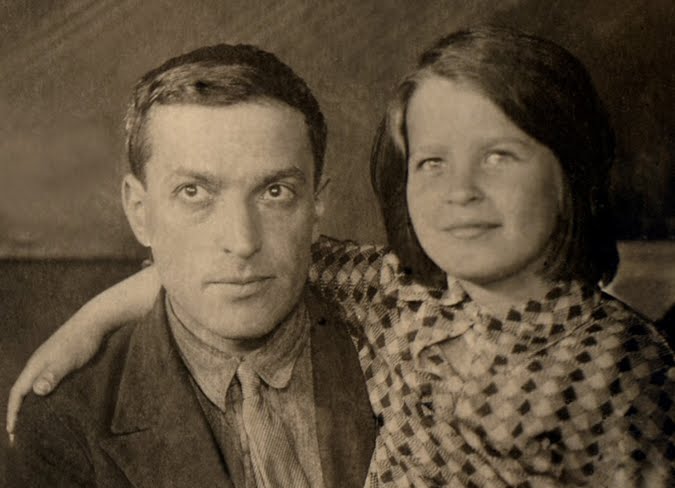
«De la psicología del drama al drama de la psicología. La relación entre la vida y la obra de Lev S. Vygotski»: Pablo del Río y Amelia Álvarez
 Resumen
Mediante el análisis de los escritos de Vygotski, en este artículo se resalta la existencia de una relación fuerte, profunda y dialéctica entre su vida y su obra que conecta su visión de la organización dramática de la psique con su interpretación de su propia vida como misión en la entonces emergente ciencia psicológica. A partir de este análisis sobre la mente dramática en la perspectiva vygotskiana, los autores reclaman un mayor acercamiento de la psicología científica a las funciones y procesos psíquicos directivos y de sentido, a menudo preteridos en la agenda de investigación.
Palabras clave: Vygotski, drama, conciencia histórica, sentimiento trágico de la vida, psicología del arte, psicotecnia del sentimiento, ciencia romántica
«Spinoza, Ilyenkov and Western Marxism – meeting the challenges of the global crisis»: Corinna Lotz and Penny Cole
 Introduction
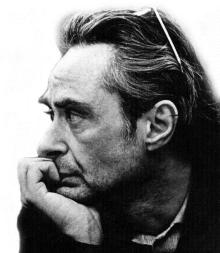
Evald Ilyenkov took Spinoza’s philosophy as the starting point for his own critique of positivism and mechanical materialism. While this assumed a strictly philosophical form, its political source was Ilyenkov’s profound conviction that a turn towards materialist dialectics was critical for the future of the Soviet Union.
Ilyenkov’s position as an “orthodox heretic” philosopher may help to explain why he identified so closely with Benedict Spinoza. Like Spinoza some 300 years earlier, he was a child of his time, but in equally deep conflict with proponents of dogma. In Spinoza’s case it was religious dogma, in both its Judaic and Christian forms. With Ilyenkov it was Marxist dogma turned into a state religion through Stalinism – and dogma’s ugly sister – the mechanistic positivist scientism which invaded Soviet philosophy during the 1960s. Ilyenkov championed those sides of the 17th century philosopher’s ideas which made a decisive impact in the late 18th century on Hölderlin and Hegel, and later on Feuerbach, Marx and Engels. He drew on Lenin to establish materialist dialectics once again as the theory of knowledge of Marxism. Like Lenin, Ilyenkov found himself swimming against the tide but was not deflected from his goals.
«Vygotsky, The Making of Mind»: A. R. Luria
 It is no exaggeration to say that Vygotsky was a genius. Through more than five decades in science I never again met a person who even approached his clearness of mind, his ability to lay bare the essential structure of complex problems, his breadth of knowledge in many fields, and his ability to foresee the future development of his science.
We met early in I924 at the Second Psychoneurological Congress in Leningrad. This gathering was the most important forum at that time for Soviet scientists who worked in the general area of psychology. Kornilov brought along from the Institute of Psychology several of his younger colleagues, among whom I was included.
When Vygotsky got up to deliver his speech, he had no printed text from which to read, not even notes. Yet he spoke fluently, never seeming to stop and search his memory for the next idea. Even had the content of his speech been pedestrian, his performance would have been notable for the persuasiveness of his style. But his speech was by no means pedestrian. Instead of choosing a minor theme, as might befit a young man of twenty-eight speaking for the first time to a gathering of the graybeards of his profession, Vygotsky chose the difficult theme of the relation between conditioned reflexes and man’s conscious behavior.
Reading Marx’s Capital with David Harvey

Free Öcalan


Fundación Infancia y Aprendizaje

Colección de libros Marxismo Crítico

Historical Materialism


CIPEC (Centro de Investigación en Pensamiento Crítico)

Centro para la Investigación como Crítica Práctica

Memoria Revista de Crítica Militante
Revista Laberinto






Marx desde cero





 marxismocritico.com