
Archivo
«Financial profit: profit from production and profit upon alienation»: Costas Lapavitsas and Iren Levina
 Abstract
Financial profit is prevalent in contemporary capitalist economies, yet its nature and sources remain unclear. In classical political economy, and for Marx, profit is conceptualised in two distinct ways. First, it is a newly produced flow of value (profit from production). Second, it is a share of either money revenue or existing sums of money, accruing through transactions in financial or real assets (profit upon alienation or expropriation). Both dimensions are vital to the analysis of financial profit, but the distinction is of particular relevance to profit from trading in financial assets, which has a dual nature. In immediate terms, profit from trading in financial assets arises from redistributing loanable money capital; when mediated, it represents the accrual of future surplus value. If, however, the mediation is incomplete, such financial profit remains redistributed loanable capital and is unrelated to newly produced value. In sum, financial profit is normally profit from production, but retains elements of profit upon alienation or expropriation.
Key-words: capital gains, exploitation, financial profit, loanable capital, profit
«¿Está derrotado el marxismo?»: Alejandro Valle Baeza
 Para muchas personas la disolución del bloque soviético en una serie de países hoy aparentemente empeñados en transformarse en capitalistas marca la derrota del marxismo. La critica marxista al capitalismo debe conducir a la propuesta de una nueva forma de sociedad que supere al capitalismo y esto fue el «socialismo real» del bloque soviético. Como esa propuesta fracasó también lo hizo el marxismo.
Por otro lado, la teoría económica contemporánea está dominada por el neoclasicismo que fundamenta las políticas económicas neoliberales. Parece que estamos en un momento de plena hegemonía de la ideología procapitalista.
Sin embargo, Marx y el marxismo tantas veces enterrados surgen en lugares insospechados. Por ejemplo, John Cassidy publica en The New Yorker(1) «The Next Thinker: The Return of Karl Marx». Casidy sostiene que Marx es uno de los economistas que tiene más que decir acerca del futuro del capitalismo.
«A general refutation of Okishio’s theorem and a proof of the falling rate of profit»: Alan Freeman
 This is the first published general refutation of the Okishio theorem. An earlier refutation based on a specific example was published by Kliman and McGlone in 1988. Okishio’s theorem, published in 1961, asserts that if real wages stay constant, the rate of profit necessarily rises in consequence of any cost-reducing technical change. It proves this within a simultaneous equation (general equlibrium) framework.
This paper establishes that this proposition is false within a differential equation (temporal) approach. In such a framework the denominator of the rate of profit rises continuously, regardless of whether or not there is technical change, unless capitalist consumption exceeds profit, as occurs in a slump.
Entrevista al economista marxista mexicano Alejandro Valle Baeza
<br /><a href=»http://www.ustream.tv/» style=»padding: 2px 0px 4px; width: 400px; background: #ffffff; display: block; color: #000000; font-weight: normal; font-size: 10px; text-decoration: underline; text-align: center;» target=»_blank»>Video streaming by Ustream</a>
«A materialidade do trabalho e o trabalho imaterial”: Sergio Lessa
 Como deve acontece de tempos em tempo, uma nova categoria “sociológico-filosófica” fez sua entrada na cena acadêmica: a do “trabalho imaterial”. Tal como ocorre na maioria das vezes, por ser uma novidade, a nova categoria foi saudada e alguns espaços lhe foram abertos na mídia e nas editoras do país. Apresentando-se como uma tese radical de esquerda, e tendo por trás a figura de Antonio Negri a lhe conferir alguma visibilidade, o conceito de trabalho imaterial acabou sendo acriticamente empregado até mesmo por setores da esquerda brasileira. É, por isso, necessário que a examinemos mais de perto, mesmo que estejamos convencidos que suas debilidades são tantas que a nova categoria do trabalho imaterial não deverá permanecer sequer por alguns poucos anos no debate em curso. Nos parece que seu destino não será muito diferente do que ocorreu com o “marxismo analítico”, que tanto furor fez na década de 1990 e que, hoje, poucos sequer recordam do que se tratava.
«Socialism Without Markets: Democratic Planned Socialism»: Al Campbel
 I. INTRODUCTION
1. Two interrelated issues inform the debate between socialists who advocate Market Socialism and those who advocate socialism without markets, Democratic Planned Socialism (DPS).1 The first is if socialism without markets is feasible. David Schweickart, who calls his most left wing of all market socialist models “Economic Democracy,” flatly asserts: market socialism “is the only form of socialism that is, at the present stage of human development, … viable …” (1998: 10). From a logical point of view, one should as well consider the question of if market socialism is possible. In fact, a few advocates of socialism without markets have made that point, for example Bertell Ollman (1988) and David McNally (1993). By-in-large, however, this issue has not been included on the debate menu, while the question of the feasibility of socialism without markets has: advocates of socialism without markets have felt it necessary to defend their vision as feasible, while advocates of market socialism have not felt the same necessity. The second issue is, if both models are in fact possible, which would be more desirable.
«Naturaleza y perspectivas de la actual crisis: una caracterización marxista de largo plazo»: Sergio Cámara Izquierdo y Abelardo Mariña Florez
 Resumen
El trabajo caracteriza la crisis actual de la economía mundial. Primeramente se describe su desarrollo inmediato, enfatizando la recesión cíclica en Estados Unidos, el estallido de la burbuja hipotecaria y la crisis financiera global, que desembocaron en una profunda recesión. Posteriormente se analiza la salida de la crisis de 2000-2001 como antecedente inmediato de la crisis actual. El análisis de las tendencias estructurales de rentabilidad y acumulación tras la crisis de sobreacumulación de la década de 1970 permite concluir que se trata de una crisis de la modalidad de reestructuración neoliberal, caracterizada por un retorno de la hegemonía financiera.
Palabras clave: crisis, burbuja hipotecaria, hegemonía financiera, tendencias estructurales de acumulación y rentabilidad.
«Entendiendo la crisis históricamente la crisis»: D. Harvey, D. Foley, B. Silver, I. Wallerstein y M. Postone
 Los profesores David Harvey (CUNY), Duncan Foley (New School for Social Research), Beverly Silver (Johns Hopkins), Immanuel Wallerstein (Yale) y moderador Postone Moishe (University of Chicago) debaten cara a cara sobre los orígenes históricos de la actual crisis. Harvey y Foley defendieron la idea de que la teoría marxista y la teoría de la lucha de clases puede ayudar mucho en la explicación de la situación económica actual. Wallerstein y Beverly Silver apoyaron la tesis de que el escenario actual es parte de un largo ciclo de ajustes entre los Estados-nación. Postone, al final, hizo su crítica y desarrolló un tema clave para la comprensión de la actualidad: cómo definir el capitalismo. El evento fue organizado por la Universidad de Chicago.
«Is Marx’s Theory of Value Still Relevant?»: Alfredo Saad-Filho
 Abstract
This paper assesses the internal consistence of four views of Marx’s theory of value, the ‘traditional Marxism’ associated with Dobb, Meek and Sweezy, Sraffian interpretations of Marx, value-form theory (especially the Rubin tradition) and the ‘new interpretation’ of value theory. On the basis of a critique of these approaches, a class interpretation of this theory is outlined, in which value theory is structured in and through the primacy of class relations in capitalism. Finally, the potential relevance of the class interpretation of Marx’s value theory is briefly assessed in the light of contemporary political, economic and social problems.
The title of this paper is deliberately provocative, on at least three grounds. First, it implies that the ‘relevance’ of social theories needs to be assessed historically, and it may change as the subject of analysis is transformed over time. Second, it suggests that Marx’s theory of value may have been relevant in the past – perhaps when it was first developed, or maybe under what became known as competitive capitalism – but it may no longer be tenable in the phase of ‘global capitalism’. Third, if this is the case, what are critics of capitalism supposed to do? – is there another theory that may offer a similarly powerful denunciation of capitalism as Marx’s, with the same scientific rigour, and the same degree of commitment to the search for postcapitalist alternatives? It is impossible to address these issues in the confines of a single paper. This essay answers these questions unevenly and only partially, in three sections. The first reviews the strengths and shortcomings of different interpretations of Marx’s theory of value, the ‘traditional Marxism’ associated with Dobb, Meek and Sweezy, Sraffian interpretations of Marx, value-form theory (especially the Rubin tradition) and the ‘new interpretation’ of value theory. The second offers an interpretation of value theory based on the primacy of class relations. This interpretation is not entirely original, as it draws on an extensive literature developed over several decades.
«Crisis and Openings: Introduction to Marxism»: Richard D Wolff
Professor Wolff discusses that which the crisis has made possible in relation to Marxism during this lecture given at The Brecht Forum on July 29, 2012 as part of their Annual Intensive Introduction to Marxism.
Professor Wolff’s Website: www.rdwolff.com
Professor Wolff’s Podcast: http://www.truth-out.org/economic-update-your-weekly-dose-revolutionary-econo…
«New Market Socialism: A Case for Rejuvenation or Inspired Alchemy?»: Dimitris Milonakis
I. INTRODUCTION
1. Socialism as a concept has its roots in the eighteenth century Enlightenment’s ideals of equality and co—operation, whereas the term itself was coined during the 1820’s. Throughout most of its history and certainly throughout the nineteenth and early twentieth century, from Karl Marx and Frederic Engels to the Fabians, the concept has been held to be synonymous with corporate planning in the context of common ownership of the means of production. As such, the essence of the concept has traditionally been based on a critique of capitalism as an exploitative class system and has correspondingly been hostile to both markets and private ownership (Hodgson, 1999b, ch.2).
2. Market socialism as a concept has a shorter history: its origins can be traced back to the calculation debate of the 1920’s and 1930’s. However, the basic idea associated with itto marry socialism with markets—is contemporaneous with the invention of the term ‘socialism’. Thus from Pierre Proudhon’s free association of small independent producers what Marx called ‘petty bourgeois socialism’ to John Stuart Mill’s sympathy with decentralised co—operative socialism, the idea has been to combine the efficiency of markets with the egalitarian goals of socialism. Having said this, it is also true that the idea of combining socialism with the market would be considered a contradiction in terms by most nineteenth century socialists (ibid).
«Business As Usual: The Economic Crisis And The Failure Of Capitalism»: Paul Mattick
 Business As Usual: The Economic Crisis And The Failure Of Capitalism by Paul Mattick. Reacktion Books: 2011. £12.95
Just yesterday, we were all supposed to believe that the globalisation of capitalism and free markets was the route to freedom, peace and prosperity for all. Then, with barely an explanation, and somewhat out of the blue, the story changed. Now we are to believe that, due to circumstances beyond anyone’s control, prosperity will have to give way to austerity. The good times are over.
It is characteristic of crises that the stories we are expected to believe suddenly change. But how can we understand the change? And might there not be better stories than the rather grim and gloomy one we’ve been ordered to swallow? Paul Mattick Jnr’s short book is just such an alternative. For him the crisis signals the complete bankruptcy and destruction of mainstream economics.
Why crisis is impossible
Why did the crisis appear as a bolt out of the blue? Why was it not expected or anticipated by any economist or mainstream commentator? In short, because there is no place in the standard economic story for crisis, any more than there’s a place for wizards and interstellar travel in a 19th-century realist novel. The old story goes something like this:
“Capitalism is a system for producing wealth to satisfy consumer needs. Individuals set up in business looking out only for their own interest, but in doing so produce for society. Only what can be sold will be produced; money will be borrowed, land rented and labour hired only because the resulting production meets a need. The money earned by selling one’s product will then be spent either on consumption or further production. The economy therefore tends naturally to a balanced state, in which all products find buyers. There may be momentary imbalances between supply and demand, but rising and falling prices soon take care of those. In this way, capitalism creates the wealth of nations, and all is well in the best of all possible worlds.”
«Valor y Precio en El Capital de Marx»: David Yaffe
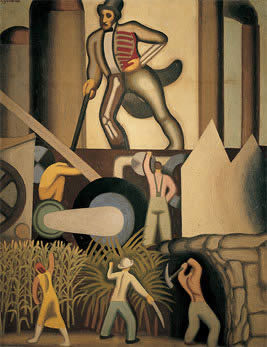
(Lenin)
1 Introducción
De todas las «correcciones» de moda de El Capital de Marx, ninguna se ha llevado a cabo tan a menudo como la transformación de los valores en precios. Desde Bortkiewicz (1907) a Samuelson (1971), la «ciencia» burguesa se ha sentido impulsada a mejorar, corregir o revisar a Marx sobre esta cuestión. Con la introducción de la «corrección» de Bortkiewicz a Marx en el mundo de habla inglesa por Sweezy en el año 1946, comenzó otra ronda de «soluciones». Aunque muchos difieren de la contribución Bortkiewicz / Sweezy en la forma, y algunos evitan los errores más obvios, todos tratan el problema de una manera más o menos similar.
Bortkiewicz fue un ricardiano y se esforzó mucho para defender a Ricardo del ataque sistemático de Marx. En su tratamiento del valor y el precio, y en su «solución» al problema de la transformación, es un ricardiano consistente. Por lo tanto, no es sorprendente que presentando el problema de una forma ricardiana, la aparición de la Producción de mercancías por medio de mercancías de Sraffa -todo él un texto ricardiano- haya dado una nueva vida al «problema» de la transformación. Lo que todas estas soluciones de tipo ricardiano tienen en común es la incapacidad de comprender el método de Marx en El Capital y poca o ninguna comprensión de las categorías de valor y precio. El valor y el capital dejan de tener un significado social, para expresar, en forma fetichista, lash relaciones sociales bajo el modo capitalista de producción. La sustancia del valor -trabajo humano abstracto se sustituye por su magnitud, unidades de tiempo de trabajo, y el capital se reduce simplemente a insumos de tiempo de trabajo fechados. Las relaciones sociales, por lo general introducidas por los críticos de Marx como tasa de explotación, es un hecho «dado» empíricamente o una explicación aceptable -matemática y, presumiblemente, sociológicamente- de los beneficios positivos.
«Vitali Vygodsky: un clásico del marxismo»: Jaime Ortega Reyna y Víctor Hugo Pacheco Chávez
 Resumen
El presente trabajo busca aportar elementos tanto biográficos como de análisis en torno a la obra del intelectual soviético Vitali Vygodsky. Dicho autor contribuyó, de manera decisiva, durante el siglo XX al esclarecimiento de los principales problemas de la teoría marxista y la crítica de la economía política. Su obra representa una renovada versión del marxismo en el seno del antiguo bloque socialista. El artículo rastrea datos biográficos, de la recepción de su obra e introduce un análisis sucinto de sus principales obras.
Palabras clave: marxismo, Unión Soviética, Vygodsky
Cuando alguien escucha pronunciar el apellido Vygodsky de inmediato puede evocar al gran psicólogo soviético Lev Semionoviche Vygotsky (1896-1934) que dedicó su vida a entender los problemas del lenguaje y el pensamiento. Sin embargo, en este artículo queremos referirnos a otro Vygodsky, que lleva por nombre Vytaly (o Vitali) Solomonovich y que fue uno de los máximos exponentes del marxismo desarrollado en la Unión Soviética. Desconocemos sí entre ambos personajes existió algún vínculo familiar. Lo que sí podemos afirmar con seguridad es que ambos tuvieron una afinidad intelectual electiva: el estudio, en muy distintas áreas del conocimiento, de la obra de Carlos Marx.
«Breaking away from Capital? Theorising activity in the shadow of Marx»: Peter E Jones
 Abstract
The paper reflects on the relationship between the understanding of human activity which Marx expresses in Capital and the theoretical model of activity offered by an influential contemporary variant of Activity Theory. The paper argues that this variant departs significantly from Marx’s conception of human activity and its role in what he calls the ‘labour process’. In particular, Activity Theory has failed to distinguish between the labour process and the valorization process, a distinction which is fundamental to Capital and to Marx’s theoretical and political perspective more generally. The paper also argues that this conceptual conflation is also evident in the theoretical discourse of the founders of the Activity Theory tradition. The paper goes on to consider the theoretical and practical implications of this departure from the method and conclusions of Capital.
Reading Marx’s Capital with David Harvey

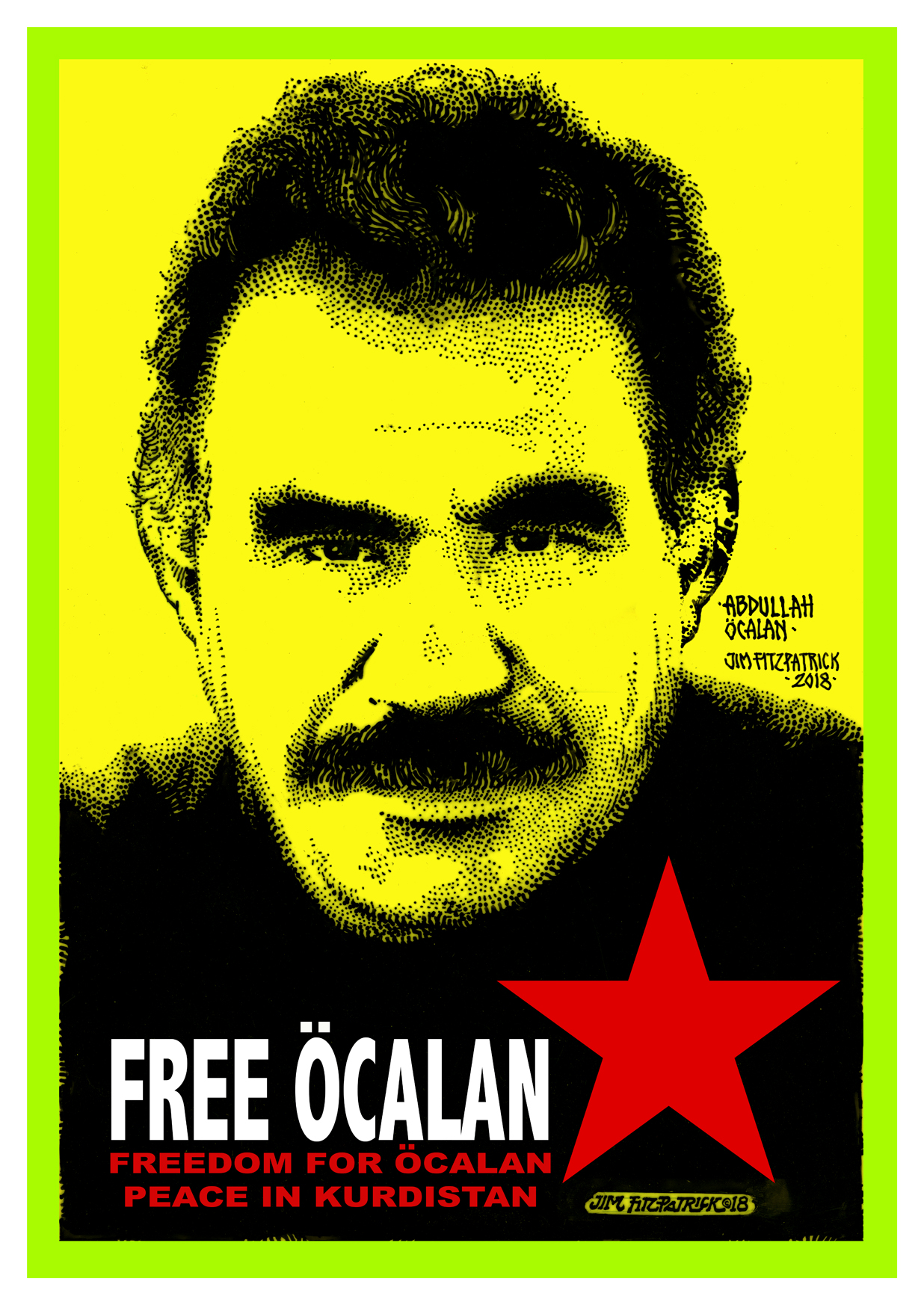
Free Öcalan


Fundación Infancia y Aprendizaje

Colección de libros Marxismo Crítico

Historical Materialism


CIPEC (Centro de Investigación en Pensamiento Crítico)

Centro para la Investigación como Crítica Práctica

Memoria Revista de Crítica Militante

Revista Laberinto






Marx desde cero





 marxismocritico.com