 Biological Determinism and Epistemology in Linguistics: Some Considerations on the «Chomskyan Revolution» [1]
«Given the molecular forces in a mutton chop, deduce Hamlet or Faust therefrom».[2]
0. INTRODUCTION
0.1 The aim of this paper is to take a critical look, from a broadly Marxist perspective, at the epistemological basis of Noam Chomsky’s theory of grammar and the implications of his work in linguistics for the human sciences in general.[3] At the very least this critique might help to explain the reasons why Chomsky’s views should be regarded as incompatible with Marxism, despite some recent claims (eg Newmeyer, 1986a,b). More importantly, I hope the discussion may show that Chomsky’s outlook on language poses a challenge not only to Marxism but to any discipline in which the social and historical are essential and irreducible categories in the understanding and explanation of human behaviour, institutions, and thought. For Chomsky uses his theoretical linguistic work, which has already had a profound influence on other disciplines, particularly philosophy and psychology (cf Salkie, 1990) as the ground on which to construct a rigid biological determinist ideology applied to all aspects of human behaviour and mental activity. The main thrust of my argument is that Chomsky’s biological determinism, like biological determinism in general, rests on an incoherent and self-contradictory epistemology and is an inadequate foundation for the human sciences, including linguistics. In view of these intended aims, I would like to think that what follows might be considered as a further contribution to the critique of biological determinism developed in Rose (ed) (1982) and Rose, Lewontin and Kamin (1990).
0.2 I do not claim any originality for philosophical opposition to Chomsky’s work and specifically Marxist criticism can be found elsewhere (eg Thompson, 1969; Luria, 1975; llyenkov, 1977c; Panfilov, 1979; and cf the discussion in Newmeyer, 1986a). What I hope to offer is a rather more fine-grained philosophical analysis of aspects of Chomsky’s approach along with a sketch of an alternative perspective which I will refer to as the Vygotskian tradition of Marxist research in psychology and linguistics.[4] While detailed scrutiny of the technical linguistic facts and arguments used to support Chomsky’s case would be out of place here, I will make one or two observations on the status and validity of such «evidence».
Since Chomsky has at the same time acquired an international reputation as a courageous, outspoken, and radical political thinker and commentator (cf Salkie, op.cit; Chomsky 1979, 1987b, 1989), the question inevitably arises of the connection between his linguistics and politics. Some writers consider both areas of his thought to be equally radical and progressive, eg Salkie (op.cit). I share the view that his scientific and political views have certain philosophical and ethical principles in common and, accordingly, I have raised some general questions on his attitude towards social and political theory. However, I shall not examine Chomksy’s political contribution in any detail, nor do I wish to denigrate that contribution in any way.
I should stress that not all linguists outside the Marxist tradition share Chomsky’s conception of language and mind. Some would challenge or reject outright the innatist framework of Chomskyan generativism (eg Sampson, 1975; Moore and Carling, 1982; Halliday, 1978; Harris, 1980) and there are many other linguists who, while working with Chomsky’s grammatical theory, would distance themselves from his biological determinism. Yet, there are few, if any, modern approaches to language which remain uninfluenced by Chomsky’s work and ideas. Whether or not Chomsky’s theoretical achievements amount to a revolution will not, however, be of concern here, although the question has generated some heat over the years (cf Koerner, 1983; Newmeyer, 1986b).
My plan of attack, then, is as follows: 1) an exposition of the key tenets of the Chomskyan doctrine on grammar, 2) an analysis of the epistemological foundations of this doctrine, 3) a critical appraisal of these foundations, and 4) a brief exposition of the Vygotskian alternative. Leer más…



 Recensión de tres libros: Mind in Society: The development of Higher Psychological Processes de L. S. Vygotsky, editado por Michael Cole, Vera John-Steiner, Sylvia Scribner y Ellen Souberman, Harvard University Press. The Psychology of Art, de L. S. Vygotsky, M.I.T. Press. Soviet Developmental Psychology: An Anthology, editado por Michael Cole, M.E. Sharpe.
 La difusión de la obra
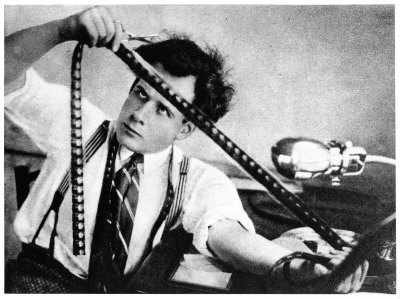 Cuando Sergei Eisenstein murió el 11 de febrero de 1948, un examen postmórtem fue llevado a cabo para establecer la causa de la muerte. Su cuerpo fue sometido a una disección y su cerebro fue expuesto, medido y fotografiado. Las fotografías del cerebro de Eisenstein las conservó el que había sido su amigo por treinta años, el neuropsicólogo Alexander Luria, quien se las mostraría a sus estudiantes para ilustrar la asimetría de los hemisferios cerebrales. El cerebro de Eisenstein presentaba un hemisferio derecho, responsable del procesamiento de las imágenes visuales y la información espacial, de proporciones extraordinarias, mientras su hemisferio izquierdo tenía un tamaño normal. [1] Esta imagen impactante da buena cuenta de uno de los proyectos intelectuales más desafiantes y duraderos en la intersección de la teoría cinematográfica, la psicología y la filosofía: aquel que trató de entender cómo interactúan la mente, el cerebro y el cine. Constituía asimismo un epílogo a la colaboración científica entre Eisenstein y Luria, que en diversas etapas incluyó también al lingüista Alexander Marr y al psicólogo cultural Lev Vygotsky. El programa de investigación que desarrollaron desde mediados de los años veinte del siglo pasado hasta la muerte de Eisenstein, aspiraba a combinar neurociencia, ciencias sociales y teoría del cine para abordar las bases neuronales y la semiótica de la estética de la gran pantalla.
 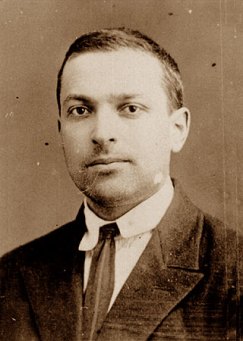 “It seems surprising that the science of psychology has avoided the idea that many mental processes are social and historical in origin, or that important manifestations of human consciousness have been directly shaped by the basic practices of human activity and the actual forms of culture.”
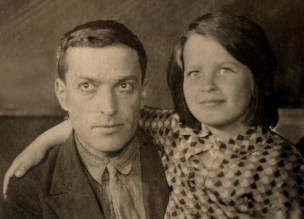 En el
En el  Perezhivanie as a word in the English language
 David Bakhurst nos habla mientras suena Virginia Plain
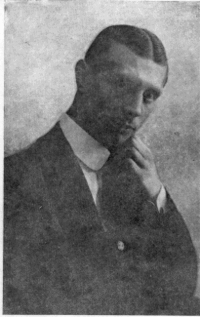 Resumen: Este artículo aborda algunos aspectos centrales del enfoque de Volóshinov, entendido como contribución a una metodología general de las ciencias humanas. En la primera parte, el artículo recuerda el contexto de crisis de las ciencias humanas en los inicios del siglo XX, subrayando que Volóshinov se adhería claramente a la corriente interaccionista social, y muestra que su enfoque de “psicología objetiva” se apoyaba sobre la firme delimitación del estatus ontológico del psiquismo. La segunda parte trata de la indisociabilidad propuesta por Volóshinov entre las diversas formas de las actividades humanas y sus condiciones de existencia socio-históricas, apuntando el doble anclaje de los fenómenos “ideológicos”, en las obras colectivas y en la actividad psíquica individual. La tercera parte insiste en el rol central que Volóshinov otorgó al lenguaje como “medio objetivo” a través del cual se construyen y se desarrollan a la vez la historia social y la conciencia individual. Por último, se plantean algunos problemas de este enfoque.
















 marxismocritico.com