
Archivo
«Essays on Marx’s theory of money of I.I.Rubin»: Susumu Takenaga
 The name of Rubin (Исаак Ильич Рубин,1886–1937) and a few of his works were known in Japan to a certain extent from the time preceding the Second World War by the literature related to the value debate going on in the Soviet Union at that time, translated and published about 1930 almost in real time. After the war, a negative image seems to have been enrooted for certain of those who were under the influence of the official disapproving view on Rubin and his followers adopted by the Soviet authority after the 1930s. Such a view was repeated and popularized in the textbooks of Marxist economics written by Russian researchers and translated and widely diffused in Japan1 after 1945 with the rise of Marxist economics in the post-war period. Resonance of such an influence has not totally disappeared even today.
In 1973, in the midst of the value controversy waged after 1968 among a few Marxist economists in the West, where the Marxist economics, a non negligible part of which was under a great influence of Soviet academy, had never been so important in the profession as in Japan, the masterpiece of Rubin, Essays on Marx’s theory of value (hereinafter Essays on value for short) was translated into English2, a book left and remained in oblivion for almost half a century. Rubin’s name and his works were thus rediscovered in the corner of the Western academic world, and his original interpretation of Marx’s theory of value gave a certain enduring impact on the then ongoing value debate3. Probably prompted by such a situation, the German and French versions (retranslations) of this work of Rubin were successively published, and also some of the original documents related to the value debate during the last years of 1920s, to begin with a few other works of Rubin himself, were translated and published, which contributed to make known something about this debate on the basis of its original resource materials. But, the pros and cons discussions at that and subsequent times about Rubin’s theory in the debate in the West were in many cases based solely on the English translation (and German and French retranslations) of his book given above, the other related literature not being referred to nor made use of. In addition, in these translations were omitted all the important supplementary materials originally annexed to the third edition of Essays on value published in 19284, which served as the exemplar to the translation: three articles of controversy (replies of Rubin to the criticisms by Dashkovskij, Shabs, Kon) newly added to this edition as ‘Replies to critics’, and ‘Appendices’ (author’s explanation of some of the keywords used in his book) showing Rubin as philologist and useful for understanding the text of Essays on value. This omission made hardly perceivable the controversial context where this book was found itself at the time of its publication. Leer más…
«150 years Karl Marx’s Capital»: John Milios, Michael Heinrich, Michael Lebowitz, Etienne Balibar, Marta Harnecker, Panagiotis Sotiris…
INTERNATIONAL CONFERENCE
150 years Karl Marx’s “Capital” – Reflections for the 21st century
14-15.1.2017 | Athens – Greece
To commemorate in 2017 the 150th anniversary of Volume 1 of Capital, Rosa Luxemburg Stiftung – Athens Office in cooperation with Theseis are organizing a two-days international conference in Athens, on the actuality of Marx’s theoretical system of the critique of political economy.
Karl Marx’s major work, Capital, is broadly recognized as an indispensable point of departure for all those who are interested in deciphering and analyzing in depth the inner workings of capitalism. The system of concepts and analyses in Marx’s Capital provides radical thinkers with insights to demystify the “truths” of the dominant bourgeois theoretical schemes, ideological certainties and policy implications. It is thus of great theoretical and political importance. Marx’s “critique of political economy” in Capital and in the relevant manuscripts of the period 1857-1867 forms a unique theoretical terrain, which enables the understanding of economic and social power relations, their driving forces and evolution trends, in all societies where the capitalist mode of production is dominant. Capital remains relevant and powerful. It is particularly timely in the midst of the present systemic global economic crisis.
«La era del capitalismo pasó: la izquierda y la dialéctica sujeto-objeto del fetichismo moderno»: Robert Kurz
 En tanto no consiga cuestionar los fundamentos del sistema, la izquierda seguirá desorientada, y si se aprovecha del carro de la administración estatista de la crisis para proponer sus reformas sociales, descarrilará con él.
Robert Kurz no hace concesiones al comparar el pensamiento posmoderno con la ideología neoliberal. Ahora, dice él, la izquierda posmoderna se encuentra con los destrozos de sus ilusiones y es confrontada con la dura realidad de una crisis monumental, la que desde el comienzo no quiso admitir y para la que ella, por eso mismo, no está preparada. Incapaz de captar la dialéctica sujeto-objeto del fetichismo moderno, la izquierda cayó en un objetivismo tosco con un subjetivismo igualmente tosco. Estas ideas fueron desarrolladas en una entrevista realizada por Patricia Fachin y Márcia Junges para IHU-On-Line. Leer más…
«Tiempo, el valor del dinero y la cuantificación del valor»: Alan Freeman
 Resumen
Este artículo establece y ejemplifica para el caso del RU, un método temporal para calcular los valores-trabajo de los productos para cualquier proceso o sector de una economía de mercado.
Muestra el cálculo temporal para la Expresión Monetaria del Tiempo de Trabajo (MELT), el cociente general entre las magnitudes monetarias y de tiempo de trabajo para una economía nacional, pero no corrige las consecuencias de las transferencias de valor dentro de la economía global como un todo. No obstante, este método es generalizada si se toman en cuenta adecuadamente las transferencias de valor internacionales.
«La expresión dineraria del tiempo de trabajo y la teoría marxista del dinero»: José Carlos Díaz Silva
 En esta nota presentamos el concepto de la llamada expresión dineraria del tiempo de trabajo (EDTT), tratando de hubicarla en el contexto de la teoría marxista del dinero, en particular en el tema de las funciones del dinero y en la medida de los valores. El problema de fondo es el dinero fiduciario actual, con este, parece que la teoría marxista del dinero no es válida, porque fue acuñada por Marx en el contexto del dinero-mercancía. Sin embargo, desarrollando el concepto de la EDTT, podemos encontrar un camino para seguir desarrollando la teoría marxista del valor trabajo y dar explicaciones consistentes a los fenómenos del siglo XXI. En la primera parte, ubicamos esta expresión en el contexto general del tema; en la segunda parte puntualizamos el concepto y desarrollamos de manera sintética algunos de los puntos a discusión sobre la misma; en la cuarta parte, reproducimos las EDTT propuestas por Duncan Foley (2005) y Fred Moseley (2006); la cuarta parte concluye. Leer más…
«El concepto de valor intrínseco de Marx»: Andrew Kliman
 Este artículo pretende mostrar que el concepto de valor intrínseco –valor como distinto de valor de cambio– se convirtió en un elemento importante de la crítica de la economía política realizada por Karl Marx[1]. La existencia de la diferencia no es desconocida, pero su importancia para el trabajo de Marx es menospreciada y la naturaleza de la distinción es comúnmente malentendida.
La Sección I muestra que la incomprensión y la falta de reconocimiento del concepto valor intrínseco de Marx son generalizadas, y sugiere que éstas son parcialmente responsables de las afirmaciones de que su teoría del valor es inconsistente lógicamente. La Sección II investiga el proceso por el cual Marx desarrolló la diferencia entre valor y valor de cambio, la cual no se encontraba todavía explícita en su trabajo de 1859 Contribución a la Crítica de la Economía Política. La Sección III analiza la primera sección de El Capital, mostrando que donde usualmente se considera que Marx está avanzando en una ‘teoría del valor’, en realidad busca establecer la existencia del valor como distinto del valor de cambio. La Sección IV discute la relevancia del concepto valor intrínseco, sugiriendo que Marx lo utilizó para convertir al valor de una categoría que expresa relaciones entre cosas a una que expresa relaciones entre humanos (trabajadores) y cosas, y que por ello el concepto le ayudó a unificar su teoría del valor, su análisis de la producción capitalista y su teoría del fetichismo. Leer más…
«Cómo funciona la economía capitalista: una introducción a la teoría del valor-trabajo de Marx»: Maxi Nieto Ferrández
 El propósito fundamental [de este libro] es mostrar que la teoría del valor-trabajo expuesta globalmente, pero no por completo desarrollada en El Capital constituye el marco fundamental para construir una teoría general del funcionamiento y la dinámica del modo de producción capitalista.
Se trata de reivindicar este marco teórico como un todo coherente en sus fundamentos, mostrando que tanto la teoría de los precios relativos y la explotación como la teoría de la acumulación, la distribución y la crisis se asientan sobre la categoría de valor, por lo que la «microeconomía» y la «macroeconomía» de Marx están orgánicamente conectadas. Mi planteamiento es que en El Capital, como sucede con cualquier otra obra esencial en la historia del pensamiento, no hay propiamente «partes» que pudieran reivindicarse o rescatarse aisladamente frente a otras descartables (es habitual que unos se queden con el análisis de clase, otros con su teoría de la explotación, otros con la de la acumulación y la crisis, etc.), como pretenden las lecturas convencionales (marxistas o no); lo que hay es una secuencia de pasos lógicos –aunque no desarrollada en su totalidad– dentro de un mismo proceso constructivo encaminado a investigar y exponer el sistema completo de relaciones sociales y económicas en que consiste el modo de producción capitalista. Leer más…
«A vueltas con la categoría de valor en la producción de arte»: José María Durán
 Resumo

Se plantea el problema del valor en la producción de obras de arte. El valor se discute primero en relación a la sociología del campo artístico y su enfoque respecto a la forma mercancía de los productos artísticos. Después se examina la posición que el trabajo artístico asume en el proceso de producción en cuanto productor de valor. Finalmente, se plantea un análisis de la sustancia del valor en referencia a la originalidad de los trabajos artísticos que es formalizada como propiedad intelectual.
Palavras-chave
arte, mercancía, valor, trabajo abstracto, original.
1. Introducción
«Racionalidad, hegemonía y fetichismo en la teoría crítica»: Néstor Kohan
 «Marx ha muerto» repiten con insistencia la Academia, las ONG y la literatura de última moda que se vende en las librerías de shopping. Autoritario, violento, estatista, verticalista, jacobino, determinista, eurocéntrico, patriarcal, brutalmente moderno, desconocedor de los pliegues más profundos de la subjetividad, ciego ante los nuevos movimientos sociales, ignorante ante la diferencia, despectivo frente al medio ambiente. Sí, tiene prestigio, pero no nos sirve para pensar el presente. El facebook lo apuñaló. «¡Doctor! Firme de una buena vez el acta de defunción. No hay remedio. Está muerto».
Curioso cadáver al que hay que comprarle un féretro nuevo cada mes, cada año, cada década. Qué teoría tan rara… necesita ser enterrada periódicamente. ¿No nos estarán engañando las funerarias posmodernas, posestructuralistas, autonomistas y posmarxistas para hacer un buen dinerillo?
En la Argentina de 1976 —fecha emblemática de nuestra cultura política que marca a fuego cualquier debate teórico en nuestro país— se clasifica al revolucionario marxista como «terrorista», «extremista», «delincuente subversivo». Una marca de época.
Más tarde, desde 1983 en adelante, al militante marxista y al simple manifestante se lo rotula como «activista». En los «90, al piquetero o fogonero se lo marca como «infiltrado», al huelguista se lo estigmatiza como «antidemocrático», al que exige lo que le corresponde se lo rechaza por su supuesta «irracionalidad». En las rebeliones del 2001 el marxista es el extremo opuesto de «la gente» y «el vecino». Desde el 2003 hasta la fecha, con ademanes y retórica progresistas, la lucha por el significado está sujeta al conflicto y la disputa, pero el marxismo continúa incomodando. Ni el más progre se lo traga. Marx continúa siendo indigerible para cualquier puesta en escena de la política criolla, ya sea que defienda un modelo extractivo-exportador, ya sea que vaya a remolque de la patria sojera. Situarse en la sociedad argentina a partir de una concepción marxista e intentar vivir cotidianamente a partir de una ética y una escala de valores inspirada en el pensamiento de Marx sigue siendo anormal. Incómodo, maloliente, disparatado. Leer más…
«Marx and Living Labour»: Laurent Baronian
 From his early economic works on, Marx conceived the labour of any kind of society as a set of production activities and analysed the historical modes of production as specific ways of distributing and exchanging these activities. Political economy on the contrary considers the labour only under the form of its product, and the exchange of products as commodities as the unique form of social labour exchange. For Marx, insofar as the labour creating value represents a specific mode of exchanging the society’s living labour, general and abstract labour cannot not only be defined as the substance or measure unit of the commodity, as in Smith or Ricardo, but foremost as an expense of living labour, i.e. of nerves, muscles, brain, etc. Hence the twofold nature of living labour, as a concrete activity producing a use value and an expense of human labour in general producing exchange value. Marx himself claimed that this twofold nature of labour creating value was its main and most important contribution to economic science. This book aims at showing how both determines the original categories and economic laws in Capital and constitutes the profound innerspring of Marx’s critique of political economy. The role and function of living labour is highlighted by dealing with the difference between Marx and Classics’ theories of labour value; money and the problems of its integration in economic analysis, especially in Keynes; the transition from feudalism to capitalism; the theory of capital through a discussion on the Cambridge controversy and the transformation problem; the labour process and the principles of labour management; unemployment and overpopulation; the formulas of capital in the history of economic thought; finally, an interpretation of the current crisis based on Marx’s conception of overaccumulation and speculation after having distinguished it from underconsumption and stagnation theories of crises.
«Marx’s theory of value and money. A critique of Reuten’s ‘value-form’ interpretation of part 1 on volume 1 of Capital»: Fred Moseley
 How then is the magnitude of value to be measured? By means of the ‘value-forming substance’, the labour, contained in the article. The quantity is measured by its duration, and the labour-time itself is measured on the particular scale of hours, days, etc. (C.I. 129).
Socially necessary labour-time is the labour-time required to produce any use-value under the conditions of production normal for a given society and with the average degree of skill and intensity of labour prevalent in that society. (C.I. 129)
A given quantity of any commodity contains a definite quantity of human labour. Therefore the form of value must not only express value in general, but also quantitatively determined value; i.e. the magnitude of value… The equation 20 yards of linen = 1 coat, or 20 years of linen are worth 1 coat, presupposes the presence in 1 coat of exactly as much of the substance of value as there is in 20 yards of linen, implies therefore that the quantities in which the two commodities are present have cost the same amount of labour or the same quantity of labour-time. (C.I. 144)
It is not money that renders commodities commensurable. Quite the contrary. Because all commodities, as values, are objectified human labour and therefore themselves commensurable, their values can be communally measured in one and the same commodity. Money is the necessary form of appearance of the measure of value immanent in commodities – labor-time. (C.I. 188)
Gold becomes the measure of value because the exchange-value of all commodities is measured in gold, is expressed in the relation of a definite quantity of gold and a definite quantity of commodity containing equal amounts of labour-time. (Contribution, 65-66)
According to the general law of value, a definite quantity of money expresses a definite quantity of materialised labour. (Selected Correspondence, 98-99)
Please note: Throughout this paper, original emphasis in quotations is in italics, and added emphasis is in bold. Phrases in brackets [ ] are also added. Leer más…
«Marx: Alienación y malestar en la cultura»: Néstor Kohan
 SINOPSIS: MARX: ALIENACION Y MALESTAR EN LA CULTURA (Néstor Kohan). ¿Cuáles son las raíces sociales del malestar en la cultura del capitalismo? Mercantilización de la vida, dictadura del dinero y predominio salvaje del cálculo egoísta. Individualismo desenfrenado y aplastamiento de los vínculos cualitativos entre las personas. Vigilancia y control: el fin de la intimidad. La compra-venta de personas como antítesis del amor y la amistad. El capitalismo contemporáneo como antiutopía sombría: violencia irracional, angustias generalizadas. El falso camino de la “autoayuda” y de la “espiritualidad” que se compra y se alquila en el Mercado. Los fundamentos sociales del stress, el crecimiento de los suicidios y la droga de masas. Cosificación de las relaciones sociales y las personas, personificación de las cosas. Fuentes filosóficas de la alienación y principales manifestaciones en el análisis crítico de la vida cotidiana. Los “Manuscritos económicos filosóficos de París” (1844) en el pensamiento de Marx y en los marxismos posteriores. Comparación con las “Tesis sobre Feuerbach” y “El Capital”. Teoría marxista de la alienación y teoría del fetichismo (continuidades y discontinuidades). Humanismo marxista, ecología y revolución socialista. Debates abiertos y desafíos futuros. PROYECTO MEMORIA DEL FUTURO. Brancaleone Films y Cátedra Che Guevara. Este video también está en vimeo: https://vimeo.com/107106077
«La Crisis de la subjetividad moderna y el sujeto de la liberación»: Enrique Dussel y Juan José Bautista
 Ponentes:
Dr. Enrique Dussel
Dr. Juan José Bautista
III SEMINARIO-TALLER INTERNACIONAL «HACIA LA CONSTRUCCIÓN DEL HORIZONTE DE LA DESCOLONIZACIÓN Y LA INTERCULTURALIDAD COMO VISIÓN DEL ESTADO PLURINACIONAL»
Bibliografía sugerida:
Dr. Enrique Dussel
http://www.ifil.org/dussel/html/libro…
Dr. Juan José Bautista
http://www.afyl.org/criticadelarazonb…
«A propósito de las 16 tesis de economía política»: Victor Hugo Pacheco Chávez
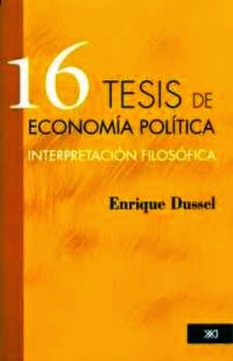 A propósito de las 16 tesis de economía política
Enrique Dussel, 2014, 16 tesis de economía política. Interpretación filosófica, Siglo XXI, México (Filosofía).
Se pregunta el escritor inglés John Berger en uno de los artículos que componen su libro Con la esperanza entre los dientes ¿Por qué hay gente que no quiere hacerle caso a Marx, si fue él quien analizó y profetizó la devastación que vivimos ocasionada por la lógica de la ganancia? La respuesta que da me parece recoge el sentido del libro que reseño en esta ocasión: “La respuesta sería que la gente, mucha gente, ha perdido sus coordenadas políticas. Sin mapa alguno, no sabe a dónde se dirige” (Berger 2006, 89). Las 16 tesis de economía política de Dussel pretenden ser una brújula que oriente a los viajeros en su camino y que puedan llegar a su meta, la gestación de una sociedad futura, como lugar incierto:
La brújula en el presente impide ir ‘zigzagueando’, retornando, contradiciéndose permanentemente en el camino. Permite avanzar a pesar de que nadie pueda saber a qué tierra prometida llegará, pero se encaminará con seguridad porque existen los criterios y principios que permiten optar en cada decisión e ir iluminando parcialmente cada paso (Dussel 2014, 267).
Emprender este viaje se vuelve necesario, hoy más que nunca, cuando la aguda crisis económica que estamos viviendo de 2008 a la fecha, ha sobre pasado los límites económicos y se muestra como una crisis de la civilización en su conjunto. Las dimensiones de lo social que han sido afectadas por esta crisis son múltiples, aunque, cabe decir que, no todas ellas tienen el mismo origen, sino que se han recrudecido con este proceso: la dimensión medioambiental, la dimensión energética, la dimensión alimentaria, la dimensión política, la dimensión bélica. En suma tenemos una crisis multidimensional que vista en su conjunto es una catástrofe civilizatoria inédita (Bartra 2013, 25-71). Estamos pues en medio de una encrucijada histórica en donde es necesario contar con una brújula que nos de pistas de donde caminar. Leer más…
Introducción al texto “Contribución a la crítica de la economía política introducción [1857] y prólogo [1859]”: Mario Espinoza Pino
 “La cruda contemplación de la gran convulsión de los intereses
materiales que sacuden ahora Europa, desde Gibraltar a Moscú y
desde Glasgow a Constantinopla, nos asombra, y cuán inmensamente
ramificadas están las relaciones de Europa con el resto del mundo
habitado, ¡por no hablar de nuestro propio país! Incalculables son de
hecho los efectos que lo ya ocurrido debe indefectiblemente producir
sobre aquel intercambio colosal de las producciones de continentes
remotos, a través de mares sin fronteras en su comercio con aquel
gran foco de la industria y la civilización, Europa. Con Londres como
su gran centro, el comercio mundial se extiende como los delicados
hilos de una tela de araña desde el escondrijo tubular del monstruo en
miniatura”.
Carta anónima al editor del The New York Times, 12 de diciembre de 1857
La Contribución a la crítica de la economía política—editada por Franz Duncker en junio de 1859— pretendía ser el fruto de la investigación económica de largo aliento que Karl Marx había emprendido durante los últimos quince años de su vida; una época plagada de dificultades económicas, conflictos políticos y exilio que llevaron a Marx y a su familia desde París —atravesando Bruselas y Colonia— hasta la miseria del Soho londinense. En Alemania e Inglaterra los círculos comunistas, animados por la gran crisis comercial iniciada a mediados del 57, aguardaban con impaciencia el último escrito de Marx, pues suponían sería la obra más importante de un autor que había dado ya, entre otros frutos, textos de enorme vigor como El Manifiesto Comunista —magistral conciencia crítica de un tiempo y de sus límites—, Trabajo asalariado y Capital o La lucha de clases en Francia. Obras que, unidas a una carrera periodística de gran talento en el New York Tribune, la Neue Oder Zeitung o el People’s Paper, habían puesto al descubierto las contradicciones y desigualdades sociales sobre las que se sustentaba la explotación capitalista, dibujando al margen de la opulencia y la riqueza los rostros anónimos de los desheredados que soportaban el peso del progreso y la civilización. Sin embargo, y a pesar de lo esperado de la publicación, la Contribución pasó desapercibida para la mayor parte de la crítica internacional. Y es que a pesar del esfuerzo sintético que Marx llevo a cabo en la obra y de volcar sobre ella una implacable erudición económica, ésta acabó re-velándose como demasiado abstracta, fragmentaria e incapaz de abordar lo que parecía proponerse como objeto: el capital. El hecho de que Marx retrasase la publicación de un segundo fascículo que iba a tratar explícitamente sobre la formación del capital, y que —a pesar de la insistencia de Duncker en publicarlo— éste al final no viese jamás la luz, hizo aún más patentes las insuficiencias de una obra que concluía justo en el punto en que quizá debiera haber empezado: la transformación del dinero en capital. Leer más…
Reading Marx’s Capital with David Harvey

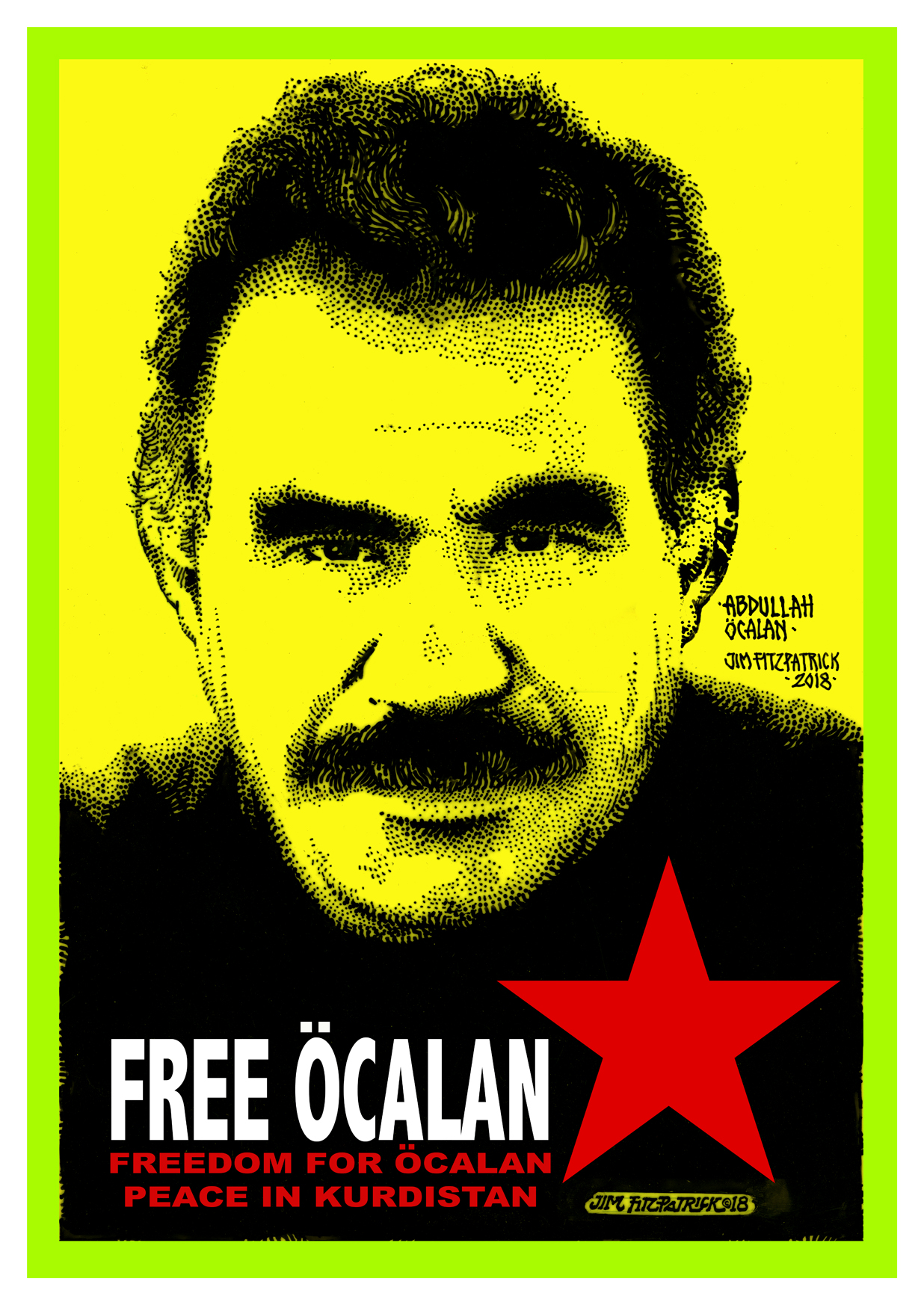
Free Öcalan


Fundación Infancia y Aprendizaje

Colección de libros Marxismo Crítico

Historical Materialism


CIPEC (Centro de Investigación en Pensamiento Crítico)

Centro para la Investigación como Crítica Práctica

Memoria Revista de Crítica Militante

Revista Laberinto






Marx desde cero





 marxismocritico.com