
 Thomas Goes: ¿Por qué deberíamos estudiar hoy el trabajo de Nicos Poulantzas, un teórico que murió hace casi 40 años? Dicho de otro modo, ¿qué pueden lxs activistas, las organizaciones y lxs cuadrxs políticos de la izquierda anticapitalista aprender de sus escritos que pueda ser útil, incluso necesario para construir una izquierda fuerte y prometedora?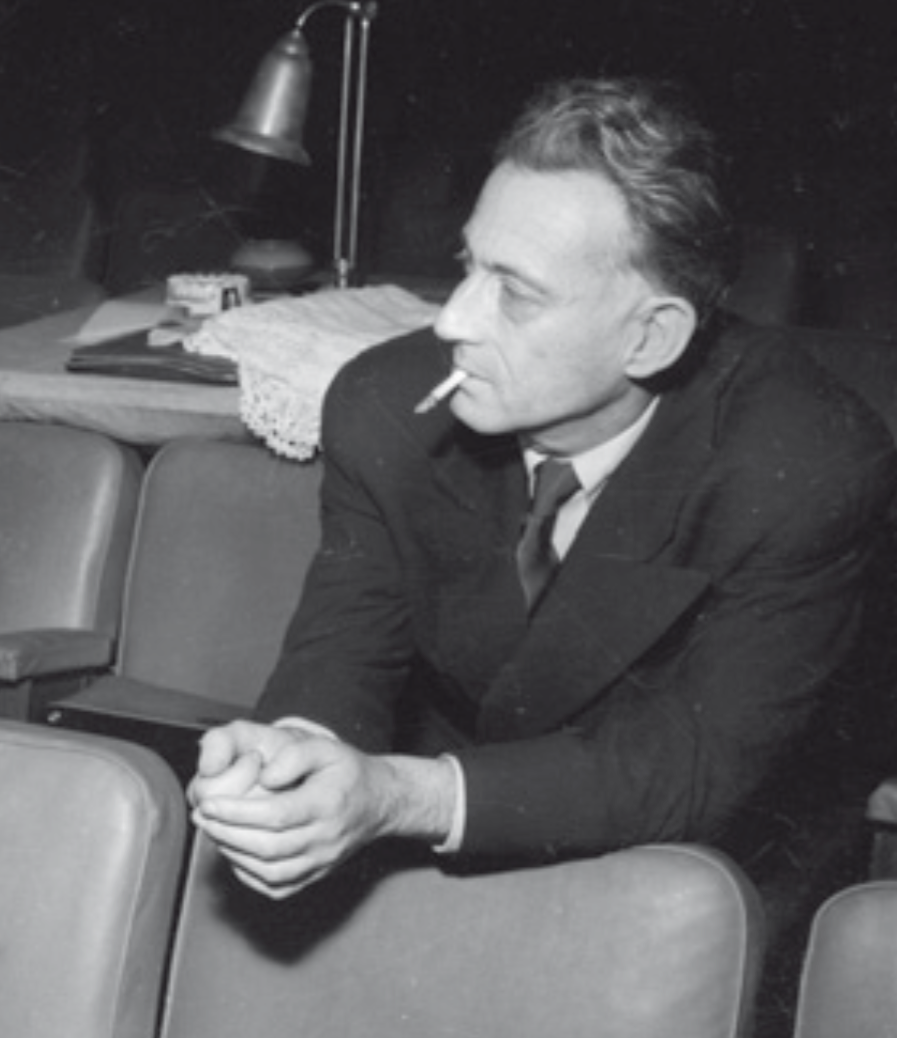


 I. Introducción al problema
 El pasado 14 de enero murió la historiadora, politóloga y filósofa marxista Ellen Meiksins Wood, una de las personalidades intelectualmente más fértiles y sólidas del pensamiento socialista de las últimas décadas. Nació en Nueva York (1942), en el seno de una familia de emigrantes judío-letones en la tradición socialista del
  Demokratie gegen Kapitalismus
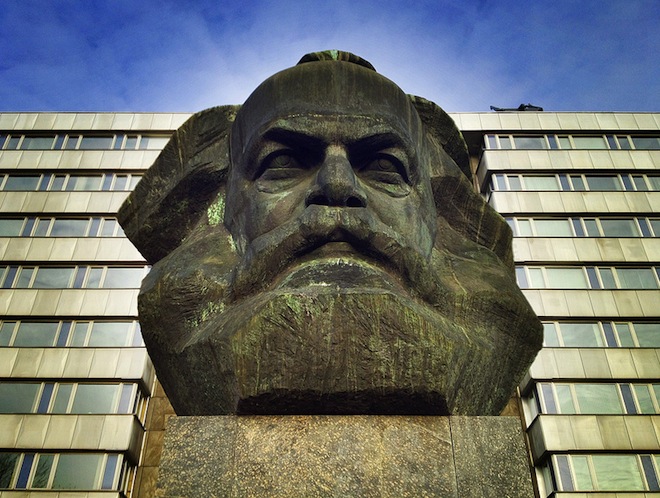 The objective of the following observations is to offer a rough overview of central ways of reading Marx’s theory. These are to be presented – by means of a few selected topics – as Marxisms that can be relatively clearly delimited from one another, and the history of their reception and influence will be evaluated with regard to the common-sense understanding of “Marxist theory.”
A distinction will be made between the hitherto predominant interpretation of Marx, primarily associated with political parties (traditional Marxism, Marxism in the singular, if you will), and the dissident, critical forms of reception of Marx (Marxisms in the plural), with their respective claims of a “return to Marx.” The first interpretation is understood as a product and process of a restricted reading of Marx, in part emerging from the “exoteric” layer of Marx’s work, which updates traditional paradigms in political economy, the theory of history, and philosophy. Systematized and elevated to a doctrine by Engels, Kautsky, et al, it succumbs to the mystifications of the capitalist mode of production and culminates in the apologetic science of Marxism-Leninism. The other two interpretations, specifically Western Marxism as well as the German neue Marx-Lektüre (“new reading of Marx”), usually explore the “esoteric” content of Marx’s critique and analysis of society, often consummated outside of institutionalized, cumulative research programs, by isolated actors in the style of an “underground Marxism.”
In order to characterize both ways of reading, some strongly truncated theses, limited to a few aspects, must suffice. In particular the ambitious proposition, first formulated by Karl Korsch, of an “application of the materialist conception of history to the materialist conception of history itself” – one that goes beyond the mere presentation of intellectual history, towards an immanent theoretical critique that critically considers the connection between historical forms of praxis and theoretical formations of Marxism – cannot be carried out here. In addition, a consideration of those readings which are critical of Marx or Marxism can also be disregarded here, insofar as their picture of Marx usually corresponds to that of traditional Marxism.
I therefore begin with the hegemonic interpretative model of traditional Marxism, and only at the end of my presentation will I conclude with a few positive determinations of what I regard as the fundamental systematic intention of Marx’s work. I do this primarily because a differentiated reading of Marx’s work can only be gained in the course of the learning processes of Western Marxism and the neue Marx-Lektüre. Leer más…

 Conferencia pronunciada en el Foro Internacional “El capitalismo tardío, su fisonomía socio-política en los albores del siglo XXI”, 20-22 de mayo de 2015, Lausana, Suiza (

 Una entrevista de la Videoteca de Pensamiento Marxista en la que Rubén Zardoya responde a preguntas sobre la esencia del Estado, su carácter de clase y su transformación en procesos revolucionarios.
 La obra intelectual de Nicos Poulantzas está marcada por lo que podríamos denominar como una trágica paradoja. Él fue un marxista que pensó su época desde la perspectiva de la revolución, en un momento en el que los procesos revolucionarios se clausuraban o habían derivado en la restauración anómala de un capitalismo estatalizado. Sin duda, fue un marxista heterodoxo brillante y audaz en sus aportes sobre el camino hacia el socialismo, en un tiempo en el que justamente el horizonte socialista se derrumbaba como símbolo y perspectiva movilizadora de los pueblos.





















 marxismocritico.com