
 Aún a riesgo de parecerle ridículo, déjeme decirle
 SINOPSIS: La herencia dialéctica como una de las fuentes y las partes integrantes del marxismo y EL CAPITAL. De Heráclito y Demócrito a Protágoras y Epicuro. De Giordano Bruno, Goethe y Shakespeare a Kant y Hegel. El marxismo revolucionario y su recuperación de la sabiduría, la filosofía, el humanismo, la dialéctica y las grandes preguntas de la historia de las culturas y la humanidad. Los vídeos de la serie MEMORIA DEL FUTURO de BRANCALEONE FILMS
  Intervención de Adolfo Sánchez Vázquez en el Congreso «Materialismo histórico y teoría crítica» desarrollado en septiembre de 2002 en la UCM.
 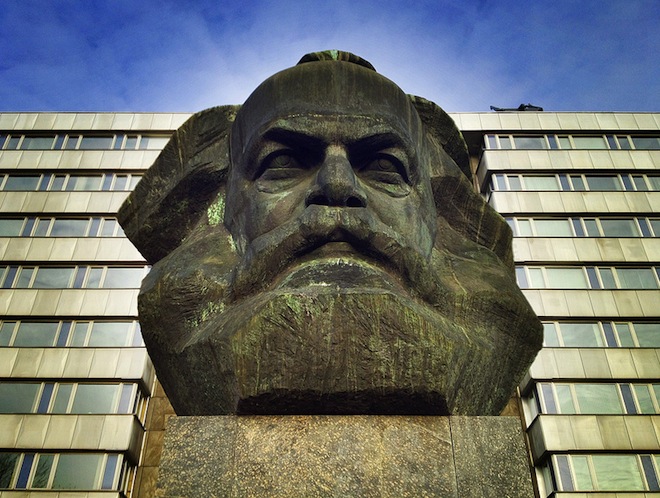 The objective of the following observations is to offer a rough overview of central ways of reading Marx’s theory. These are to be presented – by means of a few selected topics – as Marxisms that can be relatively clearly delimited from one another, and the history of their reception and influence will be evaluated with regard to the common-sense understanding of “Marxist theory.”
A distinction will be made between the hitherto predominant interpretation of Marx, primarily associated with political parties (traditional Marxism, Marxism in the singular, if you will), and the dissident, critical forms of reception of Marx (Marxisms in the plural), with their respective claims of a “return to Marx.” The first interpretation is understood as a product and process of a restricted reading of Marx, in part emerging from the “exoteric” layer of Marx’s work, which updates traditional paradigms in political economy, the theory of history, and philosophy. Systematized and elevated to a doctrine by Engels, Kautsky, et al, it succumbs to the mystifications of the capitalist mode of production and culminates in the apologetic science of Marxism-Leninism. The other two interpretations, specifically Western Marxism as well as the German neue Marx-Lektüre (“new reading of Marx”), usually explore the “esoteric” content of Marx’s critique and analysis of society, often consummated outside of institutionalized, cumulative research programs, by isolated actors in the style of an “underground Marxism.”
In order to characterize both ways of reading, some strongly truncated theses, limited to a few aspects, must suffice. In particular the ambitious proposition, first formulated by Karl Korsch, of an “application of the materialist conception of history to the materialist conception of history itself” – one that goes beyond the mere presentation of intellectual history, towards an immanent theoretical critique that critically considers the connection between historical forms of praxis and theoretical formations of Marxism – cannot be carried out here. In addition, a consideration of those readings which are critical of Marx or Marxism can also be disregarded here, insofar as their picture of Marx usually corresponds to that of traditional Marxism.
I therefore begin with the hegemonic interpretative model of traditional Marxism, and only at the end of my presentation will I conclude with a few positive determinations of what I regard as the fundamental systematic intention of Marx’s work. I do this primarily because a differentiated reading of Marx’s work can only be gained in the course of the learning processes of Western Marxism and the neue Marx-Lektüre. Leer más…
 En un artículo para The Prime Russian Maganize (en su edición sobre el Marxismo), el poeta Alexei Tsvetkov escribió este retrato de Évald Iliénkov, el último Marxista Soviético y una de los más grandes y originales pensadores de la Unión Soviética. Tsvetkov nos ofrece un retrato de una figura realmente única cuyas obras merecen ser releídas y traducidas, pero también un retrato poco habitual de los tiempos y la atmósfera en la que vivió.
 Homenaje al pensador marxista Adolfo Sánchez Vázquez en la Universidad Nacional Autónoma de México (UNAM), septiembre de 2015. Intervención de Néstor Kohan. Se puede leer la ponencia escrita en:
  El filósofo hispanomexicano nació en algeciras en 1915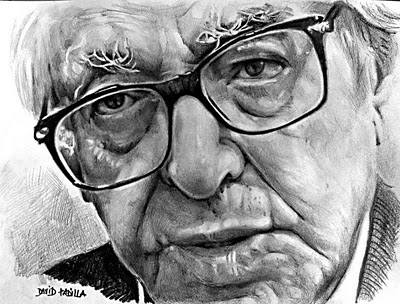
 Filosofía y política en “Materialismo y empiriocriticismo”
 Recensión de tres libros: Mind in Society: The development of Higher Psychological Processes de L. S. Vygotsky, editado por Michael Cole, Vera John-Steiner, Sylvia Scribner y Ellen Souberman, Harvard University Press. The Psychology of Art, de L. S. Vygotsky, M.I.T. Press. Soviet Developmental Psychology: An Anthology, editado por Michael Cole, M.E. Sharpe.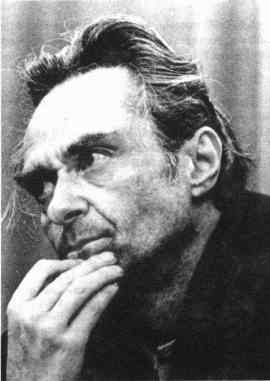

 Palabras pronunciadas en la presentación del libro de Carlos Pereyra, El sujeto de la historia (Alianza Editorial, Madrid, 1984) el 17 de Julio de 1985 en la Facultad de Filosofía y Letras de la UNAM.


















 marxismocritico.com