
Archivo
«The Limits to Capital»: David Harvey
 A major rereading of Marx’s critique of political economy, newly updated.
The Limits to Capital provides one of the best theoretical guides to the history and geography of capitalist development. In this new edition, Harvey updates his classic text with a substantial discussion of the turmoil in world markets today.
«Plusvalía extraordinaria y acumulación de capital»: Ruy Mauro Marini
 «La especial productividad del trabajo en una esfera especial de la producción o en una empresa concreta dentro de ella sólo interesa a los capitalistas de esta empresa o rama de producción, cuando permita a la rama especial de que se trate conseguir una ganancia extraordinaria con respecto al capital en su conjunto o conceda esta misma posibilidad al capitalista individual con respecto a los demás capitalistas de la misma rama de producción«. Marx, El Capital, III.
«A esta confusión —determinación de los precios por la oferta y la demanda por los precios— hay que añadir que la demanda determina la oferta y ésta, a su vez, la demanda o, lo que es lo mismo, que la producción determina el mercado, a la par que el mercado determina la producción«. Marx, El Capital, III.
En el curso de esta década, y en abierto contraste con la política represiva que, con raras excepciones, adoptaron los Estados en el campo científico y cultural, el marxismo ha tenido una notable difusión en los medios intelectuales y académicos latinoamericanos. Esto ha llevado a que, con mayor o menor grado de ortodoxia, los estudios realizados, desde el punto de vista de diferentes disciplinas, sobre la realidad de nuestros países incorporen en grado creciente el instrumental de análisis marxista. Esta incorporación es en sí misma un proceso, que presenta, de manera progresiva, un doble carácter: un mejor conocimiento de la obra de Marx y de las corrientes que de ella se han derivado, por un lado, y, por otro, un enriquecimiento de la representación formal de la realidad latinoamericana, en la medida en que, por obra de su propio desarrollo, las características y tendencias que le son inherentes a ésta se hacen más acusadas. Así, en economía, tras un rechazo airado a toda preocupación respecto a los problemas de la circulación y un sesgo productivista que correspondía al enfoque parcial con que Marx aborda los problemas en el primer libro de El Capital, se asiste ahora a un esfuerzo de los marxistas por aprehender el conjunto del ciclo económico, con lo que adquiere nuevo interés la dialéctica entre producción y circulación, que constituye el objeto de los dos primeros libros de la obra. Ello conduce a que aún estudios no marxistas, acostumbrados a enfocar la problemática económica desde el ángulo de la demanda tiendan a introducir también en sus trabajos aspectos del instrumental marxista.
«Fundamentos y límites del capitalismo»: Louis Gill
 Un análisis de la realidad del capitalismo a partir de la teoría marxista y desde el nuevo contexto planteado tras los acontecimientos históricos que han sacudido a los países de Europa central y oriental desde 1989.
El autor sitúa en primer lugar al pensamiento marxista en la evolución general del pensamiento y se ocupa de mostrar su pertinencia para la comprensión de los sucesos de nuestra época. Analiza los fundamentos del capitalismo y plantea la cuestión de sus límites, al tiempo que se interroga sobre la aptitud real de este régimen para resolver los problemas que se le plantean a la humanidad: precariedad laboral, crecimiento del desempleo, extensión de las desigualdades, militarismo, privatizaciones, dificultades económicas crecientes a pesar de la continua mejora de los medios técnicos, etc. El método utilizado es el que Marx desarrolla en su obra y en su trabajo mejor conocido, «El capital», método que aquí se expone sistemáticamente.
«The Political Economy of U.S. Output and Employment 2001–2010»: Duncan Foley
 Abstract
Service industries such as Finance, Insurance, and Real Estate, Education and Health Services, and Professional and Business Services, for which value added is imputed from incomes, are included in Gross Domestic Product, distorting measures of recession and recovery. An alternative index, Narrow Measured Value Added, which excludes all services, has similar historic correlations with employment to GDP, and tracks employment in recent business cycles better. The U.S. economy as measured by NMVA has a lower long-term real rate of growth. Long-term macroeconomic policy requires attention to some version of the productive-unproductive labor distinction of the classical political economists.
Keywords: GDP, imputation, productive and unproductive labor, 2007-8 crisis
«Some reflections on the dependence of prices on Labour-Values»: Diego Guerrero
 Resumen
Con frecuencia se cree, de una manera bastante esquizofrénica, que una teoría del valor solo debe resolver la cuestión de los “precios relativos” (un problema microeconómico), siendo principalmente la teoría del dinero de la pieza necesaria para la determinación monetaria o del nivel absoluto de los precios (un problema macroeconómico). Por una parte, la determinación del nivel de precios se encuentra teóricamente antes de cualquier consideración del mercado de dinero, mientras que por otro lado ninguna teoría del valor puede aspirar a ser completa sin la determinación del nivel absoluto de los valores. Se verá en este trabajo que sólo la teoría del valor trabajo (TVL) puede realizar ambas tareas, produciendo así la integridad y la unidad de la teoría económica.
Palabras clave: teoría del valor trabajo, precios relativos, valores absolutos.
«Reading Marx’s Capital Vol II – Class 1, Introduction»: David Harvey
 This is the first class of a free semester-long open course consisting of a close reading of the text of Marx’s Capital Volume II (plus parts of Volume III) in 12 video lectures by Professor David Harvey. David Harvey is a Distinguished Professor at the CUNY Graduate Center in the Anthropology and Geography PhD programs. This course was taught at Union Theological Seminary in Spring 2011, and was attended by graduate students and activists from across New York City.
«The Formation of Marx’s Critique of Political Economy: From the Studies of 1843 to the Grundrisse»: Marcello Musto
 Introduction
Despite the predictions that consigned it to eternal oblivion, Marx’s work has returned to the historical stage in recent years and a number of his texts have reappeared on bookshop shelves in many parts of the world. The rediscovery of Marx is based on the explanatory capacity still present in his writings. Faced with a new and deep crisis of capitalism, many are again looking to an author who in the past was often wrongly associated with the Soviet Union, and who was too hastily dismissed after 1989.
This renewed political focus was preceded by a revival of historical studies of his work. After the waning of interest in the 1980s and the “conspiracy of silence” in the 1990s, new or republished editions of his work became available almost everywhere (except in Russia and Eastern Europe, where the disasters of “actually existing socialism” are still too recent for a Marx revival to be on the agenda), and these have produced important and innovative results in many of the fields in which they blossomed.1
«Marx y la finanza: una aproximación actual» Michel Husson
 Los capítulos del Capital que Marx ha dedicado a lo que se llamaría en la actualidad la “finanza” contienen los elementos teóricos que pueden completamente ser utilizados para entender la crisis actual1. Probablemente han sufrido de haber permanecido en estado de borradores, cuya lectura es frecuentemente ingrata. Constituyen, sin embargo, un eslabón esencial entre el análisis más abstracto del capitalismo y la toma en consideración de elementos de su funcionamiento concreto.
«Realisation in Marx’s Theory of Value: A Reply to Kincaid»: Ben Fine and Alfredo Saad-Filho
 Abstract
In a review of our work, Kincaid suggests that we are ‘productivist’, reducing interpretation of Marx and capitalism to production at the expense of the relatively independent role that can be played by the value-form in general and by the money-form in particular. In response, we argue that he distorts interpretation of our work through this prism of production versus exchange, unduly emphasises the independence of exchange to the point of underconsumptionism, and simplistically collapses the mediation between production and exchange in the restructuring that accompanies the accumulation of capital.
Keywords: Marx, capital, profit, composition of capital, money, value theory, Kincaid
«Capital in general and the structure of Marx’s Capital»: Michael Heinrich
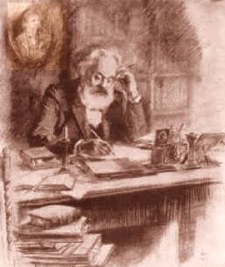 ROMAN ROSDOLSKY’S The Making of Marx’s Capital (1977), originally published in 1968, exercised a considerable and lasting sway over the debate on Capital in West Germany which began in the wake of the student movement . Although interpretations based on Rosdolsky’s approach had the merit of undermining economistic and positive readings of Capital, this was frequently at the cost of a philosophical obfuscation of the social and economic substance of Marx’s critique of political economy . Capital, so it would seem had to be read through two sets of spectacles,’ the first consisting of certain understandings of the dialectical presentation from Hegel’s Logic, and the second of a number of methodological ideas from the Grundrisse, especially Rosdolsky’s elaboration of the concept ‘capital in general’ . Ironically, the ebbing away of debate about Capital with the break-up of the student left in the mid 1970s, coincided with the first publication of many of the manuscripts which formed the immediate preparatory work to Capital, as well as better edited versions of already familiar manuscripts, in the shape of the new complete Marx-Engels edition, the Marx-Engels Gesamtausgabe (MEGA) .
Leer más…
«The four levels of abstraction of Marx’s concept of ‘Capital'»: Roberto Fineschi
 1. Introduction
Marx began to work out his own theory of capital in the fifties and particularly in the Manuscripts of 1857/58 (generally known as Grundrisse). Philological results have shown that, before, his analysis was still linked to Ricardo’s – in the Misery of Philosophy although already with important exceptions1 – or only faced problems at the “surface” – he studied e.g. different monetarist schools at the beginning of the fifties – but without coming to an independent organic outline of the matter. The process of research continued in the Manuscripts of 1857/58 as well, but there, it went together with the beginning of the exposition, or presentation.
While writing this manuscript, Marx defined progressively the structure of the whole “capital”, setting out a process that, however, did not finish with the Grundrisse. Relevant parts of the theory were changed or improved in Manuscripts of 1861/63, above all as regards the central concepts of market values and production prices, and in Manuscripts of 1863/65, where we have the only extensive exposition of credit and bank system. Moreover we could consider as well, that a proper terminological and conceptual distinction among value, use value, and value form as part of the framework representing the real starting point of his theory – the commodity – is reached only in the second German edition of Capital Book I (1872), even if this had been latently present since the Manuscripts of 1857/58.
Leer más…
«The quantitative determination of abstract labour and values»: Diego Guerrero
 Abstract
In this paper we show first of all how to calculate the magnitude of the vector of labour values without having recourse previously to the vector of direct (abstract or concrete) labour that is usually considered as a necessary condition for it. We show that, apart from its total volume, which is supposed here to be equal to the total volume of concrete labour, the magnitude of direct abstract labour per unit of commodity is not needed for the calculation of values, either as one of the ingredients of value (to be added to a second ingredient: the amount of indirect abstract labour embodied in the means of production) or as a “coefficient of labour” that becomes value once vertically integrated. We will show then, beginning from unit values, how to compute the vector of abstract labour, both per unit of output and as a fraction of total labour, and their respective “coefficients of reduction” by means of which they can be considered a multiple of the quantities of concrete labour. Both things are discussed at the theoretical level and also by means of a numerical example that helps to understand the implications of the new definitions. The main implication is that, though “physical” data suffice to determine the vector of “relative” values (or any of their infinite multiples), labour is not redundant for a theory of value because the latter requires the determination of “absolute” values as a unique vector, for which the magnitude of total labour expended is needed.
As a second aim of the paper, we intend to show that Rubin’s ideas on both the
qualitative and quantitative determination of abstract labour and the role of exchange, demand, and social need in the quantitative definition of values—ideas that have often been misunderstood—are a necessary presupposition of the modern, correct quantification of abstract labour and value.
» ‘Financiarización’, o la búsqueda de beneficios en la esfera de la circulación»: Costas Lapavitsas
 La financiarización de las economías capitalistas avanzadas durante las últimas tres décadas representa la expansión en la esfera de la circulación, mientras la esfera de la producción ha continuado enfrentándose a dificultades en el crecimiento de la rentabilidad y la productividad. En el transcurso de la financiarización las relaciones entre el capital industrial/comercial, los bancos y los trabajadores se han reconfigurado en perjuicio de estos últimos. El sector financiero ha conseguido extraer beneficios directamente del capital industrial/comercial y de los salarios, un proceso denominado «expropiación financiera». Las instituciones financieras se han hecho adeptas a la obtención de beneficios procedentes de la intermediación de transacciones en mercados financieros abiertos, esto es, la banca de inversión. La combinación de la expropiación financiera y la banca de inversión son los catalizadores de la crisis que comenzó en 2007.
Ekonomia kapitalista aurreratuen azken hiru hamarkadetako finantzarizazioak zirkulazioaren eremuan izandako hedapena azaltzen du; aldiz, ekoizpenaren eremuak errentagarritasunaren eta produktibitatearen hazkuntzan egondako zailtasunei aurre egiten jarraitu du. Finantzarizazioa egon bitartean, kapital industrial/komertzialaren, bankuen eta langileen arteko harremanak azken horien kalterako birkonfiguratu dira. Finantza-sektoreak zuzenean eskuratu ahal izan ditu onurak kapital industrial/komertzialetik eta soldatetatik; prozesu horrek «finantza-desjabetzea» du izena. Finantza-erakundeak finantza-merkatu irekietako transakzioen bitartekotzatik —hau da, inbertsio-bankutik— eratorritako onurak eskuratzearen jarraitzaile egin dira. Finantza-desjabetzearen eta inbertsio-bankaren nahasketa da 2007an hasi zen krisiaren katalizatzailea.
«La categoría marxista del trabajo productivo»: Reinaldo Carcanholo
1. Introducción
Este es el primer resultado, en muchos sentidos preliminar, de la investigación que iniciamos sobre la categoría del trabajo productivo. La intención de divulgar estas conclusiones provisionales es encontrar una colaboración adicional de colegas en el estudio del tema y estimular una mayor discusión sobre este asunto en el ámbito académico y, en particular, entre los participantes de nuestra asociación, la SEP (Sociedade Brasileira de Economia Politica). El objetivo de la investigación no es sólo esclarecer la perspectiva de Marx sobre el tema , expresada en diferentes textos suyos, sino avanzar (dentro de lo posible) en la precisión de la categoría, de manera coherente con nuestra particular interpretación de la teoría marxista del valor y sin violentar la perspectiva general de Marx .
En una primera aproximación, pocos dudarían en afirmar que, para la teoría marxista, trabajo productivo es aquel que produce plusvalía . Lo que significa que es indispensable que se trate de trabajo asalariado y que la fuerza de trabajo sea comprada por el capital; tiene que ser explotada directamente por el capital.
«The Fallacies of ‘New Dialectics’ and Value-Form Theory»: Guglielmo Carchedi
 Abstract
Chris Arthur’s approach aims at a systematic re-ordering of Marx’s categories. Th is article argues that his approach is actually a different ordering of different categories that are positioned within a specifi c theoretical whole, a Hegelian re-interpretation of Marx and especially of abstract labour, which distances itself from Marx. While the debate has focused mainly on the philosophical aspects of Arthur’s work, its economic features have not been the object of a systematic analysis. Yet, a full assessment of the ‘New Dialectics’ should include explicitly a systematic internal critique of its economic dimensions. The aim of this article is to assess the internal consistency of the economic ramifications of the ‘New Dialectics’. Th e focus is on the notions of abstract labour, concrete labour, and exploitation. Arthur’s faithfulness to Marx, or correspondence to Marx’s quotations, is not the criterion used to assess the ‘New Dialectics’. Rather, the criterion is whether it (a) discovers logical inconsistencies in Capital and (b) is itself free from inconsistencies. The answer is negative in both cases.
Keywords: abstract labour, value-form theory, dialectics
Reading Marx’s Capital with David Harvey

Free Öcalan



Fundación Infancia y Aprendizaje

Colección de libros Marxismo Crítico

Historical Materialism


CIPEC (Centro de Investigación en Pensamiento Crítico)

Centro para la Investigación como Crítica Práctica

Memoria Revista de Crítica Militante

Revista Laberinto






Marx desde cero





 marxismocritico.com