
Archivo
«Seasons of self-delusion: opium, capitalism and the financial markets»: Jairus Banaji
 The Isaac and Tamara Deutscher Memorial Prize Committee, in conjunction with Historical Materialism, present the 2012 Deutscher Memorial Lecture
Jairus Banaji
“Seasons of self-delusion: opium, capitalism and the financial markets»
«Un nuovo Marx. Filologia e interpretazione dopo la nuova edizione storico-critica (MEGA2)»: Roberto Fineschi
 Introduzione
«Commodity Fetishism vs. Capital Fetishism»: Dimitri Dimoulis and John Milios
 Abstract
In Marx’s analysis of the Capitalist Mode of Production and more precisely in his theory of value, the key to decipher the capitalist political and ideological practices and structures is to be found. In this context, many Marxists believed that the analysis of “commodity fetishism” in Section 1 of Volume 1 of Capital renders the basis for understanding ideological domination and political coercion under the capitalist rule. The authors argue, that “commodity fetishism” is only a preliminary notion, which allows Marx to arrive, in subsequent Sections of Capital, at the concept of the “fetishism of capital”.
1. Introduction
From the days of his youth Marx was familiar with the statements of ethnographers on the subject of fetishism and used the term in his own writings.1 Equally important was in this context the influence of Hegel.
In this paper we are not going to deal with the different meanings that the notion of fetishism acquires at different points of Marx’s work, an issue which is related to the various concepts of fetishism in political economy, political philosophy and the social sciences.3 We will focus on the analysis of commodity fetishism, in an effort to contribute to the comprehension of the different dimensions of this concept, especially in Marx’s Capital. For this purpose, we will pursue the following course: At the beginning we are going to present various Marxist approaches to the subject. Subsequently, we are going to read these approaches in the light of Marx’s analysis. In this way we will attempt to investigate if and to what extent the notion of fetishism has itself attained a fetishist function within Marxism, creating inversions, transpositions and misinterpretations, and what is actually its significance in the framework of the Marxist approach to ideology.
«Pour lire Le Capital»: David Harvey
Mon but est de vous amener à lire le livre I du Capital, à le lire tel que Marx voulait qu’il soit lu 1. Cette entreprise peut paraître ridicule, puisque si vous n’avez pas lu cet ouvrage, il vous est impossible de connaître les intentions de Marx. Or je peux vous assurer qu’il souhaitait être lu vraiment et attentivement. Tout véritable apprentissage implique un effort pour comprendre l’inconnu. La lecture du Capital proposée dans ce livre se révélera d’autant plus éclairante que vous aurez préalablement lu les chapitres traités.
C’est pourquoi je voudrais vous encourager à vous frotter directement au texte de Marx, pour que vous puissiez vous faire votre propre idée de sa pensée. Cela soulève d’emblée une difficulté. Tout le monde a entendu parler de Karl Marx, tout le monde a entendu les mots « marxisme » et « marxiste », qui possèdent toutes sortes de connotations : vous avez donc forcément des idées préconçues et des préjugés – favorables ou non. Je vous demanderai cependant de commencer par mettre de côté, autant que possible, ce que vous croyez savoir de Marx, afin de pouvoir entendre ce qu’il a réellement à dire.
«Developing Realistic Methodology: How New Dialectics Surpasses the Critical Realist Method for Social Science»: Andrew Brown
 ABSTRACT
This paper argues that ‘new dialectics’ provides an adequate methodology for economics and social science. The argument is advanced via a critique of ‘critical realism’, an important rival to new dialectics. Critical realism holds that the root mistake underlying orthodox methodology, termed the ‘epistemic fallacy’, is a failure to sustain adequately the distinction between ontology and epistemology, resulting in the relative neglect of ontology. By overcoming the fallacy, critical realism claims to provide an adequate methodology for economics and social science. The paper argues that critical realism goes too far in the opposite direction to the epistemic fallacy. Critical realism neglects the intrinsic links between ontology and epistemology so fails to provide an adequate methodology. However, critical realism must not, according to the argument, simply be rejected in toto if an adequate methodology is to be achieved. Instead it must be surpassed or transcended. The recent resurgence of a ‘new dialectics’ is argued to provide just such a supersession because new dialectics affirms the intrinsic links between ontology and epistemology without reducing the former to the latter. The implications of this transcendence are illustrated via a comparison of the respective interpretations of Marx’s Capital offered by critical realism and new dialectics
«O Mundo do Trabalho no Século XXI»: Ricardo Antunes
 O Roda Viva recebeu, no dia 3 de setembro, Ricardo Antunes, um dos mais destacados sociólogos marxistas da atualidade, cujos estudos se direcionam para o tema trabalho e suas novas formas de relação dentro do mundo capitalista contemporâneo. Com as mudanças relativamente recentes no sistema de trabalho, que vão desde a terceirização de serviços, o aumento na procura pelos concursos públicos, a contratação de PJs, o trabalho por tarefa até o uso de celulares e e-mails no trabalho, Ricardo analisou as transformações ocorridas nesse universo e as consequentes implicações nos planos social e político.
Ricardo Antunes diz que enxerga uma precarização trabalhista mundial e alerta para uma possível queda no trabalho formal no Brasil. Segundo o estudioso, a precarização leva à terceirização – que já soma 10 milhões de trabalhadores no país. “Terceirização não é sinônimo de informalidade, mas se torna informal muito fácil. Há terceirização dentro da empresa e fora da empresa”. Um dos problemas decorrentes do trabalho terceirizado é o cumprimento dos direitos trabalhistas. “Há casos em que o trabalhador procura os seus direitos e a empresa já nem existe mais”. As pesquisas revelaram nos últimos anos um crescimento no emprego, no entanto Ricardo Antunes diz a realização desse tipo de coleta de dados é imprecisa. “Os dados são mascarados, mas ainda assim houve crescimento de trabalho”, reconhece.
«Socialism Without Markets: Democratic Planned Socialism»: Al Campbel
 I. INTRODUCTION
1. Two interrelated issues inform the debate between socialists who advocate Market Socialism and those who advocate socialism without markets, Democratic Planned Socialism (DPS).1 The first is if socialism without markets is feasible. David Schweickart, who calls his most left wing of all market socialist models “Economic Democracy,” flatly asserts: market socialism “is the only form of socialism that is, at the present stage of human development, … viable …” (1998: 10). From a logical point of view, one should as well consider the question of if market socialism is possible. In fact, a few advocates of socialism without markets have made that point, for example Bertell Ollman (1988) and David McNally (1993). By-in-large, however, this issue has not been included on the debate menu, while the question of the feasibility of socialism without markets has: advocates of socialism without markets have felt it necessary to defend their vision as feasible, while advocates of market socialism have not felt the same necessity. The second issue is, if both models are in fact possible, which would be more desirable.
«Is Marx’s Theory of Value Still Relevant?»: Alfredo Saad-Filho
 Abstract
This paper assesses the internal consistence of four views of Marx’s theory of value, the ‘traditional Marxism’ associated with Dobb, Meek and Sweezy, Sraffian interpretations of Marx, value-form theory (especially the Rubin tradition) and the ‘new interpretation’ of value theory. On the basis of a critique of these approaches, a class interpretation of this theory is outlined, in which value theory is structured in and through the primacy of class relations in capitalism. Finally, the potential relevance of the class interpretation of Marx’s value theory is briefly assessed in the light of contemporary political, economic and social problems.
The title of this paper is deliberately provocative, on at least three grounds. First, it implies that the ‘relevance’ of social theories needs to be assessed historically, and it may change as the subject of analysis is transformed over time. Second, it suggests that Marx’s theory of value may have been relevant in the past – perhaps when it was first developed, or maybe under what became known as competitive capitalism – but it may no longer be tenable in the phase of ‘global capitalism’. Third, if this is the case, what are critics of capitalism supposed to do? – is there another theory that may offer a similarly powerful denunciation of capitalism as Marx’s, with the same scientific rigour, and the same degree of commitment to the search for postcapitalist alternatives? It is impossible to address these issues in the confines of a single paper. This essay answers these questions unevenly and only partially, in three sections. The first reviews the strengths and shortcomings of different interpretations of Marx’s theory of value, the ‘traditional Marxism’ associated with Dobb, Meek and Sweezy, Sraffian interpretations of Marx, value-form theory (especially the Rubin tradition) and the ‘new interpretation’ of value theory. The second offers an interpretation of value theory based on the primacy of class relations. This interpretation is not entirely original, as it draws on an extensive literature developed over several decades.
«New Market Socialism: A Case for Rejuvenation or Inspired Alchemy?»: Dimitris Milonakis
I. INTRODUCTION
1. Socialism as a concept has its roots in the eighteenth century Enlightenment’s ideals of equality and co—operation, whereas the term itself was coined during the 1820’s. Throughout most of its history and certainly throughout the nineteenth and early twentieth century, from Karl Marx and Frederic Engels to the Fabians, the concept has been held to be synonymous with corporate planning in the context of common ownership of the means of production. As such, the essence of the concept has traditionally been based on a critique of capitalism as an exploitative class system and has correspondingly been hostile to both markets and private ownership (Hodgson, 1999b, ch.2).
2. Market socialism as a concept has a shorter history: its origins can be traced back to the calculation debate of the 1920’s and 1930’s. However, the basic idea associated with itto marry socialism with markets—is contemporaneous with the invention of the term ‘socialism’. Thus from Pierre Proudhon’s free association of small independent producers what Marx called ‘petty bourgeois socialism’ to John Stuart Mill’s sympathy with decentralised co—operative socialism, the idea has been to combine the efficiency of markets with the egalitarian goals of socialism. Having said this, it is also true that the idea of combining socialism with the market would be considered a contradiction in terms by most nineteenth century socialists (ibid).
«Vitali Vygodsky: un clásico del marxismo»: Jaime Ortega Reyna y Víctor Hugo Pacheco Chávez
 Resumen
El presente trabajo busca aportar elementos tanto biográficos como de análisis en torno a la obra del intelectual soviético Vitali Vygodsky. Dicho autor contribuyó, de manera decisiva, durante el siglo XX al esclarecimiento de los principales problemas de la teoría marxista y la crítica de la economía política. Su obra representa una renovada versión del marxismo en el seno del antiguo bloque socialista. El artículo rastrea datos biográficos, de la recepción de su obra e introduce un análisis sucinto de sus principales obras.
Palabras clave: marxismo, Unión Soviética, Vygodsky
Cuando alguien escucha pronunciar el apellido Vygodsky de inmediato puede evocar al gran psicólogo soviético Lev Semionoviche Vygotsky (1896-1934) que dedicó su vida a entender los problemas del lenguaje y el pensamiento. Sin embargo, en este artículo queremos referirnos a otro Vygodsky, que lleva por nombre Vytaly (o Vitali) Solomonovich y que fue uno de los máximos exponentes del marxismo desarrollado en la Unión Soviética. Desconocemos sí entre ambos personajes existió algún vínculo familiar. Lo que sí podemos afirmar con seguridad es que ambos tuvieron una afinidad intelectual electiva: el estudio, en muy distintas áreas del conocimiento, de la obra de Carlos Marx.
«Breaking away from Capital? Theorising activity in the shadow of Marx»: Peter E Jones
 Abstract
The paper reflects on the relationship between the understanding of human activity which Marx expresses in Capital and the theoretical model of activity offered by an influential contemporary variant of Activity Theory. The paper argues that this variant departs significantly from Marx’s conception of human activity and its role in what he calls the ‘labour process’. In particular, Activity Theory has failed to distinguish between the labour process and the valorization process, a distinction which is fundamental to Capital and to Marx’s theoretical and political perspective more generally. The paper also argues that this conceptual conflation is also evident in the theoretical discourse of the founders of the Activity Theory tradition. The paper goes on to consider the theoretical and practical implications of this departure from the method and conclusions of Capital.
«El fetichismo de la mercancía bajo su forma de «teoría de la crisis del trabajo abstracto»»: Juan Iñigo Carrera
 CICP
CICP
La convocatoria al presente coloquio se realiza bajo la invocación de «la crisis del trabajo abstracto». De modo que la discusión debería partir de contestar una pregunta elemental: ¿qué es el trabajo abstracto? Por supuesto, todo podría reducirse a una cuestión de definición, de la enunciación de un concepto, de una categoría. Pero, en el método dialéctico, las definiciones, los conceptos no constituyen el punto de partida.1 Al contrario, constituyen el punto en que cabe sintetizar bajo un nombre al desarrollo de las determinaciones realizadas en el concreto en cuestión.
Arranquemos, pues, tomando como nuestro concreto más simple al proceso de vida humano.
La unidad del proceso de metabolismo social establecida por la forma de valor, o sea, la mercancía como relación social general de los individuos libres
Como toda existencia viva, la vida humana es un proceso de metabolismo en el cual el sujeto gasta una porción de su propio cuerpo para apropiarse de su medio, reproduciéndose así como tal sujeto vivo. En la generalidad de las especies animales, el gasto de energía que realiza el sujeto a expensas de su cuerpo para apropiarse de su medio resulta comúnmente en la reproducción del cuerpo mismo del sujeto. El trabajo que éste realiza, en el sentido más genérico de gasto de energía dirigido a un fin, arroja de manera inmediata la apropiación del medio de vida. De manera que el animal sólo puede realizar esta apropiación de sus medios de vida si los encuentra a su alcance en la naturaleza. El modo general que tiene de ampliar este alcance es la mutación de su propio cuerpo, de manera de multiplicar las potencialidades de éste respecto de las de su medio natural. De ahí que la necesidad inherente a todo ser vivo de expandir su capacidad para apropiarse del medio sólo se ponga abiertamente de manifiesto frente a cambios críticos en éste, bajo la apariencia de tratarse de una necesidad que sólo puede ser puesta en marcha respondiendo a un estímulo exterior, o sea, como la necesidad de adaptarse al medio.
«Taller de lectura crítica de ‘El Capital’ de Karl Marx»: Coordinadores Juan Iñigo Carrera y Luis L. Denari
 Presentación
El alcance del trabajo de lectura y discusión propuesto apunta al logro de un doble objetivo por los participantes:
1. Seguir el curso desarrollado por Marx en el conocimiento del modo de producción capitalista, teniendo como eje el descubrimiento de su carácter histórico sintetizado en:
a. El capital como relación social materializada que se constituye en el sujeto enajenado del proceso de vida de la sociedad actual
b. Su necesidad de engendrar las condiciones materiales para su propia aniquilación a través de la construcción de la sociedad de los individuos libremente (o sea, conscientemente) asociados
c. la determinación de la clase obrera como el sujeto concreto de esta superación revolucionaria
«Financialisation, the Value of Labour Power, the Degree of Separation, and Exploitation by Banking»: Ben Fine
 Introduction
The emergence to some prominence of radical political economy from the mid-1960s for a decade or more witnessed significant debate over Marx’s value theory across committed Marxist economists, more sceptical but sympathetic heterodox economists, and also orthodox economists who tended to be dismissive if occasionally offering some admiration from the perspective of their own concerns (Marx as general equilibrium, growth or duality theorist). As a result, debate involved the nature and validity of value theory and its position within Marx’s and Marxist political economy as a whole. Over the past two decades, contributions from non- Marxists to value theory have fallen away considerably. This reflects both bad news and good news. The bad news is, of course, that the influence and presence of Marxist political economy has been in decline. The good news is that current debate itself is richer for having moved beyond, if not universally, whether Marx’s value theory is valid and to address how it is to be interpreted by those who have both knowledge of its finer points and wish to apply them to theoretical and empirical questions.
Reading Marx’s Capital with David Harvey

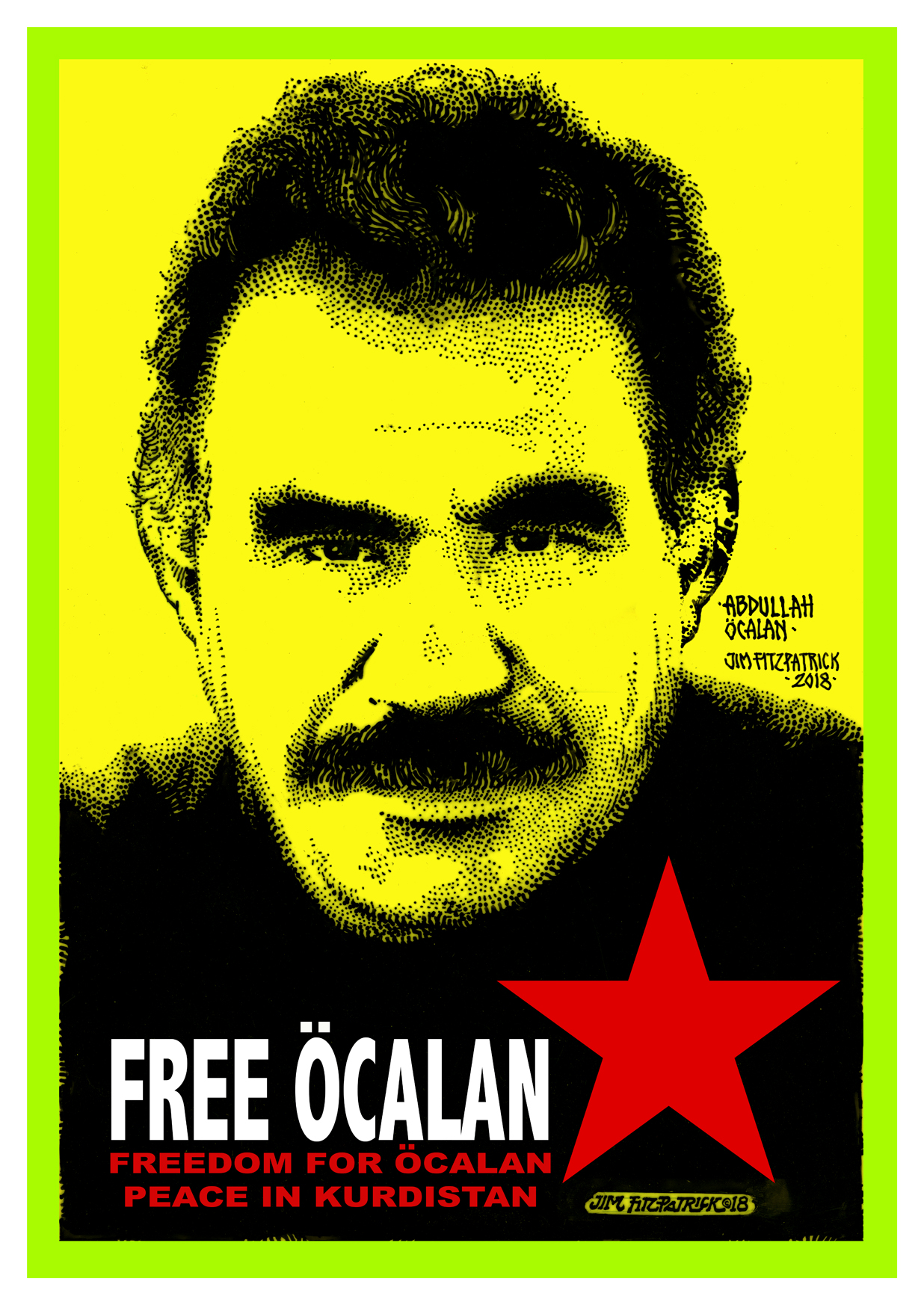
Free Öcalan


Fundación Infancia y Aprendizaje

Colección de libros Marxismo Crítico

Historical Materialism


CIPEC (Centro de Investigación en Pensamiento Crítico)

Centro para la Investigación como Crítica Práctica

Memoria Revista de Crítica Militante
Revista Laberinto






Marx desde cero





 marxismocritico.com