
Archivo
«El debate sobre el rol del marxismo en la actualidad»: Marta Harnecker
 Marta Harnecker participa en un seminario sobre la obra de Karl Marx en la Biblioteca de Santiago y la Universidad de Valparaíso.
Vídeos de las jornadas “Teoría crítica y marxismo no dogmático Alfred Schmidt (1931-2012) in memoriam”
 Miércoles 7 de noviembre de 16 a 20 horas
Facultad de Filosofía y Letras de la UNAM,
Edificio nuevo, “Adolfo Sánchez Vázquez”
«Un pensamiento para el futuro: a propósito de Vigotsky»: Vincent Charbonnier
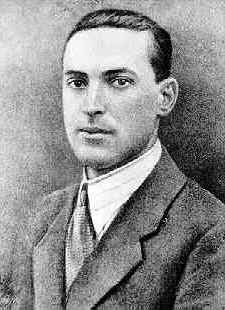 A propósito del libro de Lev S. Vigotky, Conscience, inconscient, émotions precedido de Vygostki, la conscience comme liaison de Yves Clot. (París: La Dispute, 2003).
Texto aparecido en ContreTemps, 2006, nº 17, p. 136-135, constituye una versión desarrollada y revisada de una nota crítica aparecida en Revue française de pédagogie: recherches en éducation, 2005, n° 150, p. 151-155.
La publicación de este volumen de tres textos de Lev S. Vigotsky es una admirable iniciativa de la editorial La Dispute. Debe saludarse la tenacidad en brindar al público francófono1 la obra del gran psicólogo ruso, prematuramente desaparecido a la edad de 38 años (1896-1934). Gracias a este volumen, vuelven a estar disponibles dos textos anteriormente publicados en francés en la revista Société française, en 1994 y 1995, pero desde entonces inaccesibles, de los cuales uno, el primero, muchas veces comentado, es considerado actualmente como un clásico. “La conciencia como problema de la psicología del comportamiento”, publicado en 1925 es el texto de una conferencia impartida en octubre de 1924 en el Instituto de Psicología de Moscú. “La psique, la conciencia, el inconsciente” fue publicado en 1930. “Las emociones y su desarrollo en la edad infantil”, que data de 1932 y aparece por primera vez en francés, es una de sus conferencias sobre psicología pronunciadas en el Instituto Pedagógico Superior de Leningrado.
La calidad de este volumen radica en el hecho de que todos estos textos constituyen hitos en el desarrollo vigotskyano, ofreciendo así la oportunidad de comprender in concreto la construcción de su pensamiento. Porqué lo que sorprende de inmediato al lector es su coherencia y su precisión o, mejor dicho, el movimiento de un pensamiento alejado de toda tentativa especulativa y/o reduccionista, que se basa en la riqueza y la complejidad del ser humano en sus dimensiones psíquicas, afín de construir la ciencia sin caer en el reduccionismo. Se exprime la singularidad de un enfoque, en psicología primero, que Vigotsky, aunque sea a título esencialmente póstumo, ha contribuido profundamente en transformar, pero también dentro del marxismo donde destaca como un pensador perspicaz y fecundo. Se puede así comprender la ocultación de la que fue víctima durante un largo periodo, que excede ampliamente el periodo stalinista, sin contar su (tardío) redescubrimiento.
«Talk of sayin, showing, gesturing, and feeling in Wittgenestein and Vygotsky»: John Shotter
 ‘There is a strongly musical element in verbal language. (A sigh, the intonation of voice
in a question, in an announcement, in longing; all the innumerable gestures made with
the voice.)’ (Wittgenstein, 1981, no.161).
‘The child’s self-motion, his own gestures, are what assign the function of sign to the
object and give it meaning‘ (Vygotsky, 1978, p.108).
Traditionally in the social and behavioral sciences, seeking a single, unified, orderly account of things, we have spoken and written about ourselves as disembodied, isolated, self-contained individuals. We think of ourselves as existing in a fixed world of objects that we come to know, primarily, in a visual-intellectual manner, through our observations of them. As such, we have assumed that we can only come to know our own true nature in such a world by our empirical testing of our possible representations of it for their accuracy. However, unlike computers and other machines, as living, embodied beings, we cannot be wholly indifferent to the world around us. We must, to an extent, continuously react and respond to it, spontaneously, whether we like it or not, and in so doing, we must of necessity, relate and connect ourselves to our surroundings in one way or another.
Below, influenced both by Wittgenstein and Vygotsky (as well as Volosinov and Bakhtin), I want to explore the consequences of us talking of human activity from within a new vocabulary that takes our living, embodied nature seriously, from within what I shall call a relational rather than an individualistic way of talking. For, just as the child, ‘with the help of the indicative function of words,… begins to master his (sic) attention, creating new structural centers in the perceived situation (Vygotsky, 1978, p.35), so we also, as investigators, can draw our own attention to otherwise unnoticed features of our own conduct, through the introduction of a new vocabulary, a new way of talking.
«Seasons of self-delusion: opium, capitalism and the financial markets»: Jairus Banaji
 The Isaac and Tamara Deutscher Memorial Prize Committee, in conjunction with Historical Materialism, present the 2012 Deutscher Memorial Lecture
Jairus Banaji
“Seasons of self-delusion: opium, capitalism and the financial markets»
«La psique, la conciencia; el inconsciente»: Lev Vygotsky
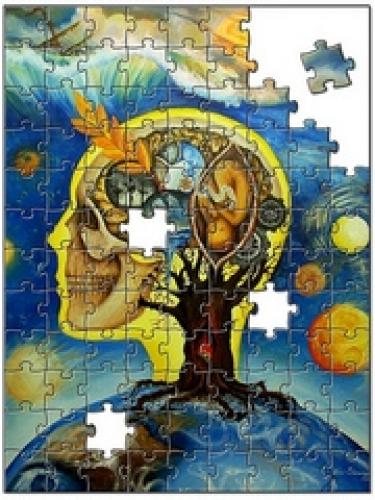 Las tres palabras que encabezan el título de nuestro ensayo: la psique, la conciencia y el inconsciente representan no sólo tres cuestiones psicológicas centrales y fundamentales, sino que son en mucho mayor grado cuestiones metodológicas, es decir, cuestiones relativas a los principios de estructuración de la propia ciencia psicológica. T. Lipps lo ha expresado muy certeramente en su conocida definición del problema de lo subconsciente, según .a cual, lo subconsciente no es tanto una dimensión psicológica como un problema que afecta a la propia psicología como ciencia.
Lo mismo sobreentendía también H. Höffding (1908) cuando afirmaba que la introducción en psicología del concepto de lo inconsciente tiene un significado análogo a la introducción del concepto de energía potencial en física. Es sólo a partir de la introducción de este concepto cuando se hace posible en todo su sentido la psicología como ciencia independiente, capaz de unir y coordinar los hechos de la experiencia en un determinado sistema subordinado a regularidades concretas. Cuando H. Münsterberg se ha ocupado de este mismo problema ha establecido una analogía entre el problema de lo inconsciente en psicología y el de la existencia de conciencia en los animales y afirma que es imposible decidir cuál de las diferentes explicaciones del problema es la correcta si nos basamos únicamente en observaciones. Para él es un problema que es preciso resolver antes de ponernos a estudiar los hechos.
«Un nuovo Marx. Filologia e interpretazione dopo la nuova edizione storico-critica (MEGA2)»: Roberto Fineschi
 Introduzione
«Marxismo crítico en México. Adolfo Sánchez Vázquez y Bolívar Echeverría»: Entrevista a Stefan Gandler
Ante la reciente desaparición de Adolfo Sánchez Vázquez (1915-2011) y de Bolívar Echeverría (1941-2010), dedicamos este programa al análisis del interesante libro de Stefan Gandler, Marxismo crítico en México: Adolfo Sánchez Vázquez y Bolívar Echeverría, editado recientemente por el FCE y en donde se nos ofrece la más acabada exposición histórico-crítica de la vida y obra de estas dos figuras imprescindibles para entender el pensamiento marxista mexicano e hispanoamericano del siglo XX. Entrevista realizada e 15 de febrero, 2012.
«A Marxist Philosophy of Language»: Jean-Jacques Lecercle
 Language has been defined in a number of different ways: as a mental organ, a cognitive ability, a state of mind, as a system of signs, a computational procedure, as means of communication, or means of describing experience, and many others. All such definitions capture vital features of language, none of them, however, is (nor can be) complete. Additionally, approaches to language put forward by structuralism, functionalism, generativism, and cognitivism (to concentrate solely on the most important schools of linguistic thought in the twentieth century) are in many respects incompatible. As has been observed by Thomas Kuhn, it is often impossible to compare theories due to the different usage of fundamental notions, and different definitions of language indeed provide support for his incommensurability thesis. For obvious reasons a similar situation may be observed in linguistics, and by extension, philosophy of language, which is traditionally concerned with the underlying nature of the phenomena that linguists study.
Jean-Jacques Lecercle, Professor of English at the University of Paris at Nanterre, offers a Marxist approach, both to language, and philosophy of language, which results in a number of new definitions and reformulations, and a vehement critique of some prominent contemporary non-Marxists approaches. The book, originally published in French (Une philosophie Marxiste du langage, Paris 2004), comprises seven chapters, a conclusion with glossaries, list of references and an index.
«Unravelling Capital’s contradictions»: David Harvey (subtítulos en castellano)
Vídeo:
Geógrafo y teórico social británico, distinguido profesor de la City University de Nueva York (CUNY) y Miliband Fellow de la London School of Economics. Director de The Center for the Place, Culture and Politics, y autor de numerosos libros.
Es uno de los 20 autores más citados en humanidades, y sus libros y ensayos han sido de gran influencia el desarrollo de la geografía moderna.
«Dialéctica y militancia»: Iñaki Gil de San Vicente
 1. PRESENTACION
2. QUÉ ES LA IDEOLOGÍA BURGUESA
3. EFECTOS Y CONSECUENCIAS DE LA IDEOLOGÍA.
4. CUATRO ESPACIOS CONCRETOS DE LUCHA
5. CONTRADICCIONES EN LAS CUATRO LUCHAS
6. BUSCANDO LA DIALÉCTICA DE LA LUCHA
7. MÉTODOS DE BÚSQUEDA DE LA DIALÉCTICA
8. CONFIRMACION DE LA DIALÉCTICA EN LA LUCHA
9. RESUMEN.
1.- PRESENTACION:
L. Sichirollo nos recuerda en Dialéctica (Labor, 1976), que en la Ilíada las expresiones en griego antiguo que podemos relacionar con lo que ahora entendemos por «dialéctica», salvando todas las distancias, se refieren a los momentos críticos de opción en circunstancias dramáticas, cuando no trágicas, a la capacidad del ser humano para pensar, decidir y actuar en las situaciones extremas, por ejemplo, en la mitad del combate a muerte, cuando Héctor tiene que decidir qué hacer frente a Aquiles. En la primera cultura clásica griega, por tanto, la dialéctica hacía referencia a capacidad y libertad de decisión en situaciones límite, siendo por tanto un sinónimo de elección y libertad: «Es necesario aceptar la lucha».
[Video] István Mészáros no Roda Viva (12-02-2002)
 O filósofo húngaro István Mészáros é entrevistado no Roda Viva (TV Cultura – gravado em 12.02.2002). Entrevistadores: Heródoto Barbeiro. Emir Sader, Ricardo Antunes, Carlos Nelson Coutinho, Luiz Gonzaga Beluzo, Maria Orlanda Pinasi e Haroldo Ceravolo Cereza.
Hungarian philosopher István Mészáros interviewed on Roda Viva (Brazilian TV Interview show – recorded on 12.02.2002) Interviewers: Heródoto Barbeiro. Emir Sader, Ricardo Antunes, Carlos Nelson Coutinho, Luiz Gonzaga Beluzo, Maria Orlanda Pinasi e Haroldo Ceravolo Cereza.
«The Role of Language and Ideology in Social Reproduction According to Rossi-Landi»: Augusto Ponzio
 Abstract
Rossi-Landi elaborated such concepts as linguistic production, linguistic work and linguistic capital in social reproduction, identifying homological relations with material production. These concepts describe factors that are fundamental in today’s social reproduction cycle as also emerges from the circulation of such expressions as ‘immaterial resource’, ‘immaterial capital’ and ‘immaterial investment’ in linguistic usage today. All this is accompanied by awareness of the importance of education, information and specialized knowledge for development and competition in present day knowledge society. Until recently material production and linguistic production, that is, manual work and intellectual work, were thought to be separate but related homologically at profound genetic and structural levels. The novelty is that in the world of global communication linguistic and material production have merged. The computer has united hardware and software in a single unit. The connection between work and material artefacts, on one hand, and work and linguistic artefacts, on the other, is now obvious such that the superior capacity of linguistic, that is, ‘immaterial work’, is also now obvious. Linguistic work leads the processes of production and development.
Leer más…
«Pour lire Le Capital»: David Harvey
Mon but est de vous amener à lire le livre I du Capital, à le lire tel que Marx voulait qu’il soit lu 1. Cette entreprise peut paraître ridicule, puisque si vous n’avez pas lu cet ouvrage, il vous est impossible de connaître les intentions de Marx. Or je peux vous assurer qu’il souhaitait être lu vraiment et attentivement. Tout véritable apprentissage implique un effort pour comprendre l’inconnu. La lecture du Capital proposée dans ce livre se révélera d’autant plus éclairante que vous aurez préalablement lu les chapitres traités.
C’est pourquoi je voudrais vous encourager à vous frotter directement au texte de Marx, pour que vous puissiez vous faire votre propre idée de sa pensée. Cela soulève d’emblée une difficulté. Tout le monde a entendu parler de Karl Marx, tout le monde a entendu les mots « marxisme » et « marxiste », qui possèdent toutes sortes de connotations : vous avez donc forcément des idées préconçues et des préjugés – favorables ou non. Je vous demanderai cependant de commencer par mettre de côté, autant que possible, ce que vous croyez savoir de Marx, afin de pouvoir entendre ce qu’il a réellement à dire.
«Developing Realistic Methodology: How New Dialectics Surpasses the Critical Realist Method for Social Science»: Andrew Brown
 ABSTRACT
This paper argues that ‘new dialectics’ provides an adequate methodology for economics and social science. The argument is advanced via a critique of ‘critical realism’, an important rival to new dialectics. Critical realism holds that the root mistake underlying orthodox methodology, termed the ‘epistemic fallacy’, is a failure to sustain adequately the distinction between ontology and epistemology, resulting in the relative neglect of ontology. By overcoming the fallacy, critical realism claims to provide an adequate methodology for economics and social science. The paper argues that critical realism goes too far in the opposite direction to the epistemic fallacy. Critical realism neglects the intrinsic links between ontology and epistemology so fails to provide an adequate methodology. However, critical realism must not, according to the argument, simply be rejected in toto if an adequate methodology is to be achieved. Instead it must be surpassed or transcended. The recent resurgence of a ‘new dialectics’ is argued to provide just such a supersession because new dialectics affirms the intrinsic links between ontology and epistemology without reducing the former to the latter. The implications of this transcendence are illustrated via a comparison of the respective interpretations of Marx’s Capital offered by critical realism and new dialectics
Reading Marx’s Capital with David Harvey

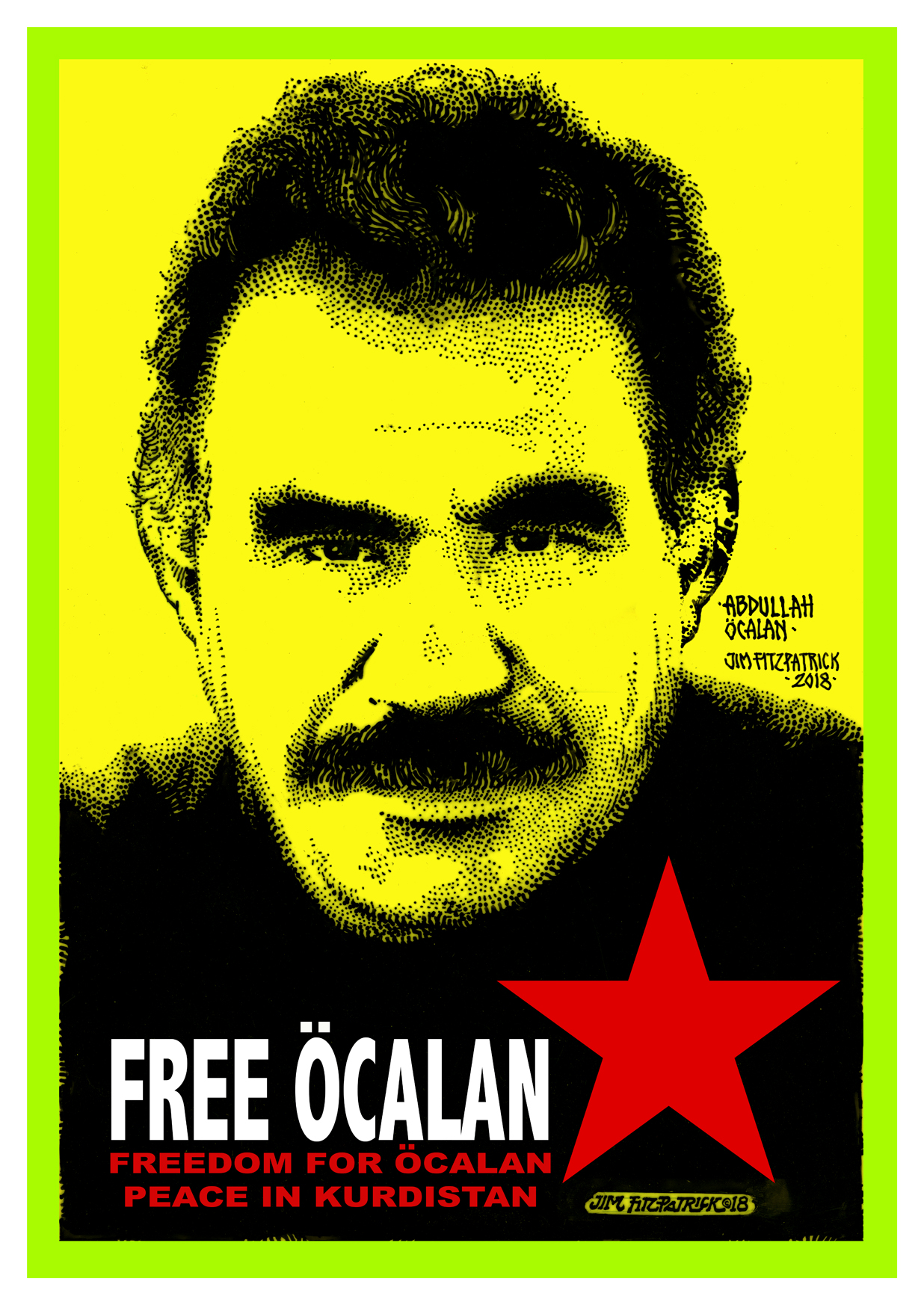
Free Öcalan


Fundación Infancia y Aprendizaje

Colección de libros Marxismo Crítico

Historical Materialism


CIPEC (Centro de Investigación en Pensamiento Crítico)

Centro para la Investigación como Crítica Práctica

Memoria Revista de Crítica Militante
Revista Laberinto






Marx desde cero





 marxismocritico.com