
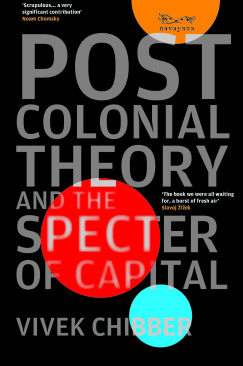

 Es sabido que Marx modificó su visión de los países subdesarrollados. Inicialmente concebía una ligazón pasiva de estas naciones con el auge y declive del capitalismo mundial. Posteriormente realzó la resistencia al colonialismo.
 Luego del estallido de la crisis económica de proporciones colosales que se ha extendido por el globo entero, en su más reciente forma de manifestación desde 2008 a la fecha, se ha actualizado la discusión sobre los problemas de la desigualdad económica, la concentración de la riqueza y los inmensos problemas asociados a la pobreza y a las malogradas promesas del desarrollo.
 The Henry George School of Social Science, and the New School of Social Research invite you to follow Professor Anwar M. Shaikh in a new series of lectures exploring his new ground-breaking Economic treatise, “Capitalism: Competition, Conflict and Crises”. The course will be introduced over two semesters. Recordings of the first semester, becoming available now, is comprised of 15 lectures. Subscribe to our YouTube Channel, Henry George School of Social Science to receive updates as new lectures are added.
Competition and conflict are intrinsic features of modern societies, inequality is persistent, and booms and busts are recurrent outcomes throughout capitalist history. State intervention modifies these patterns, but does not abolish them.
Professor Shaikh exposes how these and many other observed patterns are the results of intrinsic forces that shape and channel outcomes. Social and institutional factors play an important role, but at the same time, the factors are themselves limited by the dominant forces arising from “gain-seeking” behavior, of which the profit motive is the most important. These dominant elements create an invisible force field that shapes and channels capitalist outcomes.
The book’s approach departs from that of orthodox economics as well as the dominant elements in the heterodox tradition. There is no reference whatsoever to an idealized framework rooted in perfect firms, perfect individuals, perfect knowledge, perfectly selfish behavior, rational expectations, or so-called optimal outcomes. The book develops microeconomic and macroeconomic theory from real behavior and real competition, and uses it to explain empirical patterns in microeconomic demand and supply, wage and profits, technological change, relative prices of goods and services, interest rates, bond and equity prices, exchange rates, patterns of international trade, growth, unemployment, inflation, national and personal inequality, and the recurrence of general crises such as the current one which began in 2007-2008.
 En este libro estudia en profundidad la financiarización, probablemente el concepto más relevante para entender el capitalismo contemporáneo y, por ende, la larga fase de crisis que se inició en 2007.En este libro estudia en profundidad la financiarización, probablemente el concepto más relevante para entender el capitalismo contemporáneo y, por ende, la larga fase de crisis que se inició en 2007. Entendida como una forma de organización económica que ya no busca asegurar el crecimiento, el empleo o la inversión, sino el incremento de los beneficios por vía financiera, la financiarización ha impregnado el comportamiento de todos los agentes económicos (empresas, hogares, Estados). En este tiempo, el empresario se ha convertido en inversor, el beneficio en renta financiera y las inversiones en meros movimientos de masas de capital. Con el objeto de comprender la magnitud de estos cambios, Lapavitsas se empeña en una investigación original que le lleva a revisar todo lo que de relevante se ha escrito sobre el dinero y las finanzas y, de forma especial, los aportes marxistas.
 Gracias a los esfuerzos de marxistas a lo largo de todo el mundo, progresivamente tenemos a nuestra disposición, más obras de Marx traducidas en diferentes idiomas para su consulta. Recientemente, gracias a la editorial Brill y a la Revista

 Karl Marx has long been criticized for his so-called ecological “Prometheanism”—an extreme commitment to industrialism, irrespective of natural limits. This view, supported even by a number of Marxists, such as Ted Benton and Michael Löwy, has become increasingly hard to accept after a series of careful and stimulating analyses of the ecological dimensions of Marx’s thought, elaborated in Monthly Review and elsewhere. The Prometheanism debate is not a mere philological issue, but a highly practical one, as capitalism faces environmental crises on a global scale, without any concrete solutions. Any such solutions will likely come from the various ecological movements emerging worldwide, some of which explicitly question the capitalist mode of production. Now more than ever, therefore, the rediscovery of a Marxian ecology is of great importance to the development of new forms of left strategy and struggle against global capitalism.
  ¿Hay salida a los problemas sociales que vivimos dentro de la Europa del Euro? Ponente: Xabier Arrizabalo Montoro. Profesor Titular de la Universidad Complutense de Madrid
 Resumen
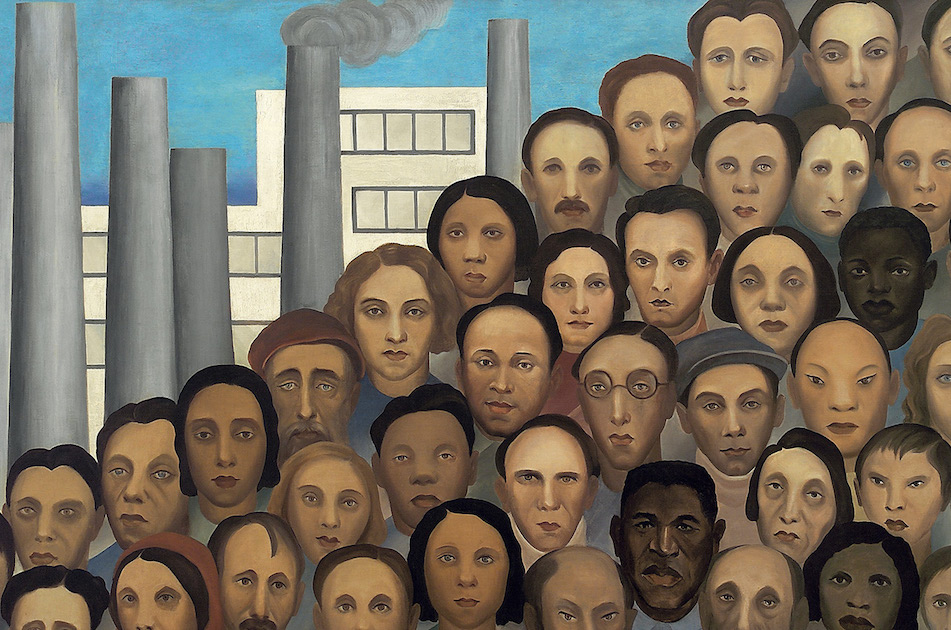 Erik Olin Wright on class, socialism, and the meaning of Marxism
 El tema sobre el cual me gustaría discutir con ustedes es el tema de la relación del pensamiento de Marx y Engels y del marxismo, de manera más amplia, con el romanticismo. Tengo que empezar explicando qué entiendo yo por romanticismo, porque si no, no queda claro por qué veo una relación muy importante, significativa, del pensamiento de Marx con el romanticismo.















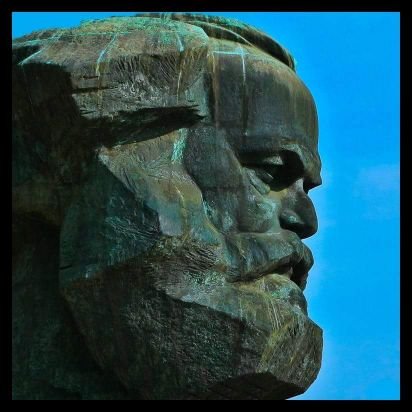





 marxismocritico.com