
Archivo
«Las aventuras de Karl Marx contra el barón Münchhausen»: Michael Löwy
 [Publicamos a continuación el prólogo y la introducción del libro “Les aventures de Karl Marx contre le baron de Münchhausen. Introduction à une sociologie critique de la connaissance”, editado por Syllepse, París. 2012.]
Este libro lo publicó por primera vez en Francia la editorial Anthropos, en 1985, con el título de “Paysages de la vérité. Introduction à une sociologie critique de la connaissance”. Al no haber suscitado mucho interés, ya no hubo ninguna reedición posterior. Después se publicó en Brasil en la década de 1990 con el título de “As aventuras de Karl Marx contra o Barão de Münchhausen. Introdução à uma sociología critica do conhecimento”, donde fue, en cambio, un gran éxito y ha sido objeto de una decena de reediciones. ¿A qué se debió la diferencia? ¿Al toque de humor del título brasileño? ¿O tal vez a la mayor vitalidad de la cultura marxista en Brasil? Sea como fuere, quiero dar las gracias a la editorial Syllepse por aceptar publicarlo de nuevo en francés.
Una breve explicación sobre el título, que hace referencia a una de las aventuras más famosas del barón Münchhausen. Después de caer con su caballo en un pantano peligroso, se hunde rápidamente y solo se salva de una muerte cierta gracias a una maniobra inaudita: tirando de sus propios cabellos, se saca, junto con su caballo, de las arenas movedizas… Como veremos más adelante, esta anécdota servirá de alegoría para caracterizar el enfoque positivista que consiste en extraerse del cenagal de los prejuicios, de las ideologías y de las nociones preconcebidas mediante un esfuerzo de “objetividad”.
«Marx’s Method in Capital»: David Harvey and Alex Callinicos
Marx’s Method in Capital
David Harvey & Alex Callinicos
Marxism 2012 Conference
London | July 2012
«Vygotskian Analysis of the Crisis in Psychology»: III International ISCAR
Vídeo:
III International ISCAR Summer University for PhD students «Moving with and beyond Vygotsky» 2-8 July 2012 MSUPE, Russia — Prof. Pentti Hakkarainen, lecture «Research paradigms of cultural-historical approach» and «Methodology of DWR» http://www.iscarschool.ru
«Lo inconsciente: una perspectiva desde la psicología sociohistórica»: Carl Ratner
 Muchos académicos, incluidos filósofos sociales de la escuela de Frankfurt y psicoantropólogos, han dicho que un abordaje cultural o sociohistórico de la psicología no podría explicar completamente los fenómenos psicológicos. Según ellos, la psicología cultural puede comprender la organización sociohistórica de los fenómenos conscientes tales como actitudes o costumbres, pero no puede explicar los procesos inconscientes arcanos, subterráneos. Así, la psicología sociohistórica debe complementarse con los conceptos freudianos que comprenden lo inconsciente. Hace poco, Dorothy Holland (1992), una psicoantropóloga, se ha quejado de que la teoría cognitivo-social no aborda los fenómenos inconscientes tales como la «censura» y el «conflicto psíquico», y se dedica a importar otras teorías tales como el psicoanálisis para llenar este hueco.
Voy a participar en este debate. Procuraré demostrar que un análisis psicológico sociohistórico puede iluminar fenómenos llamados inconscientes1.
«Mathematical Modelling and Ideology in the Economics Academy: competing explanations of the failings of the modern discipline?»: Tony Lawson
 Abstract
The widespread and long-lived failings of academic economics are due to an over-reliance on largely inappropriate mathematical methods of analysis. This is an assessment I have long maintained. Many heterodox economists, however, appear to hold instead that the central problem is a form of political-economic ideology. Specifically, it is widely contended in heterodox circles that the discipline goes astray just because so many economists are committed to a portrayal of the market economy as a smoothly or efficiently functioning system or some such, a portrayal that, whether sincerely held or otherwise, is inconsistent with the workings of social reality. Here I critically examine the contention that a form of political-economic ideology of this sort is the primary problem and assess its explanatory power. I conclude that the contention does not fare very well. I do not, though, deny that ideology of some sort has a major impact on the output of the modern economics academy. However it is of a different nature to the form typically discussed, and works in somewhat indirect and complex ways. Having raised the question of the impact of ideology I take the opportunity to explore its play in the economics academy more generally.
“Much Learning does Not Teach Understanding” (A Conversation with Vasili Davydov): Karl Levitin
 Professor Davydov, your books, articles and public statements suggest that present-day psychology needs new, drastically different methods and is therefore on the eve of a radical change of theory, and hence in practical application. Can you elaborate on that idea?
To begin with, I must say that contemporary psychology has split into a number of disciplines each having its own object of study. They are general psychology, psychophysiology, peer group, developmental and educational psychology, social, medical, the psychology of law, the psychology of labour, art, sport, and so on. In looking for answers to the questions put forth by life, psychologists are forging ahead with their investigations and have come up with a lot of valuable results. In a sense, such differentiation of psychological disciplines is useful as it gives deeper insights into the psychological laws of whatever happens to be the particular object of study. On the other hand, it results in the loss of something general that should unite all psychological studies. For a long time now the prevalent trend has been to allow not relative but complete autonomy to every branch of what used to be the one psychological tree: let everyone do his own job and forget about what the man next door is doing. And the connection between the psychology of art, peer group psychology, and psychology of labour, for example, is considered a problem of no particular interest, or else a task for another discipline.
«The russian spinozists»: Andrey Maidansky
 ABSTRACT. The article deals with the history of Russian Spinozism in the 20th century, focusing attention on three interpretations of Spinoza’s philosophy – by Varvara Polovtsova, Lev Vygotsky, and Evald Ilyenkov. Polovtsova profoundly explored Spinoza’s logical method and contributed an excellent translation of his treatise De intellectus emendatione. Later Vygotsky and Ilyenkov applied Spinoza’s method to create activity theory, an explanation of the laws and genesis of the human mind.
KEY WORDS: philosophy of Spinoza, Spinozism, Polovtsova, Vygotsky, Ilyenkov, Russian Marxism, activity theory, logical method
When looking over the legion of interpretations which have escorted Spinoza’s philosophy in the course of the past three centuries, one immediately recalls an ironic phrase of the scholastics: auctoritas nasum cereum habet. It seems that Spinoza’s teaching has been interpreted in all possible ways. It was already Hegel who had sufficient reason to complain that Spinoza’s doctrine had been too often judged in a rough and ready manner.1 In Russia of XIX century this ordinary state of affairs was complicated by a generally hostile attitude towards the philosophy of Spinoza. Though his doctrine appeared at the epicenter of impassioned polemics with the participation of leading Russian philosophers – Vladimir Solov’ëv, Alexander Vvedenskij, Lev Shestov, Semën Frank, – not one of them declared his devotion to Spinoza’s teaching. Only somewhat later would V. Polovtsova, L. Vygotskij and E. Il’enkov devote themselves to continue his inquisitio veri. They had to go against the general current of Russian philosophy, although at times the latter was becoming more sympathetic to Spinoza’s (or rather to alleged Spinozistic) ideas. I do not intend here to survey the various Spinozistic tendencies in Russian philosophy; I would like to explore somewhat of its Spinozistic “mainstream.”
«Vygotsky & the Concept of Consciousness»: Andy Blunden
 Vygotsky’s Immanent Critique of Reflexology
VYGOTSKY came to psychology by way of aesthetics. At the time, in the wake of the Russian Revolution, aesthetics was the scene of intense ideological struggles between Symbolists and Formalists and Phenomenologists. Vygotsky claimed that aesthetics had to be based on psychology and this is how he came to Psychology, more in tune with semiotics than medicine. This was not the usual training for the psychology of the time, dominated by reflexology and other variants of physiological behaviourism.
But in his first speech to the Congress of Psychoneurology in 1924, Vygotsky spoke in the language of reflexology, building up to a point where he declared:
“Consciousness is only the reflex of reflexes. If to claim that consciousness too has to be understood as a reaction of the organism to its own reactions, one has to be a bigger reflexologist than Pavlov himself. So be it” (1997).
Entrevista a Stefan Gandler sobre Eurocentrismo, Bolivar Echevarría y Adolfo Sánchez Vázquez
 ¿Por qué en las sociedades actuales existen tantos problemas económicos, sociales? ¿Cuál es la serie de contradicciones que nuestras sociedades capitalistas generan? ¿Cómo ver todo esto desde un punto de vista crítico?
En esta entrevista, Stefan Gandler habla de la obra de Bolívar Echeverría, destacado filósofo que como Walter Benjamin hace una crítica de la idea de «progreso» que tradicionalmente se ha aplicado en las sociedades.
Bolívar Echeverría y Adolfo Sánchez Vázquez fueron pilares de una visión crítica de la sociedad.
Sin más comentarios, los invitamos a ver el siguiente video del Programa ecuatoriano «Palabra suelta»:
Cinco Conferencias realizadas por el filósofo marxista Manuel Sacristán Luzón entre los años 1978 y 1983
 El trabajo científico de Marx y su noción de ciencia (1978)
El trabajo científico de Marx y su noción de ciencia es el título de una conferencia impartida por el profesor Manuel Sacristán Luzón en la Fundación Miró de Barcelona el 9 de noviembre de 1978. Descargar archivo (.mp3)
Reflexión sobre una política socialista de la ciencia (1979)
Reflexión sobre una política socialista de la ciencia es el título de una conferencia impartida por el profesor Manuel Sacristán Luzón en la Facultad de Filosofía y Letras de la Universidad de Barcelona el 17 de mayo de 1979. Descargar archivo (.mp3)
«El pensamiento económico marxista»: Diego Guerrero
 El artículo pasa revista a diferentes significados del pensamiento económico neomarxista. El significado principal es la corriente de pensamiento marxista ligada a las ideas de capitalismo monopolista, subdesarrollo e intercambio desigual, especialmente desde mediados del Siglo XX y tomando como punto de partida las elaboraciones de Paul Baran y Paul Sweezy. Pero hay otros significados del neomarxismo económico: dejando de lado una interpretación puramente cronológica, el marxismo keynesiano es el principal candidato, aunque sin olvidar otras formas blandas de marxismo como el regulacionismo, el pensamiento radical, el sraffismo y el marxismo analítico.
Palabras clave: neomarxismo, capitalismo monopolista, subdesarrollo, intercambio desigual, marxismo keynesiano.
«Marxismo crítico en México: Adolfo Sánchez Vázquez y Bolívar Echeverría»: Stefan Gandler
 El Fondo de Cultura Económica pondrá a circular en breve el libro Marxismo crítico en México: Adolfo Sánchez Vázquez y Bolívar Echeverría, en el que el autor, el filósofo alemán Stefan Gandler, reivindica las aportaciones que esos dos pensadores mexicanos han hecho a la filosofía mundial, con un punto de vista contrario al eurocentrismo imperante en los estudios filosóficos. Como una primicia para los lectores de La Jornada, ofrecemos las primeras páginas de este libro a manera de adelanto. Se trata del prólogo que escribió Michael Lowy y que a su vez, también a contracorriente de los usos y costumbres del ámbito académico, no sólo ubica, reseña, alumbra hacia el contenido del libro, sino que infunde un saludable espíritu crítico al mismo
Este hermoso libro nos habla de la contribución latinoamericana -en este caso, mexicana- a la renovación del marxismo crítico.
Stefan Gandler logró no sólo exponer, de manera profunda y coherente -¡pero no acrítica!-, el pensamiento de Adolfo Sánchez Vázquez y Bolívar Echeverría, su biografía, la evolución de sus ideas, la bibliografía completa de sus obras, sus convergencias y divergencias, sino también aportó la demostración de que la ruptura con el eurocentrismo es una condición indispensable para una verdadera universalización de la teoría crítica.
«Marx y la modernidad»: Enrique Dussel
 Aceptar que la modernidad arranca en el siglo XVIII con la Ilustración en Inglaterra y Francia es aceptar también que lo que vivió la América Latina colonial no fue capitalismo sino feudalismo. Cuestión refutada por el sociólogo Agustín Cueva . Mientras Immanuel Wallerstein ubica el inicio de la modernidad en la Ilustración, Enrique Dussel advierte que ésta inicia en 1492 con la invasión a América. Cuestión eurocentrista. ¿Dónde queda parado el pensamiento de Marx?
«Marx, Marginalism and Modern Sociology»: Simon Clarke
 Preface to the Second Edition
I originally wrote this book because I felt that it was important to take liberal social theory more seriously than did the ‘radical’ social thought of the 1970s. The main aim of the book was to develop a Marxist critique of liberal social theory, which could identify both the scientific strengths and the ideological limitations of such theories. The book was wellreceived, but critical responses made it apparent that the central argument had not been widely understood, particularly by those who could only read Marx through the eyes of his orthodox interpreters, and so missed the distinctiveness of the interpretation of Marx presented here. The book was also read as an historical study, because it did not include an explicit discussion of the liberal foundations of contemporary economic and social theory, ending with the marginalist revolution in economics and Weber’s sociology.
Since the book was originally published the intellectual landscape has changed dramatically. An uncritical return to liberal social theory has replaced its uncritical rejection, while the collapse of state socialism, in both East and West, has inspired the proclamation of the ‘death of Marxism’. I believe that these changes have made the argument developed in this book more, and not less, relevant than when it was first written. There is no better testimony to the inadequacy of the orthodox Marxist and radical critiques of liberal social theory than the recent resurgence of liberalism. The development of a theoretically sound critique is all the more urgent as liberalism once more comes up against its limits.
Reading Marx’s Capital with David Harvey

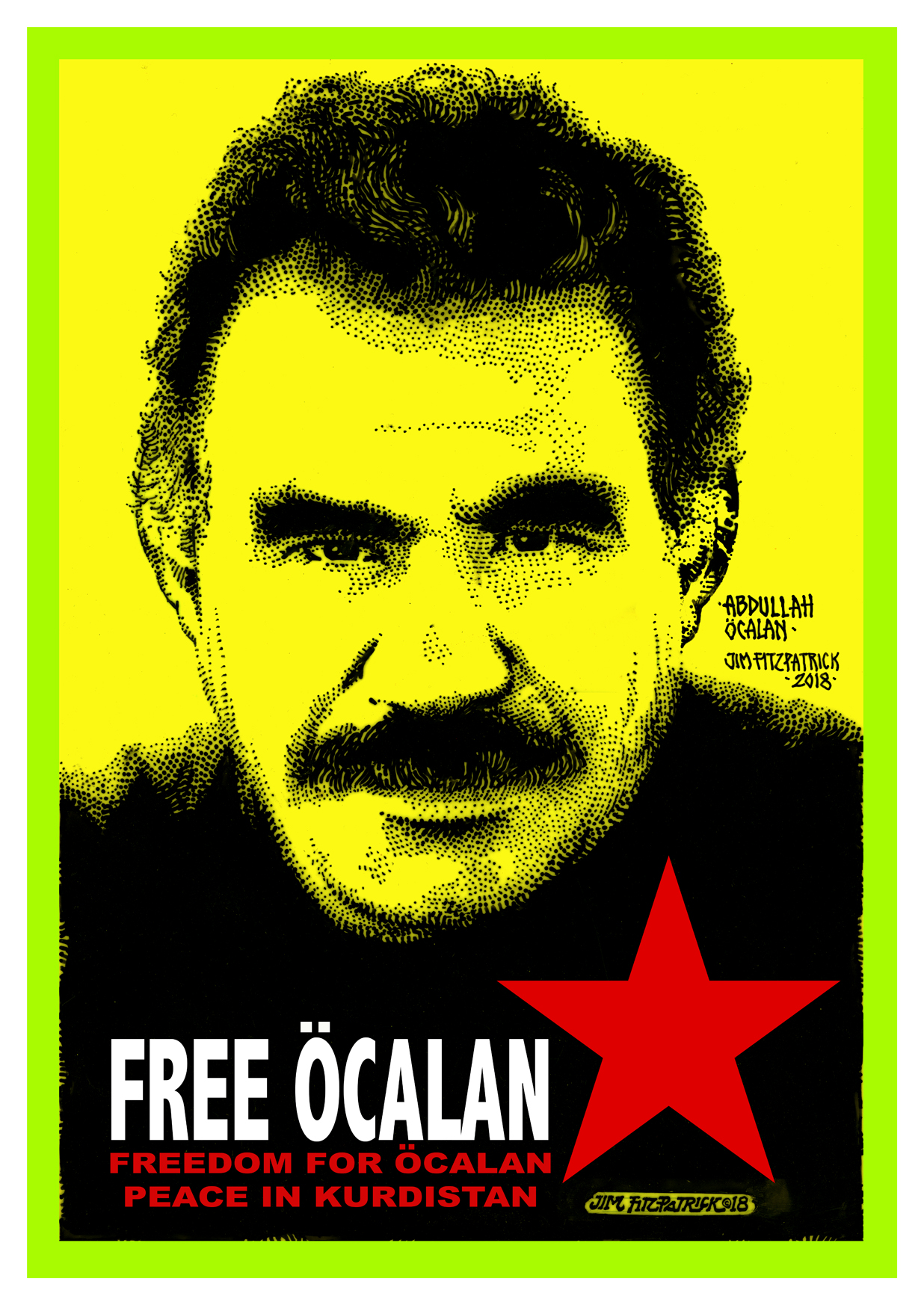
Free Öcalan


Fundación Infancia y Aprendizaje

Colección de libros Marxismo Crítico

Historical Materialism


CIPEC (Centro de Investigación en Pensamiento Crítico)

Centro para la Investigación como Crítica Práctica

Memoria Revista de Crítica Militante

Revista Laberinto






Marx desde cero





 marxismocritico.com