
Archivo
«Finance, crisis and the left alternatives»: Alfredo Saad-Filho
 Alfredo Saad-Filho, Dept. Head of Development studies at the University of London, England, says that we have a situation of malfunction, but there is not the political will to replace capitalism. In his recent talk in Vancouver, He says that he wants to see people claim the right to a different future. He says it is inconceivable that people will accept all the inequalities, the difficulties, the crisis and the waste that we have today. He also says that there is more than enough to satisfy everyone needs globally: Today there is no need or reason why people starve in different parts of the world (October-2010)
«The Dynamics of the Crisis»: Guglielmo Carchedi
 Download the slides from here http://www.isj.org.uk/index.php4?id=815&issue=134
«Marx’s Critique of (Ricardian) Political Economy, the Quantity Theory of Money and Credit Money»: John Milios
 Abstract
The Marxist concept of value is very frequently equated, whether explicitly or merely tacitly, with the corresponding Ricardian concept of “labour expended”. This paper argues that unlike the Ricardian theory of value, the Marxist theory of value is a monetary theory. In the Marxist system, the value of a commodity is expressed not through itself but through its distorted forms of appearance, in prices. Moreover, it cannot be defined in isolation, but exclusively in relation to all other commodities, in a process of exchange. In this relation of exchange value is materialised in money. The essential feature of the “market economy” (of capitalism) is thus not simply commodity exchange but monetary circulation and money. Commodity exchange presupposes thus the (positive) prices of all commodities involved. In other words, prices are not determined after the establishment of a non-monetary equilibrium system of barter between “production sectors”, like the Sraffian “linear production systems”. On the contrary, barter is for Marx non-existing, as all exchange transactions are made up of separate acts of exchange of commodities with money.
«Economía política del Sistema Euro»: Michel Husson
 Este artículo pretende mostrar cómo la actual crisis de la zona euro tiene que ver con los fallos originarios de concepción del «sistema euro» cuyas contradicciones, reveladas por la crisis financiera, tienen naturaleza estructural. Esta demostración se realiza utilizando una metodología estadística y analítica que da al estudio un carácter «técnico». Pero es una etapa necesaria para llegar a un diagnóstico más sólido sobre las posibles salidas a la actual crisis, o más bien de su dimensión específicamente europea. Esta crisis tiene raíces más profundas que el síntoma en que se encarna, esto es, una crisis de las deudas soberanas. De ahí que sólo existan dos salidas que ofrezcan una respuesta adaptada a la naturaleza estructural de la crisis europea: o un estallido del sistema euro, o su refundación radical. Las demás se limitan a alargar las contradicciones en el tiempo, o a programar una regresión socialmente inaceptable.
El sistema euro designa aquí al conjunto constituido por la moneda única y las reglas que han acompañado a su implantación (que en su mayor parte afectan al conjunto de la Unión Europea), sobre todo el pacto presupuestario, las funciones encomendadas al Banco Central Europeo (BCE), la estrechez del presupuesto europeo y el rechazo de la armonización.
El análisis se apoya en once países, a saber: los países miembros de la zona euro desde su constitución en 1999, excepto Luxemburgo, y a los que se añade Grecia, que se integró en 20011. Se distinguen dos grandes grupos de países. El «Norte» agrupa a cinco países: Alemania, Austria, Bélgica, Finlandia y Holanda. El «Sur» comprende a España, Grecia, Irlanda, Italia y Portugal. El undécimo país es Francia, puesto aparte en la medida en que ocupa por lo general una posición intermedia.
«Economic Theory and the Current Crisis»: Anwar Shaikh
 Anwar Shaikh at the Central Bank of Argentina Conference on Money and Banking, October 1, 2012 – (3 parts)
Part 1
«A new global depression?»: Richard Duncan interview
 You were one of the very few analysts to predict the full enormity of the financial crisis, writing as early as 2003 of a coming credit crunch that would have ramifications throughout the asset-backed securities sector, necessitating giant bail-outs for Fannie Mae, Freddie Mac and financial-insurance companies, and a possible meltdown in the multi-trillion-dollar derivatives market. This prescience was in stark contrast to the complacency of most mainstream economists. Could you describe how you came to write The Dollar Crisis—what was the course of your intellectual development and what did you learn from your experience as a Far East securities analyst?
I grew up in Kentucky and went to Vanderbilt University. My plan was to go to law school, but I didn’t get in. Plan B was to go to France for a year, picking grapes. I got a job as a chauffeur in Paris, driving rich Americans, and made enough money to backpack around the world for a year, in 1983 and 84. So I was lucky enough to see the world when I was very young. I spent a couple of months in Thailand, Malaysia and Singapore—and even a couple of months there was long enough to realize: go east, young man.
«La financiarización de la economía española. Endeudamiento, crisis y recortes sociales»: Nacho Álvarez
 Financiarización y modelos de crecimiento
El concepto de financiarización es utilizado para referirse al creciente dominio que los mercados y la lógica financiera ejercen sobre el conjunto de la dinámica económica desde la década de 1980. A pesar de que dicho concepto hace referencia a mecanismos tan viejos como el propio capitalismo, las políticas neoliberales de las últimas décadas han llevado hasta niveles sin precedentes el peso que los mercados, las instituciones y los objetivos financieros tienen en el funcionamiento de la economía.
Diversos indicadores evidencian este proceso: la capitalización bursátil de las principales plazas financieras se ha disparado durante las últimas décadas, sobrepasando varias veces el peso del PIB de las distintas economías nacionales; el valor de las transacciones financieras ha crecido mucho más rápidamente que la actividad comercial y productiva; el crédito ha sufrido una ingente expansión; y el peso relativo de las rentas financieras se ha incrementado notablemente sobre el total de la renta nacional.
«Marxist theory, financial system and crisis of 2008»: S. Lapatsioras, D.P. Sotiropoulos and J. Milios
 Abstract: Returning to Marx’s analysis in the third volume of Capital we shall endeavour to outline a Marxist interpretation of contemporary capitalism, contemporary financialization and the crisis of 2008. Crucial in this connection are the concept of fictitious capital and the associated with it process of capitalization. Financialization should be conceived as a type of organization and a mode of exercising capitalist power, which consists of a whole set of instruments, techniques, levels of application and targets. In this way, financialization as a generalization of these processes into a complex system comprises a decisive link for the enforcement of the capital domination. This means that our study does not concentrate merely on the ‘productive’ or ‘unproductive’ effects that financialization might have on ‘development’ or ‘consumption’, but on a whole series of other possible and crucial effects which seem marginal at first sight. As a consequence, we regard finance as a complex social function that cannot be isolated from ‘real’ economy.
Accordingly, such argumentation, based, of course, on Marxian concepts, provides the terms to rethink contemporary neoliberal form of capitalism and modern crisis as expressions of the contradictions inherent in this organization of capital hegemony, and contemporary form of imperialism, as well. Our analysis also comes up with some conclusions concerning the discussions within Marxism on whether derivatives are commodities or money (or even some other representation of capitalist wealth) and how should we comprehend the global crisis of 2008 in the light Marxian argumentation.
«Crisis monetaria, crisis de acumulación»: Joaquín Arriola
 Darle la vuelta a la situación, nos dice Arriola, es una decisión política internacional que sin embargo no se puede tomar sin afectar al problema de fondo, esto es, la ausencia de un sistema monetario internacional y el modelo de consumo a crédito ilimitado diseñado por las autoridades de Estados Unidos.
Breve excurso histórico
El crédito es el aceite en el motor de la economía capitalista. Todo el proceso de producción se hace a crédito: los bancos o los inversores financieros conceden crédito a las empresas para adquirir los bienes de capital necesarios para la producción; los trabajadores le conceden crédito al empresario, que no les paga sino al final de periodo laboral, normalmente un mes. Esos mismos trabajadores adquieren a crédito los bienes de consumo de larga duración, e incluso los productos más básicos. Los procesos de centralización del capital, genéticamente inscritos en la acumulación capitalista, también se financian a crédito.
A medida que aumenta la complejidad del proceso productivo, las innovaciones financieras se convierten por tanto en una necesidad para realizar operaciones de crédito que cada vez requieren un volumen unitario más grande, acorde con la dimensión de los procesos (de producción, de centralización) a financiar. De esta forma, las sociedades por acciones, las tarjetas de crédito o el sistema de préstamos interbancarios han surgido como innovaciones estratégicas dirigidas a facilitar la expansión de la economía de crédito.
«Financial profit: profit from production and profit upon alienation»: Costas Lapavitsas and Iren Levina
 Abstract
Financial profit is prevalent in contemporary capitalist economies, yet its nature and sources remain unclear. In classical political economy, and for Marx, profit is conceptualised in two distinct ways. First, it is a newly produced flow of value (profit from production). Second, it is a share of either money revenue or existing sums of money, accruing through transactions in financial or real assets (profit upon alienation or expropriation). Both dimensions are vital to the analysis of financial profit, but the distinction is of particular relevance to profit from trading in financial assets, which has a dual nature. In immediate terms, profit from trading in financial assets arises from redistributing loanable money capital; when mediated, it represents the accrual of future surplus value. If, however, the mediation is incomplete, such financial profit remains redistributed loanable capital and is unrelated to newly produced value. In sum, financial profit is normally profit from production, but retains elements of profit upon alienation or expropriation.
Key-words: capital gains, exploitation, financial profit, loanable capital, profit
«Naturaleza y perspectivas de la actual crisis: una caracterización marxista de largo plazo»: Sergio Cámara Izquierdo y Abelardo Mariña Florez
 Resumen
El trabajo caracteriza la crisis actual de la economía mundial. Primeramente se describe su desarrollo inmediato, enfatizando la recesión cíclica en Estados Unidos, el estallido de la burbuja hipotecaria y la crisis financiera global, que desembocaron en una profunda recesión. Posteriormente se analiza la salida de la crisis de 2000-2001 como antecedente inmediato de la crisis actual. El análisis de las tendencias estructurales de rentabilidad y acumulación tras la crisis de sobreacumulación de la década de 1970 permite concluir que se trata de una crisis de la modalidad de reestructuración neoliberal, caracterizada por un retorno de la hegemonía financiera.
Palabras clave: crisis, burbuja hipotecaria, hegemonía financiera, tendencias estructurales de acumulación y rentabilidad.
«Business As Usual: The Economic Crisis And The Failure Of Capitalism»: Paul Mattick
 Business As Usual: The Economic Crisis And The Failure Of Capitalism by Paul Mattick. Reacktion Books: 2011. £12.95
Just yesterday, we were all supposed to believe that the globalisation of capitalism and free markets was the route to freedom, peace and prosperity for all. Then, with barely an explanation, and somewhat out of the blue, the story changed. Now we are to believe that, due to circumstances beyond anyone’s control, prosperity will have to give way to austerity. The good times are over.
It is characteristic of crises that the stories we are expected to believe suddenly change. But how can we understand the change? And might there not be better stories than the rather grim and gloomy one we’ve been ordered to swallow? Paul Mattick Jnr’s short book is just such an alternative. For him the crisis signals the complete bankruptcy and destruction of mainstream economics.
Why crisis is impossible
Why did the crisis appear as a bolt out of the blue? Why was it not expected or anticipated by any economist or mainstream commentator? In short, because there is no place in the standard economic story for crisis, any more than there’s a place for wizards and interstellar travel in a 19th-century realist novel. The old story goes something like this:
“Capitalism is a system for producing wealth to satisfy consumer needs. Individuals set up in business looking out only for their own interest, but in doing so produce for society. Only what can be sold will be produced; money will be borrowed, land rented and labour hired only because the resulting production meets a need. The money earned by selling one’s product will then be spent either on consumption or further production. The economy therefore tends naturally to a balanced state, in which all products find buyers. There may be momentary imbalances between supply and demand, but rising and falling prices soon take care of those. In this way, capitalism creates the wealth of nations, and all is well in the best of all possible worlds.”
«Financialisation of the Global Economy»: Ben Fine
Professor Ben Fine of the School of African and Oriental Studies, London explains the «Financialisation of the Global Economy» by Rohit Azad
http://blip.tv/newsclick/professor-ben-fine-on-the-financialisation-of-the-global-economy-3456308
«Financialisation, the Value of Labour Power, the Degree of Separation, and Exploitation by Banking»: Ben Fine
 Introduction
The emergence to some prominence of radical political economy from the mid-1960s for a decade or more witnessed significant debate over Marx’s value theory across committed Marxist economists, more sceptical but sympathetic heterodox economists, and also orthodox economists who tended to be dismissive if occasionally offering some admiration from the perspective of their own concerns (Marx as general equilibrium, growth or duality theorist). As a result, debate involved the nature and validity of value theory and its position within Marx’s and Marxist political economy as a whole. Over the past two decades, contributions from non- Marxists to value theory have fallen away considerably. This reflects both bad news and good news. The bad news is, of course, that the influence and presence of Marxist political economy has been in decline. The good news is that current debate itself is richer for having moved beyond, if not universally, whether Marx’s value theory is valid and to address how it is to be interpreted by those who have both knowledge of its finer points and wish to apply them to theoretical and empirical questions.
«La Globalización o la razón del más fuerte. El sindicalismo ante la globalización neoliberal»: Joaquin Arriola
 La Globalización, o la razón del más fuerte
Con la crisis que se desencadenó en 2007 en los países desarrollados, se ha puesto en marcha una nueva ola de políticas neoliberales que buscan cargarle a los trabajadores la factura de de la etapa de consumo alegre y despreocupado precedente de la que no han sido los beneficiarios, y de una crisis que no han provocado. Sin embargo, los trabajadores europeos, norteamericanos y de otros países desarrollados no solo no parecen especialmente preocupados con las nuevas políticas, sino que son ellos precisamente los que con frecuencia votan y llevan al poder a los políticos y los partidos de las defienden.
Esta aparente paradoja se explica ciertamente por la enorme maquinaria de propaganda en la que se han convertido los medios de comunicación social (a fin de cuentas, no es por casualidad que el gobierno de Estados Unidos dedica más de 1.800 millones de dólares al año a investigaciones psicológicas) que ha llevado a que en la opinión pública se asiente la idea de que la evolución de la economía se ha convertido en un proceso autónomo, sobre el cual la política tiene una influencia en el mejor de los casos limitada. Y ello parece ser así como consecuencia de un proceso, acelerado en los últimos años, de internacionalización creciente de los flujos y las estructuras económicas, lo que se ha venido a denotar la “globalización”.
Reading Marx’s Capital with David Harvey

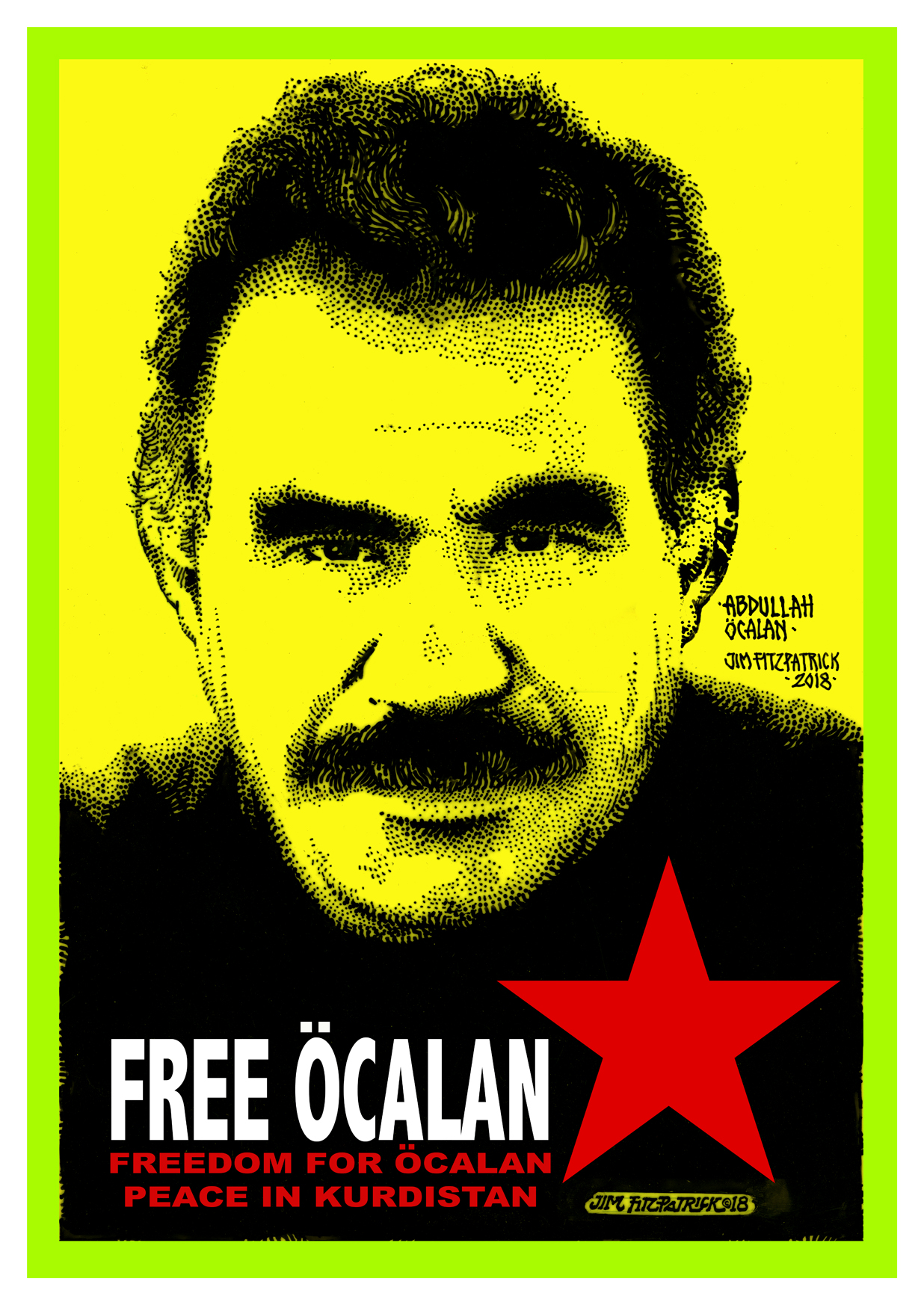
Free Öcalan


Fundación Infancia y Aprendizaje

Colección de libros Marxismo Crítico

Historical Materialism


CIPEC (Centro de Investigación en Pensamiento Crítico)

Centro para la Investigación como Crítica Práctica

Memoria Revista de Crítica Militante

Revista Laberinto






Marx desde cero





 marxismocritico.com