
«Economía y ecología»: conferencia de Elmar Alvater
 Elmar Altvater en la conferencia «Economía y ecología» con la presentación y conclusiones de Enrique Dussel. 16 de octubre en la UACM.
«Casting a Critical Eye on Foucault’s Concept of Resistance, in Light of Marcuse and Marx»: Kevin B. Anderson
 Summary: IMHO member Kevin Anderson spoke at Black Coffee Coop in Seattle’s Capitol Hill neighborhood on Monday Oct. 28th, 2013. His lecture, entitled, “Casting a Critical Eye on Foucault’s Concept of Resistance, in Light of Marcuse and Marx,” was presented by the West Coast Chapter of the International Marxist-Humanist Organization and the Commoners’ Club, and attracted an audience of over thirty workers and activists. The written version of the article on which the talk was based can be found HERE — Editors.
On Monday Oct. 28th, scholar and activist Kevin Anderson gave a talk and led discussion at Black Coffee Coop in Seattle’s Capitol Hill neighborhood. Entitled, «Casting a Critical Eye on Foucault’s Concept of Resistance, in Light of Marcuse and Marx,» the lecture was presented by the West Coast Chapter of the Marxist-Humanist Organization and the Commoners’ Club. The event attracted an audience of over thirty workers, and activists, most of whom were young adults.
«Para llegar a una sociedad satisfactoria y justa hay que destruir el capitalismo»: Entrevista a Miren Etxezarreta
 Pablo Fernandez Fernandez
La economista Miren Etxezarreta considera que «un capitalismo verde, o con rostro humano, no se puede dar»
El capitalismo necesita de crisis cíclias para superar sus contradicciones. Cuando esta última crisis aparece, primero en el ámbito financiero, pero traspasándola automáticamente a todos lo niveles, ¿tiene algo que la haga especial, o es una crisis más? ¿Supone un punto de inflexión?
No es un punto de inflexión en el sistema. Yo creo que es una crisis más del capitalismo, unas son más intensas y otras menos. Ésta es bastante intensa, pero no creo que vaya a suponer una transformación en tanto en cuanto capitalismo, no veo el punto de inflexión.
«‘Reflections on Jacoby and All That’: An Unpublished Essay by E. P. Thompson»: Carlos Aguirre
 Edward Palmer Thompson, one of the most influential social historians of the twentieth century, died twenty years ago, in 1993, at the age of 69. His magnum opus, The Making of the English Working Class, arguably the single most important work of social history published in the twentieth century, appeared for the first time in 1963, half a century ago (1). Both anniversaries are being marked with conferences and special publications in different countries, from the UK to the US to Argentina. Thompson’s historical works, theoretical reflections, and political interventions continue to inspire scholars and activists and generate debate and polemics, as they did when he was alive. Several recent studies are evidence of the continuing interest in his life, work, and legacy (2).
We want to contribute to these commemorations by making available to a wider readership a brief paper that Thompson wrote in 1987 under the rather casual title of ‘Reflections on Jacoby and all that’, presented at the History and Society Program of the University of Minnesota during the 1987-1988 academic year. This program was, in the words of sociologist Ron Aminzade, a space for ‘getting faculty from different disciplines who did historically-oriented work to talk to one another’. Aminzade directed the program between 1985 and 1987 and again in 1989-90. Unfortunately, I have not been able to confirm the exact time of Thompson’s visit to Minnesota, although both Aminzade and Kent Sandstrom, a graduate assistant for the program at that time, recall that he and his wife Dorothy spent at least a couple of weeks in the Twin Cities (3). It may have been in the fall of 1987. He had spent part of winter 1987 hospitalized, recovering from what he thought was ‘some bug‘ he acquired in New Delhi (4). In spring 1988 he taught at Queen’s University in Kingston, Canada, and delivered the Herbert G. Gutman Memorial Lecture at the New York Public Library in April of that year. Thompson taught and lectured in various countries, including the United States, partly as a way to supplement Dorothy’s salary, then the only regular family income they could count on (5).
“Crisis doméstica/reproductiva permanente”: Una entrevista con Silvia Federici
 Por Marina Vishmidt.
Con motivo de la publicación de una antología de sus escritos y el depósito de un archivo de Wages for Housework NY archive (Salario por Trabajo Doméstico NY)1 a Mayday Rooms2, Londres, Marina Vishmidt entrevista a Silvia Federici sobre su extensa contribución al pensamiento feminista y su reciente trabajo en el activismo contra la deuda (con contribuciones de Mute, Mayday Rooms y George Caffentzis).3
Mute: En el texto «Salario Vs Trabajo Doméstico» (1975) te refieres al problema de la imposibilidad de ver dónde «comienza y termina el trabajo» de las mujeres (incluso el asalariado). De la misma manera en que el grupo francés Théorie Communiste argumenta que «nosotras» no somos nada sin sueldo, también hablas del problema de las mujeres que no reciben salario alguno que pasan a considerarse fuera del “contrato social”. ¿Cómo refleja esto la relación capital-trabajo hoy en día? ¿Cómo se ha generalizado esta situación específica para mujeres y otros trabajadores? ¿Cómo debemos actuar ante la perspectiva de que esto no sea «nada»? ¿Es esta aún una cuestión identitaria de reafirmación o de desidentificación?
Silvia Federici: No deberíamos suponer que aquéllos que no perciben salario, que trabajan fuera del contrato social estipulado por un sueldo, no son «nada» ni que actúan y se organizan desde una posición carente de poder social. Ni siquiera diría que están fuera de la relación salarial, que considero más amplia que el salario en sí mismo. Uno de los logros de la International Wages For Housework Campaign (Campaña Internacional Salario por Trabajo Doméstico), que lanzamos en los setenta, es precisamente que se desenmascaró no sólo la cantidad de trabajo que las trabajadoras del hogar realizan para el capital, sino que con ello, también señalamos el potencial poder social que este trabajo les confiere, ya que la labor doméstica reproduce al trabajador y por lo tanto, es el pilar de cualquier otra forma de trabajo. Vemos un ejemplo de este poder (el poder del rechazo) en octubre de 1975, cuando las mujeres en Islandia fueron a la huelga y paralizaron Reykjavik y otras partes del país donde también secundaron la huelga quedaron paralizadas.
«La Determinación de la “Expresión Monetaria del Tiempo de Trabajo” (“MELT”) en el caso del Dinero no mercancía»: Fred Moseley
 Abstract
This paper suggests a way to determine the “monetary expression of labor” (the “MELT”) in today’s regime of inconvertible credit money, a way that is consistent with Marx’s general theory of money and is quantitatively the same as Marx’s determination of the MELT in the case of the inconvertible fiat money of his time. In order to explain this method of determination of the MELT in the case of modern inconvertible credit money, the paper first reviews Marx’s determination of the MELT in the case of commodity money and in the case of the inconvertible fiat money of his time. The final section of the paper discusses the similarities and the differences between my interpretation and Saros’s (2007) interpretation of the MELT in the case of inconvertible fiat money.
JEL classification: B51, E11
Keywords: commodity money, fiat money, credit money, monetary expression of labor time
Resumen
Este trabajo sugiera una manera para determinar la “expresión monetaria del tiempo de trabajo” (el “MELT” por sus siglas en inglés, monetary expression of labor time) en el régimen actual de dinero crédito inconvertible, una manera que es consistente con la teoría general del dinero de Marx y que es cuantitativamente igual a la determinación de Marx del MELT para el caso de dinero fiduciario inconvertible de su tiempo. Para explicar este método de determinación del MELT en el caso de dinero crédito inconvertible moderno el trabajo primero revisa la determinación del MELT que hace Marx en el caso del dinero mercancía y en el caso del dinero fiduciario inconvertible de su tiempo. La sección final del trabajo discute las similitudes y diferencias entre mi interpretación y la interpretación de Saros (2007) del MELT en el caso de dinero fiduciario inconvertible
Clasificación JEL: B51, E11
«IV International Conference on Critical Education» 23-26 June 2014
 The outbreak of the economic, social, and political crisis is affecting education at a global scale. The crisis, in tandem with the dominant neoliberal and neoconservative politics that are implemented and promoted internationally as the only solution, redefine the sociopolitical and ideological role of education. Public education is shrinking. It loses its status as a social right. It is projected as a mere commodity for sale while it becomes less democratic and critical.
«Thomas Sankara, La Revolución Asesinada»: Tristan Goasguen y Yann Manuguerra
 Subtítulos e castellano – Sous-titres français
«Presidente del Burkina Faso de 1983 a 1987, Thomas Sankara es una figura importante del panafricanismo y del tercermundismo. Su asesinato, en octubre del 1987, transformó el que apodaban el «Che africano», en héroe popular, cuyo ejemplo simboliza todavía la sed de libertad y de dignidad para los pueblos de África.
Recogiendo testimonios de aliados políticos, amigos, historiadores y activistas actuales, la película recuerda el destino particular de Thomas Sankara, su legendaria integridad y su aporte a la historia revolucionaria y antimperialista.
Este documental rinde homenaje a su memoria, borrada de la historia oficial por quienes lo asesinaron, hace más de 20 años.
«The Ideal in Human Activity de E.V. Ilyenkov»: Reseña de Alex Levant
 The Ideal in Human Activity de E.V. Ilyenkov consta de dos libros completos y tres artículos, y nos ofrece por primera vez en un sólo volumen la mayor parte de la obra traducida al inglés del famoso filósofo soviético. Esta publicación constituye una importante intervención en el problema de la conciencia, que ha predominado en el canon del pensamiento político y social occidental desde Platón hasta nuestros días. Han sido fundamentalmente teorías sobre el origen y la naturaleza del pensamiento humano las que han dado forma a nuestra noción de la política, que dio un giro sustancial en el siglo XIX a la luz del significado crítico que Marx atribuyó al rol de la conciencia en el proceso revolucionario (Löwy 2005, p. 10). En consecuencia, el debate más importante acerca de la organización política en el marxismo clásico, ponía sobre la mesa la cuestión de cómo sustituir la hegemonía de las ideas dominantes generadas por la falsa conciencia por una perspectiva objetivamente correcta articulada por una vanguardia del proletariado con conciencia de clase, en la forma de partido comunista. (Lukacs 1971; 2000; Second Congress of the Comintern 1977). Pero las innovaciones organizativas de Lenin (Lih 2005) no dieron los mismos frutos en Europa Central y Occidental “que en Rusia”, por lo que a principios de los años 20 las principales figuras de lo que se conocería posteriormente como marxismo occidental (Anderson 1976) se propusieron revisar algunos de los conceptos fundamentales más importantes en los que se basa el problema de la conciencia en un intento ‘por salvar al marxismo del positivismo y del materialismo vulgar’ (Jacoby 1983, p. 524).
«On Why Struggles over Urban Space Matter»: An Interview with David Harvey
 Why do urban struggles matter in projects of social change? What is the importance of reclaiming public space in social movements? And at this gloomy global moment of extreme urban disparities and social inequalities, how do we re-think what is possible? For insights on these questions, we interviewed David Harvey on 24 October 2013. Harvey is the Distinguished Professor of Anthropology & Geography at the Graduate Center of the City University of New York (CUNY), Director of The Center for Place, Culture and Politics, and author of numerous groundbreaking books including Social Justice and the City (1973), The Limits to Capital (1982), Spaces of Hope (2000), A Brief History of Neoliberalism (2005), and Rebel Cities: From the Right to the City to the Urban Revolution (2012). In this interview, Harvey illustrates how struggles over urban space and the quality of daily life in neighborhoods are intrinsic to understanding the dynamics of class struggle. He highlights the importance of joining struggles in projects of social change and calls for re-conceptualizing of the working class to include all “those people who produce and reproduce urban life.” The original interview was recorded, and subsequently transcribed by Duncan Wane.
«Trabajo, individuo, historia. El concepto de trabajo en Lukács»: reseña de Miguel Vedda
 Antonino Infranca
Buenos Aires, Herramienta, 2005, 316 páginas.
En Gelebtes Denken [Pensamiento vivido], György Lukács cuenta que el hecho de haber alternado, en su juventud, con Ernst Bloch, le había permitido conocer “el fenómeno de que alguien filosofaba como si toda la filosofía actual no existiera; el fenómeno de que era posible filosofar como lo habían hecho Aristóteles o Hegel1. La determinación de dedicarse solo a las grandes figuras y los grandes problemas de la filosofía, sin atender a las modas transitorias y las naderías del academicismo, es un rasgo que continuamente ha caracterizado la labora intelectual lukácsiana. Un análogo gesto de olímpico desdén define a este libro del filósofo italiano Antonino Infranca: con una encomiable desconsideración hacia las modas intelectuales impuestas durante los últimos treinta años -ante todo, en los medios académicos europeos y norteamericanos-, el libro que reseñamos desarrolla, de manera histórica y sistemática al mismo tiempo, las ideas que atraviesan la íntegra evolución intelectual y política de György Lukács, poniéndolas, a la vez, en relación con aquellos pensadores con los que el filósofo húngaro ha establecido sus más fructíferos diálogos y controversias: Aristóteles, Kant, Hegel, Marx, Hartmann. La índole de los pensadores mencionados resulta en sí significativa, y refrenda la ya mencionada “inactualidad” de la indagación de Infranca; en efecto, este ve en Lukács al consumador de una larga tradición dentro de la filosofía occidental -hoy caída en descrédito-, para la cual la obra de toda una vida (lo que tan sintéticamente expresa el término alemán Lebenswerk) debería orientarse hacia la construcción de un sistema, entendido en cuanto síntesis y summa del saber y la reflexión humanas en un momento dado. Resulta, en tal sentido, característico que Infranca subraye la importancia de los grandes tratados de vejez -la Estética y la Ontología-, en feliz coincidencia con algunos de los más importantes intérpretes de la obra lukácsiana (Nicolas Tertulian, Frank Benseler, Werner Jung), y a contrapelo, por un lado, de aquellos que exaltan la importancia de la obra juvenil en desmedro de la posterior producción lukácsiana (Theodor W. Adorno, Lucien Goldmann) y, por otro, de quienes realzan el valor de los escritos compuestos durante el exilio moscovita (Míjail Lifschitz, Laszlo Sziklai). La obra del viejo Lukács, marcada por la determinación de ver en la vida cotidiana el punto de partida tanto de las diversas formas de objetivación humanas cuanto de todo análisis filosófico acerca de ellas, representa una tentativa para retomar y, al mismo tiempo, corregir y trascender algunas de las líneas de pensamiento fundamentales de la producción juvenil y madura. Esto puede afirmarse, en primera instancia, a propósito de la categoría de trabajo, ante todo porque el Lukács de la Ontología ve en ella la “forma originaria” [Urform], el “fenómeno originario [Urphänomen] de toda praxis humana.
«Keynesianism is not Necessarily Leftist»: Ingo Stützle
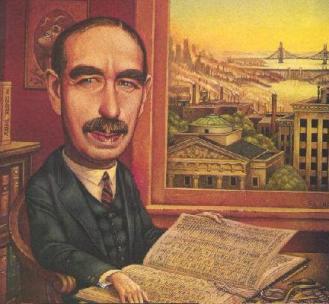 Austerity policies in the EU are often presented as having no alternative. Many leftists, on the other hand, hope for a better life from Keynesianism. Jungle World spoke with the political scientist and publicist Ingo Stützle about the euro crisis, austerity, and Keynesianism. Stützle’s study Austerity as a Political Project was just published this Autumn.
Interviewer: Axel Berger
JW: What do you mean by “austerity as a political project”?
IS: The title refers to contemporary developments in the eurozone. I raised the question as to how the financial policy model of the balanced budget could be europeanized with the creation of the euro. Ultimately, such policies don’t just fall from the sky, nor can they simply be derived from the dynamic of accumulation. A political project integrates disparate social and political forces that do not necessarily consciously follow the same goal. But within a specific historical constellation, their activity converges upon a common result. That was the case with the euro and the model of the balanced budget. Since then, Canada also wants to legally codify this principle, and US President Obama, after the budget conflict, called on the Republicans to make common cause with him, despite all their differences, in order to present a balanced budget.
«El Estado en América Latina Ruptura y continuidades»: Entrevista con Mabel Thwaites Rey
 En esta ocasión charlamos con la Dra. Mabel Thwaites sobre el impacto reciente de las transformaciones estatales en América Latina, partiendo del mirador crítico dado por Gramsci y Poulantzas.
Seminários do Professor Susumu Takenaga no Cedeplar
 Estamos nos preparando para receber a visita do Professor Susumu Takenaga, da Faculdade de Economia da Universidade Daitobunka (Tóquio, Japão), que virá a Belo Horizonte na última semana de novembro, atendendo a um convite do grupo de pesquisa em Economia Política Contemporânea do Cedeplar. O objetivo dessa visita é a realização de reuniões de trabalho sobre um conjunto de manuscritos inéditos de Marx, textos que vem sendo investigados simultânea e independentemente pela equipe do Cedeplar e por pesquisadores japoneses, e que reúnem notas tomadas por Marx sobre as crises econômicas da década de 1860.No que diz respeito ao grupo do Cedeplar, esse trabalho rendeu a publicação de um artigo em 2013, Notes on a crisis: the Exzerpthefte and Marx’s Method of Research and Composition, que discute o manuscrito B113 (veja esse post sobre o artigo). O Prof. Takenaga, por sua vez, é membro, desde 1998, do comitê editorial japonês da Marx Engels Gesamtausgabe (MEGA), a edição histórico-crítica das obras completas de Karl Marx e Friedrich Engels. Seu grupo está encarregado da edição dos volumes 17, 18 e 19 da quarta seção da MEGA, que abrigarão os textos compilados por Marx em seus cadernos de excertos dos anos 1860, e que tratam de temas de interesse para sua pesquisa com vistas à redação d’O Capital.
«Pensar sin contemplaciones: a propósito de Batallas por la teoría»: Levy del Águila Marchena
 El volumen que a continuación reseñamos, Batallas por la teoría. En torno a Marx y el Perú (Lima: IEP, 2007, 565 pp.), contiene un total de 31 artículos de la producción intelectual que Guillermo Rochabrún nos ha ofrecido en los últimos 35 años. Divididos en cuatro secciones, casi todos fueron publicados previamente, y algunos son inéditos. Al final del libro se ofrece la lista completa de los textos producidos por nuestro autor entre 1971 y 2006. Este volumen —sin dejar de hacer sentir la ausencia de algunos textos de importancia— nos ofrece el contenido suficiente para formarnos una imagen amplia de los intereses, horizontes, logros y alcances del aporte de su autor a las ciencias sociales peruanas.
La Introducción («A modo de introducción: un marxista académico ante el espejo») fue escrita especialmente para la compilación. En ella Rochabrún nos propone una versión autobiográfica de su itinerario intelectual, lo cual es un buen punto de partida para situar mejor el ánimo y el contexto, tanto académico como político, de los artículos por venir. Le sigue una sección titulada «Contra el método y por el rigor», concernida a discusiones en torno a la obra de Marx y la tradición marxista en las ciencias sociales peruanas y latinoamericanas. Es por largo la más extensa. La segunda sección, «Entre la Sociología y la Historia», ofrece distintos artículos donde además de intensos debates académicos, destaca el distintivo estilo de razonamiento sociológico de Rochabrún, comprometido con rastrear la presencia del pasado en el presente y sus condiciones de reproducción, lejos de las disociaciones disciplinarias entre
«lo sociológico» y «lo histórico».
Reading Marx’s Capital with David Harvey

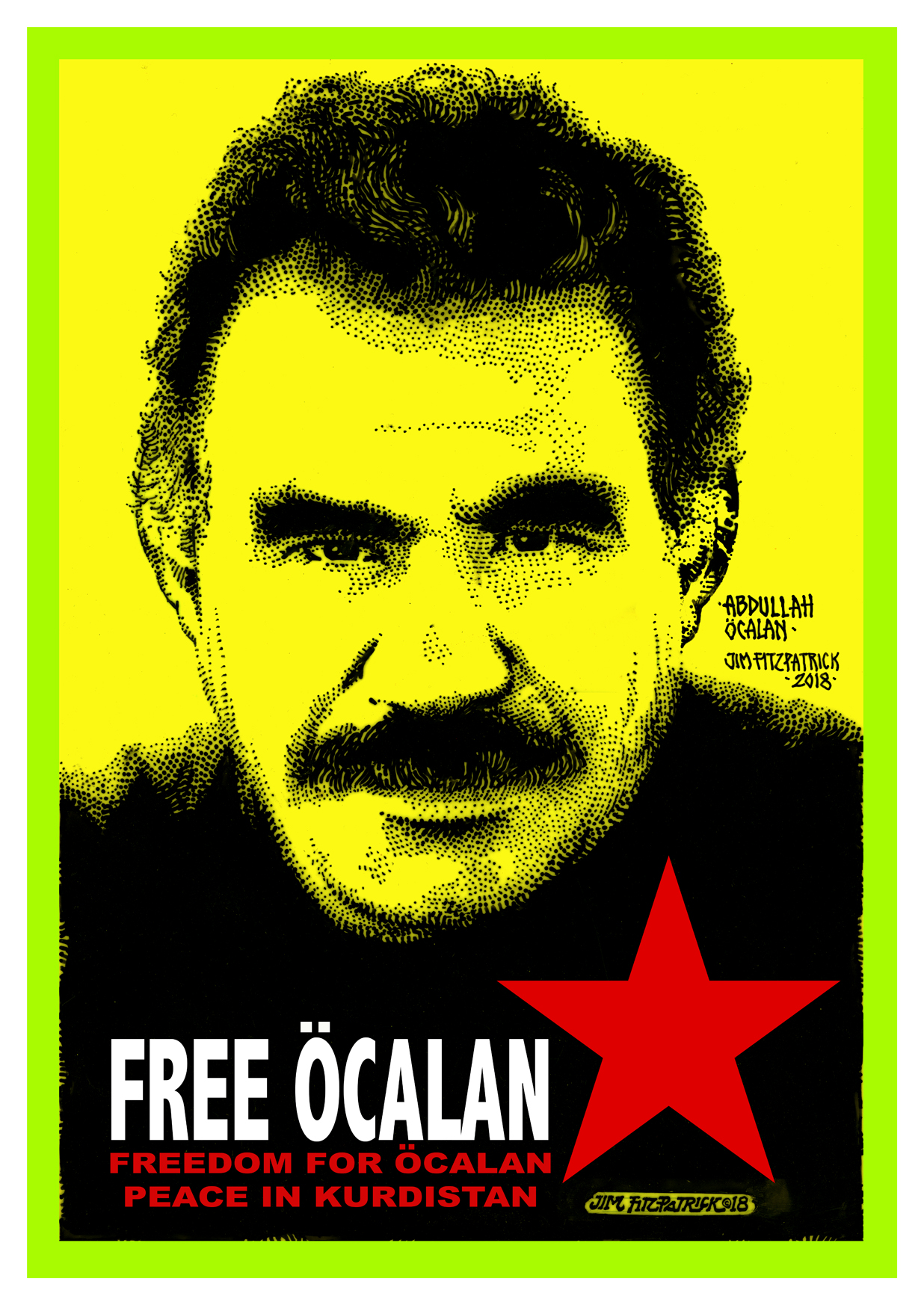
Free Öcalan
Fundación Infancia y Aprendizaje

Colección de libros Marxismo Crítico

Historical Materialism


CIPEC (Centro de Investigación en Pensamiento Crítico)

Centro para la Investigación como Crítica Práctica

Memoria Revista de Crítica Militante
Revista Laberinto






Marx desde cero




 marxismocritico.com