
Archivo
[Video] István Mészáros no Roda Viva (12-02-2002)
 O filósofo húngaro István Mészáros é entrevistado no Roda Viva (TV Cultura – gravado em 12.02.2002). Entrevistadores: Heródoto Barbeiro. Emir Sader, Ricardo Antunes, Carlos Nelson Coutinho, Luiz Gonzaga Beluzo, Maria Orlanda Pinasi e Haroldo Ceravolo Cereza.
Hungarian philosopher István Mészáros interviewed on Roda Viva (Brazilian TV Interview show – recorded on 12.02.2002) Interviewers: Heródoto Barbeiro. Emir Sader, Ricardo Antunes, Carlos Nelson Coutinho, Luiz Gonzaga Beluzo, Maria Orlanda Pinasi e Haroldo Ceravolo Cereza.
«The Role of Language and Ideology in Social Reproduction According to Rossi-Landi»: Augusto Ponzio
 Abstract
Rossi-Landi elaborated such concepts as linguistic production, linguistic work and linguistic capital in social reproduction, identifying homological relations with material production. These concepts describe factors that are fundamental in today’s social reproduction cycle as also emerges from the circulation of such expressions as ‘immaterial resource’, ‘immaterial capital’ and ‘immaterial investment’ in linguistic usage today. All this is accompanied by awareness of the importance of education, information and specialized knowledge for development and competition in present day knowledge society. Until recently material production and linguistic production, that is, manual work and intellectual work, were thought to be separate but related homologically at profound genetic and structural levels. The novelty is that in the world of global communication linguistic and material production have merged. The computer has united hardware and software in a single unit. The connection between work and material artefacts, on one hand, and work and linguistic artefacts, on the other, is now obvious such that the superior capacity of linguistic, that is, ‘immaterial work’, is also now obvious. Linguistic work leads the processes of production and development.
Leer más…
«Developing Realistic Methodology: How New Dialectics Surpasses the Critical Realist Method for Social Science»: Andrew Brown
 ABSTRACT
This paper argues that ‘new dialectics’ provides an adequate methodology for economics and social science. The argument is advanced via a critique of ‘critical realism’, an important rival to new dialectics. Critical realism holds that the root mistake underlying orthodox methodology, termed the ‘epistemic fallacy’, is a failure to sustain adequately the distinction between ontology and epistemology, resulting in the relative neglect of ontology. By overcoming the fallacy, critical realism claims to provide an adequate methodology for economics and social science. The paper argues that critical realism goes too far in the opposite direction to the epistemic fallacy. Critical realism neglects the intrinsic links between ontology and epistemology so fails to provide an adequate methodology. However, critical realism must not, according to the argument, simply be rejected in toto if an adequate methodology is to be achieved. Instead it must be surpassed or transcended. The recent resurgence of a ‘new dialectics’ is argued to provide just such a supersession because new dialectics affirms the intrinsic links between ontology and epistemology without reducing the former to the latter. The implications of this transcendence are illustrated via a comparison of the respective interpretations of Marx’s Capital offered by critical realism and new dialectics
Marx au XXIe siècle: l’esprit et la lettre 2011-2012
 Organisé dans le cadre du Centre d’Histoire des Systèmes de Pensée Moderne, avec le soutien du CERPHI (ENS Lettres et Sciences Humaines) et de la revue ContreTemps (Textuel)
Les séances ont lieu le samedi, de 14 à 16 h,
à la Sorbonne amphithéâtre Lefebvre
(Galerie Jean-Baptiste Dumas, escalier R, 1er étage)
entrée par le 14, rue Cujas,
Métro : Cluny-Sorbonne – RER : Luxembourg
.
«Marx at the Margins»: Kevin B. Anderson
Vídeo:
Más
Leer más…
«Situación actual de la 2ª edición de las Obras completas de Marx- Engels (MEGA) después del revés del socialismo»: J. Octavio Obando Moran
Sumilla:
Aquí se pone en evidencia el proceso y situación actual de la segunda edición de las Obras completas de K. Marx y F. Engels: Marx-Engels Gesamtausgabe conocida también como MEGA y la proyección intelectual y temporal para realizar la edición. Esta edición está programada en 114 tomos de los cuales han aparecido desde 1975 aproximadamente 50. Se estipulan algunas diferencias centrales entre la 1ª y 2ª MEGA y se concluye con el necesario cuidado que se ha de tener con la lectura de Marx-Engels en general vistos a la luz de la interpretación del periodo soviético.
Palabras claves: Marx / Engels / obras completas / nueva edición / filosofía / economía / política.
En este ensayo pondremos de manifiesto en los siguientes subtítulos el conjunto de ideas que serán desenvueltas a lo largo del mismo: 1) Una breve exposición histórica acerca de las MEGA, 2) Equipos que trabajan cada una de las secciones y tomos que componen la MEGA actual, 3) Esquema general y los 114 tomos proyectados, los editados y en vías de preparación. 4) Lo diferente entre la 1ª y 2ª edición de las MEGA, 5) Un breve comentario a la edición actual de MEGA. Finalmente las conclusiones.
«Modernidad y “ethos barroco” en Bolívar Echeverría»: Enrique Dussel
 En primer lugar, Bolívar Echeverría (1941-2010) se ocupó (y fue el primer momento de su vida intelectual) de una muy creativa de la interpretación no dogmática de categorías esenciales de la crítica de la Economía Política realizada por K. Marx, cuestión que no abordaremos, sino en cuanto sea necesario, en este trabajo. En segundo lugar (siendo el tema abordado en un segundo momento de su vida, desde fines de la década del 80 del siglo XX), expuso una filosofía de la cultura, situada principalmente en América Latina, cuestión que trataremos en este corto ensayo. Dentro de la filosofía de la cultura la visión que tiene de la modernidad y del ethos barroco son quizá los dos temas centrales abordados por el gran filósofo latinoamericano. La exposición de este ensayo lo dividiré en dos partes. En la primera, expondré resumidamente la posición de Echeverría; en la segunda, intentaré plantear algunas preguntas para abrir un debate dentro de la problemática actual latinoamericana que ha sido recientemente enriquecida por la problemática esbozada por el llamado “giro descolonizador” –cuyos prolegómenos deben situarse sin embargo desde finales de la década del 60 del siglo XX-.
§ 1. Modernidad y “ethos barroco” en Bolívar Echeverría
Entender esta problemática reciente para Echeverría es sin embargo captar de alguna manera la vida entera del gran pensador. No es indiferente haber nacido en Riobamba (tierra también del gran Leónidas Proaño, y donde he estado tantas veces en seminarios con miembros de los pueblos originarios del Chimborazo), y haberse mudado a Quito, en lugar de haber nacido en España (como le acontece, por ejemplo, al importante marxista Sánchez Vázquez). Opino que Quito es la capital del barroco latinoamericano, y la iglesia de los jesuitas2 en esa ciudad es la obra cubre del barroco en todo el mundo (comparándola con las existentes no sólo en toda América hispana y Bahía en Brasil, sino igualmente en Goa, España, Portugal, el Jesù en Roma, o los Vierzehnheiligen de Alemania). Hijo de padre con posiciones de izquierda y una madre católica (como en mi caso), estudiante primero en una escuela confesional y después en unos de esos clásicos colegios secundarios latinoamericanos de gran nivel académico (como el Mejía), el niño creyente se transforma en un estudiante militante de izquierda (pero siempre crítico de los partidos comunistas dogmáticos bajo la hegemonía soviética), estudioso en un primer tiempo del existencialismo de Unamuno, de Sartre y por último de Heidegger, en tiempos del gobierno populista de Velazco Ibarra.
«Marx: el regreso del gigante»: Marcello Musto

Para “The Japan Times”
TORONTO – Si la eterna juventud de un autor radica en su capacidad de seguir estimulando nuevas ideas, entonces podemos decir sin lugar a dudas que Karl Marx sigue siendo joven.
Tras la caída del muro de Berlín, conservadores y progresistas, liberales y socialdemócratas, casi de forma unánime decretaron la desaparición definitiva de Marx. Sin embargo, sus teorías vuelven a estar otra vez de rabiosa actualidad, y esto ha ocurrido a una velocidad que es, a todas luces, sorprendente. Desde 2008, la crisis económica en curso y las profundas contradicciones que están desgarrando la sociedad capitalista, han hecho resurgir el interés en un autor arrinconado de forma precipitada después de 1989. Centenares de periódicos, revistas, canales de televisión y de radio se han hecho eco de los análisis que Marx hizo en El Capital y en los artículos que escribió para “The New-York Tribune” mientras observaba el pánico de 1857, la primera crisis financiera internacional de la historia.
«The Dialectic of Social and Ecological Metabolism: Marx, Meszaros, and the Absolute Limits of Capital»: Brett Clark and John Bellamy Foster
 One of the most remarkable aspects of Marxist scholarship in recent decades has been the recovery and development of Marx’s argument on social and ecological metabolism, which was crucial to his critique of political economy. Marx defined the labor process itself in metabolic terms. As he wrote in Capital: “Labour is… a process between man and nature, a process by which man… mediates, regulates and controls the metabolism between himself and nature.”1. Such a conception was two-sided. It captured both the social character of labor, associated with such metabolic reproduction, and its ecological character, requiring a continuing, dialectical relation to nature.
The centrality of the concept of metabolism in Marx’s thought has been recognized for a long time, though its full significance has rarely been grasped until recently. For example, in the 1920s, Lukacs emphasized the “metabolic interaction with nature” through labor as a key to Marx’s dialectic of nature and society. He did not, however, go any further.2 Present-day attention to this theme has developed mainly along two lines: (1) Lukacs’s younger colleague Istvan Meszaros’s analysis of capital as a historically specific system of social metabolic reproduction, and (2) the work of the present authors and others who have built on Marx’s notion of a “metabolic rift” in the relation between nature and society.3 These two strands of Marxist analysis of the nature-society metabolism are dialectically linked. Meszaros’s work has been primarily concerned with issues of social metabolic reproduction, but this has nonetheless generated some of the most penetrating and prescient analyses of the ecological problem. From the other direction, recent Marxist work on ecological metabolism has converged with the dialectic of social metabolic reproduction, as outlined in Meszaros’s Beyond Capital,4 in delimiting the conditions of a sustainable future society. Meszaros, in particular, emphasizes that the qualitative changes in the social order demanded by ecology are indispensable elements of a wider set of qualitative challenges – such as the necessity of social control and substantive equality – defining the struggle for a socialism for the twenty-first century.
«Marx-Engels-Jahrbuch 2003: Karl Marx, Friedrich Engels, Joseph Weydemeyer»: Georg H. Fromm
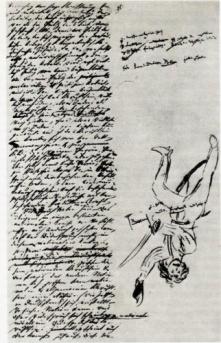 Die deutsche Ideologie: Artikel, Druckvorlagen, Entwürfe, Reinschriftfragmente und Notizen zu I. Feuerbach und II. Sankt Bruno. 2 vols. [Text und Apparat].
«La teoría general del derecho y el marxismo»: Evgueni Pashukanis
 «Evgueni Bronislavovich Pashukanis nace el 10 de febrero de 1891 en Staritsa, cerca de Kalinin (Tver). Estudia la carrera de derecho y se hace bolchevique en 1912. Después de la Revolución de Octubre figura entre los primeros y más destacados juristas soviéticos, y ocupa puestos tan altos como los de director del Instituto Jurídico de Moscú, vicepresidente de la Academia Comunista y Presidente de su sección jurídica. En 1924 publica su obra fundamental: La teoría general del derecho y el marxismo.
«Evgueni Bronislavovich Pashukanis nace el 10 de febrero de 1891 en Staritsa, cerca de Kalinin (Tver). Estudia la carrera de derecho y se hace bolchevique en 1912. Después de la Revolución de Octubre figura entre los primeros y más destacados juristas soviéticos, y ocupa puestos tan altos como los de director del Instituto Jurídico de Moscú, vicepresidente de la Academia Comunista y Presidente de su sección jurídica. En 1924 publica su obra fundamental: La teoría general del derecho y el marxismo.«Developing Realistic Philosophy: From Critical Realism to Materialist Dialectics»: Andrew Brown
 Abstract
This paper compares the (relatively little known) ‘materialist dialectics’ of E.V. Ilyenkov to the ‘critical realism’ and ‘dialectical critical realism’ of Roy Bhaskar. The latter author specifies an ontology of ‘emergence’ and ‘stratification’. He demonstrates that, not only a critique of postmodernism, but an outflanking of much contemporary Marxist work can be achieved on the basis of such an ontology. For example, the ‘new dialectics’ interpretation of Marx and Hegel (Arthur 1993) remains largely silent on the ‘emergence’ of thought from material body; yet, critical realism shows that a specification of the mind-body relation is of utmost importance. Not despite, but because of its great strength, the paper undertakes an ‘immanent’ critique of the critical realist ontology. Drawing upon Ilyenkov’s interpretation of Spinoza, the paper argues that the critical realist articulation of stratification and emergence collapses into (essentially Humean) scepticism. The underlying reason for this collapse is argued to be the non-identity of thought and being generated by the critical realist theory of mind. On Ilyenkov’s interpretation, Spinoza’s articulation of mind and body sustains the materialist identity, as well the opposition, of thought and being. Through this identity-of-opposites, the notions of ‘stratification’ and ‘emergence’ are preserved but raised to a new conceptual level. Ilyenkov’s novel interpretation of Spinoza has far reaching implications. These are illustrated via a brief re-examination of the Marx-Hegel relation.
«A materialidade do trabalho e o trabalho imaterial”: Sergio Lessa
 Como deve acontece de tempos em tempo, uma nova categoria “sociológico-filosófica” fez sua entrada na cena acadêmica: a do “trabalho imaterial”. Tal como ocorre na maioria das vezes, por ser uma novidade, a nova categoria foi saudada e alguns espaços lhe foram abertos na mídia e nas editoras do país. Apresentando-se como uma tese radical de esquerda, e tendo por trás a figura de Antonio Negri a lhe conferir alguma visibilidade, o conceito de trabalho imaterial acabou sendo acriticamente empregado até mesmo por setores da esquerda brasileira. É, por isso, necessário que a examinemos mais de perto, mesmo que estejamos convencidos que suas debilidades são tantas que a nova categoria do trabalho imaterial não deverá permanecer sequer por alguns poucos anos no debate em curso. Nos parece que seu destino não será muito diferente do que ocorreu com o “marxismo analítico”, que tanto furor fez na década de 1990 e que, hoje, poucos sequer recordam do que se tratava.
Entrevista con Carlos Nelson Coutinho (1943-2012) «La filosofía de la praxis en Brasil»: Néstor Kohan
 Muere un amigo y gran compañero, el pensador marxista brasilero Carlos Nelson Coutinho, introductor de Gramsci en Brasil e interlocutor de György Lukács (con quien se escribió una serie de cartas). Con una sonrisa irónica solía repetir “yo no me desplacé a la izquierda, sigo siendo el mismo. Los demás se corrieron a la derecha…“.
Carlos Nelson era muy irónico. Lúcido, erudito, amable, fraternal, tierno, divertido. Le gustaba conversar y beber en compañía. A pesar de ser profundamente brasilero, no le gustaba bailar. Se sentía comunista y mantuvo una coherencia en torno a los ideales comunistas, aunque fue cambiando de organizaciones a medida que éstas se derechizaban. Comenzó militando en el PC brasilero, luego se incorporó al PT y finalmente al PSOL. Apoyaba con entusiasmo al MST.
«El Adiós de un gramsciano: Carlos Nelson Coutinho (1943-2012)»
 Con enorme pesar, hoy hemos recibido la noticia de la muerte de Carlos Nelson Coutinho. Comunista en su sentido más profundo, militante de izquierdas varias, marxista riguroso, entrañable persona y cálido amigo…
Nacido en 1943 en Bahía, fue hasta el año pasado profesor titular de Teoría Política en la Universidad Federal de Río de Janeiro.
Fue reconocido internacionalmente como uno de los mayores especialistas en el pensamiento de Antonio Gramsci, del que fue traductor en su país.
Entre sus múltiples obras destacan, en español: El estructuralismo y la miseria de la razón (Era, 1973), Introducción a Gramsci (Era, 1986) y Cultura e ideología en Brasil (Casa de las Américas, 1986).
El año pasado (2011), en Chile, salió publicado su libro «Marxismo y política. La dualidad de poderes y otros ensayos»
Les comparto aquí, como pequeño homenaje personal, la reproducción de una de sus últimas entrevistas.
Seminario «Hacia un nuevo Socialismo»
Leer más…
Reading Marx’s Capital with David Harvey

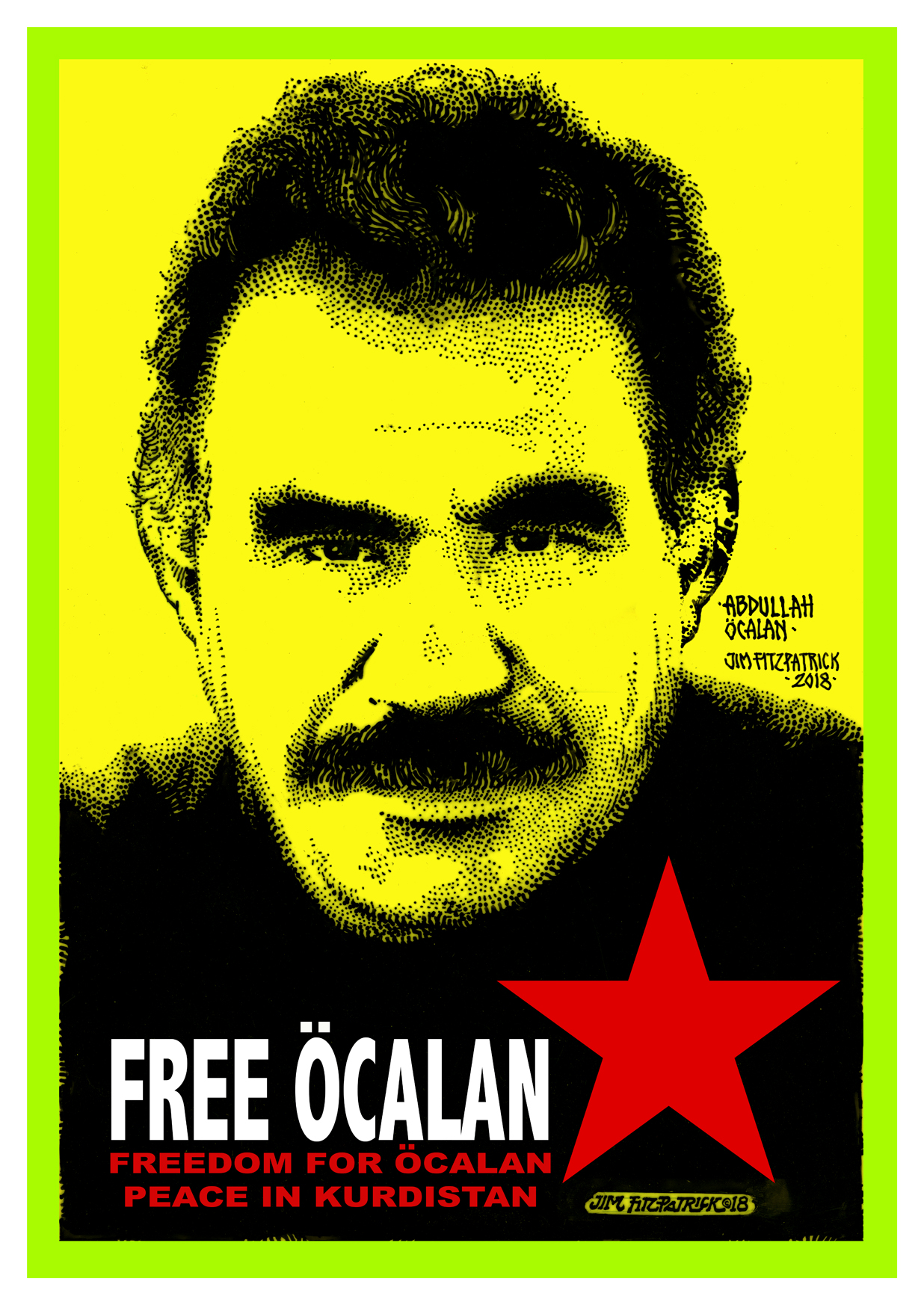
Free Öcalan


Fundación Infancia y Aprendizaje

Colección de libros Marxismo Crítico

Historical Materialism


CIPEC (Centro de Investigación en Pensamiento Crítico)

Centro para la Investigación como Crítica Práctica

Memoria Revista de Crítica Militante
Revista Laberinto






Marx desde cero





 marxismocritico.com