 One of the most remarkable aspects of Marxist scholarship in recent decades has been the recovery and development of Marx’s argument on social and ecological metabolism, which was crucial to his critique of political economy. Marx defined the labor process itself in metabolic terms. As he wrote in Capital: “Labour is… a process between man and nature, a process by which man… mediates, regulates and controls the metabolism between himself and nature.”1. Such a conception was two-sided. It captured both the social character of labor, associated with such metabolic reproduction, and its ecological character, requiring a continuing, dialectical relation to nature.
The centrality of the concept of metabolism in Marx’s thought has been recognized for a long time, though its full significance has rarely been grasped until recently. For example, in the 1920s, Lukacs emphasized the “metabolic interaction with nature” through labor as a key to Marx’s dialectic of nature and society. He did not, however, go any further.2 Present-day attention to this theme has developed mainly along two lines: (1) Lukacs’s younger colleague Istvan Meszaros’s analysis of capital as a historically specific system of social metabolic reproduction, and (2) the work of the present authors and others who have built on Marx’s notion of a “metabolic rift” in the relation between nature and society.3 These two strands of Marxist analysis of the nature-society metabolism are dialectically linked. Meszaros’s work has been primarily concerned with issues of social metabolic reproduction, but this has nonetheless generated some of the most penetrating and prescient analyses of the ecological problem. From the other direction, recent Marxist work on ecological metabolism has converged with the dialectic of social metabolic reproduction, as outlined in Meszaros’s Beyond Capital,4 in delimiting the conditions of a sustainable future society. Meszaros, in particular, emphasizes that the qualitative changes in the social order demanded by ecology are indispensable elements of a wider set of qualitative challenges – such as the necessity of social control and substantive equality – defining the struggle for a socialism for the twenty-first century.
Leer más…


 Shortly before this issue went to press, we were desperately saddened to hear of the untimely death of Neil Smith. Neil will be known to many readers of this journal as a co-editor between 1993 and 2003, as a regular contributor, and as a long-term supporter of the combination of geography, social theory, and politics that sustains this journal’s work.
 Para muchas personas la disolución del bloque soviético en una serie de países hoy aparentemente empeñados en transformarse en capitalistas marca la derrota del marxismo. La critica marxista al capitalismo debe conducir a la propuesta de una nueva forma de sociedad que supere al capitalismo y esto fue el «socialismo real» del bloque soviético. Como esa propuesta fracasó también lo hizo el marxismo.
 En su edición de ayer (25/09/12) La Nación informa sobre el estallido de un fuerte conflicto en la planta de 80.000 empleados que Foxconn posee en Taiyuan, China. Ocurrió durante el fin de semana del 22 y 23 de septiembre, y dejó un saldo de 40 trabajadores heridos y varios detenidos. “Detrás del nuevo iPhone5, la furia de los obreros chinos”, titula la periodista, Natalia Tobón, y escribe: “El esperado lanzamiento del iPhone5 fue todo un éxito de ventas, pero un estallido de furia en una fábrica china desnudó el lado más oscuro de los productos Apple”. Según Tobón, varios trabajadores informaron a los medios chinos que un guardia de seguridad estaba golpeando a un trabajador, y más de 200 compañeros salieron a defenderlo. El enfrentamiento con el personal de seguridad habría durado unas cuatro horas. “La firma tiene un negro historial de suicidios, denuncias laborales, pésimas condiciones sanitarias y mal pago que motivan constantes protestas”, agrega. Lo sucedido en Foxconn se inscribe en un contexto de creciente resistencia de la clase trabajadora de China a la explotación. Vale la pena entonces ampliar un poco la información.
 Dirección: Carlos Mendoza
  Eric Hobsbawm, one of the leading historians of the 20th century, has died, his family said on Monday.
 O Roda Viva recebeu, no dia 3 de setembro, Ricardo Antunes, um dos mais destacados sociólogos marxistas da atualidade, cujos estudos se direcionam para o tema trabalho e suas novas formas de relação dentro do mundo capitalista contemporâneo. Com as mudanças relativamente recentes no sistema de trabalho, que vão desde a terceirização de serviços, o aumento na procura pelos concursos públicos, a contratação de PJs, o trabalho por tarefa até o uso de celulares e e-mails no trabalho, Ricardo analisou as transformações ocorridas nesse universo e as consequentes implicações nos planos social e político.
 This is the first published general refutation of the Okishio theorem. An earlier refutation based on a specific example was published by Kliman and McGlone in 1988. Okishio’s theorem, published in 1961, asserts that if real wages stay constant, the rate of profit necessarily rises in consequence of any cost-reducing technical change. It proves this within a simultaneous equation (general equlibrium) framework.
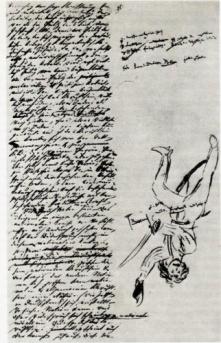 Die deutsche Ideologie: Artikel, Druckvorlagen, Entwürfe, Reinschriftfragmente und Notizen zu I. Feuerbach und II. Sankt Bruno. 2 vols. [Text und Apparat].
 «Evgueni Bronislavovich Pashukanis nace el 10 de febrero de 1891 en Staritsa, cerca de Kalinin (Tver). Estudia la carrera de derecho y se hace bolchevique en 1912. Después de la Revolución de Octubre figura entre los primeros y más destacados juristas soviéticos, y ocupa puestos tan altos como los de director del Instituto Jurídico de Moscú, vicepresidente de la Academia Comunista y Presidente de su sección jurídica. En 1924 publica su obra fundamental: La teoría general del derecho y el marxismo.
«Evgueni Bronislavovich Pashukanis nace el 10 de febrero de 1891 en Staritsa, cerca de Kalinin (Tver). Estudia la carrera de derecho y se hace bolchevique en 1912. Después de la Revolución de Octubre figura entre los primeros y más destacados juristas soviéticos, y ocupa puestos tan altos como los de director del Instituto Jurídico de Moscú, vicepresidente de la Academia Comunista y Presidente de su sección jurídica. En 1924 publica su obra fundamental: La teoría general del derecho y el marxismo.



















 marxismocritico.com