
Archivo
«De ídolos e ideales» E. V. Ilyenkov
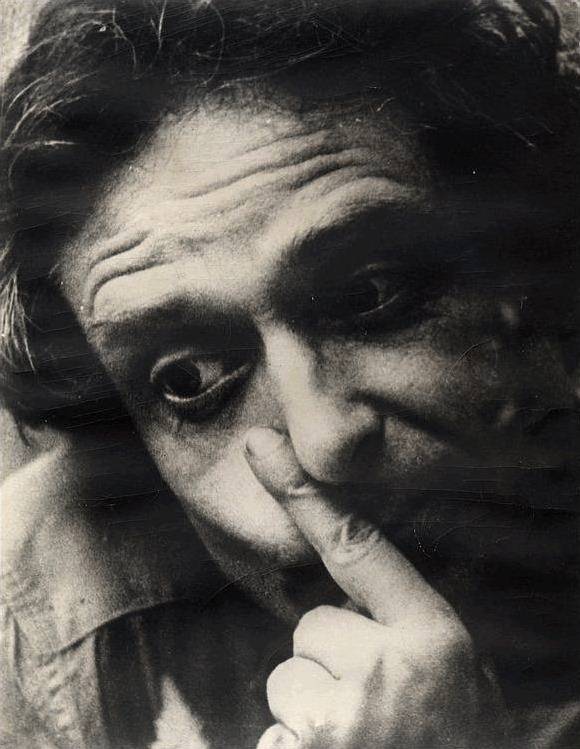 El problema del ideal es complejo y polifacético. En primer lugar, naturalmente, surge la pregunta sobre el lugar que ocupa el concepto del “ideal” en la teoría del reflejo: cómo aquél puede ser interpretado desde el punto de vista de esta teoría. En todo caso, la teoría del reflejo nos enseña que es correcto y verdadero sólo aquel conocimiento que refleja lo que hay en la realidad. Y en el ideal se expresa no lo que es, sino lo que debe ser, o lo que el hombre quiere ver. ¿Se puede, acaso, interpretar lo deseado o lo debido, desde las posiciones de la teoría del reflejo? En otras palabras, ¿puede, acaso, ser “verdadero” el ideal?.
La filosofía hace mucho vio aquí una dificultad y también hace mucho que trató de resolverla.
Los materialistas de épocas pasadas insistieron sobre este problema en el curso de su lucha contra las doctrinas idealistas de la iglesia, contra el ideal religioso, y pretendieron resolverlo de acuerdo, por un lado, a la teoría del reflejo y, por otro, a las exigencias de la vida real. Pero, lograr esto, sólo pudieron Carlos Marx y Federico Engels: y, precisamente, porque ellos fueron no sólo materialistas, sino materialistas dialécticos.
Veamos cómo ocurrió.
«Hegel, Marx, Lenin y la Revolución en el pensamiento y la pasión de Raya Dunayevskaya: ¿cuál es su relevancia para la América Latina del siglo xxi?» Eugene Gogol
 Este año se celebra el centenario del natalicio de Raya Dunayevskaya (1910 – 1987). Los tiempos actuales, a finales de la primera década del siglo xxi, son muy diferentes de aquellos que Raya Dunayevskaya enfrentó en la primera mitad del siglo xx. Ya ha colapsado el imperio ‘capitalista de estado’ soviético, que había surgido con posterioridad a la Segunda Guerra Mundial, desafiando a los Estados Unidos durante cuatro décadas en el dominio hegemónico del mundo. Ya no estamos más en presencia del mundo bipolar que Dunayevskaya constantemente estudió, sino en un mundo unipolar regido por una superpotencia hegemónica. Se ha disipado la posibilidad de la subjetividad revolucionaria, como fue expresada en los movimientos sociales y revoluciones de izquierda, vibrantes en las décadas del cincuenta, sesenta y setenta, mientras que muchos movimientos religiosos fundamentalistas están en auge. A diferencia de la época en la cual las ideas del marxismo eran debatidas abiertamente y con entusiasmo, mucho del pensamiento posmoderno refuta la idea de la revolución, censura cualquier cometido revolucionario del pensamiento dialéctico y se cuestiona la existencia de la subjetividad revolucionaria.
Si examinamos brevemente las tres dimensiones que caracterizan los tiempos actuales: 1) un desenfrenado capitalismo globalizado bajo la Pax Americana; 2) la amenaza de un oscurecimiento del pensamiento dialéctico y 3) la falta aparente de un concepto de la subjetividad revolucionaria, entonces el ‘nuevo comienzo’ que Dunayevskaya estuvo forzada a buscar seis décadas atrás, parece ser necesario para estos tiempos.
«Un nuovo Marx. Filologia e interpretazione dopo la nuova edizione storico-critica (MEGA2)»: Roberto Fineschi
 Introduzione
«Vygotsky & the Concept of Consciousness»: Andy Blunden
 Vygotsky’s Immanent Critique of Reflexology
VYGOTSKY came to psychology by way of aesthetics. At the time, in the wake of the Russian Revolution, aesthetics was the scene of intense ideological struggles between Symbolists and Formalists and Phenomenologists. Vygotsky claimed that aesthetics had to be based on psychology and this is how he came to Psychology, more in tune with semiotics than medicine. This was not the usual training for the psychology of the time, dominated by reflexology and other variants of physiological behaviourism.
But in his first speech to the Congress of Psychoneurology in 1924, Vygotsky spoke in the language of reflexology, building up to a point where he declared:
“Consciousness is only the reflex of reflexes. If to claim that consciousness too has to be understood as a reaction of the organism to its own reactions, one has to be a bigger reflexologist than Pavlov himself. So be it” (1997).
«Marx’s Theory of the Money Commodity»: Anitra Nelson
Abstract
Marx defines the commodity in a unique way. His theory of the money commodity is a unique commodity theory of money. It developed from a political critique of the utopian socialists’ concepts of money, labour time and exchange value. Besides using Hegel’s dialectical method, Marx also adapted certain ideas from his elaboration of ‘measure’ in the Logic to develop his concept of money. Similarly his framework for relating ‘price’, which appears in circulation, and ‘value’, the essential relation in production, can be compared with Hegel’s passages on the ‘force’ and its ‘manifestation’ in the Phenomenology of the Spirit. These influences on Marx’s thoughts on money appear in the Grundrisse but inform the final version of his theory of money in Capital I, too.
1 Introduction
Marx was a nineteenth century political intellectual unconstrained by the disciplinary rigour or specialisation insisted on by late twentieth century academia. Marx’s writings can be studied as sociology, philosophy, politics, economics, history, even as literature, though if studied from simply one perspective his work loses much of its richness and original message. An interdisciplinary approach is especially pertinent to Marx’s theory of money, which is definitely not just an economic theory. Marx was a scholar and a revolutionary. The development of his unique concept of money seems to have been strongly influenced by his background in Hegelian and Young Hegelian philosophy as well as by his political views. Certainly if looked at purely as an economic theory various aspects of it make little sense.
«Dialéctica y capital: Elementos para una reconstrucción de la crítica de la economía política»: Robles Báez, Mario L. Compilador
 México DF: UAM-X, CSH, Depto. de Producción Económica; 2005 México DF: UAM-X, CSH, Depto. de Producción Económica; 20051ra. edición Págs. 318 ISBN: 9703104681 |
||

|
Reedición de «Dialéctica de lo abstracto y lo concreto en «El Capital» de Marx»: Evald Ilyenkov
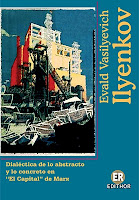 Título: Dialéctica de lo abstracto y lo concreto en «El Capital» de Marx
«Etica y marxismo»: Adolfo Sánchez Vázquez (2003)
 Conferencia /// Moral y política II. Conferencias realizadas por el Dr. Adolfo Sánchez Vázquez, dentro del Ciclo Ética y política. Facultad de Filosofía y Letras. Universidad Nacional Autónoma de México. Aula Magna el 4 de noviembre de 2003.
«Alcance y significado de la filosofía de la praxis»: Gabriel Vargas Lozano
 En los últimos años del siglo xx, el marxismo como teoría y como práctica se enfrentó a uno de los momentos más difíciles de su historia. Una serie de países que vivían bajo regímenes que se autodenominaban como socialistas se derrumbaron estrepitosamente provocando la conformación de un nuevo orden mundial.1 A partir de este acontecimiento, el bloque triunfador difundió, a través de todos los medios a su disposición, la idea de que el marxismo (así, en general, sin distinción alguna) había perecido bajo los escombros del Muro de Berlín. La tesis era deliberadamente confusa ya que la caída de un régimen no puede representar, como pretendería un sociologismo burdo, la crisis de una teoría y mucho menos si, como habían argumentado muchos marxistas críticos de aquellos países, “no eran socialistas desde el punto de vista estrictamente marxiano”. Si aquellos países no representaban a un marxismo genuino era obvio que no podían ser arrastrados por el cataclismo histórico.
«Diálogos sobre Interculturalidad»: Conferencia de Enrique Dussel
 Conferencia de Enrique Dussel en el evento de Diálogos sobre Interculturalidad, México – Los Ángeles, organizado por el Centro Universitario del Norte de la Universidad de Guadalajara en el marco de la FIL 2009.
«Dance of the Dialectic: Steps in Marx’s Method «: Bertell Ollman
 Reviews of Dance of the Dialectic: Steps in Marx’s Method
Perspectives on Political Science
James C. Foster, Oregon State University-Cascades
Bertell Ollman is a professor of politics at New York University. He gained his fifteen minutes of fame by creating the Marxist board game Class Struggle (See Class Struggle is the Name of the Game: Confessions of a Marxist Businessman). Ollman also is one of the more distinguished Marxist scholars of his generation. His Alienation: Marx’s Conception of Man in Capitalist Society stands as a classic in the literature of Marxist scholarship because it renders accessible and develops further the philosophical aspects of Marx’s method.
Marx’s method, Ollman argues, is «internal relations.» It «tells a tale of two cities» focused on interconnections: «[The tale] is not capitalism, it is not communism, it is not history. Rather it is the internal relations between all of them» (1). Marx and Ollman collaboratively work out the social implications of the epigraph to E. M. Forster’s Howard’s End—»Only connect.» Illuminating connections between social formations that appear on the surface to be incommensurate opens Marx to charges that he is inconsistent and contradictory. As Vilfredo Pareto observed: «Marx’s words are like bats. One can see in them both birds and mice» (4). For Ollman, the answer to Pareto’s paradox is that Marx’s method was his message: «By allowing Marx to focus on the interconnections that constitute the key patterns in capitalism, the dialectic brings the capitalist system itself, as a pattern of patterns, into ‘sight’ and makes it something real that requires its own explanation» (4).
«Some reflections on Marx’s theory of value»: Gilbert Faccarello
 Two controversies concerning Marx’s theory of value were of particular importance during the 1960s and 1970s. The first is well known and has attracted most of the attention of Marxian scholars during these decades: I allude to the celebrated ‘transformation problem’ and to the spirited debates that followed the publication of Sraffa’s Production of Commodities by Means of Commodities. The second one, however, is much less well known among economists but is also of fundamental importance: it was more methodological in character and centred mainly on Marx’s ‘logic’ and the relationship between Marx and Hegel.
At first sight these two considerations are disconnected and involve very different problems in Marx’s writings. The first controversy seems in fact to be mainly technical and mathematical in character, and the second chiefly philosophical. However it has become more and more evident that the fundamental problems they raise are linked and this is precisely what I have tried to do (Faccarello, 1983a, 1983b). My line of argument is simple. As a result of the Sraffian controversies it is obvious that the ‘transformation problem’ is destined never to find a solution, since the theory of production prices is ‘self-sufficient’. But it is also evident that what is traditionally ‘transformed’, that is, the system of ‘labour values’, can no longer be considered as an unproblematic starting point for the entire theoretical construction; old questions have again been raised in this new context and such central concepts as ‘abstract labour’ or ‘socially necessary labour’ have proved to be unclear and in need of unambiguous definition. The problem thus faced is that of reinterpreting Marx’s statements on value and of trying again to grasp, possibly in a new way, the definition(s) and significance(s) of the related concepts.
«The Formation of Marx’s Critique of Political Economy: From the Studies of 1843 to the Grundrisse»: Marcello Musto
 Introduction
Despite the predictions that consigned it to eternal oblivion, Marx’s work has returned to the historical stage in recent years and a number of his texts have reappeared on bookshop shelves in many parts of the world. The rediscovery of Marx is based on the explanatory capacity still present in his writings. Faced with a new and deep crisis of capitalism, many are again looking to an author who in the past was often wrongly associated with the Soviet Union, and who was too hastily dismissed after 1989.
This renewed political focus was preceded by a revival of historical studies of his work. After the waning of interest in the 1980s and the “conspiracy of silence” in the 1990s, new or republished editions of his work became available almost everywhere (except in Russia and Eastern Europe, where the disasters of “actually existing socialism” are still too recent for a Marx revival to be on the agenda), and these have produced important and innovative results in many of the fields in which they blossomed.1
«Capital in general and the structure of Marx’s Capital»: Michael Heinrich
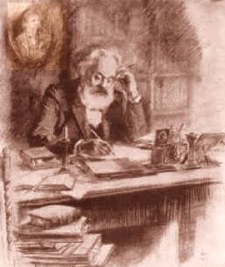 ROMAN ROSDOLSKY’S The Making of Marx’s Capital (1977), originally published in 1968, exercised a considerable and lasting sway over the debate on Capital in West Germany which began in the wake of the student movement . Although interpretations based on Rosdolsky’s approach had the merit of undermining economistic and positive readings of Capital, this was frequently at the cost of a philosophical obfuscation of the social and economic substance of Marx’s critique of political economy . Capital, so it would seem had to be read through two sets of spectacles,’ the first consisting of certain understandings of the dialectical presentation from Hegel’s Logic, and the second of a number of methodological ideas from the Grundrisse, especially Rosdolsky’s elaboration of the concept ‘capital in general’ . Ironically, the ebbing away of debate about Capital with the break-up of the student left in the mid 1970s, coincided with the first publication of many of the manuscripts which formed the immediate preparatory work to Capital, as well as better edited versions of already familiar manuscripts, in the shape of the new complete Marx-Engels edition, the Marx-Engels Gesamtausgabe (MEGA) .
Leer más…
«The four levels of abstraction of Marx’s concept of ‘Capital'»: Roberto Fineschi
 1. Introduction
Marx began to work out his own theory of capital in the fifties and particularly in the Manuscripts of 1857/58 (generally known as Grundrisse). Philological results have shown that, before, his analysis was still linked to Ricardo’s – in the Misery of Philosophy although already with important exceptions1 – or only faced problems at the “surface” – he studied e.g. different monetarist schools at the beginning of the fifties – but without coming to an independent organic outline of the matter. The process of research continued in the Manuscripts of 1857/58 as well, but there, it went together with the beginning of the exposition, or presentation.
While writing this manuscript, Marx defined progressively the structure of the whole “capital”, setting out a process that, however, did not finish with the Grundrisse. Relevant parts of the theory were changed or improved in Manuscripts of 1861/63, above all as regards the central concepts of market values and production prices, and in Manuscripts of 1863/65, where we have the only extensive exposition of credit and bank system. Moreover we could consider as well, that a proper terminological and conceptual distinction among value, use value, and value form as part of the framework representing the real starting point of his theory – the commodity – is reached only in the second German edition of Capital Book I (1872), even if this had been latently present since the Manuscripts of 1857/58.
Leer más…
Reading Marx’s Capital with David Harvey

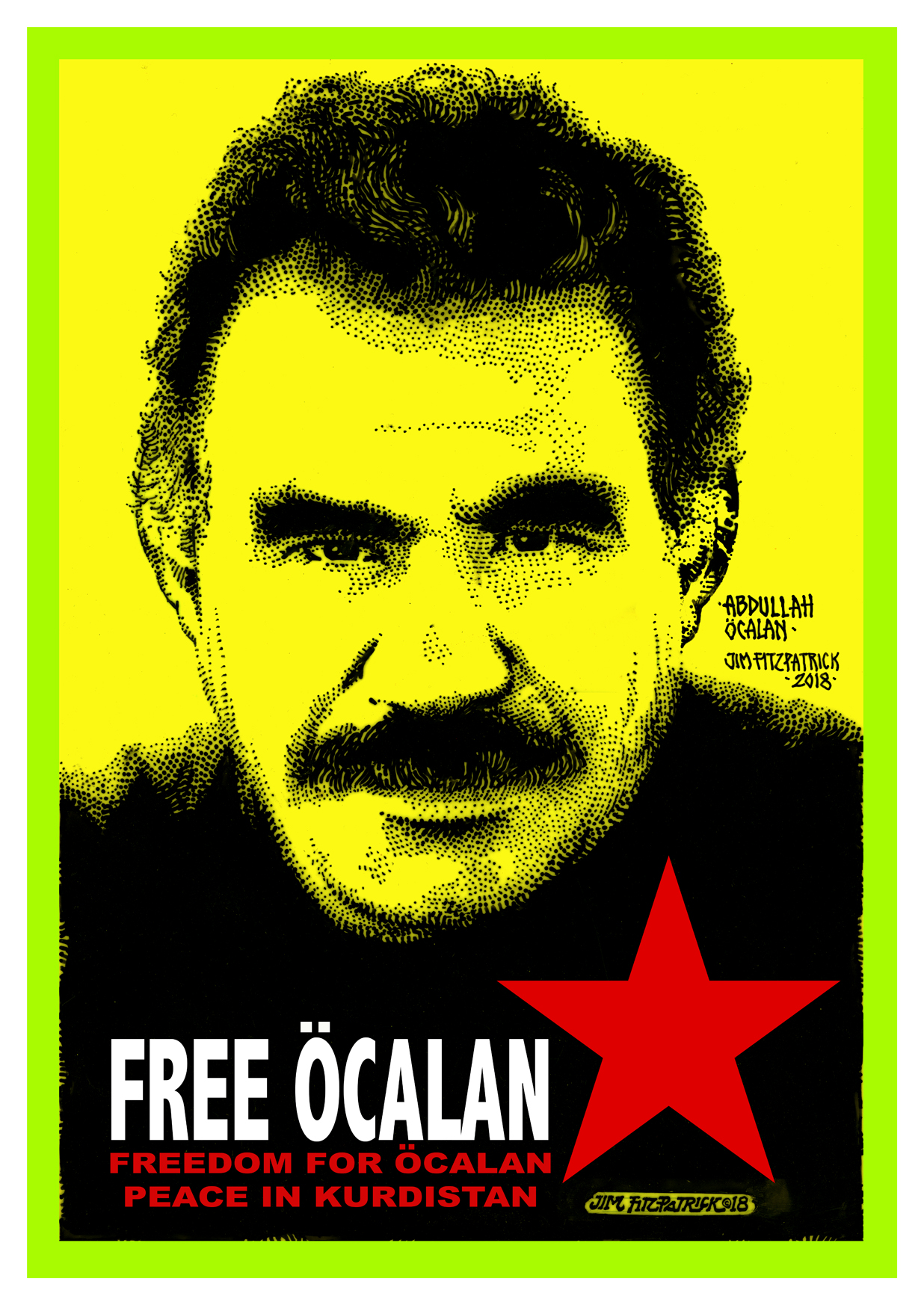
Free Öcalan


Fundación Infancia y Aprendizaje

Colección de libros Marxismo Crítico

Historical Materialism


CIPEC (Centro de Investigación en Pensamiento Crítico)

Centro para la Investigación como Crítica Práctica

Memoria Revista de Crítica Militante

Revista Laberinto






Marx desde cero




 marxismocritico.com