
Archivo
“Scientific and everyday concepts: Theory and practice for quality learning”: Irina Verenikina
 Melbourne Branch of the International Society for Cultural and Activity Research (ISCAR) and Monash University have pleasure in presenting Dr. Irina Verenikina, Faculty of Education, University of Wollongong at an open lecture “Scientific and everyday concepts: Theory and practice for quality learning”. The lecture was video-recorded on 19th of November in Monash University, Peninsula Campus, Frankston, Australia
Over the past decades the theory of Vygtosky has become increasingly popular as it provides educators with a useful framework to conceptualise a quality intervention. While some concepts of the theory have become widely accepted, others remain relatively unknown. This presentation focuses on the notion of concept formation, which is largely underrepresented in educational research, particularly in relation to adult learning.
«A philosopher under suspicion»: Sergei Mareyev
 The Soviet philosopher Evald Ilyenkov, who died in 1979 following a renewed witch-hunt against him by the authorities, defied Stalinist dogma and made a priceless contribution to the creative development of the Marxist method. This profile of Ilyenkov’s life and work is by philosophy scholar Sergei Mareyev. It first appeared in the Journal of Moscow State University, Volume 7, No. 1 in 1990. It is published in English for the first time.
Translation by Angela Landon
In 1989 we marked two dates associated with one name – 65 years from the day of his birth, and 10 years from the day of Evald Vasilievich Ilyenkov’s death. He belonged to the small group of leading Marxist philosophers who creatively developed revolutionary science in spite of the regime imposed 60 years ago in the Soviet Union, and despite having the least possible support.
Probably the attitude of the official scientific side was best expressed by his former comrade A.A. Zinoviev in a friendly cartoon, when they were still making the famous Moscow wall newspaper of the Institute of Philosophy (USSR Academy of Sciences).
«Introdução à Ontologia de Lukács: Aspectos Históricos e Ontológicos»: Sergio Lessa
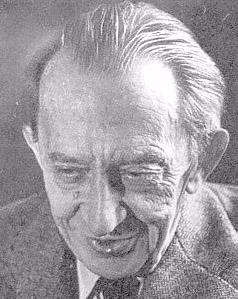 Em novembro de 2012 o professor de filosofia Sérgio Lessa ministrou na Universidade de Brasília um curso introdutório à ontologia de György Lukács, um dos mais importantes pensadores do marxismo ocidental. Lukács contribuiu enormemente sobre temas relacionados à reificação do ser social, ao fetichismo, à dialética e ao marxismo como ontologia fundada na categoria do trabalho humano, além de ter sido capaz de elucidar muitas das relações teóricas entre Kant, Hegel e Marx antes mesmo da publicação de vários dos manuscritos de Marx que somente hoje temos acesso. Lukács, ademais escrever sobre ética e estética do ponto de vista da análise marxista, foi ele também responsável por escrever um tratado sobre ontologia desde o início da escravidão até os dias em que morreu. O professor Sérgio Lessa faz uma excelente introdução à obra máxima de Lukács, a Ontologia do Ser Social, e aproveita também para discutir assuntos correlatos. Acompanhe aqui a gravação completa do evento.
«Origins on CHAT: German Philosophy and Marx»: Andy Blunden
 Talk given at the Monash Education Research Community, within the Department of Education at Monash University, by Andy Blunden on 20 April 2010.
The talk is the first of a two-part seminar for the International Course on Cultural Historical Activity Theory. It covers the contributions to this current of thought derived from Descartes, J G Herder, Goethe and Hegel. Part Two, deals with Marx. See marx.org/subject/philosophy/german.htm for readings, home.mira.net/~andy/works/origins-chat.htm for text of this talk and ethicalpolitics.org/chat/Genealogy-CHAT.htm for a diagram of the historical sources of CHAT more widely.
«The Universal and the Particulars in Hegel’s Logic and Marx’s Capital»: Fred Moseley
 I have argued in a number of papers (please see References) that there are two main stages (or levels of abstraction) in Marx’s theory in Capital. The first stage has to do with the production of surplus-value and the determination of the total surplus-value, and the second stage has to do with the distribution of surplus-value and the division of the pre-determined total surplus-value into individual parts (equal rates of profit, commercial profit, interest, and rent). The total amount of surplus-value is determined at the first stage (the production of surplus-value) and then this predetermined magnitude is presupposed in the second stage (the distribution of surplus-value). This key quantitative presupposition of the prior determination of the total surplus-value is repeated many times, in all the drafts of Capital, as I have shown in my papers. Thus, there is a clear logical progression from the determination of the magnitude of the total surplus-value in the first stage to the determination of the individual parts in the second stage. Other authors who have presented similar interpretations of the production and distribution of surplus-value and the prior determination of the total surplus-value in Marx’s theory include Paul Mattick, Roman Rosdolsky, Enrique Dussel, David Yaffe, and Duncan Foley.
«The Ideal in Human Activity»: Reviewed by Alex Levant
 E.V. Ilyenkov
The Ideal in Human Activity
Marxist Internet Archive Publications (www.marxists.org), Pacifica CA, 2009. 396pp. $25 pb
ISBN 9780980542875
The Ideal in Human Activity by E. V. Ilyenkov is a substantial tome consisting of two complete books and three articles, which offers for the first time in the form of a single volume the majority of this renowned Soviet philosopher’s work currently available in English translation. This publication constitutes an important intervention in the problem of consciousness, which has figured prominently in the canon of Western social and political thought from Plato to the present. Theories about the origin and nature of human thought have fundamentally shaped our notions of politics, taking a substantial turn in the nineteenth century in light of the critical significance that Marx ascribed to the role of consciousness in the process of revolution (Lowy 2005, p. 10). Consequently, the key debates on political organization in classical Marxism turned on the question of how to displace the hegemony of ruling ideas produced by false consciousness with the objectively correct perspective articulated by the class-conscious vanguard of the proletariat in the form of the communist party (Lukacs 1971; 2000; Second Congress of the Comintern 1977). But when the organizational innovations ascribed to Lenin (Lih 2005) did not yield in Central and Western Europe the same results ‘as in Russia’, the principal figures of a tradition retrospectively known as Western Marxism (Anderson 1976), set out in the early 1920s to re-examine some of the most foundational concepts on which the problem of consciousness rests in an effort ‘to rescue Marxism from positivism and crude materialism’ (Jacoby 1983, p. 524).
«Non-linear Processes and the dialectic»: Andy Blunden
 Most writers and researchers in the humanities speak of something like “dialectical processes” or “dialectical thinking” and use a number of metaphors to characterise the complex and nuanced processes of reality in contrast to what may be called “linear” or “mechanical” processes or thinking.
In his exposition of dialectics in the Logic, Hegel dealt with this problem in great length and detail from a conceptual point of view. Six distinct forms of the dialectic can be abstracted from Hegel’s work.
I shall briefly review the metaphors and forms of words used in popular and scientific discourse and then outline the concepts Hegel introduced for these same problems.
Popular conceptions of linear and non-linear processes
The idea of characterising processes or someone’s conception of a process as ‘linear’ has its origin in mathematical representations of processes in natural science. Here there is a dependent and an independent variable (possibly time), and this relation may be represented by a line on a graph; given appropriate measures for each variable or combination of variables, this graph may take the form of a straight line. In this case, the same change in the independent variable produces the same change in the dependent variable (add an extra kg to the pan and the spring always extends by one cm.), and the change is reversible (remove one kg from the scales and the spring retracts by one cm.)
This is the archetype of the ‘linear process’: a cause always has the same effect and is reversible. The ‘linear effect’ is thus independent of how many times it is applied, and in this specific sense is independent of previous history and context. A process can still be ‘linear’ in the strict sense while being context- and repetition-dependent, but this dependence on context and history is usually taken as one of the characteristics of ‘non-linear’ processes: a certain stimulus always produces a certain response, but suddenly one more stimulus produces a different response – the straw that broke the camel’s back. Irreversibility is also taken as a characteristic of ‘non-linear’ processes: “you can’t unscramble an egg.”
«Francisco Fernández Buey como filósofo de la ciencia»: Salvador López Arnal
 Texto leido en la Universidad Pompeu Fabra el 13 de diciembre de 2012. “Homenaje a Francisco Fernández Buey”.
Algunos aspectos de la obra del profesor Francisco Fernández Buey [FFB] tal vez no han merecido suficiente atención. Pienso, por ejemplo, en sus aportaciones y sugerencias en el ámbito de la filosofía de la ciencia, en sus reflexiones y propuestas sobre la problemática de la tercera cultura o en su programa para una política de la ciencia humanista, republicana y sostenible.
Me centro en el primer vértice. Tres de sus libros tienen relación directa con él (y hay numerosos huellas en otros), al igual que muchos de sus numerosos artículos (sobre todo en estos últimos años) y una cantidad en absoluto desdeñable de sus seminarios y cursos de doctorado.
Al autor de Albert Einstein. Ciencia y consciencia le gustaba mucho el cine. Había pensado escribir un guión para una película en su honor: “La epistemología de FFB: ‘E la nave va”, podía ser el título. No me ha salido. Sólo he logrado hilvanar algunas escenas.
Si mi intervención tuviera algún interés, me gustaría dedicársela a su memoria, a la memoria del profesor FFB y de Neus Porta, su compañera.
«Elementos de una teoría cultural de la objetivación»: Luis Radford
 RESUMEN
En este artículo se presentan los lineamientos generales de una teoría cultural de la objetivación –una teoría de la enseñanza y el aprendizaje de las matemáticas que se inspira de escuelas antropológicas e histórico-culturales del conocimiento. Dicha teoría se apoya en una epistemología y una ontología no racionalistas que dan lugar, por un lado, a una concepción antropológica del pensamiento y, por el otro, a una concepción esencialmente social del aprendizaje. De acuerdo con la teoría, lo que caracteriza al pensamiento no es solamente su naturaleza semióticamente mediatizada sino sobre todo su modo de ser en tanto que praxis reflexiva. El aprendizaje de las matemáticas es tematizado como la adquisición comunitaria de una forma de reflexión del mundo guiada por modos epistémico-culturales históricamente formados.
PALABRAS CLAVE: Objetivación, pensamiento matemático, semiótica, sentido, significado, significación cultural, signos.
«Lukács’ Critical Ontology and Critical Realism»: Mário Duayer and João Leonardo Medeiros
 ABSTRACT: This paper intends to put forward the late work of G. Lukács, The Ontology of Social Being, as an indispensable contribution to ontological investigation in general and particularly to the understanding of social reality. As the ontology of Lukács is quite unknown even by authors and currents which have been (properly) dealing with ontological issues in the last decades it seems to be extremely fruitful to bring it into discussion. Comparing the analysis of Lukács with the ontology of Critical Realism, for instance, it is not only possible to identify obvious convergences but also to shed light on many questions that still demand a proper treatment from an ontological perspective.
Introduction
By the beginning of the 1960s, after the publication of the first two volumes of his (unfinished) Aesthetics, Lukács set out the project of developing a Marxist ethics. For this purpose he had been collecting a huge amount of material since the late 1940s. It is in connection with this work that his concerns regarding ontology were most openly stated, though what many authors refer to as the ‘ontological turn’ of Lukács’ thought could be tracked down to the early 1930s. (Oldrini, 2002: 54) Since, for Lukács, there is no ethics without ontology, his Marxist ethics could only be elaborated on the basis of a Marxist ontology of social being. Thus his voluminous work, The Ontology of Social Being, published in German after the author’s death in 1971, is the end result of the attempt to develop an ontological foundation for an ethics that unfortunately could not be accomplished.
«Wittgenstein»: Andy Blunden
 No theory of human action, which necessarily includes the study of language and concepts within its scope, can go past the (later) work of Ludwig Wittgenstein, a renegade from Logical Positivism, who has provided an insider’s critique of the analytical approach to language and meaning. It is not so much that Wittgenstein provides any foundation or resource for a theory of action – he doesn’t – but to be viable a theory has to withstand a Wittgensteinian criticism. The aim of this reflection is to identify the questions which Wittgenstein swept under the carpet and to see what is needed to address these questions without transgressing the limits set by Wittgenstein.
What motivates this reflection is the need to ground a critique of the whole spectrum of interactionist approaches to the human science. By ‘interactionist’, I mean those approaches which eschew recourse to metaphysical claims, but aim to reconstruct the phenomena of human life on the basis of analysis of person-to-person interactions, generally without the aid of any substantial psychology or theory of ‘human nature’.
«Teoría científica y práctica histórica: relaciones entre el desarrollo del saber y las formas de vida social»: Marx W. Wartofsky
 Conferencias en torno al IX Simposio interdisciplinar sobre filosofía y medicina «Ciencia e historia» 22/03/1979
«Teoría científica y práctica histórica : relaciones entre el desarrollo del saber y las formas de vida social»
«Vygotsky, Bakhtin, Goethe: Consciousness and the dynamics of voice»: John Shotter
 ABSTRACT: All our higher mental functions are mediated processes, says Vygotsky (1986), and signs are the basic means used to master and direct them. But how can this be if our words and other signs work only in a purely representational, ‘picturing’ fashion, for they still need interpreting as to their meaning? The ‘inner observation’ problem remains unsolved. Our significant expressions must also work on us in another way: by the living expressions of others producing spontaneous bodily reactions from us. Thus the relation between thought and language is not to be found in patterns discoverable in transcripts of already spoken words, but in the dynamic influences exerted by our words in their speaking. Vygotsky (1986) speaks of our utterances as having an affective-volitional intonation in their voicing, while Bakhtin (1993) talks of them as having an emotional-volitional tone. This means, as I will elaborate in my talk, that not only it is possible to possess a transitional understanding of ‘where’ at any one moment we are placed in relation to another person’s expressions, but to possess also at that moment an action guiding anticipation of the range of next ‘moves’ they may make. Thus, as I see it then, thinking and consciousness is a socially responsive elaboration of our animal sensitivities to, and awareness of, events occurring in our relations to the others and othernesses in our surroundings. Thus, far from it being a special, private, inner theater or workshop of the mind, its emergence depends completely on the dynamical intertwining or intermingling of our ‘inner lives’ with the ‘inner’ lives of those around us. This view of thinking chimes in with Goethe’s [1749-1832] views quoted below, as well as with his account of a special kind of thinking he calls exact sensorial imagination. In this view, our thinking and consciousness becomes no more strange to us than the fact of our ‘livingness’ – a fact that is at once both ordinary, in the sense of being very familiar to us in our daily practical lives, as well as being quite extraordinary to us in our intellectual lives, due to the current inappropriateness of our academic modes of thought and talk. My talk, then, will be just as much concerned with an exploration of the move away from mechanical modes of thought to those appropriate to living processes, as it will be about thinking and consciousness.
«Marx and the Ontology of Social Being»: João Leonardo Medeiros
 Abstract: Although inspired by very different motivations, Geörgy Lukács (in his Ontology of Social Being) and Roy Bhaskar (mainly in The Possibility of Naturalism) attempted to unveil the key elements of the ontology entailed in Marx’s social theory. The paper intends to show that some of these elements can be truly employed to depict a general image of society. The following determinations are considered more extensively: teleology, which distinguishes human activity; knowledge and value taken as objective determinations of society; the structural character of the social world; the category of totality; and historicity, characterised by the notions of law (understood as tendency), development and uneven development.
«Un pensamiento para el futuro: a propósito de Vigotsky»: Vincent Charbonnier
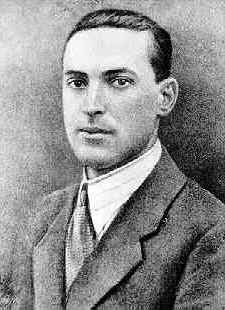 A propósito del libro de Lev S. Vigotky, Conscience, inconscient, émotions precedido de Vygostki, la conscience comme liaison de Yves Clot. (París: La Dispute, 2003).
Texto aparecido en ContreTemps, 2006, nº 17, p. 136-135, constituye una versión desarrollada y revisada de una nota crítica aparecida en Revue française de pédagogie: recherches en éducation, 2005, n° 150, p. 151-155.
La publicación de este volumen de tres textos de Lev S. Vigotsky es una admirable iniciativa de la editorial La Dispute. Debe saludarse la tenacidad en brindar al público francófono1 la obra del gran psicólogo ruso, prematuramente desaparecido a la edad de 38 años (1896-1934). Gracias a este volumen, vuelven a estar disponibles dos textos anteriormente publicados en francés en la revista Société française, en 1994 y 1995, pero desde entonces inaccesibles, de los cuales uno, el primero, muchas veces comentado, es considerado actualmente como un clásico. “La conciencia como problema de la psicología del comportamiento”, publicado en 1925 es el texto de una conferencia impartida en octubre de 1924 en el Instituto de Psicología de Moscú. “La psique, la conciencia, el inconsciente” fue publicado en 1930. “Las emociones y su desarrollo en la edad infantil”, que data de 1932 y aparece por primera vez en francés, es una de sus conferencias sobre psicología pronunciadas en el Instituto Pedagógico Superior de Leningrado.
La calidad de este volumen radica en el hecho de que todos estos textos constituyen hitos en el desarrollo vigotskyano, ofreciendo así la oportunidad de comprender in concreto la construcción de su pensamiento. Porqué lo que sorprende de inmediato al lector es su coherencia y su precisión o, mejor dicho, el movimiento de un pensamiento alejado de toda tentativa especulativa y/o reduccionista, que se basa en la riqueza y la complejidad del ser humano en sus dimensiones psíquicas, afín de construir la ciencia sin caer en el reduccionismo. Se exprime la singularidad de un enfoque, en psicología primero, que Vigotsky, aunque sea a título esencialmente póstumo, ha contribuido profundamente en transformar, pero también dentro del marxismo donde destaca como un pensador perspicaz y fecundo. Se puede así comprender la ocultación de la que fue víctima durante un largo periodo, que excede ampliamente el periodo stalinista, sin contar su (tardío) redescubrimiento.
Reading Marx’s Capital with David Harvey

Free Öcalan


Fundación Infancia y Aprendizaje

Colección de libros Marxismo Crítico

Historical Materialism


CIPEC (Centro de Investigación en Pensamiento Crítico)

Centro para la Investigación como Crítica Práctica

Memoria Revista de Crítica Militante
Revista Laberinto






Marx desde cero





 marxismocritico.com