
Archivo
«Abstraction versus Contradiction: Observations on Chris Arthur’s The New Dialectic and Marx’s ‘Capital’»: Roberto Finelli
 Abstract
This intervention concerns the different statute of abstraction in Marx’s work. By means of a critical confrontation with Chris Arthur’s work, Finelli presents his thesis of the presence of a double theory and fuction of abstraction in Marx’s work. In the early Marx, until the German Ideology, abstraction is, in accordance with the traditional meaning of this term, a product of the mind, an unreal spectre. More exactly, it consists in negating the common essence belonging to labouring humanity and projecting it, as alienated universal, into the idea of philosophy, into the state of politics and into the money of the market. In the later Marx, the nature of abstraction is, rather than mental, practical. It is directly related to the quantity without quality of capitalist labour, and it is the product of the systemic connection of machines to labour-power. In contrast to Arthur, Finelli maintains that practical abstraction in the Marx of Capital is not located in the zone of exchange and the market, where there is the mediation of money. On the contrary, it is located in the zone of production, which, for Marx, is a social ensemble not mediated by money but by relations of technological domination.
Keywords
abstraction, formal determination, presupposed-posited, opposition-contradiction, abstractionemptying out, dissimulation. The New Dialectic and Marx’s ‘Capital
«Mathematical Modelling and Ideology in the Economics Academy: competing explanations of the failings of the modern discipline?»: Tony Lawson
 Abstract
The widespread and long-lived failings of academic economics are due to an over-reliance on largely inappropriate mathematical methods of analysis. This is an assessment I have long maintained. Many heterodox economists, however, appear to hold instead that the central problem is a form of political-economic ideology. Specifically, it is widely contended in heterodox circles that the discipline goes astray just because so many economists are committed to a portrayal of the market economy as a smoothly or efficiently functioning system or some such, a portrayal that, whether sincerely held or otherwise, is inconsistent with the workings of social reality. Here I critically examine the contention that a form of political-economic ideology of this sort is the primary problem and assess its explanatory power. I conclude that the contention does not fare very well. I do not, though, deny that ideology of some sort has a major impact on the output of the modern economics academy. However it is of a different nature to the form typically discussed, and works in somewhat indirect and complex ways. Having raised the question of the impact of ideology I take the opportunity to explore its play in the economics academy more generally.
“Much Learning does Not Teach Understanding” (A Conversation with Vasili Davydov): Karl Levitin
 Professor Davydov, your books, articles and public statements suggest that present-day psychology needs new, drastically different methods and is therefore on the eve of a radical change of theory, and hence in practical application. Can you elaborate on that idea?
To begin with, I must say that contemporary psychology has split into a number of disciplines each having its own object of study. They are general psychology, psychophysiology, peer group, developmental and educational psychology, social, medical, the psychology of law, the psychology of labour, art, sport, and so on. In looking for answers to the questions put forth by life, psychologists are forging ahead with their investigations and have come up with a lot of valuable results. In a sense, such differentiation of psychological disciplines is useful as it gives deeper insights into the psychological laws of whatever happens to be the particular object of study. On the other hand, it results in the loss of something general that should unite all psychological studies. For a long time now the prevalent trend has been to allow not relative but complete autonomy to every branch of what used to be the one psychological tree: let everyone do his own job and forget about what the man next door is doing. And the connection between the psychology of art, peer group psychology, and psychology of labour, for example, is considered a problem of no particular interest, or else a task for another discipline.
«La actividad humana en la Psicología Histórico-cultural»: Rosalia Montealegre
 Resumen
«Agency and Vygotskyan theory»: Arturo Escandón
By introducing a ‘complex mediated act’ as the unit to account for the development of higher psychological functions, Vygotsky opened a way for a non-deterministic account of agency whereby the individual is acted upon and acts upon society.
A talk given on September 2010
«The russian spinozists»: Andrey Maidansky
 ABSTRACT. The article deals with the history of Russian Spinozism in the 20th century, focusing attention on three interpretations of Spinoza’s philosophy – by Varvara Polovtsova, Lev Vygotsky, and Evald Ilyenkov. Polovtsova profoundly explored Spinoza’s logical method and contributed an excellent translation of his treatise De intellectus emendatione. Later Vygotsky and Ilyenkov applied Spinoza’s method to create activity theory, an explanation of the laws and genesis of the human mind.
KEY WORDS: philosophy of Spinoza, Spinozism, Polovtsova, Vygotsky, Ilyenkov, Russian Marxism, activity theory, logical method
When looking over the legion of interpretations which have escorted Spinoza’s philosophy in the course of the past three centuries, one immediately recalls an ironic phrase of the scholastics: auctoritas nasum cereum habet. It seems that Spinoza’s teaching has been interpreted in all possible ways. It was already Hegel who had sufficient reason to complain that Spinoza’s doctrine had been too often judged in a rough and ready manner.1 In Russia of XIX century this ordinary state of affairs was complicated by a generally hostile attitude towards the philosophy of Spinoza. Though his doctrine appeared at the epicenter of impassioned polemics with the participation of leading Russian philosophers – Vladimir Solov’ëv, Alexander Vvedenskij, Lev Shestov, Semën Frank, – not one of them declared his devotion to Spinoza’s teaching. Only somewhat later would V. Polovtsova, L. Vygotskij and E. Il’enkov devote themselves to continue his inquisitio veri. They had to go against the general current of Russian philosophy, although at times the latter was becoming more sympathetic to Spinoza’s (or rather to alleged Spinozistic) ideas. I do not intend here to survey the various Spinozistic tendencies in Russian philosophy; I would like to explore somewhat of its Spinozistic “mainstream.”
Cinco Conferencias realizadas por el filósofo marxista Manuel Sacristán Luzón entre los años 1978 y 1983
 El trabajo científico de Marx y su noción de ciencia (1978)
El trabajo científico de Marx y su noción de ciencia es el título de una conferencia impartida por el profesor Manuel Sacristán Luzón en la Fundación Miró de Barcelona el 9 de noviembre de 1978. Descargar archivo (.mp3)
Reflexión sobre una política socialista de la ciencia (1979)
Reflexión sobre una política socialista de la ciencia es el título de una conferencia impartida por el profesor Manuel Sacristán Luzón en la Facultad de Filosofía y Letras de la Universidad de Barcelona el 17 de mayo de 1979. Descargar archivo (.mp3)
«Marxismo crítico en México: Adolfo Sánchez Vázquez y Bolívar Echeverría»: Stefan Gandler
 El Fondo de Cultura Económica pondrá a circular en breve el libro Marxismo crítico en México: Adolfo Sánchez Vázquez y Bolívar Echeverría, en el que el autor, el filósofo alemán Stefan Gandler, reivindica las aportaciones que esos dos pensadores mexicanos han hecho a la filosofía mundial, con un punto de vista contrario al eurocentrismo imperante en los estudios filosóficos. Como una primicia para los lectores de La Jornada, ofrecemos las primeras páginas de este libro a manera de adelanto. Se trata del prólogo que escribió Michael Lowy y que a su vez, también a contracorriente de los usos y costumbres del ámbito académico, no sólo ubica, reseña, alumbra hacia el contenido del libro, sino que infunde un saludable espíritu crítico al mismo
Este hermoso libro nos habla de la contribución latinoamericana -en este caso, mexicana- a la renovación del marxismo crítico.
Stefan Gandler logró no sólo exponer, de manera profunda y coherente -¡pero no acrítica!-, el pensamiento de Adolfo Sánchez Vázquez y Bolívar Echeverría, su biografía, la evolución de sus ideas, la bibliografía completa de sus obras, sus convergencias y divergencias, sino también aportó la demostración de que la ruptura con el eurocentrismo es una condición indispensable para una verdadera universalización de la teoría crítica.
«Spinoza, Ilyenkov and Western Marxism – meeting the challenges of the global crisis»: Corinna Lotz and Penny Cole
 Introduction
Evald Ilyenkov took Spinoza’s philosophy as the starting point for his own critique of positivism and mechanical materialism. While this assumed a strictly philosophical form, its political source was Ilyenkov’s profound conviction that a turn towards materialist dialectics was critical for the future of the Soviet Union.
Ilyenkov’s position as an “orthodox heretic” philosopher may help to explain why he identified so closely with Benedict Spinoza. Like Spinoza some 300 years earlier, he was a child of his time, but in equally deep conflict with proponents of dogma. In Spinoza’s case it was religious dogma, in both its Judaic and Christian forms. With Ilyenkov it was Marxist dogma turned into a state religion through Stalinism – and dogma’s ugly sister – the mechanistic positivist scientism which invaded Soviet philosophy during the 1960s. Ilyenkov championed those sides of the 17th century philosopher’s ideas which made a decisive impact in the late 18th century on Hölderlin and Hegel, and later on Feuerbach, Marx and Engels. He drew on Lenin to establish materialist dialectics once again as the theory of knowledge of Marxism. Like Lenin, Ilyenkov found himself swimming against the tide but was not deflected from his goals.
«Vygotsky, The Making of Mind»: A. R. Luria
 It is no exaggeration to say that Vygotsky was a genius. Through more than five decades in science I never again met a person who even approached his clearness of mind, his ability to lay bare the essential structure of complex problems, his breadth of knowledge in many fields, and his ability to foresee the future development of his science.
We met early in I924 at the Second Psychoneurological Congress in Leningrad. This gathering was the most important forum at that time for Soviet scientists who worked in the general area of psychology. Kornilov brought along from the Institute of Psychology several of his younger colleagues, among whom I was included.
When Vygotsky got up to deliver his speech, he had no printed text from which to read, not even notes. Yet he spoke fluently, never seeming to stop and search his memory for the next idea. Even had the content of his speech been pedestrian, his performance would have been notable for the persuasiveness of his style. But his speech was by no means pedestrian. Instead of choosing a minor theme, as might befit a young man of twenty-eight speaking for the first time to a gathering of the graybeards of his profession, Vygotsky chose the difficult theme of the relation between conditioned reflexes and man’s conscious behavior.
«Análisis neuropsicológico de las alteraciones del lenguaje»: Luis Quintanar Rojas y Yulia Solovieva
 Resumen
El presente artículo analiza al lenguaje y sus alteraciones desde la perspectiva de la escuela neuropsicológica de Luria (1947). Se describen algunos de sus conceptos fundamentales, tales como funciones psicológicas superiores y su localización sistémica y dinámica en el cerebro, síntoma, defecto primario y secundario, factor y síndrome. De acuerdo a dichos conceptos, el lenguaje surge y se desarrolla durante la vida del individuo en las condiciones de la actividad humana, cumpliendo varias funciones en ella. Además, el lenguaje se localiza de manera sistémica y dinámica en el cerebro, como sistema funcional complejo (Luria, 1969; Anojin, 1980), el cual está integrado por varios eslabones operacionales, cuyo trabajo común permite realizar las acciones verbales complejas. Estos eslabones se identifican como factores neuropsicológicos, los cuales se encuentran en la base de la clasificación de las afasias de Luria (1973). El diagnóstico Neuropsicológico se realiza a través de la identificación del factor o factores que dificultan o imposibilitan la ejecución, por lo que no se limita al análisis de un solo proceso, sino que considera a toda la actividad del paciente. Se analiza el significado de la teoría de Luria para la investigación de las alteraciones y la rehabilitación del lenguaje y sus posibles relaciones con otros procesos psicológicos. Asimismo, se analiza la afectación de las esferas intelectual y afectivo-emocional en los casos de afasia, así como la aplicación de esta aproximación en la neuropsicología infantil.
Palabras clave: Afasia, Alteraciones del lenguaje, Neuropsicología del lenguaje, Cognición y afasia.
«Dialéctica de lo concreto»: Karel Kosik
 Este libro que hoy ofrecemos a los lectores de habla española pronto ocupará un lugar insustituible en la bibliografía marxista en nuestra lengua y un puesto eminente entre la producción filosófica que circula en nuestros medios. Por su puesto, no haríamos esta afirmación si no estuviéramos persuadidos de los elevados méritos que, desde diversos ángulos, muestra esta obra.
Pero antes de referirnos a algunos de ellos y, en particular, al clima filosófico en que se sitúan, trataremos de presentar en pocas líneas a su autor, poco conocido hasta ahora por los lectores hispanoamericanos. Karel Kosík es un joven filósofo checo, nacido en Praga en 1926. Como militante del Partido Comunista de Checoslovaquia participó activamente en la lucha clandestina contra el nazismo. Después de liberado su país, hizo estudios filosóficos en Moscú y Leningrado (entre 1947 y 1949). En 1956 se da a conocer con un artículo sobre Hegel en una discusión sobre la filosofía marxista y suscita, a su vez, agudas objeciones. En 1958 publica un volumen de carácter histórico: La democracia radical checa. Más tarde (en 1960) participa en el Coloquio Internacional de Royaumont sobre la dialéctica, con una intervención que hoy constituye el primer capítulo del presente libro, y que fue publicada originariamente en la revista italiana Aut, en 1961. En 1963 asiste al XIII Congreso Internacional de Filosofía, celebrado en México, donde presenta una importante comunicación: «¿Wer ist der Mensch?«, en la que concentra algunas ideas fundamentales expuestas ya en su libro Dialektika konkrétniho (Dialéctica de lo concreto ), que ese mismo año había aparecido en su lengua original en Praga, provocando un enorme interés y acalorados comentarios no sólo entre los filósofos checos, sino, en general, en los medios intelectuales praguenses más diversos. Posteriormente, en 1964, participa en un coloquio del Instituto Gramsci, de Roma, donde da a conocer una brillante ponencia titulada «Dialéctica de la moral y moral de la dialéctica», y pronuncia una conferencia sobre «La razón y la historia» en la Universidad de Milán.
«Saussure, Voloshinov y Bajtín revisitados. Estudios históricos y epistemológicos»: Dora Riestra (comp.)
 Que la atribución de la autoría de El marxismo y la filosofía del lenguaje a Mijaíl Bajtín no solo es un error sino que una “maquinación”, o que la lectura más difundida de Saussure no es más que una “explotación” estructuralista, reduccionista e incluso equivocada son solo dos de las sugerentes tesis de lectura que este texto presenta. La compilación de la argentina Dora Riestra incluye trabajos de Cristian Bota, Jean Paul Bronckart, Ecaterina Bulea, Irina Ivanovna y Patrick Sériot, que aportan significativamente a la relectura y a la contextualización histórica de teorías que hoy tienen una radical relevancia en las ciencias del lenguaje, el análisis del discurso y la didáctica de las lenguas. La propuesta del texto –histórica e interpretativa, más que filológica– es poner en perspectiva y resolver los problemas epistemológicos y metodológicos que reviste el uso de estos conceptos, de circulación frecuente en los contextos académicos y universitarios actuales.
Reedición de «Dialéctica de lo abstracto y lo concreto en «El Capital» de Marx»: Evald Ilyenkov
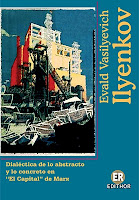 Título: Dialéctica de lo abstracto y lo concreto en «El Capital» de Marx
«Probabilidad, economía y la teoría del valor trabajo»: Emmanuel Farjoun y Moshe Machover
 Introducción
En nuestro libro Leyes del caos, publicado por Verso en 1983, abogamos por un desplazamiento metodológico básico en los fundamentos de la economía política.1Economistas y filósofos económicos a menudo han señalado la naturaleza esencialmente indeterminada y estadística de categorías económicas tales como precio y tasa de ganancias.2 Los marxistas, en particular, han reconocido que esta indeterminación tiene sus raíces en la naturaleza desordenada, descoordinada y caótica de las relaciones de mercado capitalistas.3 Sin embargo, en la práctica (teórica), el enfoque tomado por todas las escuelas económicas, marxistas y no marxistas por igual, es predominantemente determinista: las categorías económicas básicas son teorizadas como cantidades numéricas determinadas, interrelacionadas por medio de leyes deterministas. En Leyes del caos, abogamos por el abandono de esta metodología en favor de un marco conceptual totalmente probabilístico, que no solamente le preste servicio verbal a la naturaleza estadística de las categorías económicas básicas, sino que actualmente se incorpore dentro de sus modelos teóricos. Estas categorías, sostenemos nosotros, deberían ser teorizadas como “variables de azar”, interconectadas por leyes estadísticas. También intentamos mostrar cómo, tal metodología, aplicada a la teoría económica marxista, puede producir una versión probabilística, reconstruida y moderna, de la teoría del valor trabajo, capaz de trascender la profunda crisis teórica de la economía política marxista tradicional. En nuestra opinión, esta crisis se debe en gran parte a la mediación determinista errónea que plantea la teoría tradicional, entre valores y precios de mercado, siendo el eslabón mediador los llamados precios de producción.
Reading Marx’s Capital with David Harvey

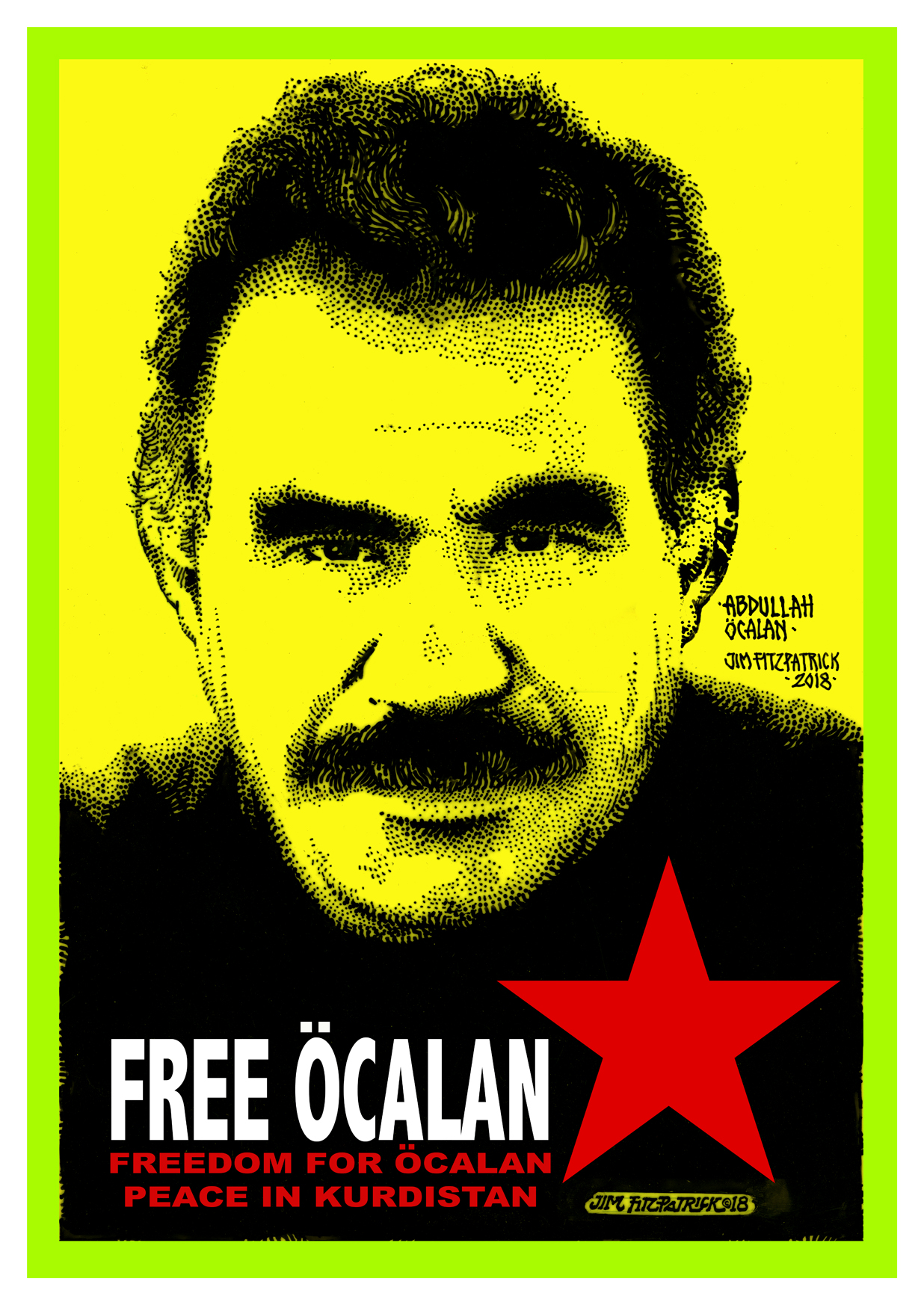
Free Öcalan


Fundación Infancia y Aprendizaje

Colección de libros Marxismo Crítico

Historical Materialism


CIPEC (Centro de Investigación en Pensamiento Crítico)

Centro para la Investigación como Crítica Práctica

Memoria Revista de Crítica Militante
Revista Laberinto






Marx desde cero





 marxismocritico.com