
Archivo
«A Marxist Philosophy of Language»: Jean-Jacques Lecercle
 Language has been defined in a number of different ways: as a mental organ, a cognitive ability, a state of mind, as a system of signs, a computational procedure, as means of communication, or means of describing experience, and many others. All such definitions capture vital features of language, none of them, however, is (nor can be) complete. Additionally, approaches to language put forward by structuralism, functionalism, generativism, and cognitivism (to concentrate solely on the most important schools of linguistic thought in the twentieth century) are in many respects incompatible. As has been observed by Thomas Kuhn, it is often impossible to compare theories due to the different usage of fundamental notions, and different definitions of language indeed provide support for his incommensurability thesis. For obvious reasons a similar situation may be observed in linguistics, and by extension, philosophy of language, which is traditionally concerned with the underlying nature of the phenomena that linguists study.
Jean-Jacques Lecercle, Professor of English at the University of Paris at Nanterre, offers a Marxist approach, both to language, and philosophy of language, which results in a number of new definitions and reformulations, and a vehement critique of some prominent contemporary non-Marxists approaches. The book, originally published in French (Une philosophie Marxiste du langage, Paris 2004), comprises seven chapters, a conclusion with glossaries, list of references and an index.
[Video] István Mészáros no Roda Viva (12-02-2002)
 O filósofo húngaro István Mészáros é entrevistado no Roda Viva (TV Cultura – gravado em 12.02.2002). Entrevistadores: Heródoto Barbeiro. Emir Sader, Ricardo Antunes, Carlos Nelson Coutinho, Luiz Gonzaga Beluzo, Maria Orlanda Pinasi e Haroldo Ceravolo Cereza.
Hungarian philosopher István Mészáros interviewed on Roda Viva (Brazilian TV Interview show – recorded on 12.02.2002) Interviewers: Heródoto Barbeiro. Emir Sader, Ricardo Antunes, Carlos Nelson Coutinho, Luiz Gonzaga Beluzo, Maria Orlanda Pinasi e Haroldo Ceravolo Cereza.
«Pour lire Le Capital»: David Harvey
Mon but est de vous amener à lire le livre I du Capital, à le lire tel que Marx voulait qu’il soit lu 1. Cette entreprise peut paraître ridicule, puisque si vous n’avez pas lu cet ouvrage, il vous est impossible de connaître les intentions de Marx. Or je peux vous assurer qu’il souhaitait être lu vraiment et attentivement. Tout véritable apprentissage implique un effort pour comprendre l’inconnu. La lecture du Capital proposée dans ce livre se révélera d’autant plus éclairante que vous aurez préalablement lu les chapitres traités.
C’est pourquoi je voudrais vous encourager à vous frotter directement au texte de Marx, pour que vous puissiez vous faire votre propre idée de sa pensée. Cela soulève d’emblée une difficulté. Tout le monde a entendu parler de Karl Marx, tout le monde a entendu les mots « marxisme » et « marxiste », qui possèdent toutes sortes de connotations : vous avez donc forcément des idées préconçues et des préjugés – favorables ou non. Je vous demanderai cependant de commencer par mettre de côté, autant que possible, ce que vous croyez savoir de Marx, afin de pouvoir entendre ce qu’il a réellement à dire.
«Developing Realistic Methodology: How New Dialectics Surpasses the Critical Realist Method for Social Science»: Andrew Brown
 ABSTRACT
This paper argues that ‘new dialectics’ provides an adequate methodology for economics and social science. The argument is advanced via a critique of ‘critical realism’, an important rival to new dialectics. Critical realism holds that the root mistake underlying orthodox methodology, termed the ‘epistemic fallacy’, is a failure to sustain adequately the distinction between ontology and epistemology, resulting in the relative neglect of ontology. By overcoming the fallacy, critical realism claims to provide an adequate methodology for economics and social science. The paper argues that critical realism goes too far in the opposite direction to the epistemic fallacy. Critical realism neglects the intrinsic links between ontology and epistemology so fails to provide an adequate methodology. However, critical realism must not, according to the argument, simply be rejected in toto if an adequate methodology is to be achieved. Instead it must be surpassed or transcended. The recent resurgence of a ‘new dialectics’ is argued to provide just such a supersession because new dialectics affirms the intrinsic links between ontology and epistemology without reducing the former to the latter. The implications of this transcendence are illustrated via a comparison of the respective interpretations of Marx’s Capital offered by critical realism and new dialectics
«El derecho a la ciudad»: David Harvey
 Vivimos en una era en la que los ideales de los derechos humanos se han colocado en el centro de la escena tanto política como éticamente. Se ha gastado una gran cantidad de energía en promover su significado para la construcción de un mundo mejor, aunque la mayoría de los conceptos que circulan no desafían fundamentalmente las lógicas de mercado liberales y neoliberales o los modos dominantes de legalidad y de acción estatal. Vivimos, después de todo, en un mundo en el que los derechos a la propiedad privada y el benefició aplastan todas las demás nociones de derechos.
Quiero explorar aquí otro tipo de derecho humano, el derecho a la ciudad. ¿Ha contribuido el impresionante ritmo y escala de urbanización de los últimos cien años al bienestar humano? La ciudad, en palabras del sociólogo urbano Robert Parker, es
«el intento más exitoso del ser humano de rehacer el mundo en el que vive de
acuerdo con el deseo más íntimo de su corazón. Pero si la ciudad es el mundo
que el ser humano ha creado, es también el mundo en el que a partir de
ahora está condenado a vivir. Así pues, indirectamente y sin un sentido nítido
de la naturaleza de su tarea, al hacer la ciudad, el ser humano se ha rehecho
a sí mismo«.
«Of Social Interests and Critical Intent: From Ideology to Discourse and Back Again»: Neil Smith
Progress in Human Geography Annual Lecture (AAG 2011)
Of Social Interests and Critical Intent: From Ideology to Discourse and Back Again
Professor Neil Smith, City University of New York
«O Mundo do Trabalho no Século XXI»: Ricardo Antunes
 O Roda Viva recebeu, no dia 3 de setembro, Ricardo Antunes, um dos mais destacados sociólogos marxistas da atualidade, cujos estudos se direcionam para o tema trabalho e suas novas formas de relação dentro do mundo capitalista contemporâneo. Com as mudanças relativamente recentes no sistema de trabalho, que vão desde a terceirização de serviços, o aumento na procura pelos concursos públicos, a contratação de PJs, o trabalho por tarefa até o uso de celulares e e-mails no trabalho, Ricardo analisou as transformações ocorridas nesse universo e as consequentes implicações nos planos social e político.
Ricardo Antunes diz que enxerga uma precarização trabalhista mundial e alerta para uma possível queda no trabalho formal no Brasil. Segundo o estudioso, a precarização leva à terceirização – que já soma 10 milhões de trabalhadores no país. “Terceirização não é sinônimo de informalidade, mas se torna informal muito fácil. Há terceirização dentro da empresa e fora da empresa”. Um dos problemas decorrentes do trabalho terceirizado é o cumprimento dos direitos trabalhistas. “Há casos em que o trabalhador procura os seus direitos e a empresa já nem existe mais”. As pesquisas revelaram nos últimos anos um crescimento no emprego, no entanto Ricardo Antunes diz a realização desse tipo de coleta de dados é imprecisa. “Os dados são mascarados, mas ainda assim houve crescimento de trabalho”, reconhece.
«Developing Realistic Philosophy: From Critical Realism to Materialist Dialectics»: Andrew Brown
 Abstract
This paper compares the (relatively little known) ‘materialist dialectics’ of E.V. Ilyenkov to the ‘critical realism’ and ‘dialectical critical realism’ of Roy Bhaskar. The latter author specifies an ontology of ‘emergence’ and ‘stratification’. He demonstrates that, not only a critique of postmodernism, but an outflanking of much contemporary Marxist work can be achieved on the basis of such an ontology. For example, the ‘new dialectics’ interpretation of Marx and Hegel (Arthur 1993) remains largely silent on the ‘emergence’ of thought from material body; yet, critical realism shows that a specification of the mind-body relation is of utmost importance. Not despite, but because of its great strength, the paper undertakes an ‘immanent’ critique of the critical realist ontology. Drawing upon Ilyenkov’s interpretation of Spinoza, the paper argues that the critical realist articulation of stratification and emergence collapses into (essentially Humean) scepticism. The underlying reason for this collapse is argued to be the non-identity of thought and being generated by the critical realist theory of mind. On Ilyenkov’s interpretation, Spinoza’s articulation of mind and body sustains the materialist identity, as well the opposition, of thought and being. Through this identity-of-opposites, the notions of ‘stratification’ and ‘emergence’ are preserved but raised to a new conceptual level. Ilyenkov’s novel interpretation of Spinoza has far reaching implications. These are illustrated via a brief re-examination of the Marx-Hegel relation.
«The Economic Crisis in Fact and Fiction»: Paul Mattick, Jr.
 Paul Mattick, Jr.’s most recent book, Business as Usual: The Economic Crisis and the Future of Capitalism, was just published by Reaktion Books. In late April, he sat down with John Clegg and Aaron Benanav of the journal Endnotes This version of their interview appeared in The Brooklyn Rail.
Rail: Recent reports suggest that the economy is growing again. The unemployment rate is stabilizing, or even declining, and the Dow is trending upwards. So was the crisis really that deep? What makes you think that we haven’t already seen the end of it?
Paul Mattick: Quite a few things. One is the ongoing difficulties in the world as a whole with regard to state finances and unemployment. It is a mistake to look simply at the United States. This is a global problem. There has been a parade of fiscal crises in Europe: in Portugal and to a certain extent Spain. The attempt to master the crisis has led to deepening depression-conditions in England and Greece. It has even reached China, where apparently high growth rates are leading to seemingly problematic rates of inflation—exactly like the pseudo-growth of the 1970s, which generated high inflation rates in the west. Even with respect to the United States, and I wouldn’t be so impressed by measures such as employment going up and down. To a certain extent, this reflects the fact that people are dropping out of the labor force. There are of course minute changes from month to month in the number of people who get jobs, but overall conditions remain extremely poor.
It’s also worth remembering that the GDP growth rate is an artificial construction. For example, since economic theory assumes that everyone who receives money is being paid for some service or good that has been produced, whenever someone from Goldman Sachs gets a bonus, that appears as part of the growth figures. If you give Lloyd Blankfein a $35 million bonus, it’s assumed that he has performed $35 million worth of services. The truth is that the growth rates are increasingly a measure of activity in the financial sector, so even today, all this remains completely imaginary. It’s nice if a person here or there gets a job, but the truth is the city of Detroit is still 25 percent smaller than it was ten years ago. The unemployment rate in Tampa, Florida—which I happened to read about today—even if it is one percent lower than it was last month, is still 11 percent. All over the world unemployment rates remain high. There is very little lending from banks, very little investment, and very little actual economic growth.
«Vygotsky y el método dialéctico»: Andy Blunden
 Traducción: Efraín Aguilar
Los siguientes comentarios acerca del trabajo de Vygotski son parte de una discusión sobre la aplicación del método dialéctico. Están basados en «Thought and Language«, publicado por MIT Press en 1962 y reimpreso en 1980.
El enfoque de Vygotski
1. La noción del significado de la palabra
Vygotski observa que el estudio previo de la relación pensamiento-lenguaje consideraba de modo aislado la génesis de cada parte de la relación y asumía que la relación entre las dos era invariable; o alternativamente, las dos eran identificadas mecánicamente. Al contrario, Vygotski propuso la necesidad de concebir el objeto de investigación como una unidad de opuestos y que la génesis inherente de la relación estaba en su esencia misma.
“En opinión nuestra el curso correcto a seguir es usar otro tipo de análisis, que puede ser llamado análisis dentro de las unidades. Por unidad entendemos un producto del análisis que, a diferencia de los elementos, retiene todas las propiedades básicas del todo y que no puede ser dividido sin perderlas… [la célula viva] ¿Cual es la unidad básica del pensamiento verbal?… el significado de la palabra… La concepción del significado de la palabra como unidad tanto del pensamiento generalizante como del intercambio social es de incalculable valor para el estudio del pensamiento y el lenguaje” [Thought and Language, Chapter 1].
«New Market Socialism: A Case for Rejuvenation or Inspired Alchemy?»: Dimitris Milonakis
I. INTRODUCTION
1. Socialism as a concept has its roots in the eighteenth century Enlightenment’s ideals of equality and co—operation, whereas the term itself was coined during the 1820’s. Throughout most of its history and certainly throughout the nineteenth and early twentieth century, from Karl Marx and Frederic Engels to the Fabians, the concept has been held to be synonymous with corporate planning in the context of common ownership of the means of production. As such, the essence of the concept has traditionally been based on a critique of capitalism as an exploitative class system and has correspondingly been hostile to both markets and private ownership (Hodgson, 1999b, ch.2).
2. Market socialism as a concept has a shorter history: its origins can be traced back to the calculation debate of the 1920’s and 1930’s. However, the basic idea associated with itto marry socialism with markets—is contemporaneous with the invention of the term ‘socialism’. Thus from Pierre Proudhon’s free association of small independent producers what Marx called ‘petty bourgeois socialism’ to John Stuart Mill’s sympathy with decentralised co—operative socialism, the idea has been to combine the efficiency of markets with the egalitarian goals of socialism. Having said this, it is also true that the idea of combining socialism with the market would be considered a contradiction in terms by most nineteenth century socialists (ibid).
Videos del V Coloquio Internacional “Teoría crítica y marxismo occidental” Alienación y extrañamiento: reflexiones teóricas y críticas

Vídeos:
Intervención de Ricardo Antunes (UNICAMP) «Los ejercicios de la subjetividad. Las cosificaciones inocentes y las cosificaciones alienadas» en el Panel «La alienación hoy»
«Los diez principios de la psicología histórico-cultural»: Moisés Esteban Guitart
 Resumen
Según la psicología cultural no es posible entender la conducta y mente humana sin analizar el contexto histórico, institucional, social y cultural en el que se expresa y se desarrolla. Bajo esta perspectiva, el fenómeno psicológico es el producto y resultado de la participación en situaciones y actividades socioculturales a través de las cuales las personas se apropian del conjunto de artefactos valorados por una comunidad en un momento histórico determinado (la lengua, oral y escrita, la notación matemática, el uso de las nuevas tecnologías). El origen de estas ideas se encuentra en la escuela histórico- cultural liderada por Vygotski, en la antigua Unión Soviética. En el artículo se exponen diez principios asumidos por esta escuela: 1) la conciencia humana como objeto de estudio; 2) la génesis social de la conciencia y conducta humana; 3) el principio de la significación; 4) el desarrollo cultural de la conducta humana; 5) los cuatro estadios en el dominio de signos; 6) el principio de la mediación; 7) el carácter práctico de la actividad humana; 8) la función planificadora del lenguaje; 9) la “zona de desarrollo próximo” y, finalmente, 10) el método dialéctico.
Palabras clave
psicología cultural – escuela histórico-cultural – Vygotski – mediación semiótica – zona de desarrollo próximo.
La Educación Prohibida
 «La Educación Prohibida», Estreno Mundial 13 de Agosto del 2012
Sitio Web Oficial: http://www.educacionprohibida.com
Mapa de Proyecciones Independientes: http://proyecciones.educacionprohibida.com/mapa/
Se permite y alienta la copia, modificación, adaptación, traducción y exhibición pública de esta película, siempre que no existan fines de lucro y se mantengan estas mismas condiciones. Copyleft 2012. La cultura se protege compartiéndola.
Licencia: Creative Commons Atribución-NoComercial-CompartirIgual 3.0
Facebook: http://www.facebook.com/laeducacionprohibida
Twitter: @EdProhibida / #YoViLep
Reading Marx’s Capital with David Harvey

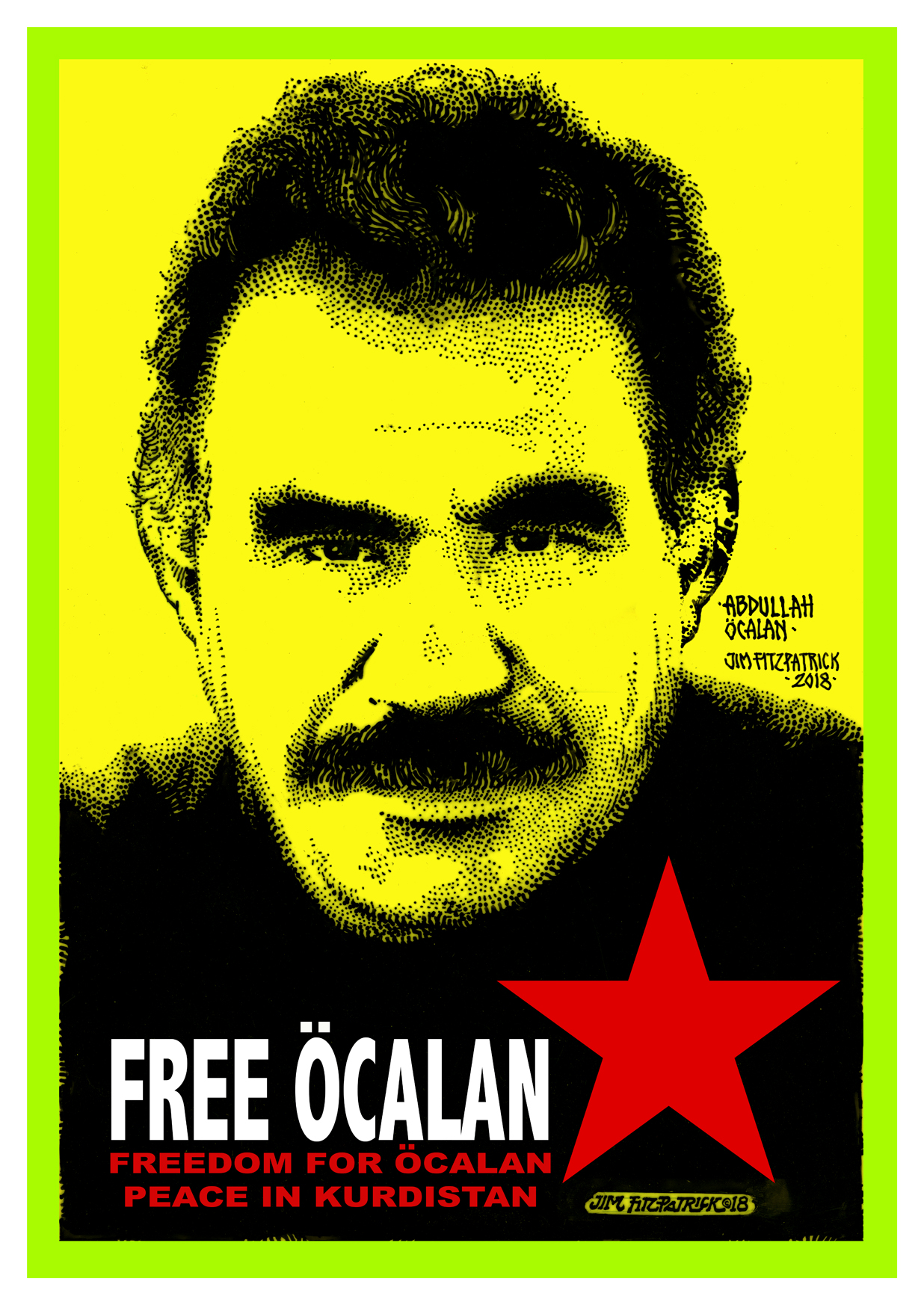
Free Öcalan


Fundación Infancia y Aprendizaje

Colección de libros Marxismo Crítico

Historical Materialism


CIPEC (Centro de Investigación en Pensamiento Crítico)

Centro para la Investigación como Crítica Práctica

Memoria Revista de Crítica Militante
Revista Laberinto






Marx desde cero




 marxismocritico.com