
Archivo
«Para ser humanos necesitamos ser libres»: Aquiles Montoya
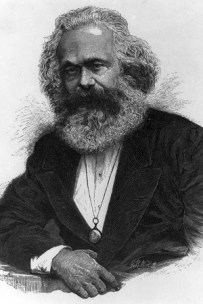 RESUMEN: El ser humano es el único ser vivo que por su naturaleza puede ser libre. El trabajo es una necesidad interna al ser humano y es que el trabajo como actividad libre y consciente, es una forma de realización humana. En el capitalismo, no sólo estamos acabando con la naturaleza, sino que impedimos la plena realización humana. Nos hemos transformado en depredadores de toda forma de vida. Si no transformamos esta forma histórica de sociedad, corremos el peligro de no tener historia, porque ya no habría seres humanos.
ABSTRACT: The human being is naturally free. Work is an inner need to human being, for work as a free and conscious activity is a way to human realization. Under Capitalism, we are not only annihilating the nature but we also prevent the realization of humankind. We have become into predators of all sort of life. If we do not transform this historic form of society, we would be under the risk of not having history, for there would not be human beings.
«Some reflections on the dependence of prices on Labour-Values»: Diego Guerrero
 Resumen
Con frecuencia se cree, de una manera bastante esquizofrénica, que una teoría del valor solo debe resolver la cuestión de los “precios relativos” (un problema microeconómico), siendo principalmente la teoría del dinero de la pieza necesaria para la determinación monetaria o del nivel absoluto de los precios (un problema macroeconómico). Por una parte, la determinación del nivel de precios se encuentra teóricamente antes de cualquier consideración del mercado de dinero, mientras que por otro lado ninguna teoría del valor puede aspirar a ser completa sin la determinación del nivel absoluto de los valores. Se verá en este trabajo que sólo la teoría del valor trabajo (TVL) puede realizar ambas tareas, produciendo así la integridad y la unidad de la teoría económica.
Palabras clave: teoría del valor trabajo, precios relativos, valores absolutos.
«Reading Marx’s Capital Vol II – Class 1, Introduction»: David Harvey
 This is the first class of a free semester-long open course consisting of a close reading of the text of Marx’s Capital Volume II (plus parts of Volume III) in 12 video lectures by Professor David Harvey. David Harvey is a Distinguished Professor at the CUNY Graduate Center in the Anthropology and Geography PhD programs. This course was taught at Union Theological Seminary in Spring 2011, and was attended by graduate students and activists from across New York City.
«The Formation of Marx’s Critique of Political Economy: From the Studies of 1843 to the Grundrisse»: Marcello Musto
 Introduction
Despite the predictions that consigned it to eternal oblivion, Marx’s work has returned to the historical stage in recent years and a number of his texts have reappeared on bookshop shelves in many parts of the world. The rediscovery of Marx is based on the explanatory capacity still present in his writings. Faced with a new and deep crisis of capitalism, many are again looking to an author who in the past was often wrongly associated with the Soviet Union, and who was too hastily dismissed after 1989.
This renewed political focus was preceded by a revival of historical studies of his work. After the waning of interest in the 1980s and the “conspiracy of silence” in the 1990s, new or republished editions of his work became available almost everywhere (except in Russia and Eastern Europe, where the disasters of “actually existing socialism” are still too recent for a Marx revival to be on the agenda), and these have produced important and innovative results in many of the fields in which they blossomed.1
«¿Por qué (re)leer las teorías del sistema mundial capitalista?»: Remy Herrera
 Resumen:
Este artículo le invita a leer o a releer las teorías del sistema mundial capitalista y demuestra como dichos análisis siguen siendo válidos para comprender las transformaciones del capitalismo a principios del siglo XXI. El estudio se centra principalmente en los cuatro autores más representativos de esta corriente teórica: Samir Amín, Immanuel Wallerstein, Giovanii Arrighi y André Gunder Frank. Estas teorías representan uno de los campos de investigación más dinámicos del marxismo en las últimas décadas. Estos análisis han permitido clarificar categorías cruciales en el plano teórico y político, como la de la clase, la del Estado, la de mercado o la de mundialización, al reforzar las relaciones entre economía y política y los lazos de articulación entre lo intra y lo internacional, al reformular los problemas de periodización y de articulación de los modos de producción y los de la combinación de las relaciones de explotación y dominación.
Palabras clave: Capitalismo, sistema, mundialización, Estado, mercado, clases.
«Marx y la finanza: una aproximación actual» Michel Husson
 Los capítulos del Capital que Marx ha dedicado a lo que se llamaría en la actualidad la “finanza” contienen los elementos teóricos que pueden completamente ser utilizados para entender la crisis actual1. Probablemente han sufrido de haber permanecido en estado de borradores, cuya lectura es frecuentemente ingrata. Constituyen, sin embargo, un eslabón esencial entre el análisis más abstracto del capitalismo y la toma en consideración de elementos de su funcionamiento concreto.
«Progreso destructivo: Marx, Engels y la ecología»: Michael Lowy
 ¿En qué medida el pensamiento de Marx y Engels es compatible con la ecología moderna? ¿Puede concebirse una lectura ecológica de Marx? ¿Cuáles son las adquisiciones del marxismo indispensables para la constitución de un ecosocialismo a la altura de los desafíos del siglo de XXI?
«Realisation in Marx’s Theory of Value: A Reply to Kincaid»: Ben Fine and Alfredo Saad-Filho
 Abstract
In a review of our work, Kincaid suggests that we are ‘productivist’, reducing interpretation of Marx and capitalism to production at the expense of the relatively independent role that can be played by the value-form in general and by the money-form in particular. In response, we argue that he distorts interpretation of our work through this prism of production versus exchange, unduly emphasises the independence of exchange to the point of underconsumptionism, and simplistically collapses the mediation between production and exchange in the restructuring that accompanies the accumulation of capital.
Keywords: Marx, capital, profit, composition of capital, money, value theory, Kincaid
Vídeo «Global Capitalism – A Monthly Update & Discussion»: Richard D. Wolff
 Basic prospects for the US economy in 2012 opened this month’s update. Most attention focused on analyzing the two main problems now shaking European capitalism: (1) the financial and social costs and implications of European governments’ debts and austerity programs aimed to alleviate those debts, and (2) conflicts over Greece’s debts and default scenarios. Emphasis was placed on the impact of Europe’s crises on the US economy in 2012.
«Capital in general and the structure of Marx’s Capital»: Michael Heinrich
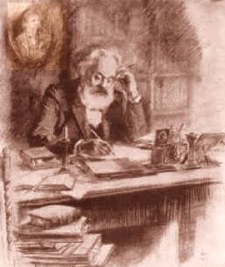 ROMAN ROSDOLSKY’S The Making of Marx’s Capital (1977), originally published in 1968, exercised a considerable and lasting sway over the debate on Capital in West Germany which began in the wake of the student movement . Although interpretations based on Rosdolsky’s approach had the merit of undermining economistic and positive readings of Capital, this was frequently at the cost of a philosophical obfuscation of the social and economic substance of Marx’s critique of political economy . Capital, so it would seem had to be read through two sets of spectacles,’ the first consisting of certain understandings of the dialectical presentation from Hegel’s Logic, and the second of a number of methodological ideas from the Grundrisse, especially Rosdolsky’s elaboration of the concept ‘capital in general’ . Ironically, the ebbing away of debate about Capital with the break-up of the student left in the mid 1970s, coincided with the first publication of many of the manuscripts which formed the immediate preparatory work to Capital, as well as better edited versions of already familiar manuscripts, in the shape of the new complete Marx-Engels edition, the Marx-Engels Gesamtausgabe (MEGA) .
Leer más…
«The four levels of abstraction of Marx’s concept of ‘Capital'»: Roberto Fineschi
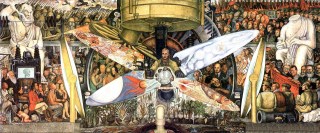 1. Introduction
Marx began to work out his own theory of capital in the fifties and particularly in the Manuscripts of 1857/58 (generally known as Grundrisse). Philological results have shown that, before, his analysis was still linked to Ricardo’s – in the Misery of Philosophy although already with important exceptions1 – or only faced problems at the “surface” – he studied e.g. different monetarist schools at the beginning of the fifties – but without coming to an independent organic outline of the matter. The process of research continued in the Manuscripts of 1857/58 as well, but there, it went together with the beginning of the exposition, or presentation.
While writing this manuscript, Marx defined progressively the structure of the whole “capital”, setting out a process that, however, did not finish with the Grundrisse. Relevant parts of the theory were changed or improved in Manuscripts of 1861/63, above all as regards the central concepts of market values and production prices, and in Manuscripts of 1863/65, where we have the only extensive exposition of credit and bank system. Moreover we could consider as well, that a proper terminological and conceptual distinction among value, use value, and value form as part of the framework representing the real starting point of his theory – the commodity – is reached only in the second German edition of Capital Book I (1872), even if this had been latently present since the Manuscripts of 1857/58.
Leer más…
«La crisis mundial y el movimiento obrero»: Paul Mattick
 El desarrollo del capitalismo es inseparable de las crisis: esta ley se confirma empíricamente de vez en cuando. A pesar del retorno de las crisis la economía burguesa no ha propuesto, hasta hoy, ninguna teoría que se adapte a la realidad. La razón es que el punto teórico del que parte es en si mismo erróneo. La teoría capitalista, en efecto, partía de la idea errónea de que la producción estaba subordinada al consumo y que, por consiguiente, la oferta y la demanda se adaptarían en el mercado. Aunque se reconocía que este mecanismo de ajuste podía verse interrumpido debido a superproducciones parciales, se estaba convencido de que el mecanismo del mercado resolvería, de modo espontáneo, estas discordancias. La teoría del mercado, como la teoría del equilibrio a partir del cual la oferta condiciona la demanda y viceversa, todavía está vigente aunque reformulada de distinta manera. En la teoría neoclásica de la utilidad marginal, que se fundamenta en principios psicológicos, se trata simplemente de anunciar de nuevo la vieja teorfa de la oferta y de la demanda, que había permanecido intacta hasta 1936.
«The quantitative determination of abstract labour and values»: Diego Guerrero
 Abstract
In this paper we show first of all how to calculate the magnitude of the vector of labour values without having recourse previously to the vector of direct (abstract or concrete) labour that is usually considered as a necessary condition for it. We show that, apart from its total volume, which is supposed here to be equal to the total volume of concrete labour, the magnitude of direct abstract labour per unit of commodity is not needed for the calculation of values, either as one of the ingredients of value (to be added to a second ingredient: the amount of indirect abstract labour embodied in the means of production) or as a “coefficient of labour” that becomes value once vertically integrated. We will show then, beginning from unit values, how to compute the vector of abstract labour, both per unit of output and as a fraction of total labour, and their respective “coefficients of reduction” by means of which they can be considered a multiple of the quantities of concrete labour. Both things are discussed at the theoretical level and also by means of a numerical example that helps to understand the implications of the new definitions. The main implication is that, though “physical” data suffice to determine the vector of “relative” values (or any of their infinite multiples), labour is not redundant for a theory of value because the latter requires the determination of “absolute” values as a unique vector, for which the magnitude of total labour expended is needed.
As a second aim of the paper, we intend to show that Rubin’s ideas on both the
qualitative and quantitative determination of abstract labour and the role of exchange, demand, and social need in the quantitative definition of values—ideas that have often been misunderstood—are a necessary presupposition of the modern, correct quantification of abstract labour and value.
» ‘Financiarización’, o la búsqueda de beneficios en la esfera de la circulación»: Costas Lapavitsas
 La financiarización de las economías capitalistas avanzadas durante las últimas tres décadas representa la expansión en la esfera de la circulación, mientras la esfera de la producción ha continuado enfrentándose a dificultades en el crecimiento de la rentabilidad y la productividad. En el transcurso de la financiarización las relaciones entre el capital industrial/comercial, los bancos y los trabajadores se han reconfigurado en perjuicio de estos últimos. El sector financiero ha conseguido extraer beneficios directamente del capital industrial/comercial y de los salarios, un proceso denominado «expropiación financiera». Las instituciones financieras se han hecho adeptas a la obtención de beneficios procedentes de la intermediación de transacciones en mercados financieros abiertos, esto es, la banca de inversión. La combinación de la expropiación financiera y la banca de inversión son los catalizadores de la crisis que comenzó en 2007.
Ekonomia kapitalista aurreratuen azken hiru hamarkadetako finantzarizazioak zirkulazioaren eremuan izandako hedapena azaltzen du; aldiz, ekoizpenaren eremuak errentagarritasunaren eta produktibitatearen hazkuntzan egondako zailtasunei aurre egiten jarraitu du. Finantzarizazioa egon bitartean, kapital industrial/komertzialaren, bankuen eta langileen arteko harremanak azken horien kalterako birkonfiguratu dira. Finantza-sektoreak zuzenean eskuratu ahal izan ditu onurak kapital industrial/komertzialetik eta soldatetatik; prozesu horrek «finantza-desjabetzea» du izena. Finantza-erakundeak finantza-merkatu irekietako transakzioen bitartekotzatik —hau da, inbertsio-bankutik— eratorritako onurak eskuratzearen jarraitzaile egin dira. Finantza-desjabetzearen eta inbertsio-bankaren nahasketa da 2007an hasi zen krisiaren katalizatzailea.
International conference: «Marx and crises of capitalism: Interpretations and interventions»
 Conference Organizers:
Marcello Musto, York University. Toronto-Canada
Kenji Mori, Tohoku University, Sendai-Japan.
February 18-19, 2012
Yokohama – Japan
Reading Marx’s Capital with David Harvey

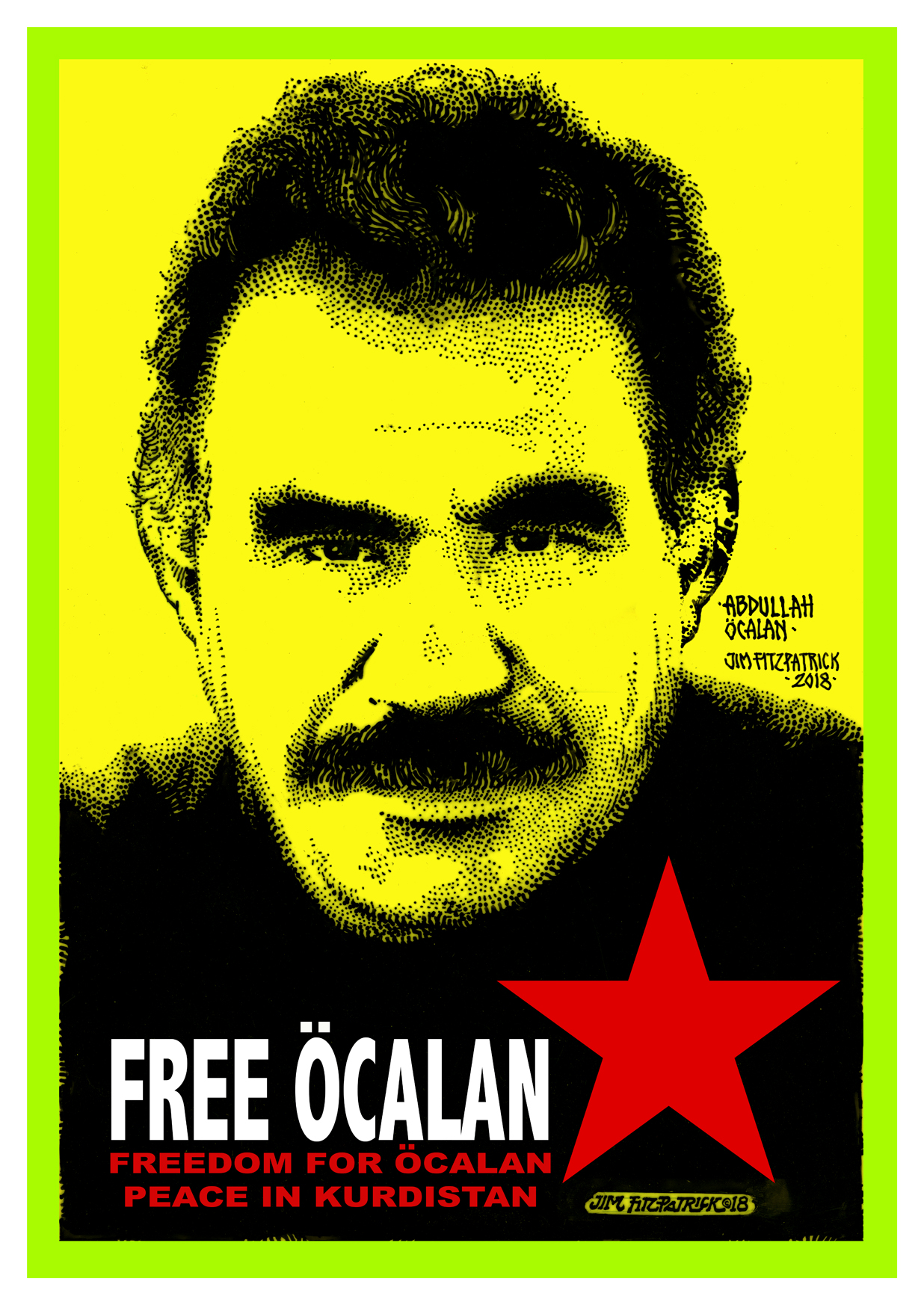
Free Öcalan


Fundación Infancia y Aprendizaje

Colección de libros Marxismo Crítico

Historical Materialism


CIPEC (Centro de Investigación en Pensamiento Crítico)

Centro para la Investigación como Crítica Práctica

Memoria Revista de Crítica Militante

Revista Laberinto






Marx desde cero





 marxismocritico.com