
Archivo
“Marx y Hegel. Contribuciones a una relectura”: Roberto Fineschi
 Reproducimos la traducción de la Introducción del libro de Roberto Fineschi «Marx e Hegel: Contributi a una rilettura» editado por Carocci.
Introducción
- Premisa
El estudio que presento es la continuación orgánica de una investigación iniciada hace algunos años que ha dado sus primeros frutos en el volumen aparecido bajo el título Ripartire da Marx. Processo storico de economia politica nella teoria del “capitale”. Teniendo en cuenta este vínculo explícito, nos valdremos aquí de las mismas tres premisas de carácter general introducidas entonces.
En la entrada Karl Marx para el diccionario enciclopédico Granat, Lenin escribía: “El Marxismo es el sistema de las concepciones y de la doctrina de Marx” [Lenin (1914): 9], prosiguiendo con una exposición de los principios generales y concluyendo con un capítulo sobre la táctica del proletariado. Ciertamente, no pretendo pronunciarme aquí sobre Lenin como personaje histórico, político o como pensador; limitándonos a esta afirmación, creo que se puede sostener que él opera una interpretación que después se hizo propia de toda una tradición, a la que incluso pertenecían los opositores de Lenin. Definiré el marxismo más propiamente como “una praxis política inspirada en la concepción y la doctrina de Marx”. Pero la teoría del modo de producción capitalista elaborada por Marx no es – ni pudo ser – inmediatamente una teoría política; se trata más bien de la reconstrucción, a un altísimo nivel de abstracción, del funcionamiento de la sociedad burguesa de la época, que implica líneas de tendencia, formas de movimiento, pero no una política inmediata. Esto no niega la explícita toma de partido de Marx, ni que se pueda utilizar su teoría con finalidades políticas, pero es necesario establecer: (i) que la política, colocándose a un nivel de abstracción muy bajo, para ser alcanzable necesita de una serie de teorías que el Moro no desarrolló, (ii) que, por tanto, la política no tiene que ver tan solo con las formas – que representan el objeto esencial de las teorizaciones de Marx – sino con las “figuras”, que son aquellos sujetos que en las subperiodizaciones de cada época encarnan las formas del movimiento. De este modo, por poner un ejemplo, el “obrero masa” fue legítimamente considerado una figura de movimiento de la sociedad capitalista, pero la forma de tal movimiento funciona en otras fases con otras figuras, precisamente porque no hay identidad entre forma y figura. Así, aunque en política Marx se dirigiese a los obreros de las fábricas, esto no agota el espectro de aplicabilidad de su teoría. Si, por una parte, se gana en amplitud, por otra se pierde en precisión. [1] Más en general, si sostenemos que a nivel político se actúa inevitablemente con las figuras, una cosa es la táctica y otra la teoría del modo de producción como fase de época. Leer más…
«Mercadoria e valor: algumas reflexões em torno do primeiro capítulo de O Capital de Karl Marx»: João Vasco Fagundes
 1. Uma carta. Um prefácio
Após o esmagamento da Comuna de Paris, o editor e banqueiro francês Maurice La Châtre exila-se em San Sebastián. Próximo, desde os anos 40 do século XIX, dos círculos afectos a Saint-Simon, a Louis Blanc e a Pierre-Joseph Proudhon, é na cidade cantábrica que ele se encontra no ano de 1872, ao abrigo da repressão e dos inúmeros processos judiciais que lhe são movidos enquanto editor de Eugène Sue e de enciclopédias de cunho anti-clerical da sua própria autoria. Nessas circunstâncias, projecta então publicar a tradução francesa do Livro Primeiro de Das Kapital. Kritik der politischen Ökonomie, de Karl Marx, em fascículos periódicos.
No dia 18 de Março de 1872, Marx escreve de Londres ao «cidadão» (citoyen) La Châtre a aplaudir a ideia. A solução proposta pelo editor tem o mérito, segundo Marx, de tornar a obra mais acessível a um público operário, e essa consideração «sobreleva qualquer outra».
A medalha tinha, porém, um reverso. «O método de análise que empreguei, e que ainda não havia sido aplicado aos assuntos económicos – adverte Karl Marx –, torna bastante árdua a leitura dos primeiros capítulos». Uma vez que o público francês é conhecido pela pressa de concluir, de apreender a ligação «dos princípios gerais com as questões imediatas que o apaixonam», é de recear que o seu ânimo de leitura esmoreça por não «poder logo passar adiante».
No entanto… «É essa uma desvantagem – acrescenta Marx – contra a qual nada posso senão prevenir e premunir os leitores preocupados com a verdade. Não há estrada real para a ciência e só têm possibilidade de chegar aos seus cumes luminosos aqueles que não temem fatigar-se a escalar as suas veredas escarpadas.» Leer más…
«El rechazo de Marx a la teoría laboral del valor»: David Harvey
 Se cree generalmente que Marx adaptó la teoría laboral del valor de Ricardo como un concepto fundamental para sus estudios sobre la acumulación del capital. Dado que la teoría laboral del valor ha sido desacreditada de manera general, se ha sostenido a menudo con autoridad que las teorías de Marx no merecen la pena. Esa teoría corresponde a Ricardo, que reconoció que era profundamente problemática, aun mientras insistía que la cuestión del valor era crítica para el estudio de la economía política. En las pocas ocasiones donde Marx comentó este asunto[1] se refiere a la “teoría del valor” y no a la teoría laboral del valor. Así pues, ¿en qué consistía la teoría del valor distintiva de Marx, y cómo difiere de la teoría laboral del valor?
La respuesta (como es usual) es complicada en sus detalles, pero sus lineamientos pueden ser reconstruidos a partir de la estructura del libro primero de El capital.[2]
Marx comienza esa obra con un examen de la apariencia superficial del valor de uso y del valor de cambio en el acto material del intercambio de mercancías, y postula la existencia del valor (una relación inmaterial pero objetiva) tras el aspecto cuantitativo del intercambio de valor. Este valor es tomado inicialmente como un reflejo del trabajo social (abstracto) cuajado en las mercancías (capítulo 1). Como una norma regulatoria del mercado, el valor puede existir, según Marx, sólo cuando y donde el intercambio de mercancías se ha convertido en “un acto social normal”. Esta normalización depende de la existencia de relaciones de propiedad privada, individuos jurídicos y mercados perfectamente competitivos (capítulo 2). Un tal mercado puede funcionar sólo con el surgir de formas monetarias (capítulo 3) que faciliten y lubriquen las relaciones de intercambio de manera eficiente, a la vez que provean de un vehículo conveniente para almacenar valor. El valor no puede existir sin su representación. En el capítulo 4 [*] Marx muestra que sólo en un sistema donde el fin y el objeto de la actividad económica es la producción de mercancías el intercambio se convierte en necesario y a la vez en un acto social normal. Es la circulación del dinero como capital (capítulo 5) la que consolida las condiciones para la creación de la forma de valor distintiva del capital como una norma regulatoria. Pero la circulación del capital presupone la existencia previa del trabajo asalariado como una mercancía que puede ser comprada y vendida en el mercado (capítulo 6). Cómo el trabajo se convirtió en una tal mercancía antes del surgimiento del capitalismo es el tema de la sección 7 de El capital, que trata de la acumulación primitiva u original. Leer más…
«Cicle 150 anys Das Kapital – La fórmula trinitaria: interés, renta del suelo y salario»: Clara Ramas San Miguel
 El 2017 fa 150 anys que es va publicar el primer volum de «El Capital», l’obra més important de Karl Marx i una de les més influents de l’història de l’economia. És per això que des de Post Crash UPF vam organitzar un cicle de xerrades, entre el 19 i el 25 d’abril, on treballarem, principalment, diversos capítols del primer i tercer volum de l’obra. Per ajudar-nos a aprofundir en l’obra comptarem amb la participació de diversos experts en la matèria: des de Madrid, Clara Ramas, doctorada per l’UCM, i Xabier Arrizabalo, professor de la Universitat Complutense, i des del Seminari Taifa de Barcelona, Xavier García i Antoni Puig. Leer más…
«Oferta, demanda y precios de mercado»: Paolo Giussani
 Capítulo 9 de ‘Marx y la economía sin equilibrios’ editado por Freeman y Carchedi 1995 de la Editorial Edward Elgar.
Vale la pena mencionar que la escuela clásica marxista, ciertamente los principales defensores de la primacía de las condiciones objetivas de la producción en la formación de precios aún no ha producido una crítica de los fundamentos sobre los que la teoría neoclásica ha erigido su teoría de la relación entre oferta y demanda de bienes al fijar los precios de mercado de los bienes a pesar de que esta fundación es una frágil, basada claramente en tautologías conscientes.
Cualquier manual básico de economía explica que la curva de demanda dada para un bien se construye de tal manera que la curva de oferta de otro, y el precio de equilibrio del bien en cuestión, es su punto de intersección. No obstante, los libros de texto sin excepción son claramente ambiguos sobre la posición de estas curvas en el plano. Si esto estuviera inequívocamente y directamente determinado previo, e independiente de, la formación de precios, el resultado sería una tautología inmediata: conociendo de antemano todas las correspondencias entre precios y cantidades demandadas u ofrecidas, la afirmación de que el vaciado de mercados requiere aquellos precios comunes a ambos conjuntos de correspondencias sería trivial y no habría necesidad de teoría alguna. Si el precio de equilibrio de un bien se define como el único precio de mercado en el que el mercado se vacía sin residuo de algún bien, es una tautología pura añadir que a este precio, la oferta y la demanda se igualan. De otro modo, un residuo positivo o negativo permanecería en el mercado.
Lo que importante desde un punto de vista científico es ser capaces de construir las dos curvas con la información conocida, de tal manera que automática puedan entregar los precios de equilibrio únicos de varios bienes. Pero, como veremos, esto no es posible. Comenzamos examinando el lado de la demanda. Leer más…
«El valor del dinero, el valor de la fuerza de trabajo y el producto neto: una evaluación del ‘Nuevo Enfoque’ al problema de la transformación»: Alfredo Saad-Filho
 Capítulo 6 de ‘Marx y la economía sin equilibrios’ editado por Freeman y Carchedi 1995 de la Editorial Edward Elgar.
La transformación de valores a precios de producción ha sido sujeto de discusión por más de cien años. Los primeros disparos de este debate fueron disparados incluso antes de la publicación de la versión propia de Marx sobre esta cuestión en el tercer Tomo de El Capital (ver Engels 1981 y Howard and King 197). Un continuo flujo de literatura le ha seguido que analiza la relación entre valores y precios desde virtualmente casi ángulo concebible. Hoy, la polémica está más que viva, aunque los temas bajo debate han cambiado por los enfoques de los escritores involucrados.
Hasta mitades de los 1970s el tema más importante en la discusión eran las circunstancias en las que se sostienen las igualdades entre valor total y precio total, y plusvalor total y ganancia total. Marx atribuyó gran importancia a ellas y rápidamente se volvieron las condiciones que debe satisfacer cualquier solución fidedigna al problema de la transformación –o al menos explicar convincentemente.
La prominencia de estas igualdades está relacionada cercanamente con la predominancia que ha logrado el enfoque del equilibrio general al problema de la transformación. Estos enfoques siguen la tradición de Tugan Baranowsky (1905) y Bortkiewicz (1952, 1984). Ellos se volvieron, rápidamente, la forma estándar de enmarcar las relaciones entre valores y precios (el ejemplo más común es Steedman 1977). Aun cuando muchos estuvieron en desacuerdo con ellos, las soluciones de equilibrio general siguieron siendo el centro de atención por décadas. Esto ha cambiado ahora. A finales de los 1970s y principios de los 1980s Gérard Duménil y Duncan Foley de manera independiente propusieron el ‘Nuevo Enfoque’ al problema de la transformación; una de las características más importantes de su solución es que aborda el problema de la transformación (y las dos igualdades agregadas de Marx) sin relación al equilibrio. Leer más…
«La transición de Marx hacia el dinero sin valor intrínseco en El Capital, Capítulo 3»: Martha Campbell
 Resumen:
En el capítulo 3 de El Capital, Tomo 1, Marx sentó las bases para el dinero sin valor intrínseco. El dinero tiene una expresión de valor, la lista de precios de mercancías leída al revés debido a su lugar como forma de equivalente universal. La explicación de Marx del dinero como medio de circulación y atesoramiento establece que esta expresión –la tasa de cambio entre el dinero y el valor de las mercancías– se mantiene si el dinero tiene valor intrínseco o no. Con esto, la expresión del ‘valor’ del dinero es suficiente para que el dinero exprese el valor de las mercancías y que por ello funcione como medida de valor, sin importar si el valor del dinero es real o imaginario. Esta interpretación se deriva de la Teoría Marxista de la moneda de S. De Brunhoff.
Palabras clave: Marx, dinero fiduciario, valor, forma social, S. de Brunhoff. Leer más…
«Essays on Marx’s theory of money of I.I.Rubin»: Susumu Takenaga
 The name of Rubin (Исаак Ильич Рубин,1886–1937) and a few of his works were known in Japan to a certain extent from the time preceding the Second World War by the literature related to the value debate going on in the Soviet Union at that time, translated and published about 1930 almost in real time. After the war, a negative image seems to have been enrooted for certain of those who were under the influence of the official disapproving view on Rubin and his followers adopted by the Soviet authority after the 1930s. Such a view was repeated and popularized in the textbooks of Marxist economics written by Russian researchers and translated and widely diffused in Japan1 after 1945 with the rise of Marxist economics in the post-war period. Resonance of such an influence has not totally disappeared even today.
In 1973, in the midst of the value controversy waged after 1968 among a few Marxist economists in the West, where the Marxist economics, a non negligible part of which was under a great influence of Soviet academy, had never been so important in the profession as in Japan, the masterpiece of Rubin, Essays on Marx’s theory of value (hereinafter Essays on value for short) was translated into English2, a book left and remained in oblivion for almost half a century. Rubin’s name and his works were thus rediscovered in the corner of the Western academic world, and his original interpretation of Marx’s theory of value gave a certain enduring impact on the then ongoing value debate3. Probably prompted by such a situation, the German and French versions (retranslations) of this work of Rubin were successively published, and also some of the original documents related to the value debate during the last years of 1920s, to begin with a few other works of Rubin himself, were translated and published, which contributed to make known something about this debate on the basis of its original resource materials. But, the pros and cons discussions at that and subsequent times about Rubin’s theory in the debate in the West were in many cases based solely on the English translation (and German and French retranslations) of his book given above, the other related literature not being referred to nor made use of. In addition, in these translations were omitted all the important supplementary materials originally annexed to the third edition of Essays on value published in 19284, which served as the exemplar to the translation: three articles of controversy (replies of Rubin to the criticisms by Dashkovskij, Shabs, Kon) newly added to this edition as ‘Replies to critics’, and ‘Appendices’ (author’s explanation of some of the keywords used in his book) showing Rubin as philologist and useful for understanding the text of Essays on value. This omission made hardly perceivable the controversial context where this book was found itself at the time of its publication. Leer más…
«A New “General Theory”? A review of «Capitalism» by Anwar Shaikh»: Bernard Guerrien
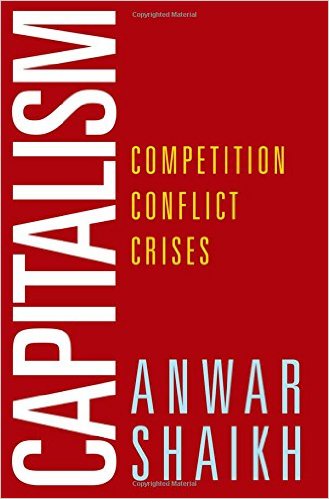 “The goal of this book is to develop a theoretical structure that is appropriate from the very start to the actual operations of existing developed capitalist countries. Its object of investigation is neither the perfect, nor the imperfect, but rather the real. For this reason, the theoretical arguments developed here, along with their main alternatives, are constantly confronted with empirical evidence” (p. 4).
«Visualizing Capital»: David Harvey
 In January, David Harvey spoke at the School of Geography and the Environment, Oxford to present «Visualizing Capital»: what he «hopes is the end» of the project on Marx he began — inadvertantly — fifteen years ago.
«Most commentators on Marx have the habit of trying to make Marx more complicated than he already is,» Harvey says, «we should be concerned with trying to make simple representations of Marx without being simplistic.» Leer más…
«150 years Karl Marx’s Capital»: John Milios, Michael Heinrich, Michael Lebowitz, Etienne Balibar, Marta Harnecker, Panagiotis Sotiris…
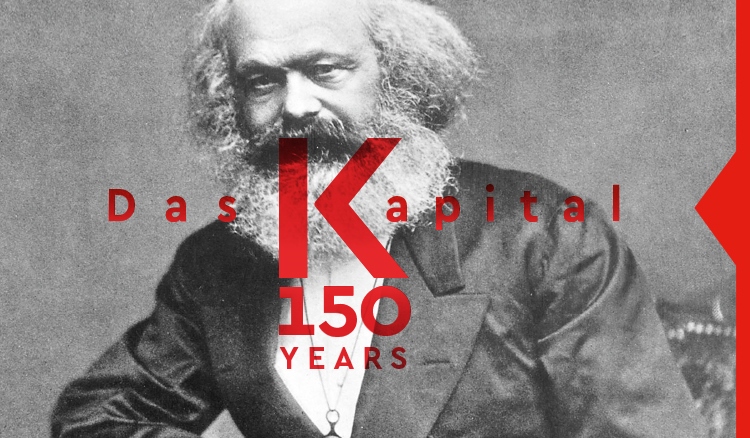
INTERNATIONAL CONFERENCE
150 years Karl Marx’s “Capital” – Reflections for the 21st century
14-15.1.2017 | Athens – Greece
To commemorate in 2017 the 150th anniversary of Volume 1 of Capital, Rosa Luxemburg Stiftung – Athens Office in cooperation with Theseis are organizing a two-days international conference in Athens, on the actuality of Marx’s theoretical system of the critique of political economy.
Karl Marx’s major work, Capital, is broadly recognized as an indispensable point of departure for all those who are interested in deciphering and analyzing in depth the inner workings of capitalism. The system of concepts and analyses in Marx’s Capital provides radical thinkers with insights to demystify the “truths” of the dominant bourgeois theoretical schemes, ideological certainties and policy implications. It is thus of great theoretical and political importance. Marx’s “critique of political economy” in Capital and in the relevant manuscripts of the period 1857-1867 forms a unique theoretical terrain, which enables the understanding of economic and social power relations, their driving forces and evolution trends, in all societies where the capitalist mode of production is dominant. Capital remains relevant and powerful. It is particularly timely in the midst of the present systemic global economic crisis.
«Harvey contra Marx sobre las crisis del capitalismo, segunda parte: malinterpretando la rentabilidad»: Andrew Kliman
 Este artículo es la segunda parte de una crítica de Andrew Kliman a un borrador de un artículo de David Harvey, publicado en el tristemente difunto New Left Project. En la primera parte de la crítica hice una pequeña introducción a la polémica que subyace a este intercambio. En las próximas semanas publicaremos la respuesta de Harvey a Kliman y la contrarréplica de éste. Aprovecho para agradecer a Pau Llonch y a Antonio Dorado su revisión de la primera y segunda parte de la crítica.
Las pruebas son claras: desde el final de la Segunda Guerra Mundial hasta la Gran Recesión, la tasa de ganancia total de las corporaciones estadounidenses descendió, y este descenso se explica casi en su totalidad gracias a la Ley del Descenso Tendencial de la Tasa de Ganancia de Marx
La primera parte de este artículo se centró en la interpretación de David Harvey (Harvey 2014) de la Ley del Descenso Tendencial de la Tasa de Ganancia (LDTTG) de Marx, a medida que la producción capitalista se incrementa – una ley que Marx identificó como “la ley más importante de la economía política”. Resta por tratar la creencia de Harvey de que la LDTTG no ha operado desde los años 80.
Los datos de mano de obra que se trataron en la primera parte constituyen la única “prueba” de Harvey de que la LDTTG no ha actuado; no presenta pruebas directas al respecto de la tasa de ganancia (esto es: la cantidad de ganancia como porcentaje del volumen de capital invertido). Sin embargo, pone en tela de juicio las pruebas que hemos presentado tanto yo como otros que indican que la tasa de ganancia descendió realmente a lo largo de los años 80 y 90 (ver Figura 1) [1]. Leer más…
«V. I. Lenin y los problemas actuales de la lógica dialéctica»: Évald V. Iliénkov, Mark M. Rosental
 La necesidad de un estudio completo y profundo de la dialéctica materialista en sus funciones de lógica y teoría del conocimiento y como paradigma científico actual ha adquirido en nuestros días una especial importancia. De manera evidente, el carácter expresamente dialéctico de los problemas que aparecen en todas las esferas de la realidad social y del conocimiento científico obliga cada vez más a tomar conciencia de que solo la dialéctica marxista-leninista es capaz de constituir el método para dicho conocimiento científico y para la actividad práctica, así como para ayudar al científico a la comprensión teórica de los datos fáctico-experimentales en la resolución de problemas que aparecen en el proceso de investigación científica. Leer más…
«El capital ficticio y la crisis actual»: Marcelo Dias Carcanholo
 En el tercer tomo de El Capital, Marx esboza la categoría de capital ficticio, una forma de capital que hoy día crece ante la necesidad de construir nuevos espacios de valorización para el capital sobreacumulado. En contraposición con la categoría capital financiero, Marcelo Carcanholo propone capital ficticio como categoría central para entender la crisis del capitalismo actual. Leer más…
«Trabajo abstracto o trabajo inmaterial»: Anselm Jappe
 Texto en el que se basó la presentación de Anselm Jappe en la cuarta sesión del curso el 13 de abril de 2015, “¿Más allá del fetichismo de la mercancía? La civilización del trabajo y su descomposición“. El original italiano puede encontrarse en el libro Anselm Jappe: Contro il dentro (Milano: Mimesis, 2013, pp. 15-34).
En la fase actual de la evolución social y económica, el trabajo se denomina con frecuencia “posfordista”, y es identificado a menudo con un supuesto predominio del trabajo “inmaterial” o “informático”. ¿Cuáles son los instrumentos teóricos que permiten comprender esta realidad? ¿Puede decirse que las categorías elaboradas por Karl Marx, que tan útiles han sido para comprender no sólo la realidad de su tiempo, sino también las de la época fordista, son aplicables todavía a la realidad posfordista? Con independencia del juicio que cada uno pueda emitir sobre la validez de la teoría de Marx, ésta tiene, sin discusión, la particularidad de ser el único intento de pensar la realidad capitalista en su conjunto, como totalidad, mientras que los restantes enfoques económicos han renunciado a tal pretensión y se interesan únicamente en cálculos cuantitativos sobre factores y autores ya presupuestos. En rigor, a partir de la escuela marginalista, surgida, y no por azar, en la época en que Marx presentó su crítica de la economía política, la denominada ciencia económica burguesa abandonaba el concepto mismo de “valor”, elemento cardinal de la teoría económica de Marx pero también de la economía política burguesa anterior a él. Leer más…
Reading Marx’s Capital with David Harvey

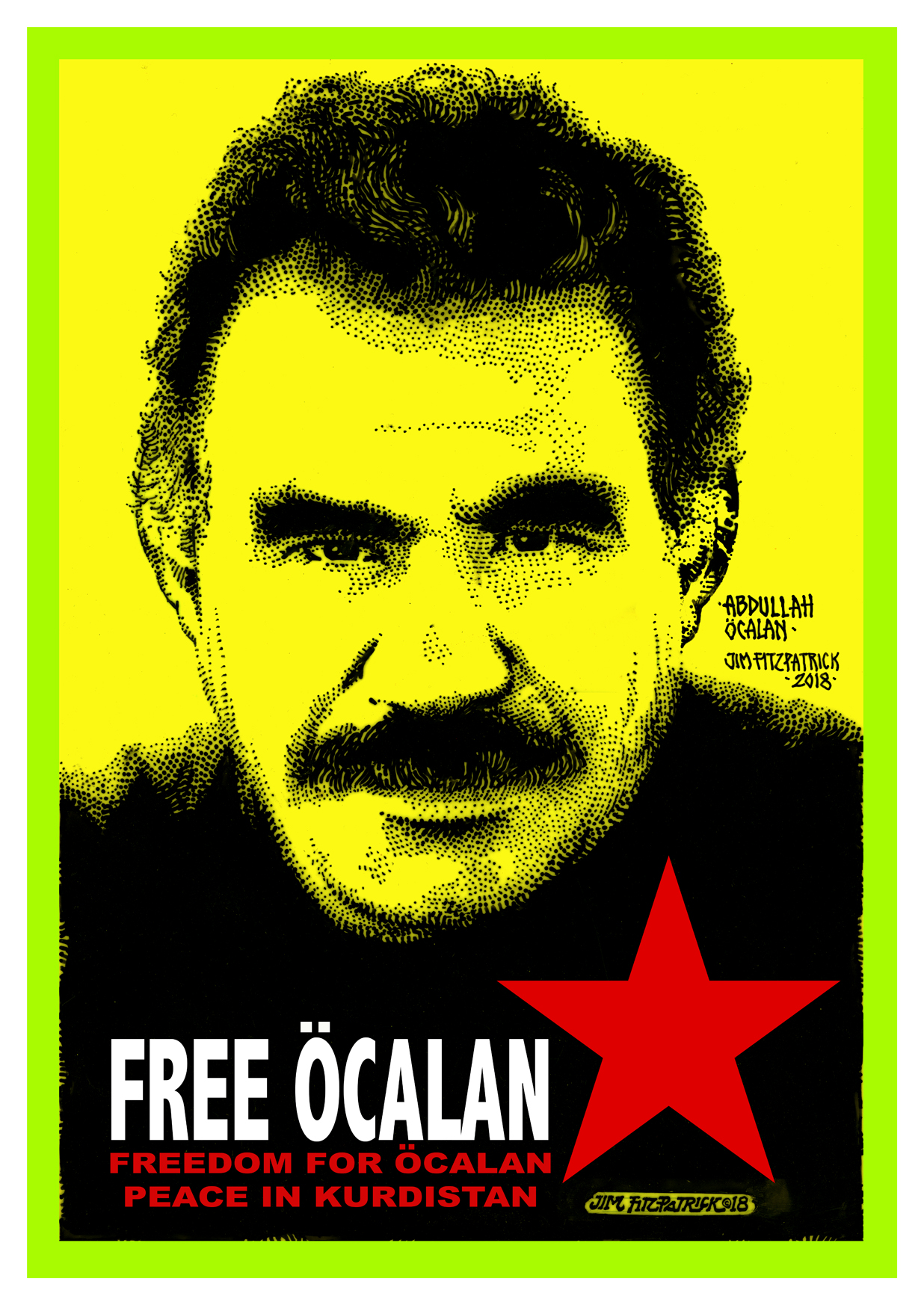
Free Öcalan


Fundación Infancia y Aprendizaje

Colección de libros Marxismo Crítico

Historical Materialism


CIPEC (Centro de Investigación en Pensamiento Crítico)

Centro para la Investigación como Crítica Práctica

Memoria Revista de Crítica Militante

Revista Laberinto






Marx desde cero





 marxismocritico.com