
Archivo
«Economic crisis and socialist revolution: Henryk Grossman’s Law of accumulation, its first critics and his responses»: Rick Kuhn
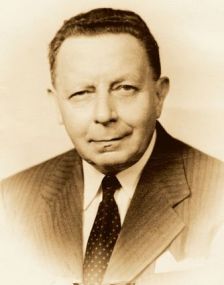 Abstract
Henryk Grossman was the first person to systematically explore Marx’s explanation of capitalist crises in terms of the tendency for the rate of profit to fall and to place it in the context of the distinction between use and exchange value. His The law of accumulation and breakdown of the capitalist system remains an important reference point in the Marxist literature on economic crises. That literature has been plagued by distortions of Grossman’s position which derive from early hostile reviews of his book. These accused Grossman of a mechanical approach to the end of capitalism and of neglecting factors which boost profit
rates. Grossman, in fact, contributed a complementary economic element to the recovery of Marxism undertaken by Lenin (particularly in the area of Marxist politics) and Lukács (in philosophy). In both published and unpublished work, Grossman also dealt with and even anticipated criticisms of his methodology and treatment of countertendencies to the tendency for the rate of profit to fall. Far from being mechanical, his economic analysis can still assist the struggle for working class self-emancipation.
«The Economic Crisis & Left Responses Video»
 The Economic Crisis & Left Responses was convened by Marxist-Humanist Initiative on November 6, 2010 at Pace University in lower Manhattan. Panel 1 features Brendan Cooney, Roslyn Bologh, Richard Wolff, Andrew Kliman, and Ray McKay (chair). Panel 2 features Paul Mattick, Walter Daum, Mac Intosh, and Brendan Cooney (chair). Panel 3 features Barry Finger, Anne Jaclard, Fred Moseley, Mike Dola (closing remarks), and Walter Daum (chair). Click here for the conference program, which includes links to speakers’ biographies, abstracts, and draft papers posted prior to the conference. Many of the papers prepared for the conference are now available online. Click here to view conference papers.
«De qué va esta crisis»: Joaquin Arriola
 Los análisis de la crisis que proliferan últimamente se centran en la dimensión financiera o macroeconómica de la misma. Se suele señalar como “culpable” de la crisis a un largo periodo de incremento del crédito que, unido a la liberalización financiera, ha permitido crear un mercado financiero mundial que ha alimentado burbujas especulativas en el sector inmobiliario e inflación de activos. Tras varios episodios de crisis financiera (caracterizadas por el hundimiento de los precios de activos del capital ficticio y situaciones de insolvencia bancaria que se trasladan a destrucción de empleo y capital productivo con mayor o menor virulencia, y de impacto sobre todo regional (Países Nórdicos 1991, Japón 1992, México 1995, Tigres y Dragones de Asia 1997, Rusia 1998, dotcom 2001…), en agosto de 2007 se produce una crisis financiera en Estados Unidos que a finales de 2008 se traslada al conjunto de las economías desarrolladas, articuladas en el negocio bancario internacional. Ese momento es señalado como el del inicio de “la crisis” por antonomasia.
«Technology, Distribution and the Rate of Profit in the US Economy: Understanding the Current Crisis»: Deepankar Basu and Ramaa Vasudevan
 Abstract: This paper offers a synoptic account of the state of the debate within Marxist scholars regarding the current structural crisis of capitalism, identifies two broad streams within the literature dealing, in turn, with aggregate demand and profitability problems, and proceeds to concentrate on an analysis of issues surrounding the profitability problem in two steps. First, evidence on profitability trends for the Nonfarm Nonfinancial Corporate Business, the Nonfinancial Corporate Business and the Corporate Business sectors in post-War U.S. are summarized. A broad range of profit rate measures are covered and data from both the U.S. Bureau of Economic Analysis (NIPA and Fixed Asset Tables) and the Federal Reserve (Flow of Funds Account) are used. Second, the underlying drivers of profitability, in terms of technology and distribution, are investigated. The profitability analysis is used to offer some hypotheses about the current structural crisis.
Keywords: profitability, technological change, income distribution, structural crisis.
«The Limits to Capital»: David Harvey
 A major rereading of Marx’s critique of political economy, newly updated.
The Limits to Capital provides one of the best theoretical guides to the history and geography of capitalist development. In this new edition, Harvey updates his classic text with a substantial discussion of the turmoil in world markets today.
«La crisis mundial y el movimiento obrero»: Paul Mattick
 El desarrollo del capitalismo es inseparable de las crisis: esta ley se confirma empíricamente de vez en cuando. A pesar del retorno de las crisis la economía burguesa no ha propuesto, hasta hoy, ninguna teoría que se adapte a la realidad. La razón es que el punto teórico del que parte es en si mismo erróneo. La teoría capitalista, en efecto, partía de la idea errónea de que la producción estaba subordinada al consumo y que, por consiguiente, la oferta y la demanda se adaptarían en el mercado. Aunque se reconocía que este mecanismo de ajuste podía verse interrumpido debido a superproducciones parciales, se estaba convencido de que el mecanismo del mercado resolvería, de modo espontáneo, estas discordancias. La teoría del mercado, como la teoría del equilibrio a partir del cual la oferta condiciona la demanda y viceversa, todavía está vigente aunque reformulada de distinta manera. En la teoría neoclásica de la utilidad marginal, que se fundamenta en principios psicológicos, se trata simplemente de anunciar de nuevo la vieja teorfa de la oferta y de la demanda, que había permanecido intacta hasta 1936.
«The Marxist Theory of Overaccumulation and Crisis»: Simon Clarke
 In this paper I intend to contrast the ‘falling rate of prot’ crisis theories of the 1970s with the ‘underconsumptionism’ of the orthodox Marxist tradition. The central argument is that in rejecting traditional underconsumptionist theories of crisis contemporary Marxism has thrown the baby out with the bathwater, with unfortunate theoretical and political consequences. A more adequate critique of traditional underconsumptionism leads not to the falling rate of prot, but to a disproportionality theory of crisis, which follows the traditional theory in seeing crises not as epochal events but as expressions of the permanent tendencies of capitalist accumulation.
The background to the paper is my recent book, Keynesianism, Monetarism and the Crisis of the State (Clarke, 1988a), in which analysed the development of capitalism on the basis of a version of the theory of overaccumulation and crisis which is proposed here. However in the book this theory is developed in relation to the historical analysis, without reference to either traditional or contemporary debates. The purpose of this paper is to draw out the theoretical signicance of the argument as the basis of a re- evaluation of the Marxist tradition. The issue is of the highest importance as erstwhile Marxists, in both East and West, fall victim once more to the ‘reformist illusion’ that the negative aspects of capitalism can be separated from the positive, that the dynamism of capitalism can be separated from its crisis tendencies, that capitalist prosperity can be separated from capitalist immiseration.
«El ajedrez global de la crisis»: Claudio Katz
 Una nueva fase recesiva de la crisis iniciada en el 2007 se vislumbra en las economías desarrolladas. El rebote logrado con desembolsos estatales se está agotando y la próxima recaída incluirá un alto piso de desempleo. Sólo para retomar el nivel de ocupación vigente al comienzo del temblor se necesitarían crear en el mundo 17 millones de puestos de trabajo y las tesorerías están exhaustas por el socorro brindado a los bancos.
En el debut de la convulsión hubo dos interpretaciones económicas predominantes. Los neoliberales subrayaron la culpabilidad de los deudores, que tomaron préstamos sin capacidad de repago y la irresponsabilidad de los Estados, que asumieron pasivos inmanejables. Los keynesianos remarcaron, en cambio, la falta de regulación financiera y los excesos de especulación. También subrayaron el deterioro de la demanda solvente por el estancamiento de los salarios y la polarización social. Ambas corrientes enfatizaron distintos desaciertos de la política económica que condujo al colapso actual.
«Financialisation and capitalist acucumulation: structural accounts of the crisis of 2007-9»: Costas Lapavitsas
 The crisis of 2007-9 resulted from a financial bubble marked by weak production, expanding bank assets, and growing household indebtedness. For these reasons the crisis casts light on the financialisation of capitalist economies. The literature on financialisation generally links weak production with booming finance; according to some, causation runs from weak production to booming finance, while for others it runs in the opposite direction. This article argues that there is no direct causation between booming finance and weak production. Rather, financialisation represents systemic transformation of capitalist production and finance, which ultimately accounts for the crisis of 2007-9, and has three main features. First, less reliance of large corporations on banks; second, banks shifting their activities toward mediating in open markets and transacting with individuals; third, increasing implication of individuals in the operations of finance.
Key words: Crisis, financialisation, rentiers, banking, Marxism, post-Keynesianism
«¿Qué hace falta para salir de la crisis?»: J. A. Tapia Granados
 Las turbulencias que se han producido en la economía mundial en los últimos meses hacen muy previsible una nueva crisis financiera como la del 2008. La deuda acumulada en los balances de los bancos y de los Estados y las escasas perspectivas de una reactivación de la economía mundial que pudiera echar tierra sobre esas deudas y “tirar el balón fuera del área” no parecen dejar mucho espacio para la duda.
Las masas astronómicas de dinero que hasta el comienzo de la crisis del 2007 circulaban en los mercados financieros internacionales buscando inversiones que rindieran “algo decente” y que después del 2009 volvieron en cierta medida a los mercados de valores haciendo que subieran las bolsas han sido cada vez más reticentes en meses recientes. La subida de los precios del oro, “inversión” que no solo no rinde nada sino que conlleva gastos asociados (de custodia, etc.) indica que muchos inversores tienen miedo de otra caída catastrófica de los mercados financieros y prefieren apostar al metal dorado. El dinero sigue afluyendo a los bonos del Tesoro de EEUU, considerados al menos como un activo “seguro”, a pesar de haber sido devaluados de categoría AAA a AA+ por la agencia Standard & Poors. Pero las agencias de calificación también han devaluado la deuda de varios pases europeos y la crisis de la deuda griega sigue creciendo como una bola de nieve, con la perspectiva de crisis financieras importantes en otros países europeos frente a las cuales ni el Banco Central Europeo ni los que mandan en la Unión Europea (Alemania y Francia) saben qué hacer.
«Marx’s Theory of Crisis»: Simon Clarke
 Political Economy and the Necessity of Crisis
With every boom the apologists for capitalism claim that the tendency to crisis that has plagued the capitalist system since its very beginnings has finally been overcome. When the boom breaks, economists fall over one another to provide particularistic explanations of the crash. The crisis of the early nineteen nineties was the result of the incautious lending of the nineteen eighties. The crisis of the early nineteen eighties was the result of excessive state spending in the late nineteen seventies. The crisis of the mid nineteen seventies was the result of the oil price hike and the inflationary financing of the Vietnam war … the crisis of the nineteen thirties was the result of inappropriate banking policies … … . Every crisis has a different cause, all of which boil down to human failure, none of which are attributed to the capitalist system itself.
And yet crises have recurred periodically for the past two hundred years. Bourgeois economists have to deny that crises are inherent in the social form of capitalist production, because the whole of economic theory is built on the premise that the capitalist system is self-regulating, the principal task of the theoretical economist being to identify the minimal conditions under which such self-regulation will be maintained, so that any breakdown will be identified as the result of exceptional deviations from the norm.
Leer más…
New Book: «The Failure of Capitalist Production » by Andrew Kliman + Audio
 Published by Pluto Press, November 2011
Paperback / 256pp. / ISBN-13: 978-0745332390
“Clear, rigorous and combative. Kliman demonstrates that the current economic crisis is a consequence of the fundamental dynamic of capitalism, unlike the vast bulk of superficial contemporary commentary that passes for economic analysis.”
. – Rick Kuhn, Deutscher Prize winner, Reader in Politics at the Australian National University
“Among the myriad publications on the present day crisis, this work stands out as something unusual. Kliman cogently argues against the view that the crisis is ultimately rooted in financialization. He is an excellent theorist, and an equally excellent analyst of empirical data.”
, – Paresh Chattopadhyay, Université du Québec à Montréal
“One of the very best of the rapidly growing series of works seeking to explain our economic crisis. … The scholarship is exemplary and the writing is crystal clear. Highly recommended!”
. – Professor Bertell Ollman, New York University, author of Dance of the Dialectic
Introducción del libro: «La crisis financiera y monetaria mundial. Endeudamiento, especulación, austeridad» de Louis Gill
 “Introducción”
Del libro de Louis Gill : La crise financière et monétaire mondia-le. Endettement, spéculation, austérité, pp. 7-25. Montréal : M Édi-teur, 2011, 141 pp. Collection : Mobilisations.
La crisis mundial desencadenada en julio de 2007, entró, en el verano de 2011, en su quinto año. Antes de 2007, poca gente había oído hablar de este “papel comercial adosado a activos” que hizo perder 40 mil millones de dólares a la Caja de depósito e inversión de Quebec sobre un activo de 155 mil millones de dólares en 2008, ni de las hipotecas de alto riesgo llamadas “subprimes” en el argot financiero estadounidense, ni de la multitud de productos financieros exóticos y tóxicos nacidos recientemente de una “innovación financiera” deletérea, que contribuyeron a hundir la economía mundial en el marasmo. Aunque Quebec y Canadá se fueron relativamente librando de esta crisis tan grave y se han ido recuperando rápidamente y emergiendo mejor que otros países, esto no debe enmascarar el hecho de que la economía mundial está lejos de salir de ella, a pesar de las apreciaciones optimistas de observadores con prisa por anunciar la vuelta al los buenos tiempos.
«Economic crisis and socialist revolution: Henryk Grossman’s Law of accumulation, its first critics and his responses»: Rick Kuhn
 Abstract
Henryk Grossman was the first person to systematically explore Marx’s explanation of capitalist crises in terms of the tendency for the rate of profit to fall and to place it in the context of the distinction between use and exchange value. His The law of accumulation and breakdown of the capitalist system remains an important reference point in the Marxist literature on economic crises. That literature has been plagued by distortions of Grossman’s position which derive from early hostile reviews of his book. These accused Grossman of a mechanical approach to the end of capitalism and of neglecting factors which boost profit rates. Grossman, in fact, contributed a complementary economic element to the recovery of Marxism undertaken by Lenin (particularly in the area of Marxist politics) and Lukács (in philosophy). In both published and unpublished work, Grossman also dealt with and even anticipated criticisms of his methodology and treatment of countertendencies to the tendency for the rate of profit to fall. Far from being mechanical, his economic analysis can still assist the struggle for working class self-emancipation.
Charla de Anwar Shaikh sobre la crisis
 Intervención del economista marxista Anwar Shaikh sobre la crisis actual y los ciclos económicos. En su exposición Shaikh identifica cuatro episodios de «Gran Depresión» en la evolución histórica del capitalismo: 1840, 1870 – 80, 1930 y 1970 – 80 a los que añade la actual crisis del capital que se inició en el año 2008.
Reading Marx’s Capital with David Harvey

Free Öcalan



Fundación Infancia y Aprendizaje

Colección de libros Marxismo Crítico

Historical Materialism


CIPEC (Centro de Investigación en Pensamiento Crítico)

Centro para la Investigación como Crítica Práctica

Memoria Revista de Crítica Militante

Revista Laberinto






Marx desde cero





 marxismocritico.com