
Archivo
«In Marx’s Laboratory. Critical Interpretations of the Grundrisse» Edited by Riccardo Bellofiore, Guido Starosta and Peter D. Thomas
 Edited by Riccardo Bellofiore, University of Bergamo, Italy, Guido Starosta, National University of Quilmes, Argentina, and Peter D. Thomas, Brunel University, London In Marx’s Laboratory. Critical Interpretations of the Grundrisse provides a critical analysis of the Grundrisse as a crucial stage in the development of Marx’s critique of political economy. Stressing both the achievements and limitations of this much-debated text, and drawing upon recent philological advances, this volume attempts to re-read Marx’s 1857-58 manuscripts against the background of Capital, as a ‘laboratory’ in which Marx first began to clarify central elements of his mature problematic. With chapters by an international range of authors from different traditions ofinterpretation, including the International Symposium on Marxian Theory, this volume provides an in-depth analysis of key themes and concepts in the Grundrisse, such as method, dialectics and abstraction; abstract labour, value, money and capital; technology, the ‘general intellect’ and revolutionary subjectivity, surplus-value, competition, crisis; and society, gender, ecology and pre-capitalist forms.
«The interpretation of Capital: an interview with Michael Heinrich»: Xiaoping Wei
 Apart from your recent article, which has been translated into Chinese, which books have you written?
My first book, my PhD thesis, was Die Wissenschaft vom Wert (The Science of Value). It was first published in 1991 and a considerably extended edition appeared in 1999. After all the discussions of the late 1960s and 1970s, it was an attempt to determine the peculiar scientific kernel of Marx’s project of a Critique of Political Economy. I was occupied with the difference, on the one hand between early and late Marx, on the other hand with the difference between Marx and classical political economy but also with the difference between Marx and modern neoclassical economics. I tried to describe Marx’s fundamentally new project of critique of political economy, a project, which was not only meant to add a new theory to the existing theories, but to practice a critique of a whole science, to articulate a scientific revolution. But in this project of Marx’s you can also find some ambivalences: on the one hand, Marx broke with the old field of economic science, on the other in some of his inquiries he remained in this field, without realizing it. The simultaneity of break with this field, leaving this field and remaining in this field, caused certain problems in Marx’s theory, for example the well known “transformation problem.” The transformation from values to prices of production I can understand as a problem which is caused by this incomplete break with the field of political economy. It is not really a problem of Marx’s new theory; it is a problem of a mixture between old elements (which Marx had already criticized) and new elements.
Leer más…
“El tipo de ciudad en que queremos vivir está ligado al tipo de personas que queremos ser”: David Harvey
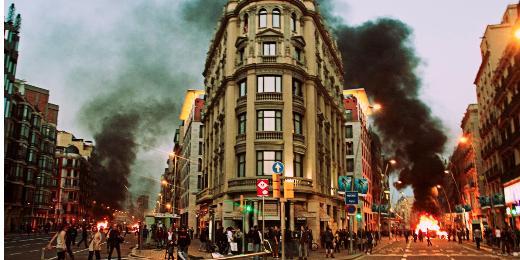 En el prefacio de Rebel Cities (Ciudades rebeldes), empiezas describiendo tu experiencia en París durante los ’70: “Edificios gigantes, carreteras, viviendas públicas desalmadas y mercantilización monopolizada sobre las calles amenazando con absorber el viejo París… París desde los ’60 en adelante estaba simplemente en medio de una crisis existencial. El viejo no podía durar. Además, fue también en 1967 cuando Henry Lefebvre escribió su ensayo fundamental «Sobre el derecho a la ciudad”. ¿Puedes hablar sobre este período de los ’60 y ’70? ¿Cómo te interesaste por el paisaje urbano? ¿Y cuál fue el ímpetu para escribir Rebel Cities?
En todo el mundo se mira a los ’60, históricamente, como un período de crisis urbana. En los Estados Unidos, por ejemplo, fue un momento en el que muchas ciudades centrales se incendiaron. Hubo revueltas y casi revoluciones en ciudades como Los Angeles, Detroit y por supuesto después del asesinato del doctor Martin Luther King en 1968, alrededor de 120 ciudades estadounidenses vivieron una inquietud social y acción rebelde más o menos masivas. Menciono esto sobre Estados Unidos, porque lo que estaba en efecto ocurriendo era que la ciudad se estaba modernizando. Se estaba modernizando en base al automóvil; se estaba modernizando en base a las áreas residenciales. La Vieja Ciudad, o lo que había sido el centro político, económico y cultural de la ciudad durante los ’40 y ’50, estaba quedándose atrás. Recuerda, estas tendencias estaban teniendo lugar en todo el mundo capitalista avanzado. Así que no era sólo en Estados Unidos. Había serios problemas en Gran Bretaña y Francia, donde un modo de vida más antiguo estaba siendo desmantelado –un modo de vida sobre el que creo que nadie debería ser nostálgico-, pero este antiguo modo de vida estaba siendo desplazado y sustituido por un nuevo modo de vida basado en la comercialización, la propiedad, la especulación con la propiedad, la construcción de carreteras, el automóvil, la suburbanización, y con todos estos cambios vimos un aumento de la desigualdad y la inquietud social.
«The Failure of Capitalist Production: Underlying Causes of the Great Recession»: Andrew Kliman
 Economist Andrew Kliman discusses his book «The Failure of Capitalist Production: Underlying Causes of the Great Recession» (Pluto 2012). Many analyses of the Great Recession have been put forward from theories of unregulated finance, to Neoliberalism, to rising inequality. Kliman’s book is the first to put forward, based on in-depth empirical analysis of US data, that Marx’s theory of the Tendency of the Rate of Profit to Fall can explain these events. This talk will also present some of Kliman’s most recent work on the contentious issues of wages and inequality.
Kliman’s conclusions have immediate political implications. Short of a socialist transformation the only way to escape the ‘new normal’ of stagnation is to restore profitability through full-scale destruction of the value of existing capital assets, something not seen since the Depression of the 1930’s.
«Crisis theory and the great recession»: Riccardo Bellofiore
 Riccardo Bellofiore – Crisis theory and the great recession: a personal journey from Marx to Minsky
*****
DPU: http://dpu.mirovni-institut.si/index.php
FB stran: https://www.facebook.com/pages/Delavs…
«The political economy of the dead: Marx’s vampires»: Mark Neocleous
 Abstract: This article aims to show the importance of the vampire metaphor to Marx’s work. In so doing, it challenges previous attempts to explain Marx’s use of the metaphor with reference to literary style, nineteenth-century gothic or Enlightenment rationalism. Instead, the article accepts the widespread view linking the vampire to capital, but argues that Marx’s specific use of this link can be properly understood only in the context of his critique of political economy and, in particular, the political economy of the dead.
Towards the end of Volume 1 of Capital, Marx employs one of his usual dramatic and rhetorical devices: ‘If money comes into the world with a congenital blood-stain on one cheek,’ he says, then ‘capital comes dripping from head to toe, from every pore, with blood and dirt’.2 The comment is a reminder of the extent to which the theme of blood and horror runs through the pages of Capital. According to Stanley Hyman, there are in Capital two forms of horror. The first concerns the bloody legislation against vagabondage, describing the way that agricultural peoples were driven from their homes, turned into vagabonds and then ‘whipped, branded, tortured by laws grotesquely terrible, into the discipline necessary for the wage system’. The second concerns the horrors experienced by people in the colonies, ‘the extirpation, enslavement and entombment in mines of the aboriginal population . . . the turning of Africa into a warren for the commercial hunting of black skins’.3 But to these we might add a third form of horror: the constant sucking of the blood of the Western working class by the bourgeois class. This form is nothing less than the horror of a property-owning class that appears to be vampire-like in its desire and ability to suck the life out of the working class.
Video de la presentació del llibre “Nuestro Marx” de Néstor Kohan a la conferència inaugural de la UCPC 2011
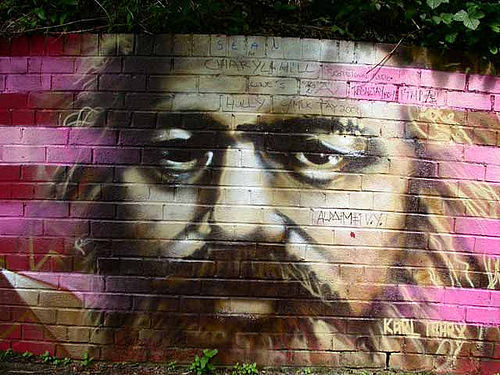 L’exposició es va centrar en l’explicació sintètica del darrer llibre de Kohan “Nuestro Marx”, producte de les discussions a la Càtedra Libre Ché Guevara. Entre altres, també va realitzar una crida a la necessitat de formació teòrica per tal d’orientar una bona praxis política comunista i contra la fragmentació del coneixement.
Crònica de la conferència
Prologat per membres de les FARC-EP, el llibre té com a objectiu la crítica dels “paradigmes” intel·lectuals que han dominat el pensament acadèmic des de mitjans dels vuitanta, d’una banda; i d’altra, fer una crítica explícitament diferenciada de les tradicions dels marxisme, és a dir, de les elaboracions de Marx divulgades i defensades per diferents famílies de l’esquerra pretesament rupturistes o transformadores.
Les anomenades “metafísiques post” (postmodernisme, postmarxisme, postestructuralisme i multiculturalisme) s’han de contextualitzar com a productes teòrics de la derrota de les revoltes del 68. Segons Kohan, aquestes van fer de la debilitat virtut tot apujant la fallida conjunctural com a teoria que va renunciar a la conquesta del poder i a l’enfrontament de l’Estat, això sí, sota una “gestualidad pseudolibertaria y una cierta inspiración en los relatos antiutópicos como 1984”.
«The necessary reconstitution of the historical dialectic»: István Mészáros
 AS WE know, the modern state was not formed as a result of some direct economic determination, as a mechanical super-structural outcrop, in conformity to a reductivist view of the sup-posedly one-sided material domination of society, as presented in the vulgar Marxist conception of these matters. Rather, it was dialectically constituted through its necessary reciprocal interaction with capital’s highly complex material ground. In this sense, the state was not only shaped by the economic foundations of society but it was also most actively shaping the multifaceted real-ity of capital’s reproductive manifestations throughout their his-torical transformations, both in the ascending and in the de-scending phase of development of the capital system.
In this complex dialectical process of reciprocal interchange the historical and the transhistorical determinations have been closely intertwined, even if in the course of the capital system’s descending phase of development we had to witness a growing violation of the historical dialectic, especially under the impact of the deepening structural crisis. For the defence of the estab-lished mode of societal reproduction at all cost, no matter how wasteful and destructive its impact by now even on nature, can only underline the historical anachronism and the corresponding untenability of a once all-powerful mode of productive societal reproduction, which tries to extend its power in a “globalized form” at a time when the absolute systemic limits of capital are being activated on a global scale.
«Sobre el marxismo en México» conferencia de Gabriel Vargas Lozano
 La situación del marxismo en la actualidad, las causas del desprestigio del marxismo, los temas en los que se debe profundizar o ampliar el marxismo.
Sinópsis:
Gabriel Vargas Lozano es un filósofo que no sólo se dedica a la docencia y producción teórica, sino que, además, dedica su tiempo a luchar contra la Reforma Integral de la Educación Media Superior (RIEMS) y a mantener con vida el Observatorio Filosófico de México.
En esta conferencia aborda los avatares del marxismo en México, destacando dos épocas sobresalientes, la primera en los años treinta con la reforma al artículo tercero constitucional y la segunda en los años setenta y ochenta influenciada por el movimiento del 68, la teología de la liberación y la revolución cubana.
«An Introduction to the Three Volumes of Karl Marx’s Capital»: Michael Heinrich
 The global economic crisis and recession that began in 2008 had at least one unexpected outcome: a surge in sales of Karl Marx’s Capital. Although mainstream economists and commentators once dismissed Marx’s work as outmoded and flawed, some are begrudgingly acknowledging an analysis that sees capitalism as inherently unstable. And of course, there are those, like Michael Heinrich, who have seen the value of Marx all along, and are in a unique position to explain the intricacies of Marx’s thought.
Heinrich’s modern interpretation of Capital is now available to English-speaking readers for the first time. It has gone through nine editions in Germany, is the standard work for Marxist study groups, and is used widely in German universities. The author systematically covers all three volumes of Capital and explains all the basic aspects of Marx’s critique of capitalism in a way that is clear and concise. He provides background information on the intellectual and political milieu in which Marx worked, and looks at crucial issues beyond the scope of Capital, such as class struggle, the relationship between capital and the state, accusations of historical determinism, and Marx’s understanding of communism. Uniquely, Heinrich emphasizes the monetary character of Marx’s work, in addition to the traditional emphasis on the labor theory of value, thus highlighting the relevance of Capital to the age of financial explosions and implosions.
“16 Tesis de Economía Política. Tesis III″: Enrique Dussel
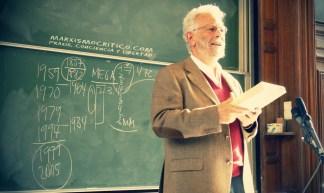 «El ciclo equivalencial: valor de cambio, dinero y mercado«: tercera conferencia de Enrique Dussel sobre la crítica de la economía política de Marx de su curso ” 16 Tesis de Economía Política”
Audio de la presentació del llibre «Nuestro Marx» de Néstor Kohan a la conferència inaugural de la UCPC 2011
 L’exposició es va centrar en l’explicació sintètica del darrer llibre de Kohan “Nuestro Marx”, producte de les discussions a la Càtedra Libre Ché Guevara. Entre altres, també va realitzar una crida a la necessitat de formació teòrica per tal d’orientar una bona praxis política comunista i contra la fragmentació del coneixement.
Crònica de la conferència
Prologat per membres de les FARC-EP, el llibre té com a objectiu la crítica dels “paradigmes” intel·lectuals que han dominat el pensament acadèmic des de mitjans dels vuitanta, d’una banda; i d’altra, fer una crítica explícitament diferenciada de les tradicions dels marxisme, és a dir, de les elaboracions de Marx divulgades i defensades per diferents famílies de l’esquerra pretesament rupturistes o transformadores.
Les anomenades “metafísiques post” (postmodernisme, postmarxisme, postestructuralisme i multiculturalisme) s’han de contextualitzar com a productes teòrics de la derrota de les revoltes del 68. Segons Kohan, aquestes van fer de la debilitat virtut tot apujant la fallida conjunctural com a teoria que va renunciar a la conquesta del poder i a l’enfrontament de l’Estat, això sí, sota una “gestualidad pseudolibertaria y una cierta inspiración en los relatos antiutópicos como 1984”.
«Entrevista con Doménico Losurdo»: Giulio Gerosa
Entrevista realizada no verão de Julho de 2011 em Urbino, Itália. Losurdo não é mais um divulgador do marxismo entre muitos. É um criador. Tal como os materialistas gregos, não desconhece que o objectivo supremo do homem na aventura da vida é a procura da felicidade possível. E sabe também que em poucas épocas terá sido tão difícil como hoje perseguir essa meta. Não é de estranhar que o filósofo, nessa ânsia de compreender para ensinar, tenha escrito sobre autores tão diferentes como Nietzsche, Hegel, Marx e Lénine. Mas Domenico tem os pés bem fincados na terra. A teoria e a prática são para ele complementares. Consciente dessa interacção, o historiador está, como intelectual revolucionário, permanentemente envolvido na solidariedade com as grandes causas da humanidade e na luta dos povos contra o imperialismo. Os seus artigos correm mundo na crítica às guerras de agressão imperiais contra os povos da Palestina, do Iraque, do Afeganistão, da Líbia e outros, na denúncia da participação do golpe dos EUA nas Honduras, na solidariedade com as FARC colombianas e com o povo iraniano. É reconfortante que neste mundo em crise de civilização haja pensadores revolucionários como Domenico Losurdo. Vai completar 70 anos e preparam-lhe merecidas homenagens em diferentes países. (fonte: Miguel Urbano Rodrigues)
«The Contradictions of Capital»: David Harvey
 University of Warwick
Distinguished Lecture Series
14 February 2013
David Harvey is the Distinguished Professor of Anthropology at the Graduate Center of the City University of New York. He is a leading political economist and social theorist of international standing. He is a highly cited academic and the author of many books and essays. Professor Harvey received his BA, MA and PhD from Cambridge University and was formerly Professor of Geography at John Hopkins University, Halford Mackinder Professor of Geography at the University of Oxford and Senior Research Fellow at St Peter’s College Oxford.
His numerous awards include Outstanding Contributor Award of the Association of American Geographers, the Centenary Medal from the Royal Scottish Geographical Society and the Patron’s Medal of the Royal Geographical Society for contributions to critical human
“16 Tesis de Economía Política. Tesis II″: Enrique Dussel
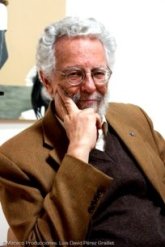 «El ciclo productivo, trabajo vivo y valor» segunda conferencia de Enrique Dussel sobre la crítica de la economía política de Marx de su curso ” 16 Tesis de Economía Política”
Reading Marx’s Capital with David Harvey

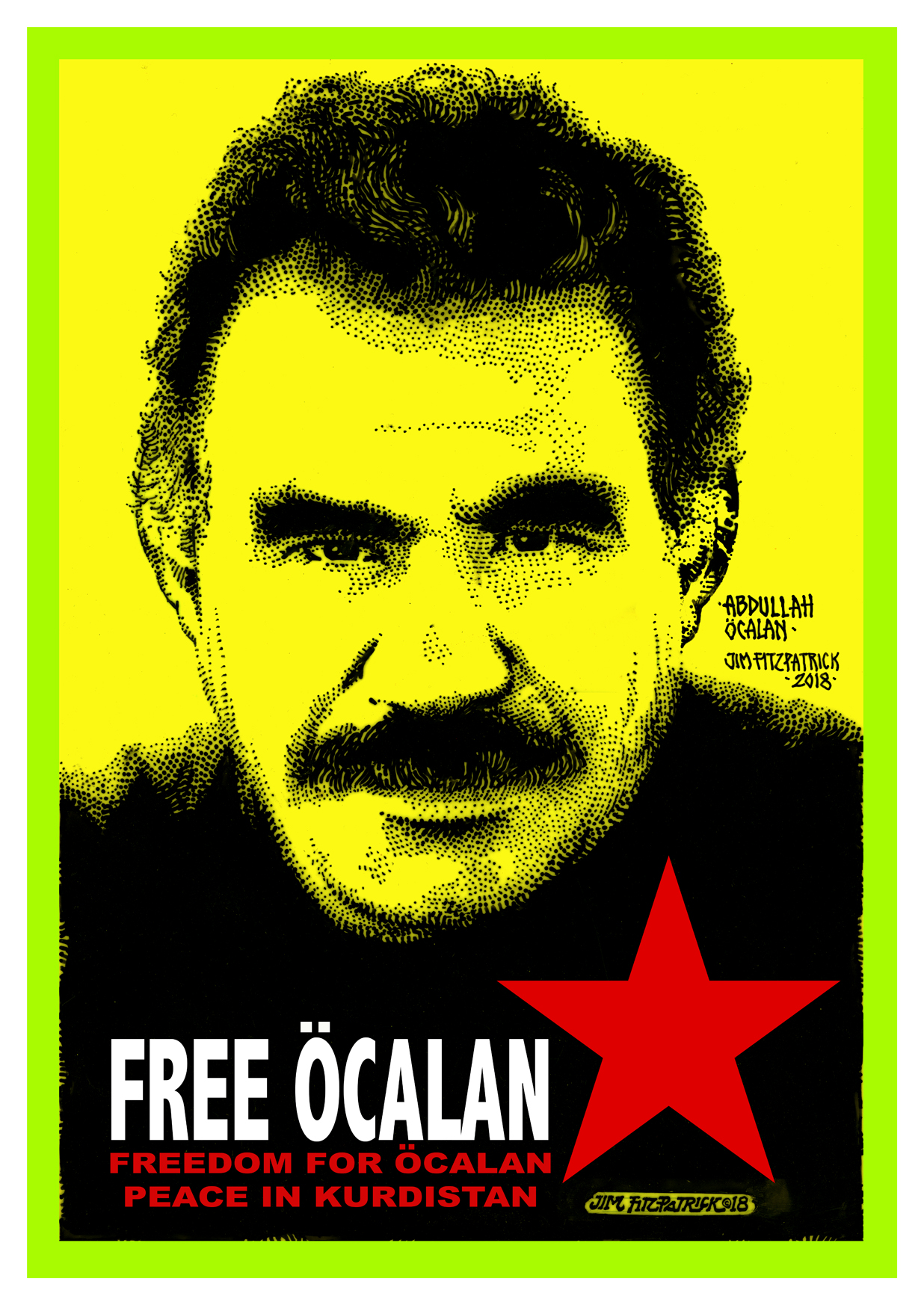
Free Öcalan

Fundación Infancia y Aprendizaje

Colección de libros Marxismo Crítico

Historical Materialism


CIPEC (Centro de Investigación en Pensamiento Crítico)

Centro para la Investigación como Crítica Práctica

Memoria Revista de Crítica Militante
Revista Laberinto






Marx desde cero




 marxismocritico.com