
Archivo
Seminario «Introducción a la lectura del tomo I de El Capital: Perspectivas críticas de las formas actuales del capitalismo»
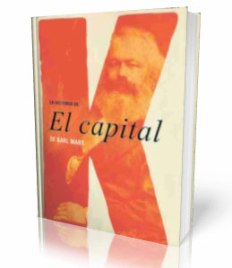 Exponente: Ángelo Narváez León.
Licenciado en Filosofía y Candidato a Doctor en Filosofía (PUCV). Profesor de Epistemología de las Ciencias Sociales, Universidad Alberto Hurtado.
Centro de Estudios Hegelianos de Valparaíso.
Universidad Popular de Valparaíso.
Lugar: Facultad de Filosofía y Educación PUCV, Aula Media
Primera sesión: Jueves 6 de Junio a las 15:00 horas
Sesión 1: “Génesis, estructura y recepción de El Capital”
Sesión 2: “Hacia la necesidad de una teoría crítica del valor”
Sesión 3: “La producción directa de riqueza: plusvalía y jornada laboral”
Sesión 4: “La desnaturalización de la naturaleza: acumulación originaria y teoría de la colonización”
Sesión 5: “El espacio en el capital: introducción al problema de la renta y el territorio”
“A estratexia do esquecemento do capitalismo / La estrategia del olvido del capitalismo” : Miren Etxezarreta
 Conferencia de Miren Etxezarreta en la XXX Semana Galega de Filosofia, “Filosofía y memoria”, 1 al 5 de abril de 2013, Pontevedra. Organizada por Aula Castelao de Filosofia. Duración de la intervención: 1:46:27
«Manuel Sacristán habla con Dialéctica»: Gabriel Vargas Lozano y Jorge Rendón Alarcón
 Esta detallada entrevista apareció por vez primera en Dialéctica. N°13. junio 1983. PP. 97-119. Dialéctica es una revista de Filosofía, Ciencias Sociales y cultura política, dirigida por Gabriel Vargas Lozano y editada por la Universidad Autónoma de Puebla. La entrevista fue realizada por el mencionado y el profesor Jorge Rendón Alarcón.
Los entrevistadores presentaron la conversación con la siguiente «Nota introductoria”: Manuel Sacristán es uno de los filósofos y políticos más conocidos y respetados en el mundo de habla hispana. Ex─miembro del comité ejecutivo del Partido Comunista de España y ahora fuera del PCE, autor de libros como Las ideas gnoseológicas de Heidegger (1959).
Introducción a la lógica y al análisis formal (1964), Sobre el lugar de la filosofía en los estudios superiores (1968). Goethe y Heine (968), director de la revista mientras tanto y traductor connotado de Marx, Engels, Gramsci. Lukács, etc, ha concedido a Dialéctica una importante entrevista en la que se respira una gran honestidad, una intensa fuerza polémica y un interés por hacer del marxismo una nueva respuesta a los graves problemas que ha abierto el desarrollo del capitalismo en su fase actual.
«Gender and Democracy in the Neoliberal Agenda: Feminist Politics, Past and Present»: Silvia Federici
 6th Subversive festival
13/05/2013, 21:00h, cinema Europa
Silvia Federici »Gender and democracy in the Neo-liberal agenda: feminist politics past and present
Moderator: Ankica Čakardić
As feminism has been institutionalized and subsumed to the neo-liberal agenda in the name of democratization, a feminist critique of liberal democracy is more urgent than ever. Federici discusses the role this grand illusion has played in feminist politics and contrasts it with the contribution feminist movements have made to democracy intended as self-government and egalitarian division of the commonwealth.
Marcello Musto presenta il suo libro «Ripensare Marx e i marxismi – Studi e saggi»

Palazzo Albani, Urbino, 17 maggio 2012
Marcello Musto presenta il suo libro «Ripensare Marx e i marxismi – Studi e saggi»
Introduzione di Domenico Losurdo e Stefano G. Azzarà.
Fonte video: http://www.uniurb.it
«Michael Heinrich, Marx’s law and crisis theory»: Michael Roberts
 Michael Heinrich is an exponent of what is known as the ‘New German Reading of Marx’, which interprets the theory of value that Marx presents in Capital as a socially specific theory of ‘impersonal social domination’. He is a collaborator on the MEGA edition of Marx and Engel’s complete works and has published several philological studies of Capital. He has also authored a work on Marx’s theory of value, The Science of Value, which is forthcoming in the Historical Materialism book series. And recently he has published An Introduction to all Three Volumes of Capital as his first full-length work to appear in English.
I am not going to do a critique of Heinrich’s views on the theory of value, as this has been done by Guglielmo Carchedi in his book, Behind the Crisis (see chapter 2). But I am moved to respond to a recent article of Heinrich’s in the American Monthly Review, entitled Crisis theory, the law of the tendency of the rate of profit to fall and Marx’s studies in the 1870s (monthlyreview.org).
In this article, Heinrich makes the following points: 1) Marx’s law is inconsistent because its categories are indeterminate; 2) it is empirically unproven and even unjustifiable on any measure of verification; 3) Engels badly edited Marx’s works to distort his view on the law in Capital Vol 3; 4) Marx himself in his later works of the 1870s began to have doubts about the law as the cause of crises and started to abandon it in favour of some theory that took into account credit, interest rates and the problem of realisation (similar to Keynesian theory); 5) Marx died before he could present these revisions of his crisis theory, so there is no coherent Marxist theory of crisis.
“Releer Marx a la luz de la filología” Roberto Fineschi

1. La nueva edición del libro I del Capital que he coordinado para las “Opere Complete di Marx ed Engels” (vol. XXXI, Napoli, La città del sole, 1600 páginas) pretende mostrar al lector el estado de la cuestión tras las significativas novedades surgidas durante la publicación de la nueva edición histórico-crítica, la segunda Marx-Engels-Gesamtausgabe (MEGA2), monumental proyecto de 114 volúmenes en proceso de realización desde hace cuarenta años y lejos de finalizarse [1].
La circulación de las obras de Marx ha sido escasa en las últimas décadas; recientemente ha sido reemprendida su publicación, aspecto sin duda positivo. Sin embargo, en casi todos los casos, simplemente se han vuelto a publicar los textos clásicos o se los ha reeditado en base a las ediciones tradicionales. Por el contrario, la gran novedad de la MEGA consiste, esencialmente, en haber mostrado que muchas de las obras más significativas de Marx diferían de las lecturas históricamente realizadas. De manera que no son, tan solo, las interpretaciones de Marx y Engels las que hay que revisar, sino las mismas fuentes textuales sobre las que las interpretaciones se han realizado o pueden realizarse. La nueva edición del primer libro del Capital parte, por primera vez en el mundo occidental, de esta premisa.
“Lliçons sobre el capítol sisè (inèdit) de Marx de Claudio Napoleoni»: Ivan Gordillo
 “El capital, llibre I, capítol VI (inèdit). Resultats del procés immediat de producció”1 més conegut amb el nom d’Inèdit és un text escrit per Marx als voltants de 1865 que finalment no va incloure en la versió definitiva del llibre I de El capital que va aparèixer per primera vegada el 1867. Aquest text es pot trobar individualment en edicions en format llibre que no superen les 150 pàgines. És, per tant, un text de reduïdes dimensions si ho comparem amb altres obres del pensador alemany.
Tot i el caràcter de treball previ no definitiu, l’Inèdit és d’especial interès perquè conté gran part del contingut teòric essencial del llibre I de El capital. A més, està escrit en un estil força menys farragós que d’altres obres de l’autor pel que creiem pot ser de gran utilitat als lectors novells en el pensament de Marx o aquells que volen iniciar-se en la lectura de El capital.
¿Para qué sirve El Capital?: Iñaki Gil de San Vicente
 Texto escrito para el 2do Encuentro de Escuela de Cuadros que se llevará a cabo en la Fundación Centro de Estudios Latinoamericanos Rómulo Gallegos (CELARG), Caracas, del 30 de mayo al 1 de junio del 2013.
Estamos reunidos aquí para reflexionar sobre una interrogante ¿Para qué sirve El Capital? La respuesta es simple e inmediata: para avanzar al comunismo mediante la revolución socialista. El Capital fue escrito para ser la obra cumbre de toda la impresionante praxis revolucionaria de Marx, pero también de Engels. Será esta respuesta inmediata la que oriente este texto. Sin la perspectiva práctica revolucionaria, sin la perspectiva política en suma, nada del marxismo es comprensible, y por tanto El Capital es ininteligible. Ahora bien, como iremos viendo, la política marxista no se reduce a la politiquería parlamentarista por muy de izquierdas y de masas que diga ser, y menos todavía burguesa y reformista, sino que en sí misma, la política revolucionaria es la síntesis del resto de prácticas económicas.
«Marx, Ricardo e Smith: sobre a teoria do valor trabalho»: Reinaldo Carcanholo
 “O marxismo são marxismos – e os marxistas estão hoje plenamente conscientes desse fato, além de estarem, também, plenamente satisfeitos com essa pluralidade. Como se sabe, o marxismo não é propriamente uma ilha, mas vem a ser um arquipélago formando por um grande número de ilhas, mais ou menos próximas entre si. É nessa perspectiva que se deve enxergar o livro Marx, Ricardo e Smith, do prof. Reinaldo Carcanholo – livro este em que ele procurou retomar criticamente os três clássicos do pensamento econômico. Justamente por respeitar essa pluralidade, ele pode ser bem enfático na defesa de suas posições sobre as teorias do valor dos três autores mencionados. Marx dentre os três, como ele próprio deixa claro, é o mais profundo.
Os ensaios reunidos nesse livro são resultados de um prolongado esforço de compreensão desses três autores, nenhum deles fácil de ler e de compreender como os manuais de economia matemática (cuja dificuldade eventual é meramente técnica). Eles se debruçaram com denodo sobre a complexidade do mundo real para revelá-la em sua verdade e isto está refletido na riqueza conceitual – e certa obscuridade constitutiva – de seus escritos. Pois, aquilo que é contraditório não se deixa conhecer por um discurso claro, sem contradições. Em toda a sua vida intelectual, o prof. Reinaldo Carcanholo se dedicou com paixão à compreensão dos autores que, agora, ele ousa expor e criticar. Trata-se, pois, de um livro que vem contribuir para o desenvolvimento de uma cultura econômica de esquerda no Brasil.” (Eleutério Prado)
«Primitive Accumulation: From Adam Smith to Angela Merkel»: Michael Perelman
 The barbaric wave of austerity crashing across Europe and much of the rest of the world both resembles and differs from the classical period of primitive accumulation which deprived masses of people of their means of production. Although landgrabs continue in this modern version of primitive accumulation, the central thrust is the destruction of all public wealth in the interest of capital. Another difference is that classical political accumulation reflected the optimism associated with a new form of making wealth, while viciousness of modern primitive accumulation seems to be an attempt to recapture the vitality of early capitalism. However, despite the short-term benefits of such cannibalistic policies for capital, in the end the result will be detrimental to the capitalists, as well as the rest of society.
Michael Perelman is a Marxist economist and economic historian and a professor of economics at California State University, Chico. He has has written numerous books and academic articles on the topic of primitive accumulation, including The Invention of Capitalism: The Secret History of Primitive Accumulation (2000).
«From the Oil Crisis to the Great Recession: Five crises of the world economy»: J. A. Tapia Granados
 ABSTRACT — This article makes the case that the global economy has gone through five crises since the 1970s to the present. This implies not only that the world economy is a real entity, but also that the usual view that poses national economies as units of economic analysis is an approach with major limitations. The paper discusses the concept of “economic crisis” and provides data indicating that the world economy, not national economies, is the major unit to be analysed when trying to understand the economic reality of our time, and particularly the reality of crises. These crises are discrete, countable phenomena, distinctive states of an entity that can be properly called world economy, or world capitalism. Data on capital formation, on growth of the world output, of monetary aggregates, of unemployment rates and on industrial activity indicate five major “dips” of the global economy, i.e., world recessions, in (i) the mid 1970s, (ii) the early 1980s, (iii) the early 1990s, (iv) the early 2000s, and (v) the Great Recession that provisionally can be dated 2007-2009. To a large extent business cycle chronologies of national economies such as those produced by the NBER, the OECD, or other institutions are largely consistent with these five crises of the world economy which, obviously, had different manifestations in different nations and economic regions.
«Primitive accumulation versus contested reproduction»: Michael A. Lebowitz
 May 4, 2013 — Links International Journal of Socialist Renewal — If we don’t understand a system as it is fully developed [its «being»] and thus its critical characteristics, we cannot investigate the «becoming» of those characteristics.
This is why Marx discussed primitive (or original) accumulation of capital only at the end of volume 1 of Capital. Exclusive focus upon the emergence of the new elements, however, is not real history. «Becoming» is two sided: it is both a coming into being and a passing away. The concept of primitive accumulation explores only the former; it considers the new being born but not the old struggling to remain alive. It is, in short, one-sided. Not only does it fail to explore on its own the struggle of the old for its reproduction but it also does not consider the interaction, the morbid symptoms and dysfunction when two sets of productive relations are engaged in contested reproduction with respect to their control of the elements of production.
What is lost? The centrality of class struggle — the struggle of two sides and the conditions thereby in which history is made. The paper considers various historical phenomena using the concept of contested reproduction.
«Rethinking Microeconomics: A Proposed Reconstruction»: Anwar Shaikh
 I. Introduction
Microeconomics is important because individual agents make choices, and choices have personal and social consequences. Incentives do matter, and they do affect individual choices. But it does not follow that individual decision making is characterized by the rules of so-called rational choice and rational expectations or by the reductive incentives they embody. Nor does it follow that aggregates can be analyzed in terms of representative agents. The historical, empirical and analytical evidence against this set of hypotheses is overwhelming. One purpose of this paper is to survey this evidence. But a larger purpose is to demonstrate that the central empirical findings of microeconomics do not require any such foundation, because they can be derived from a wide range of individual decision making modes. Aggregates are shown to be «robustly indifferent» to their microfoundations because shaping structures such as budget constraints and social influences which generally play decisive roles in producing aggregate patterns.
Once it is understood that very different types of microfoundations can give rise to the same market-level or economy-wide patterns, we can partition microeconomics into two types of propositions. Empirically grounded propositions which can be derived from a wide variety of microfoundations: downward sloping demand curves, differential income elasticities for necessary goods, income-driven consumption functions, etc. And propositions which depend on the specific characterization of individual behavior: where the assumed foundation is rational choice, this latter set includes the usual theorems on the efficiency, harmony and general optimality of market processes. The advantage of proceeding in this manner is that it greatly expands the room for the possible characterizations of individual economic behavior while retaining key microeconomic
patterns which play an important role in economic analysis.
«Bibliografía (provisional) de Francisco Fernández Buey»: Salvador López Arnal y Jordi Mir
 Presentación
El sustantivo es lo esencial, no el adjetivo. En nuestro caso, la afirmación inversa es la verdadera. Esta aproximación a la obra de Francisco Fernández Buey es un primer intento, o uno de los primeros intentos, y está lejos, muy lejos de convertirse en una bibliografía de referencia del autor de La gran perturbación.
No hemos podido investigar apenas los probablemente numerosos papeles clandestinos que el reconocido luchador antifranquistacomunista escribió a lo largo de sus prolongados años de arriesgada militancia clandestina. Sólo hay alguna huella de todo ello en nuestro trabajo. Ni tan siquiera hemos podido mirar detalladamente sus artículos en la prensa generalista de estos 30 últimos años e incluso en revistas que él, junto a su maestro, amigo y compañero Manuel Sacristán, hicieron tan suyas como Materiales o mientras tanto. No es imposible que en este ámbito tan próximo habite algún olvido, poco o nada excusable. De igual modo, la relación de traducciones que hemos incluido al final del trabajo dista mucho de ser exhaustiva y de estar comprobada en todas sus entradas.
Reading Marx’s Capital with David Harvey

Free Öcalan



Fundación Infancia y Aprendizaje

Colección de libros Marxismo Crítico

Historical Materialism


CIPEC (Centro de Investigación en Pensamiento Crítico)

Centro para la Investigación como Crítica Práctica

Memoria Revista de Crítica Militante

Revista Laberinto






Marx desde cero





 marxismocritico.com