
Archivo
«Organizarse para la transición anticapitalista»: David Harvey
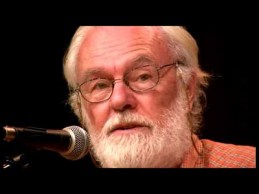 “Comunistas son todos los que trabajan sin cesar para producir un futuro diferente al que el capitalismo depara. Esta es una definición interesante. Mientras que el comunismo tradicional institucionalizado está muerto y enterrado, según esta definición hay millones de comunistas de facto activos entre nosotros, dispuestos a actuar según sus comprensiones, preparados para consumar de manera creativa los imperativos anticapitalistas. Si, como declaraba el movimiento altermundista de finales de los noventa “otro mundo es posible”, entonces por qué no decimos también “otro comunismo es posible”. Las circunstancias actuales del desarrollo capitalista exigen algo así, si es que queremos lograr un cambio fundamental”.
«Capitalismo y ciudadanía: la anomalía de las clases sociales»: Luis Alegre Zahonero y Carlos Fernández Liria
 1. Ciudadanía y Propiedad.
No sostenemos desde luego nada muy original afirmando que esos peculiares “sujetos de derecho” que somos los humanos no podemos prescindir de un cuerpo como soporte de cualquier derecho y que, por lo tanto, hay siempre determinadas condiciones previas a que pueda hablarse de derecho o de ciudadanía que se refieren a la cuestión del sustento material y, en definitiva, a la cuestión de la propiedad.
Debemos ante todo recordar que la mejor tradición ilustrada consideró siempre la propiedad privada una condición de la ciudadanía. Ciertamente, resulta fácil comprender las sólidas razones que llevaron a establecer esta conexión entre la propiedad y la autonomía ciudadana: sólo quien no depende del arbitrio de otro para garantizar su subsistencia (porque puede asegurarla por sus propios medios) puede considerarse verdaderamente independiente. Por el contrario, aquél cuya subsistencia misma depende de la voluntad de otro –es decir, de la propiedad de otro que puede hacer siempre lo que quiera con lo suyo— cabe decir que tiene su autonomía y, por lo tanto, todos sus derechos de ciudadanía hipotecados. Resulta fácil comprender, pues, cierto carácter irrenunciable de la propiedad para garantizar la independencia personal y, por lo tanto, la ciudadanía.
Video de la presentació del llibre “Nuestro Marx” de Néstor Kohan a la conferència inaugural de la UCPC 2011
 L’exposició es va centrar en l’explicació sintètica del darrer llibre de Kohan “Nuestro Marx”, producte de les discussions a la Càtedra Libre Ché Guevara. Entre altres, també va realitzar una crida a la necessitat de formació teòrica per tal d’orientar una bona praxis política comunista i contra la fragmentació del coneixement.
Crònica de la conferència
Prologat per membres de les FARC-EP, el llibre té com a objectiu la crítica dels “paradigmes” intel·lectuals que han dominat el pensament acadèmic des de mitjans dels vuitanta, d’una banda; i d’altra, fer una crítica explícitament diferenciada de les tradicions dels marxisme, és a dir, de les elaboracions de Marx divulgades i defensades per diferents famílies de l’esquerra pretesament rupturistes o transformadores.
Les anomenades “metafísiques post” (postmodernisme, postmarxisme, postestructuralisme i multiculturalisme) s’han de contextualitzar com a productes teòrics de la derrota de les revoltes del 68. Segons Kohan, aquestes van fer de la debilitat virtut tot apujant la fallida conjunctural com a teoria que va renunciar a la conquesta del poder i a l’enfrontament de l’Estat, això sí, sota una “gestualidad pseudolibertaria y una cierta inspiración en los relatos antiutópicos como 1984”.
«The necessary reconstitution of the historical dialectic»: István Mészáros
 AS WE know, the modern state was not formed as a result of some direct economic determination, as a mechanical super-structural outcrop, in conformity to a reductivist view of the sup-posedly one-sided material domination of society, as presented in the vulgar Marxist conception of these matters. Rather, it was dialectically constituted through its necessary reciprocal interaction with capital’s highly complex material ground. In this sense, the state was not only shaped by the economic foundations of society but it was also most actively shaping the multifaceted real-ity of capital’s reproductive manifestations throughout their his-torical transformations, both in the ascending and in the de-scending phase of development of the capital system.
In this complex dialectical process of reciprocal interchange the historical and the transhistorical determinations have been closely intertwined, even if in the course of the capital system’s descending phase of development we had to witness a growing violation of the historical dialectic, especially under the impact of the deepening structural crisis. For the defence of the estab-lished mode of societal reproduction at all cost, no matter how wasteful and destructive its impact by now even on nature, can only underline the historical anachronism and the corresponding untenability of a once all-powerful mode of productive societal reproduction, which tries to extend its power in a “globalized form” at a time when the absolute systemic limits of capital are being activated on a global scale.
«Marxismo, feminismo y liberación de la mujer»: Sharon Smith
 Inessa Armand, la primera dirigente del Departamento de la Mujer en la Revolución Rusa de 1917, hizo la siguiente observación: “Si la liberación de la mujer es impensable sin el comunismo, el comunismo es también impensable sin la liberación de la mujer”. Esta afirmación es un perfecto resumen de la relación entre la lucha por el socialismo y la lucha por la liberación de la mujer: no es posible una sin la otra.
La tradición marxista asume, desde sus orígenes, con los escritos de Karl Marx y Friedrich Engels, la lucha por la liberación de la mujer. Ya desde el “Manifiesto Comunista”, Marx y Engels argumentaron como la clase dominante oprime a las mujeres, relegándolas a “ciudadanas de segunda clase” en la sociedad y dentro de la familia: “el burgués ve en su mujer un mero instrumento de producción…, no sospecha siquiera que el verdadero objetivo que perseguimos [los comunistas] es el de acabar con esa situación de las mujeres como mero instrumento de producción”.
Marx no dedicó mucho espacio en El Capital a describir el papel que cumple el trabajo domestico de las mujeres bajo el capitalismo. Tampoco examinó el origen de la opresión de la mujer en la sociedad de clases, a pesar de que tomó extensas notas etnológicas sobre este tema hacia el final de su vida.
«Resistance versus Emancipation: Foucault, Marcuse, Marx, and the Present Moment»: Kevin B. Anderson
 I. The Changed World of 2011-12
We live in a far different world than just a few short years ago. Not only have we suffered the greatest economic downturn since the 1930s, but we have also witnessed the emergence of new forms of mass struggle. Foremost among these have been the 2011-12 Arab revolutions, still ongoing. Not since 1848 has the world experienced such a wave of revolutions crossing borders in such a short period. Moreover, unlike some of the other democratic upheavals of this century (Iran 2009, Ukraine 2004, Serbia 2000, etc.), the Arab revolutions have articulated not only political but also economic demands. The spread of these revolutions countries whose governments boasted of their anti-imperialist credentials like Libya and Syria has also tested those on the Left who place opposition to U.S. imperialism ahead of everything else. (For more elaboration of this point see my “Year Two of the Arab Revolutions, Logos 11:4, Spring-Summer 2012: http://logosjournal.com/2012/spring-summer_anderson/.)
Several other key struggles have emerged in the wake of the Arab revolutions, among them the summer 2011 British youth riots triggered by minority youth, a serious challenge to racially based state/police oppression and austerity economics. We have also seen serious movements against austerity and economic oppression, above all in Greece (begun before 2011), but also in Spain and Israel, as well as the labor upheaval in Wisconsin. In the U.S. and the UK, the 2011-12 Occupy movement has galvanized a new generation of young radicals, most notably in Oakland, California where they were able to shut down of one of the world’s largest ports, while also linking their movement to earlier protests against the murder of an African-American youth, Oscar Grant, by local transit police.
One could make a number of critiques of these new movements concerning their organizational practices or their political stances. In the discussion that follows, however, I would like to concentrate on a philosophical orientation that influences the contemporary radical movement’s, centered the all-too-common preoccupation with notions of “resistance.”
«La ilusión del metacontrol imperial del caos»: Jorge Beinstein
 La mutación del sistema de intervención militar de los Estados Unidos
“Las Ilusiones desesperadas generan vida en tus venas”
St. Vulestry
“La gente cree que las soluciones provienen de su capacidad de estudiar
sensatamente la realidad discernible. En realidad, el mundo ya no
funciona así. Ahora somos un imperio y, cuando actuamos, creamos
nuestra propia realidad. Y mientras tú estás estudiando esa realidad,
actuaremos de nuevo, creando otras realidades que también puedes
estudiar. Somos los actores de la historia, y a vosotros, todos vosotros,
sólo os queda estudiar lo que hacemos”.
Karl Rove, asesor de George W. Bush, verano de 2002 (1)
Guerra y economía
Conceptos tales como “keynesianismo militar” o “economía de la guerra permanente” constituyen buenos disparadores para entender el largo ciclo de prosperidad imperial de los Estados Unidos: su despegue hace algo más de siete décadas, su auge y el reciente ingreso a su etapa de agotamiento abriendo un proceso militarista-decadente actualmente en curso.
En 1942 Michal Kelecki exponía el esquema básico de lo que posteriormente fue conocido como “keynesianismo militar”. Apoyándose en la experiencia de la economía militarizada de la Alemania nazi, el autor señalaba las resistencias de las burguesías de Europa y Estados Unidos a la aplicación de políticas estatales de pleno empleo basadas en incentivos directos al sector civil y su predisposición a favorecerlas cuando se orientaban hacia las actividades militares (2). Más adelante Kalecki ya en plena Guerra Fría describía las características decisivas de lo que calificaba como triángulo hegemónico del capitalismo norteamericano que combinaba la prosperidad interna con el militarismo descripto como convergencia entre gastos militares, manipulación mediática de la población y altos niveles de empleo (3).
“Against and beyond the crisis: the role of urban social movements”: David Harvey
 Workshop Athens 2013
The workshop “Crisis regimes and emerging social movements in cities of Southern Europe”
The intention of the workshop is to provide an opportunity to scholars and activists from South European cities for exchanging experiences concerning the current crisis in South European cities and explore alternatives. The main goals of the workshop are:
a) to explore from a critical viewpoint the impact of the crisis on South European cities and their inhabitants, the dominant policies implemented, as well as new issues and novel social claims that are emerging, and
b) to bring together both activists from current/emerging movements and scholars, in order to exchange ideas and experiences from concrete practices, initiatives and struggles and to collectively think about alternatives for radical action.
«Class War and Labor’s Declining Share»: Fred Magdoff and John Bellamy Foster
 Workers in the United States are in a very difficult situation—one made significantly worse by the Great Recession and the very slow “recovery.” The latest data as we write this (available for January 2013) indicates that although the unemployment rate has declined from its peak and is now at 7.9 percent, when those working part time but wanting full-time jobs and those who have given up looking for work are added in, 14.4 percent of the labor force currently needs full-time employment.1 To give some idea of the meaning of such a large percentage needing full-time jobs, this represents 22 million people, compared to total nonfarm private-sector employment of about 113 million. Given the large portion of workers in part-time positions, there are currently less than 100 million full-time-equivalent jobs left in the private sector.2 With the public sector hiring few if any workers for the foreseeable future, and no New Deal-type works program in the cards, the private sector will be the source of whatever job increases occur.
As if the current employment situation is not bad enough, there has also been a long-term decline in the relative power of the working class, with capital increasingly gaining the upper hand. One crucial indication of this is the stagnation or decline over decades of real wages (corrected for inflation). For a while workers’ lost ground with respect to wages was compensated for by more women entering the labor force so that households increasingly had two earners, helping to maintain household income. However, over the last decade there has even been a downward trend in median family income—decreasing from $54,841 in 2000 to $50,054 in 2011 (both in 2011 dollars).3 The financial impact of the Great Recession has had a devastating effect on many people—with millions declaring bankruptcy, losing homes to foreclosure, or being forced “underwater” (owing more than the worth) on their homes.
Audio de la presentació del llibre «Nuestro Marx» de Néstor Kohan a la conferència inaugural de la UCPC 2011
 L’exposició es va centrar en l’explicació sintètica del darrer llibre de Kohan “Nuestro Marx”, producte de les discussions a la Càtedra Libre Ché Guevara. Entre altres, també va realitzar una crida a la necessitat de formació teòrica per tal d’orientar una bona praxis política comunista i contra la fragmentació del coneixement.
Crònica de la conferència
Prologat per membres de les FARC-EP, el llibre té com a objectiu la crítica dels “paradigmes” intel·lectuals que han dominat el pensament acadèmic des de mitjans dels vuitanta, d’una banda; i d’altra, fer una crítica explícitament diferenciada de les tradicions dels marxisme, és a dir, de les elaboracions de Marx divulgades i defensades per diferents famílies de l’esquerra pretesament rupturistes o transformadores.
Les anomenades “metafísiques post” (postmodernisme, postmarxisme, postestructuralisme i multiculturalisme) s’han de contextualitzar com a productes teòrics de la derrota de les revoltes del 68. Segons Kohan, aquestes van fer de la debilitat virtut tot apujant la fallida conjunctural com a teoria que va renunciar a la conquesta del poder i a l’enfrontament de l’Estat, això sí, sota una “gestualidad pseudolibertaria y una cierta inspiración en los relatos antiutópicos como 1984”.
«Simón Bolívar y nuestra Independencia: Una lectura latinoamericana»: Néstor Kohan
 Nuevo libro sobre Simón Bolívar, San Martín, Mariano Moreno y nuestra Independencia. Pensar el Bicentenario desde abajo. Debates abiertos, sueños pendientes
 Texto de presentación y contraportada
El interés por nuestra historia crece día a día. Resulta ineludible pensar el Bicentenario a escala continental, no de modo aislado, país por país. Eso implica desmontar la historia oficial, de matriz eurocéntrica. Romper con la mirada colonial y provinciana de Nuestra América. A contramano del abandono posmoderno del supuesto “mito del origen” y de una globalización imperial que nos ningunea, resurgen una y otra vez las preguntas por nuestra identidad, la reconstrucción de nuestras luchas, la búsqueda del sentido… Mientras los pueblos aspiran a identificarse con los rebeldes del pasado, las conmemoraciones oficiales del Bicentenario han sido apologéticas y complacientes. Las burguesías sólo pretenden legitimarse. Cualquiera sea la marca del calendario lo que persiste es la discusión sobre la historia. Necesitamos liberar con urgencia el pasado para abrazar el porvenir.
«José Aricó: la última entrevista»
 Una entrevista, realizada en 1995, como parte de proyecto La Ciudad Futuro al marxista argentino José Aricó, fundador de la revista gramsciana Pasado y Presente. Testimonios de Carlos Altamirano, Oscar del Barco, Juan Carlos Portantiero.
«The Contradictions of Capital»: David Harvey
 University of Warwick
Distinguished Lecture Series
14 February 2013
David Harvey is the Distinguished Professor of Anthropology at the Graduate Center of the City University of New York. He is a leading political economist and social theorist of international standing. He is a highly cited academic and the author of many books and essays. Professor Harvey received his BA, MA and PhD from Cambridge University and was formerly Professor of Geography at John Hopkins University, Halford Mackinder Professor of Geography at the University of Oxford and Senior Research Fellow at St Peter’s College Oxford.
His numerous awards include Outstanding Contributor Award of the Association of American Geographers, the Centenary Medal from the Royal Scottish Geographical Society and the Patron’s Medal of the Royal Geographical Society for contributions to critical human
«Directly and Indirectly Social Labor: What Kind of Human Relations Can Transcend Capitalism?»: Peter Hudis
 In exploring how to go “beyond capitalism,” we need to first ask why it has been so difficult to develop a comprehensive alternative to capitalism. One reason is the nature of capitalism, which creates the false impression that alienated human relations are natural and immutable. Capital’s ability to naturalize conditions of oppression is central to its ideological dominance. Another reason for the difficulty in envisioning an alternative is the failed attempts to emancipate humanity from capitalism. The failure of many revolutions to create a truly new society solidifies the view that there is no alternative to being subordinated to social laws outside our control. And there is yet a third reason that it has been hard to develop an alternative—the decline of interest in Marx’s work over the past few decades. Marx was not just one of many important thinkers. Marx was the founder of a unique philosophy of revolution that contained a specific concept of a new society. The less direct study and discussion there is of Marx’s works, the harder it becomes to envision an alternative to capitalism itself.
For this reason, we aim to seriously explore Marx. It will not do to focus on bits and pieces of his work that may or may not be to our liking. We instead have to grapple with his ideas as a whole. But grappling with his ideas as a whole entails grappling with his ideas in their specificity. Without doing so it is not possible to grasp Marx’s ideas at all. So let’s take a closer look at the work that contains Marx’s most detailed discussion of a non-capitalist society—his 1875 Critique of the Gotha Program.
“16 Tesis de Economía Política. Tesis II″: Enrique Dussel
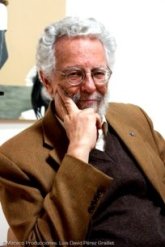 «El ciclo productivo, trabajo vivo y valor» segunda conferencia de Enrique Dussel sobre la crítica de la economía política de Marx de su curso ” 16 Tesis de Economía Política”
Reading Marx’s Capital with David Harvey

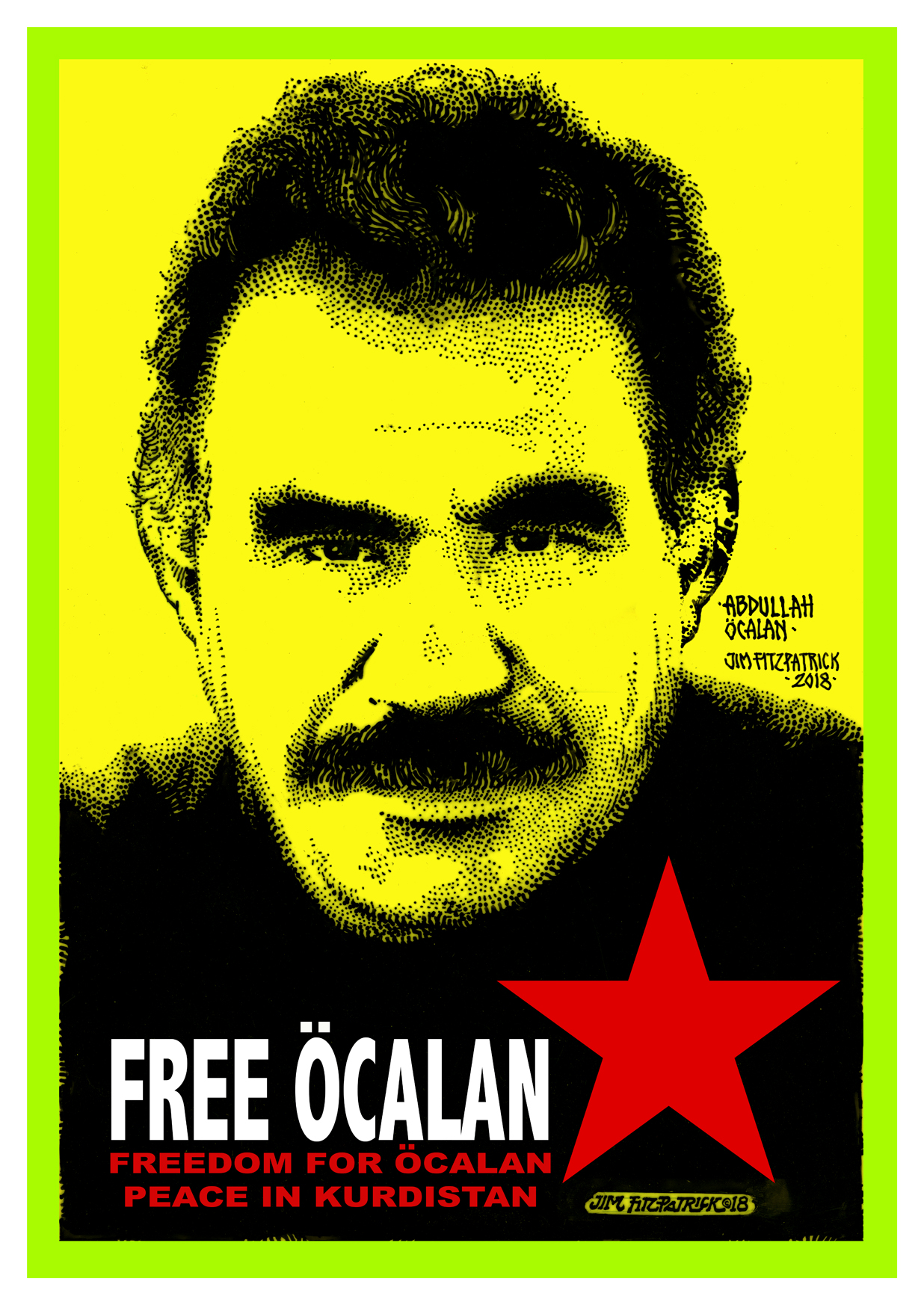
Free Öcalan
Fundación Infancia y Aprendizaje

Colección de libros Marxismo Crítico

Historical Materialism


CIPEC (Centro de Investigación en Pensamiento Crítico)

Centro para la Investigación como Crítica Práctica

Memoria Revista de Crítica Militante
Revista Laberinto





Marx desde cero




 marxismocritico.com