
Archivo
«Il Capitale come Feticcio Automatico e come Soggetto, e la sua costituzione: sulla (dis)continuità Marx-Hegel»: Riccardo Bellofiore
 Abstract: This article will deal in two steps with the Marx–Hegel (dis)connection in Capital. First, I’ll present a survey of what I take to be the most relevant positions about the role of dialectics in Marx. Second, after reviewing Marx’s criticisms of Hegel, I’ll consider the debate within the International Symposium on Marxian Theory. Third, I will argue that it is exactly Hegel’s idealism which made the Stuttgart philosopher crucial for the understanding of the capital relation. Here, I will refer to the ‘Hegelian’ Colletti of the late 1960s-early 1970s, to Backhaus’ dialectic of the form of value, and to Rubin’s interpretation of abstract labour as a process. At this point, I will provide my reading of Marx’s movement from commodity to money, and then to capital, in the first 5 chapters of Capital. Marx is moving on following a dual path. The first path reconstructs the ‘circularity’ of Capital as Subject, as an Automatic Fetish: it is here that Hegel’s idealistic method of ‘positing the presupposition’ served Marx well. The second path leads him to dig into the ‘constitution’ of the capital-relation, and therefore into the ‘linear’ exploitation of workers and class-struggle in production. Here we meet Marx’s radical break from Hegel, and understand the materialist foundation of the critique of political economy.
Introduzione
In questo articolo mi interrogherò sul rapporto di continuità/discontinuità tra Marx e Hegel. Inizierò con una rassegna personale idiosincratica delle posizioni più importanti che hanno influenzato la mia posizione. A seguire, prima ricorderò le critiche principali di Marx a Hegel, poi alcuni momenti del vivace dibattito all’interno dell’International Symposium on Marxian Theory (ISMT). Sosterrò quindi che è proprio l’idealismo assoluto di Hegel che ha reso il filosofo di Stoccarda così importante per la comprensione del ‘rapporto di capitale’. Lo farò ricordando la lettura, a suo modo hegeliana, che Colletti dà del valore di Marx a cavallo tra anni Sessanta e Settanta. Userò pure il rimando a Backhaus e alla sua dialettica della forma di valore, e a Rubin e alla sua interpretazione del lavoro astratto, autori che aiutano ad approfondire il discorso di Colletti in una prospettiva a mio parere convergente.
«Homenaje al Che Guevara y presentación del libro «En la selva» (los estudios marxistas del Che en Bolivia)»: Néstor Kohan
 Homenaje al Che Guevara – 8 de octubre 2013 (Universidad de Buenos Aires, Argentina). Presentación del libro «En la selva. (Los estudios desconocidos del Che Guevara. A propósito de sus Cuadernos de lectura de Bolivia)» de Néstor Kohan. Exponen: Vicente Zito Lema (poeta), Valeria Ianni (historiadora) y Javier Calderón (sociólogo). Homenaje de la Cátedra Che Guevara y la agrupación «Hombre nuevo» junto con las editoriales Yulca, La Llamarada y Amauta insurgente.
«Marx on the Concept of the Proletariat: An Ilyenkovian Interpretation»: Siyaves Azeri
 The notion of “concept” and the concept of “class” plays a central role in Marx’s and Marxist analysis of society and human activity. There is a large body of study about concepts, their formation and development, which has been made, in great extent, by Soviet psychologists from cultural-historical tradition that have been inspired by works of Lev Vygotsky. Yet, the achievements of the scientific works of these scholars have not been fully incorporated toward developing an epistemological-philosophical theory that aims at a proper understanding of concepts. Evald Ilyenkov is one of the major figures that has undertaken this task and has made great contribution to a Marxist philosophical theory of concepts and conceptual systems. Yet, his early tragic death has left his task unfulfilled. This paper is an attempt toward a first step of furthering and deepening Ilyenkov’s philosophical analysis of concepts. To this end, Marx’s concept of class will be analyzed with the use of Ilyenkovian approach to concepts. The paper attempts to show that contradiction is an essential aspect of conceptual and real development. It also aims at showing that the contradictory nature of concepts, on the other hand, reveals the normative aspect of conceptual activity: concepts and thus conceptual systems are not only contradictory but also normative. Normativity is a necessary aspect of conceptual development in that it put concepts into work, that is, it facilitates the resolution of contradictions that are inherent in reality and thus causes development of both the real and the conceptual realms; this development will reveal itself in form of a new, higher form of contradiction.
«Vivir la tesis 11»: Richard Levins
 Cuando era un crío siempre tuve claro que, cuando me hiciera un hombre, sería a la vez un científico y un rojo. Más que enfrentarme al problema de cómo compaginar la militancia con la actividad académica, tendría dificultades para separarlas. Antes siquiera de saber leer, mi abuelo solía leerme el Ciencia e Historia para Niños y niñas (Science and History for Girls and Boys), de Bad Bishop Brown’s. Estaba convencido de que todo trabajador socialista debería estar familiarizado, como mínimo, con la cosmología, la evolución y la historia. Yo nunca separé la historia, en la que todos participamos activamente, de la ciencia, esa investigación sobre cómo son las cosas. Mi familia había abandonado la religión organizada hacía cinco generaciones, pero mi padre me hacía sentarme a estudiar la Biblia todos los viernes porque era una parte importante de la cultura que nos rodeaba y algo importante para mucha gente, un relato fascinante de cómo las ideas se desarrollan en condiciones cambiantes, y porque todo ateo debería conocerla igual que los creyentes.
«Social and Physical Form: Ilyenkov on the Ideal and Marx on the Value-Form»: Andrew Chitty
 E.V. Ilyenkov’s philosophy represents an extraordinarily ambitious attempt to use the idea that human social activity has determinate ‘forms’ to achieve three different goals: an account of the categories of thought, an account of our knowledge of the natural world, and an account of human consciousness. Overarching these goals, and incorporating them, is another: that of giving an account of mind based on social activity.
Ilyenkov’s conception of the ideal, or of ideality, plays a central role in this project. We could go as far as to say that for Ilyenkov ‘ideality’ is the most fundamental feature of human mindedness. By demonstrating that ideality is an objective yet non-physical feature of social activities, and of the things used and produced by social activities, Ilyenkov aims to show that an elementary human mindedness inheres in these activities and things, which makes possible the fully-fledged human mindedness that characterises individual reflective human beings.
«Three Key Concepts of the Theory of Objectification: Knowledge, Knowing, and Learning»: Luis Radford
 Abstract
In this article I sketch three key concepts of a cultural-historical theory of mathematics teaching and learning—the theory of objectification. The concepts are: knowledge, knowing and learning. The philosophical underpinning of the theory revolves around the work of Georg W. F. Hegel and its further development in the philosophical works of K. Marx and the dialectic tradition (including Vygotsky and Leont’ev). Knowledge, I argue, is movement. More specifically, knowledge is a historically and culturally codified fluid form of thinking and doing. Knowledge is pure possibility and can only acquire reality through activity—the activity that mediates knowledge and knowing. The inherent mediated nature of knowing requires learning, which I theorize as social, sensuous and material processes of objectification. The ideas are illustrated through a detailed classroom example with 9–1 0-year-old students.
Keywords: objectification; knowledge, knowing, learning, consciousness.
Utopía y Praxis Latinoamericana Nº 18 dedicada a Alfred Schmidt
 El día 28 de agosto del año pasado falleció el mundialmente reconocido filósofo materialista Alfred Schmidt, en la ciudad de Frankfurt am Main a la edad de 81 años. Hijo de un mecánico, nacido el 19 de mayo 1931 en Berlín, estudió inicialmente filología clásica e inglesa en la Universidad de Frankfurt. Max Horkheimer, a cuyas clases de filosofía asistió, lo impactó de tal forma que le impulsó a estudiar filosofía, con especial interés en Schopenhauer, Marx, el marxismo occidental, Feuerbach, Goethe, la Teoría Crítica.
Horkheimer y Adorno fueron sus maestros y él, unos años después, su asistente. Llegó a ser el conocedor europeo contemporáneo de la historia del materialismo filosófico y uno de los mayores maestros de la historia de la filosofía en general. Su tesis doctoral El concepto de naturaleza en Marx (Siglo XXI, 1976, reedición, 2012), uno de los primeros estudios realizados con perspectiva no dogmática sobre la obra de Marx; ha sido traducido a 18 idiomas y es hasta hoy una obra central del marxismo crítico.
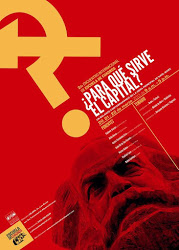
«¿Para qué sirve El Capital? Un balance contemporáneo de la obra principal de Karl Marx»: Ponencias de Néstor Kohan, Carlos Fernández Liria, Iñaki Gil de San Vicente y Rubén Zardoya entre otros.
 Por
Por Entre el 30 de mayo y el 1 de junio se realizó el 2do Encuentro Internacional de Escuela de Cuadros con el título “¿Para qué sirve El Capital? Un balance contemporáneo de la obra principal de Karl Marx”.
«Karl Marx después de la edición histórico-crítica (MEGA2): Un nuevo objeto de investigación»: Roberto Fineschi
I. Introducción
La exégesis marxiana tiene un larga historia: nace con el propio Engels, a quien correspondió en primer lugar el deber de «defender» la obra del amigo, y ha continuado hasta nuestros días, a través de las interpretaciones más diversas, la mayor parte de las cuales se etiquetan genéricamente con el término de «marxismo». Sería inútil dar una lista de autores, que a los lectores resultaría previsible ya que se trata, en efecto, de nombres célebres.
Todas estas lecturas se han basado, como no podía ser de otro modo, en textos ya conocidos de Marx. Es por ello que han habido puntos de ruptura, por ejemplo con la publicación de las Theorien über den Mehrwert, o de los Grundrisse: su aparición proporcionó nuevos instrumentos indispensables para la comprensión crítica del pensamiento del autor, cambiando el objeto de la investigación y sancionando definitivamente la implausibilidad de algunas interpretaciones precedentes.
Leer más…
«Some explanations of the fall of ‘real socialism’»: Michael A. Lebowitz
 September 13, 2013 — The Bullet, posted at Links International Journal of Socialist Renewal with permission. This essay is from a talk given to the Centre for Political Emancipation in Belgrade, Serbia, on May 6, 2013. It can also be seen above and on YouTube. — Why did «real socialism» and, in particular the Soviet Union, fall? Let me note a few explanations that have been offered. With respect to the Soviet Union, one very interesting explanation that has been suggested is that it’s all the fault of Mikhail Gorbachev. And not simply the errors of Gorbachev but the treachery. Those who offer this explanation rely in particular upon a document which is sometimes described as his confession. This document begins as follows:
My ambition was to liquidate communism, the dictatorship over all the people. Supporting me and urging me on in this mission was my wife, who was of this opinion long before I was. I knew that I could only do this if I was the leading functionary. In this my wife urged me to climb to the top post. While I actually became acquainted with the West, my mind was made up forever. I decided that I must destroy the whole apparatus of the Communist Party of the Soviet Union and the USSR. Also, I must do this in all of the other socialist countries. My ideal is the path of social democracy. Only this system shall benefit all the people. This quest I decided I must fulfil.
Now, one of the most interesting things about this document is that it is virtually untraceable. It is said to come from an interview in Turkey but the actual source is unverifiable and, indeed, appears to have occurred with different interviewers. So, I would suggest this document is not credible at all. So, why mention it? Simply because there are people who believe it and cite it as authority. I discovered this to my surprise a few years ago at a conference in Beijing on the fall of the Soviet Union where it was repeatedly quoted by members of Russian and Bulgarian communist parties and also, interestingly, by some Chinese scholars within the state structure who were clearly warning against Chinese Gorbachevs. The inference in this is that all really was well with «real socialism» but that it’s important to watch out for the liquidators and saboteurs.
«El marxismo sin ismos de Francisco Fernández Buey»: Salvador López Arnal

PRESENTACIÓN
El marxismo sin ismos de Francisco Fernández Buey no es un trabajo de investigación. Más bien es un homenaje, un reconocimiento, una muestra de admiración, una aproximación didáctica y fuertemente incompleta a algunos de los nudos esenciales de su rico, culto, documentado y profundo marxismo.
Un marxismo que bebió, como el mismo señaló, de la obra, la vida, las prácticas políticas, las luchas, los errores, las meteduras de pata y los trabajos críticos de Maximilien Rubel, Anton Pannekoek y Manuel Sacristán. ¡Nada menos! ¡Una trinidad explosiva, inteligente y enrojecida! El profesor Fernández Buey fue un entrañable amigo del tercero de los citados y se carteó con el primero de ellos.
«Hacia un socialismo no colonizado, Marx y la periferia»: Entrevista a Néstor Kohan
 En este episodio los compañeros de «Tiempos equívocos. La Teoría Crítica desde la periferia» nos presentan una charla con Néstor Kohan, investigador argentino, especialista en el pensamiento de Marx que ha visitado México recientemente.
«Speaking in Salvador, Brazil on Marx’s Capital, Volume I»: David Harvey
 O Geógrafo David Harvey esteve em Salvador para apresentar a conferência «Para entender ‘O capital'», por ocasião do lançamento de seu livro homônimo.
O evento integra o projeto «Marx: a criação destruidora», organizado em torno da publicação da edição definitiva de «O capital, Livro 1», pela Boitempo Editorial.
A conferência, ocorrida no dia 26 de março de 2013 no salão nobre da Universidade Federal da Bahia, teve realização da Boitempo Editorial e do Café Científico UFBA com apoio da Pró-Reitoria de Extnesão Universitária (PROEXT) e da Livraria LDM Multicampi.
«Examen de la crítica de C. Benetti y J. Cartelier a la teoría del dinero de Marx»: Abelardo Mariña Flores y Mario L. Robles Báez
 En la parte tercera de Merchands, salariat et capitalistes (1980), Benetti y Cartelier realizan un examen crítico a la consistencia lógica de algunas de las proposiciones teóricas inherentes a la teoría del capital de Marx en El Capital. Algunas de estas críticas son desarrolladas y reproducidas en trabajos posteriores, por separado, por un lado, en el capítulo v del libro de Benetti Moneda y teoria del valor (1990), y por otro lado, en el articulo de Cartelier «Marx’s theory of value, exchange and surplus value: a suggested reformulation» (1991). La presentación de las formas del valor de Marx es uno de los problemas críticamente analizados por ellos; particularrnente, ellos intentan mostrar que Marx no tuvo éxito en la derivación del concepto de dinero a partir del de la mercancía y, por lo tanto, de las relaciones de intercarmbio mercantil. Una irnportante crítica a los argumentos que presentan Benetti y Cartelier en Merchands, salariat et capitalistes a este respecto se encuentra en Fausto (1983); Williams (1992) objeta algunos de los argurnentos desarrollados en el artículo de Cartelier; y, en su respuesta al texto de Benetti, Robles (1992 y 1997) desarrolla algunos de los argumentos críticos de Fausto relacionados con la interpretación de Benetti y Cartelier respecto a la presentación de la génesis de la forma-dinero del valor de Marx.
«Marx e Hegel. Contributi a una rilettura»: Roberto Fineschi
 Indice
Reading Marx’s Capital with David Harvey

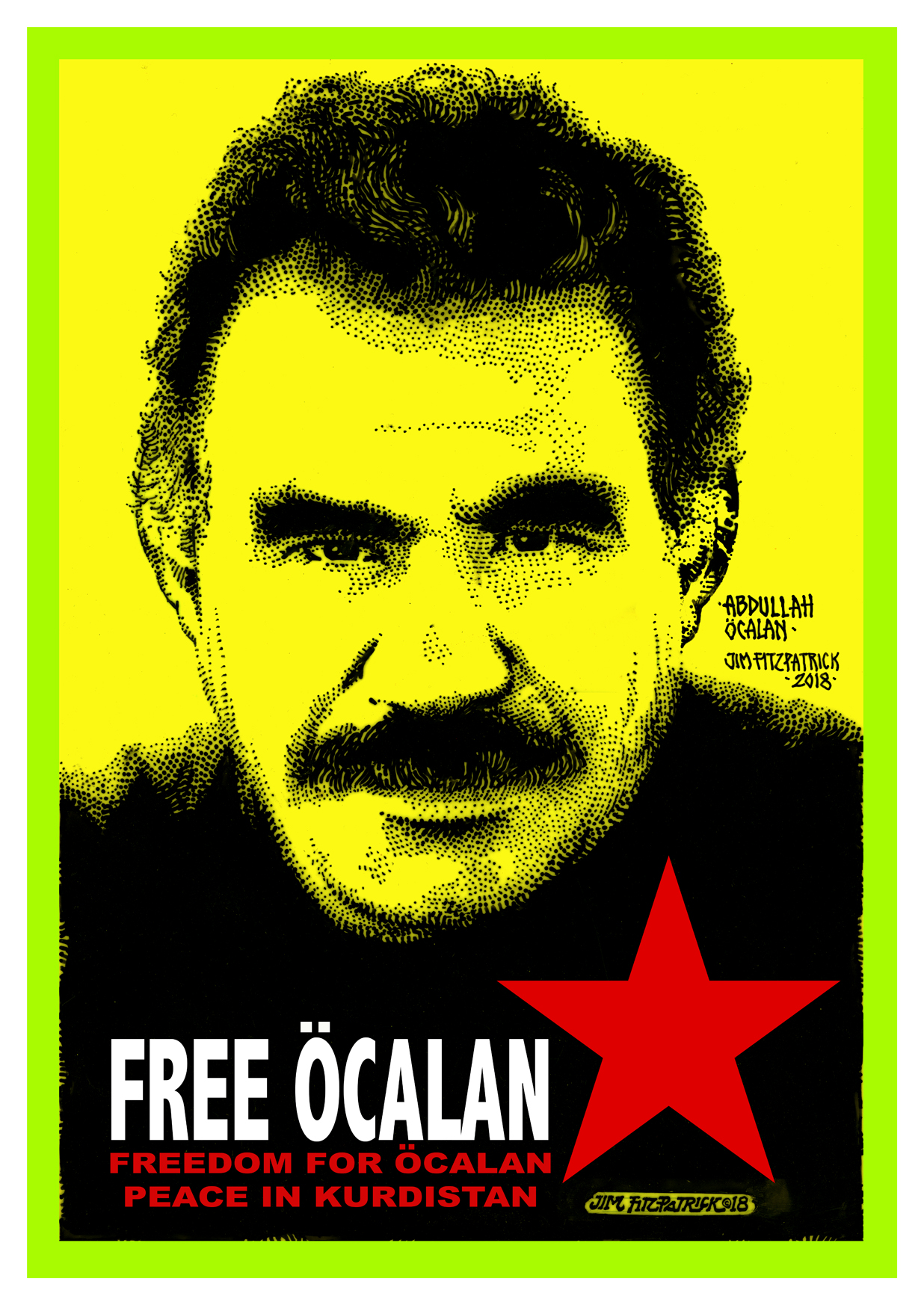
Free Öcalan


Fundación Infancia y Aprendizaje

Colección de libros Marxismo Crítico

Historical Materialism


CIPEC (Centro de Investigación en Pensamiento Crítico)

Centro para la Investigación como Crítica Práctica

Memoria Revista de Crítica Militante

Revista Laberinto






Marx desde cero





 marxismocritico.com