
Archivo
«The political economy of the dead: Marx’s vampires»: Mark Neocleous
 Abstract: This article aims to show the importance of the vampire metaphor to Marx’s work. In so doing, it challenges previous attempts to explain Marx’s use of the metaphor with reference to literary style, nineteenth-century gothic or Enlightenment rationalism. Instead, the article accepts the widespread view linking the vampire to capital, but argues that Marx’s specific use of this link can be properly understood only in the context of his critique of political economy and, in particular, the political economy of the dead.
Towards the end of Volume 1 of Capital, Marx employs one of his usual dramatic and rhetorical devices: ‘If money comes into the world with a congenital blood-stain on one cheek,’ he says, then ‘capital comes dripping from head to toe, from every pore, with blood and dirt’.2 The comment is a reminder of the extent to which the theme of blood and horror runs through the pages of Capital. According to Stanley Hyman, there are in Capital two forms of horror. The first concerns the bloody legislation against vagabondage, describing the way that agricultural peoples were driven from their homes, turned into vagabonds and then ‘whipped, branded, tortured by laws grotesquely terrible, into the discipline necessary for the wage system’. The second concerns the horrors experienced by people in the colonies, ‘the extirpation, enslavement and entombment in mines of the aboriginal population . . . the turning of Africa into a warren for the commercial hunting of black skins’.3 But to these we might add a third form of horror: the constant sucking of the blood of the Western working class by the bourgeois class. This form is nothing less than the horror of a property-owning class that appears to be vampire-like in its desire and ability to suck the life out of the working class.
Video de la presentació del llibre “Nuestro Marx” de Néstor Kohan a la conferència inaugural de la UCPC 2011
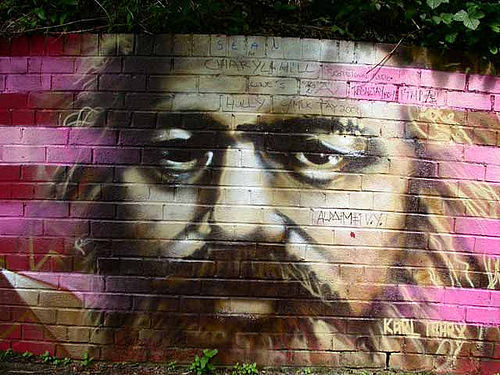 L’exposició es va centrar en l’explicació sintètica del darrer llibre de Kohan “Nuestro Marx”, producte de les discussions a la Càtedra Libre Ché Guevara. Entre altres, també va realitzar una crida a la necessitat de formació teòrica per tal d’orientar una bona praxis política comunista i contra la fragmentació del coneixement.
Crònica de la conferència
Prologat per membres de les FARC-EP, el llibre té com a objectiu la crítica dels “paradigmes” intel·lectuals que han dominat el pensament acadèmic des de mitjans dels vuitanta, d’una banda; i d’altra, fer una crítica explícitament diferenciada de les tradicions dels marxisme, és a dir, de les elaboracions de Marx divulgades i defensades per diferents famílies de l’esquerra pretesament rupturistes o transformadores.
Les anomenades “metafísiques post” (postmodernisme, postmarxisme, postestructuralisme i multiculturalisme) s’han de contextualitzar com a productes teòrics de la derrota de les revoltes del 68. Segons Kohan, aquestes van fer de la debilitat virtut tot apujant la fallida conjunctural com a teoria que va renunciar a la conquesta del poder i a l’enfrontament de l’Estat, això sí, sota una “gestualidad pseudolibertaria y una cierta inspiración en los relatos antiutópicos como 1984”.
«The necessary reconstitution of the historical dialectic»: István Mészáros
 AS WE know, the modern state was not formed as a result of some direct economic determination, as a mechanical super-structural outcrop, in conformity to a reductivist view of the sup-posedly one-sided material domination of society, as presented in the vulgar Marxist conception of these matters. Rather, it was dialectically constituted through its necessary reciprocal interaction with capital’s highly complex material ground. In this sense, the state was not only shaped by the economic foundations of society but it was also most actively shaping the multifaceted real-ity of capital’s reproductive manifestations throughout their his-torical transformations, both in the ascending and in the de-scending phase of development of the capital system.
In this complex dialectical process of reciprocal interchange the historical and the transhistorical determinations have been closely intertwined, even if in the course of the capital system’s descending phase of development we had to witness a growing violation of the historical dialectic, especially under the impact of the deepening structural crisis. For the defence of the estab-lished mode of societal reproduction at all cost, no matter how wasteful and destructive its impact by now even on nature, can only underline the historical anachronism and the corresponding untenability of a once all-powerful mode of productive societal reproduction, which tries to extend its power in a “globalized form” at a time when the absolute systemic limits of capital are being activated on a global scale.
«An Introduction to the Three Volumes of Karl Marx’s Capital»: Michael Heinrich
 The global economic crisis and recession that began in 2008 had at least one unexpected outcome: a surge in sales of Karl Marx’s Capital. Although mainstream economists and commentators once dismissed Marx’s work as outmoded and flawed, some are begrudgingly acknowledging an analysis that sees capitalism as inherently unstable. And of course, there are those, like Michael Heinrich, who have seen the value of Marx all along, and are in a unique position to explain the intricacies of Marx’s thought.
Heinrich’s modern interpretation of Capital is now available to English-speaking readers for the first time. It has gone through nine editions in Germany, is the standard work for Marxist study groups, and is used widely in German universities. The author systematically covers all three volumes of Capital and explains all the basic aspects of Marx’s critique of capitalism in a way that is clear and concise. He provides background information on the intellectual and political milieu in which Marx worked, and looks at crucial issues beyond the scope of Capital, such as class struggle, the relationship between capital and the state, accusations of historical determinism, and Marx’s understanding of communism. Uniquely, Heinrich emphasizes the monetary character of Marx’s work, in addition to the traditional emphasis on the labor theory of value, thus highlighting the relevance of Capital to the age of financial explosions and implosions.
“16 Tesis de Economía Política. Tesis III″: Enrique Dussel
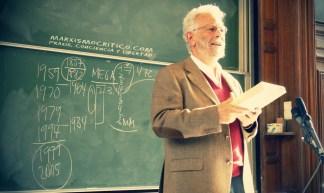 «El ciclo equivalencial: valor de cambio, dinero y mercado«: tercera conferencia de Enrique Dussel sobre la crítica de la economía política de Marx de su curso ” 16 Tesis de Economía Política”
Audio de la presentació del llibre «Nuestro Marx» de Néstor Kohan a la conferència inaugural de la UCPC 2011
 L’exposició es va centrar en l’explicació sintètica del darrer llibre de Kohan “Nuestro Marx”, producte de les discussions a la Càtedra Libre Ché Guevara. Entre altres, també va realitzar una crida a la necessitat de formació teòrica per tal d’orientar una bona praxis política comunista i contra la fragmentació del coneixement.
Crònica de la conferència
Prologat per membres de les FARC-EP, el llibre té com a objectiu la crítica dels “paradigmes” intel·lectuals que han dominat el pensament acadèmic des de mitjans dels vuitanta, d’una banda; i d’altra, fer una crítica explícitament diferenciada de les tradicions dels marxisme, és a dir, de les elaboracions de Marx divulgades i defensades per diferents famílies de l’esquerra pretesament rupturistes o transformadores.
Les anomenades “metafísiques post” (postmodernisme, postmarxisme, postestructuralisme i multiculturalisme) s’han de contextualitzar com a productes teòrics de la derrota de les revoltes del 68. Segons Kohan, aquestes van fer de la debilitat virtut tot apujant la fallida conjunctural com a teoria que va renunciar a la conquesta del poder i a l’enfrontament de l’Estat, això sí, sota una “gestualidad pseudolibertaria y una cierta inspiración en los relatos antiutópicos como 1984”.
«Entrevista con Doménico Losurdo»: Giulio Gerosa
Entrevista realizada no verão de Julho de 2011 em Urbino, Itália. Losurdo não é mais um divulgador do marxismo entre muitos. É um criador. Tal como os materialistas gregos, não desconhece que o objectivo supremo do homem na aventura da vida é a procura da felicidade possível. E sabe também que em poucas épocas terá sido tão difícil como hoje perseguir essa meta. Não é de estranhar que o filósofo, nessa ânsia de compreender para ensinar, tenha escrito sobre autores tão diferentes como Nietzsche, Hegel, Marx e Lénine. Mas Domenico tem os pés bem fincados na terra. A teoria e a prática são para ele complementares. Consciente dessa interacção, o historiador está, como intelectual revolucionário, permanentemente envolvido na solidariedade com as grandes causas da humanidade e na luta dos povos contra o imperialismo. Os seus artigos correm mundo na crítica às guerras de agressão imperiais contra os povos da Palestina, do Iraque, do Afeganistão, da Líbia e outros, na denúncia da participação do golpe dos EUA nas Honduras, na solidariedade com as FARC colombianas e com o povo iraniano. É reconfortante que neste mundo em crise de civilização haja pensadores revolucionários como Domenico Losurdo. Vai completar 70 anos e preparam-lhe merecidas homenagens em diferentes países. (fonte: Miguel Urbano Rodrigues)
«José Aricó: la última entrevista»
 Una entrevista, realizada en 1995, como parte de proyecto La Ciudad Futuro al marxista argentino José Aricó, fundador de la revista gramsciana Pasado y Presente. Testimonios de Carlos Altamirano, Oscar del Barco, Juan Carlos Portantiero.
«The Contradictions of Capital»: David Harvey
 University of Warwick
Distinguished Lecture Series
14 February 2013
David Harvey is the Distinguished Professor of Anthropology at the Graduate Center of the City University of New York. He is a leading political economist and social theorist of international standing. He is a highly cited academic and the author of many books and essays. Professor Harvey received his BA, MA and PhD from Cambridge University and was formerly Professor of Geography at John Hopkins University, Halford Mackinder Professor of Geography at the University of Oxford and Senior Research Fellow at St Peter’s College Oxford.
His numerous awards include Outstanding Contributor Award of the Association of American Geographers, the Centenary Medal from the Royal Scottish Geographical Society and the Patron’s Medal of the Royal Geographical Society for contributions to critical human
«Directly and Indirectly Social Labor: What Kind of Human Relations Can Transcend Capitalism?»: Peter Hudis
 In exploring how to go “beyond capitalism,” we need to first ask why it has been so difficult to develop a comprehensive alternative to capitalism. One reason is the nature of capitalism, which creates the false impression that alienated human relations are natural and immutable. Capital’s ability to naturalize conditions of oppression is central to its ideological dominance. Another reason for the difficulty in envisioning an alternative is the failed attempts to emancipate humanity from capitalism. The failure of many revolutions to create a truly new society solidifies the view that there is no alternative to being subordinated to social laws outside our control. And there is yet a third reason that it has been hard to develop an alternative—the decline of interest in Marx’s work over the past few decades. Marx was not just one of many important thinkers. Marx was the founder of a unique philosophy of revolution that contained a specific concept of a new society. The less direct study and discussion there is of Marx’s works, the harder it becomes to envision an alternative to capitalism itself.
For this reason, we aim to seriously explore Marx. It will not do to focus on bits and pieces of his work that may or may not be to our liking. We instead have to grapple with his ideas as a whole. But grappling with his ideas as a whole entails grappling with his ideas in their specificity. Without doing so it is not possible to grasp Marx’s ideas at all. So let’s take a closer look at the work that contains Marx’s most detailed discussion of a non-capitalist society—his 1875 Critique of the Gotha Program.
“16 Tesis de Economía Política. Tesis II″: Enrique Dussel
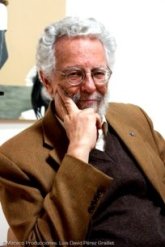 «El ciclo productivo, trabajo vivo y valor» segunda conferencia de Enrique Dussel sobre la crítica de la economía política de Marx de su curso ” 16 Tesis de Economía Política”
Primera sesión del Seminario Marx Revisitado: «Fredric Jameson, Representing capital. El desempleo: Una lectura de El Capital»: Victor Hugo Pacheco y Jaime Ortega.
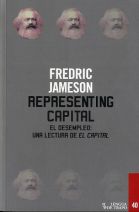 Programa del Seminario Marx Revisitado: Posiciones encontradas
1ra. Sesión, 20 de febrero:
«Fredric Jameson, Representing capital. El desempleo: Una lectura de El Capital», Lengua de Trapo, 2011.
Comentan: Mtro. Jaime Ortega y Lic. Victor Hugo Pacheco Chávez
«Anti-manual para uso de marxistas, marxólogos y marxianos»: Ludovico Silva
 En el Antimanual Para Uso de Marxistas, Marxólogos y Marxianos, Ludovico Silva nos invita a re-descubrir la esencia de la filosofía de Karl Marx desde su lectura directa, separándonos así de los dogmas y las máximas irrevocables equivocadamente expuestas –e impuestas- en los antiguos manuales marxistas soviéticos que se han mantenido vigentes a través del tiempo.
“Hace algún tiempo tuve la oportunidad de combatir, en un periódico venezolano, con uno de estos doctores de la iglesia marxista. En un arranque de originalidad, este doctor decía: «el marxismo es la ciencia que utiliza el método dialéctico en el estudio de los fenómenos sociales». Después de haberse buscado una frase como esa, extraída de algún manual soviético, la dejó caer ante mis narices como quien deja caer las tablas mosaicas de la Ley de Dios. Yo le pregunté ingenuamente si él sabía en verdad lo que era la dialéctica, y por supuesto, no me respondió nada. «La dialéctica es el método marxista», repetía sin cesar el loro intelectual.”
«Notas introductorias sobre la subsunción del trabajo en el capital»: Carlos Alberto Castillo Mendoza
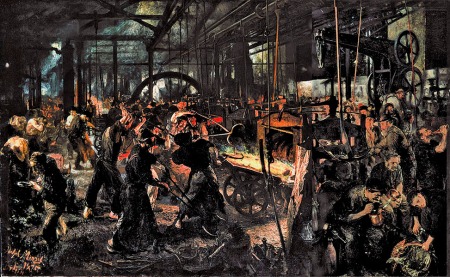 La problemática de la subsunción remite a cuestiones que resultan de gran importancia para desarrollar una determinada comprensión acerca de la estructuración y regulación social del trabajo por parte del capital social global, así como, con las elaboraciones intermedias pertinentes, sobre lo que de ello se deriva para el conjunto de las relaciones sociales constitutivas de las sociedades capitalistas.
1. La noción de subsunción tiene larga data en el mundo de la filosofía de donde Marx la recoge para reformularla profundamente. De hecho, con él se da un cambio radical en el escenario de aplicación, y consecuente modificación, de los contenidos del término en cuestión: pasamos de los problemas del conocimiento, donde Kant (cf. 1978) y Hegel (cf. 1969) lo ubicaron y trataron prioritariamente3, a los problemas vinculados con los fenómenos constitutivos y constituyentes de la realidad social resultante de las dinámicas y complejas relaciones sociales capitalistas.
«The Current Financial Crisis and the Future of Global Capitalism»: Michael Heinrich
 Prophecies of Downfall
The fact that Marx finally began with the composition of his long-planned economic work in the winter of 1857/1858 was directly occasioned by the economic crisis that broke out in the autumn of 1857 and the concomitant expectations of a deep trauma from which capitalism would no longer recover. «I am working like mad all night and every night collating my economic studies so that I at least get the outlines clear before the deluge,» wrote Marx to Engels in a letter from December of 1857 (MECW 40, p.217). The crisis of 1857/1858 was in fact the first true global economic crisis of modern capitalism, which involved all major capitalist countries of that time (England, the USA, France, and Germany). In the Grundrisse that emerged during this period, one can find the sole unambiguous passage of Marx’s work that can be understood as a theory of capitalist collapse (MECW 29, p.90 et sqq.). This collapse, Marx was convinced, would unleash revolutionary movements. In a letter to Ferdinand Lassalle from February of 1858, he even expressed his fear that in light of the expected «turbulent movements» his work would be finished «too late» and thus «find the world no longer attentive to such subjects» (MECW 29, p. 271). Marx was right about the fact that he wouldn’t finish his work (the first volume of Capital was published nine years later), but this first global crisis of capitalism led neither to a collapse of capitalism nor to any sort of revolutionary movement. The crisis had already been overcome in the early summer of 1858, and the capitalist system even came out of it enormously strengthened. Marx learned a lesson: in capitalism, crises function as brutal acts of purification. The destruction wreaked by crises removes previous impediments to accumulation and frees up new possibilities for capitalist development.
Reading Marx’s Capital with David Harvey

Free Öcalan
Fundación Infancia y Aprendizaje

Colección de libros Marxismo Crítico

Historical Materialism


CIPEC (Centro de Investigación en Pensamiento Crítico)

Centro para la Investigación como Crítica Práctica

Memoria Revista de Crítica Militante
Revista Laberinto





Marx desde cero




 marxismocritico.com