


 In January, David Harvey spoke at the School of Geography and the Environment, Oxford to present «Visualizing Capital»: what he «hopes is the end» of the project on Marx he began — inadvertantly — fifteen years ago.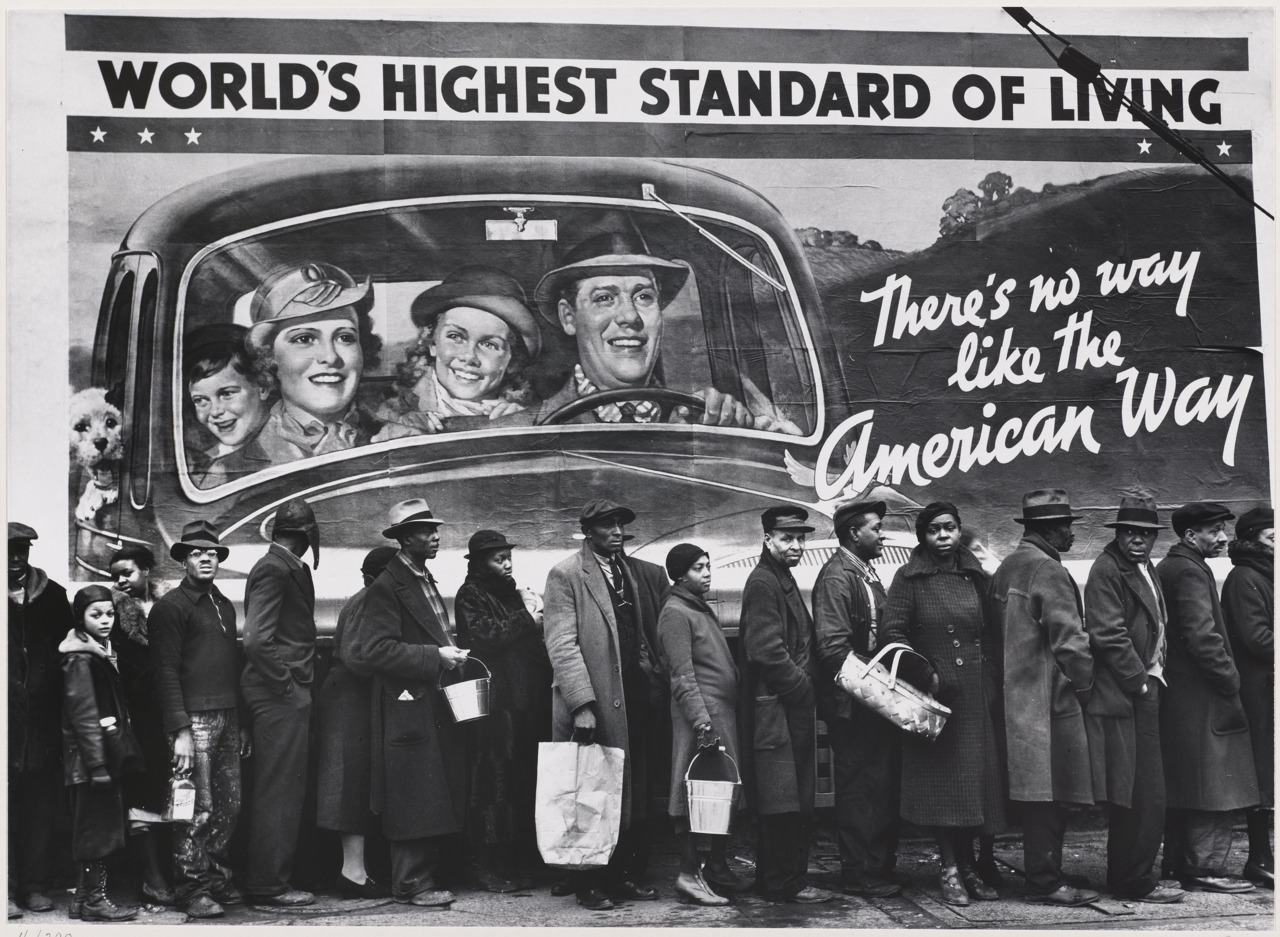
 El siguiente texto es una
 Cómo caracterizaría la crisis capitalista actual? ¿se trata una crisis de nuevo tipo o más bien una fase de la crisis iniciada en 1973?
 Abstract: Returning to Marx’s analysis in the third volume of Capital we shall endeavour to outline a Marxist interpretation of contemporary capitalism, contemporary financialization and the crisis of 2008. Crucial in this connection are the concept of fictitious capital and the associated with it process of capitalization. Financialization should be conceived as a type of organization and a mode of exercising capitalist power, which consists of a whole set of instruments, techniques, levels of application and targets. In this way, financialization as a generalization of these processes into a complex system comprises a decisive link for the enforcement of the capital domination. This means that our study does not concentrate merely on the ‘productive’ or ‘unproductive’ effects that financialization might have on ‘development’ or ‘consumption’, but on a whole series of other possible and crucial effects which seem marginal at first sight. As a consequence, we regard finance as a complex social function that cannot be isolated from ‘real’ economy.
 The Henry George School of Social Science, and the New School of Social Research invite you to follow Professor Anwar M. Shaikh in a new series of lectures exploring his new ground-breaking Economic treatise, “Capitalism: Competition, Conflict and Crises”. The course will be introduced over two semesters. Recordings of the first semester, becoming available now, is comprised of 15 lectures. Subscribe to our YouTube Channel, Henry George School of Social Science to receive updates as new lectures are added.
Competition and conflict are intrinsic features of modern societies, inequality is persistent, and booms and busts are recurrent outcomes throughout capitalist history. State intervention modifies these patterns, but does not abolish them.
Professor Shaikh exposes how these and many other observed patterns are the results of intrinsic forces that shape and channel outcomes. Social and institutional factors play an important role, but at the same time, the factors are themselves limited by the dominant forces arising from “gain-seeking” behavior, of which the profit motive is the most important. These dominant elements create an invisible force field that shapes and channels capitalist outcomes.
The book’s approach departs from that of orthodox economics as well as the dominant elements in the heterodox tradition. There is no reference whatsoever to an idealized framework rooted in perfect firms, perfect individuals, perfect knowledge, perfectly selfish behavior, rational expectations, or so-called optimal outcomes. The book develops microeconomic and macroeconomic theory from real behavior and real competition, and uses it to explain empirical patterns in microeconomic demand and supply, wage and profits, technological change, relative prices of goods and services, interest rates, bond and equity prices, exchange rates, patterns of international trade, growth, unemployment, inflation, national and personal inequality, and the recurrence of general crises such as the current one which began in 2007-2008.


 ¿Es posible una educación pública, no vinculada al poder de compra, laica y de calidad en el escenario de la Unión Europea y la eurozona? Lo considera incompatible Xabier Arrizabalo, profesor de Economía en la Universidad Complutense de Madrid y autor del libro “Capitalismo y economía mundial”, publicado en 2014 por el Instituto Marxista de Economía. “La educación pública debería ser una exigencia democrática elemental”, a pesar de que se la vincule a objetivos como el pago de la deuda o los criterios de déficit, impuestos por la UE y el BCE, que –apunta el economista- “se hallan al servicio del FMI, es decir, el capital financiero estadounidense”.

















 marxismocritico.com