
Archivo
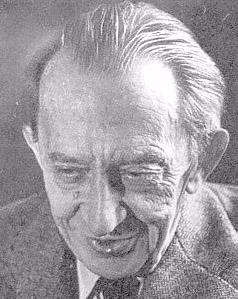
«A philosopher under suspicion»: Sergei Mareyev
 The Soviet philosopher Evald Ilyenkov, who died in 1979 following a renewed witch-hunt against him by the authorities, defied Stalinist dogma and made a priceless contribution to the creative development of the Marxist method. This profile of Ilyenkov’s life and work is by philosophy scholar Sergei Mareyev. It first appeared in the Journal of Moscow State University, Volume 7, No. 1 in 1990. It is published in English for the first time.
Translation by Angela Landon
In 1989 we marked two dates associated with one name – 65 years from the day of his birth, and 10 years from the day of Evald Vasilievich Ilyenkov’s death. He belonged to the small group of leading Marxist philosophers who creatively developed revolutionary science in spite of the regime imposed 60 years ago in the Soviet Union, and despite having the least possible support.
Probably the attitude of the official scientific side was best expressed by his former comrade A.A. Zinoviev in a friendly cartoon, when they were still making the famous Moscow wall newspaper of the Institute of Philosophy (USSR Academy of Sciences).
«Introdução à Ontologia de Lukács: Aspectos Históricos e Ontológicos»: Sergio Lessa
 Em novembro de 2012 o professor de filosofia Sérgio Lessa ministrou na Universidade de Brasília um curso introdutório à ontologia de György Lukács, um dos mais importantes pensadores do marxismo ocidental. Lukács contribuiu enormemente sobre temas relacionados à reificação do ser social, ao fetichismo, à dialética e ao marxismo como ontologia fundada na categoria do trabalho humano, além de ter sido capaz de elucidar muitas das relações teóricas entre Kant, Hegel e Marx antes mesmo da publicação de vários dos manuscritos de Marx que somente hoje temos acesso. Lukács, ademais escrever sobre ética e estética do ponto de vista da análise marxista, foi ele também responsável por escrever um tratado sobre ontologia desde o início da escravidão até os dias em que morreu. O professor Sérgio Lessa faz uma excelente introdução à obra máxima de Lukács, a Ontologia do Ser Social, e aproveita também para discutir assuntos correlatos. Acompanhe aqui a gravação completa do evento.
«Origins on CHAT: German Philosophy and Marx»: Andy Blunden
 Talk given at the Monash Education Research Community, within the Department of Education at Monash University, by Andy Blunden on 20 April 2010.
The talk is the first of a two-part seminar for the International Course on Cultural Historical Activity Theory. It covers the contributions to this current of thought derived from Descartes, J G Herder, Goethe and Hegel. Part Two, deals with Marx. See marx.org/subject/philosophy/german.htm for readings, home.mira.net/~andy/works/origins-chat.htm for text of this talk and ethicalpolitics.org/chat/Genealogy-CHAT.htm for a diagram of the historical sources of CHAT more widely.
«Not Just Capital and Class: Marx on Non-Western Societies, Nationalism and Ethnicity»: Kevin B. Anderson
 While Marx’s major writings concentrated on capital and class in Western Europe, he also wrote extensively on ethnicity and nationalism, colonialism, and non-Western societies. A slightly different version appeared in Socialism and Democracy, Nov. 2010. Parts of the first half were presented at plenary sessions at the Historical Materialism Conference, London, November 14, 2010; parts of the second half were presented at a panel on “Marxism Beyond the Boundaries,” sponsored by the Hobgoblin Online Journal and the International Marxist-Humanist Organization, London, November 11, 2010 — Editors
Despite the revival of interest in Marx since the economic crisis hit, some important ideological and conceptual barriers continue to block what would be a very positive step, returning to Marx as the primary source of leftist critique of capitalist modernity as a whole, and as providing the theoretical ground for its overcoming [Aufhebung].
«Perspectivas del pensamiento crítico, hoy»: Gabriel Vargas Lozano
 Este coloquio está dedicado a examinar las perspectivas del pensamiento crítico en la actualidad. El tema, sin embargo, requiere la definición de que entendemos por pensamiento crítico, para luego caracterizar la situación actual de dicho pensamiento y finalmente, plantear algunas de las tareas que se tienen hacia el futuro.
1. ¿Qué entendemos por pensamiento crítico?
En un primer sentido general, podríamos decir que “pensamiento crítico” es toda reflexión que implique la búsqueda de un nuevo conocimiento de la realidad; que aliente una nueva conducta ética o política o proponga un nuevo tipo de sociedad. Así, Sócrates, en el campo de la filosofía, al cuestionar las creencias comunes de los ciudadanos de Atenas, ejerció un pensamiento crítico pero también lo hicieron Platón, Aristóteles y toda una serie de filósofos hasta la actualidad. Pero el pensamiento crítico también está presente en la ciencia, en la medida en que sus descubrimientos implican una revolución de las ideas vigentes como lo han sido los casos de Galileo, Darwin o Freud, por sólo mencionar tres ejemplos. Hay también un pensamiento crítico en la literatura y el arte. Por tanto, el pensamiento crítico es la base de toda innovación en la cultura. En la filosofía, el pensamiento crítico es fundamental. Los filósofos ilustrados franceses, por ejemplo, ejercieron su crítica a las condiciones de dominación de su tiempo y constituyeron las bases de la nueva conformación social, al distinguir entre religión y política (Voltaire); al proponer la división del poder ejecutivo (Montesqueieu); al apuntalar a la centralidad de la razón científico-técnica (D’Alembert, Diderot) y al proclamar la instauración de una nueva razón. Kant, dentro de este movimiento, denominó a tres de sus grandes obras, Críticas, con lo cual quería establecer los límites del pensamiento en el conocimiento del mundo; los límites del actuar y del creer. Crítica implicaba distinción o delimitación entre el conocimiento probado y la noción incierta; entre el actuar correcto e incorrecto y sobre los alcances del juicio estético.
«Revolution at Point Zero: Housework, Reproduction, and Feminist Struggle»: Silvia Federici
Film of the Public Lecture by Silvia Federici about her new book: Revolution at Point Zero: Housework, Reproduction, and Feminist Struggle (PM Press, 2012)
Presented by Bristol Radical History Group
http://www.brh.org.uk/
Written between 1974 and the present, Revolution at Point Zero collects forty years of research and theorizing on the nature of housework, social reproduction, and women’s struggles on this terrain—to escape it, to better its conditions, to reconstruct it in ways that provide an alternative to capitalist relations. In this talk Silvia outlines the ideas within this book in a clear and lucid way. Indeed, as Federici reveals, behind the capitalist organization of work and the contradictions inherent in «alienated labor» is an explosive ground zero for revolutionary practice upon which are decided the daily realities of our collective reproduction. Beginning with Federici’s organizational work in the Wages for Housework movement, the essays collected here unravel the power and politics of wide but related issues including the international restructuring of reproductive work and its effects on the sexual division of labor, the globalization of care work and sex work, the crisis of elder care, the development of affective labor, and the politics of the commons.
«Marxismos contra corriente: sopesando la década de los ochenta»: Francisco Fernández Buey y Carles Muntaner

Para especificar que se entiende por «crisis del marxismo» y qué marxismo es el que está en crisis hay que empezar con el importante cambio que ocurrió hacia finales de los setenta: el desplazamiento del centro del marxismo académico hacia los países de habla inglesa. De hecho, una parte importante del marxismo académico de los ochenta proviene del mundo anglosajón. Inglaterra y Estados Unidos, este último en particular, han sido productivos como también lo han sido los países nórdicos y los autores que han adoptado el inglés como su expresión académica y científica. Este desplazamiento pudo haber sido previsto por Louis Althusser y Lucio Coletti quienes proclamaron la crisis general del marxismo en 1977. De todas formas, es claro que a finales de los 70 la hegemonía del marxismo -si es posible hablar en estos términos- estaba pasando de Alemania y los países sureños de Europa hacia los Estados Unidos e Inglaterra, tal como Perry Anderson ha mostrado en detalle en un corto pero sugerente ensayo titulado “Tras la huella del materialismo histórico” (Siglo XXI, 1984). En forma simultanea al traslado del marxismo académico hacia los países de habla inglesa tiene lugar un debilitamiento progresivo del nexo entre movimientos que están agitando el mundo actual, movimientos que expresan “la ira del ciudadano humillado», en palabras de Claude Julien.
«The Four Drafts of Capital: Toward a New Interpretation of the Dialectical Thought of Marx»: Enrique Dussel
 The first century following Marx’s death (1883–1983) began under Engels’s authority, then continued under the hegemony of the Second International (Kautsky, Lenin, Rosa Luxemburg, etc.). The Leninist period of the Second International was brief, and it quickly fell under the domination of Stalinism. The second century of Marx (l983–2083) has begun with “perestroika,” with the collapse of existing socialism in Eastern Europe, and with the massive publication of hitherto unknown manuscripts. Marx in his second century will be something very different from in his first century. He will be a Marx whose critical thought will be in the hands of humanity— critical of capitalism and, in a positive way (opening its democratic and creative era), of existing socialism. We are perhaps nearer to Marx than ever. Engels himself too often confused in his “we” (Marx and I) what belonged to Marx and what Engels had added. Moreover, due to an understandable defensiveness, he could not take a clear, archaeological vision of Marx’s theoretical discoveries as we can today, thanks to the discoveries we will discuss in this article. Kautsky, Lenin, and many other subsequent Marxists had even less access to the texts with which we are now acquainted.
It is a question, then, of a complete rereading of Marx, with new eyes: as a Latin American, from the growing poverty of the peripheral world, the underdeveloped and exploited of capitalism at the end of the twentieth century. Marx is, in the periphery, today, more pertinent than in the England of the mid-nineteenth century.
«Marx y Polanyi. La posibilidad de un diálogo»: Carlos Fernández Liria y Luis Alegre Zahonero
 Resumen
Este artículo pretende sentar las bases para un posible diálogo entre cierta lectura de Marx y la obra de Karl Polanyi. Para ello es preciso, en primer lugar, aislar los motivos que llevaron a Polanyi a criticar duramente el enfoque marxista. En segundo lugar, comprobar si otra posible lectura de Marx podría escapar a esa crítica, introduciendo el debate en una problemática más interesante. Con ello pretendemos contrarrestar la tendencia a insertar la obra de Polanyi en el seno de un nuevo pensamiento reaccionario.
Palabras clave: Marx, Polanyi, mercado, hombre, capitalismo, ilustración, antropología
1. Polanyi: “El hombre es el mismo a lo largo de la historia”
Marx y Polanyi no son incompatibles. Al contrario, en un cierto sentido se iluminan mutuamente. Bien es verdad que, en un primer plano, destacan sobre todo los desencuentros. La gran transformación de Karl Polanyi contiene, sin duda, una crítica muy poderosa a Marx, al que acusa de economicismo, aunque no en el sentido habitual. Por su parte, el universo del marxismo, en general muy propenso al historicismo, tampoco podía sentirse muy interesado por una obra en la que podía leerse que “El hombre es el mismo a lo largo de la historia” (Polanyi, 1989: 422)2.
«Capitalismo, Desenvolvimentismo e Barbárie»: José Paulo Netto
 Capitalismo, Desenvolvimentismo e Barbárie
Profº. Dr. José Paulo Netto (UFRJ)
Palestra proferida durante Oficina Regional Centro-Oeste da Associação Brasileira de Ensino e Pesquisa em Serviço Social (ABEPSS). Local: Universidade de Brasília (UnB). Data: 12 de setembro de 2012. Horário: de 9h às 12h.
Gravação e edição: Efrain Maciel e Silva
http://boletimef.org
«Working With Cultural-Historical Activity Theory»: Wolff-Michael Roth, Luis Radford & Lionel LaCroix
 Abstract: This article focuses on the experiences of two researchers, Wolff-Michael ROTH and Luis RADFORD, using cultural-historical activity theory in mathematics education. The aim is to provide insights into the ways these researchers see and engage with activity theory, how they have come to adopt and expand it, and some of the challenges and concerns that they have had using it. These questions are not usually addressed within typical scientific papers. Yet, they are important for understanding both the dynamics of research and the practical use of cultural-historical activity theory. Since the format of research report papers is not necessarily well suited to convey personal experiences and thinking, the present article takes the form of a conversation, which provides an effective vehicle for exploring and articulating these matters. This provides a basis for understanding more deeply the underlying assumptions of this theory; its dynamics and how it is applied in research of mathematics practice, thinking, and learning; and insights into the manner in which experienced researchers grapple with the theoretical dimensions of their research.
Key words: cultural-historical activity theory; dialectical thinking; Leont’ev; Vygotsky; mathematics education; objectification; subjectification
“No podemos llegar al socialismo por la acumulación gradual de reformas”: Michael Löwy
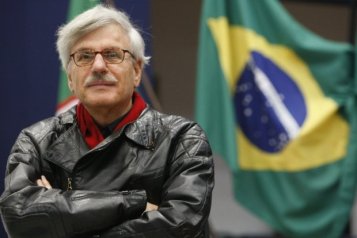 Entrevista con Michael Löwy :: “La experiencia de la Comuna de París inspiró a la Revolución Rusa y aun hoy en día es un ejemplo de autoemancipación revolucionaria”
Michael Löwy estuvo en Brasil a finales de 2012 para promocionar el libro “La teoría de la revolución en el joven Marx”, que fue publicado en Francia en 1970 y hasta ahora no se había editado en portugués.
Durante su estancia en Brasil participó en muchos eventos y trató temas diversos, como literatura y la cuestión ecológica. Nada que pueda sorprender en el perfil de un investigador que se mueve con desenvoltura entre el estudio de los clásicos y el análisis de la coyuntura actual, además de su militancia política de izquierda. En esta entrevista, echa mano de los conceptos que aprendió de los clásicos (principalmente Marx y Walter Benjamin) para discutir sobre la crisis que atraviesa el capitalismo y los movimientos reivindicativos que han surgido en las diferentes partes del mundo. Además, explica los principios y limitaciones del “ecosicialismo”, con la legitimidad que le otorga haber sido uno de los autores del Manifiesto que lo defiende.
Brasileño residente en Francia desde 1969, Löwy es director de investigaciones en el CNRS, profesor en la Écoles de Hautes en Sciences Sociales. Sólo en portugués es autor de más de 20 libros.
«Non-linear Processes and the dialectic»: Andy Blunden
 Most writers and researchers in the humanities speak of something like “dialectical processes” or “dialectical thinking” and use a number of metaphors to characterise the complex and nuanced processes of reality in contrast to what may be called “linear” or “mechanical” processes or thinking.
In his exposition of dialectics in the Logic, Hegel dealt with this problem in great length and detail from a conceptual point of view. Six distinct forms of the dialectic can be abstracted from Hegel’s work.
I shall briefly review the metaphors and forms of words used in popular and scientific discourse and then outline the concepts Hegel introduced for these same problems.
Popular conceptions of linear and non-linear processes
The idea of characterising processes or someone’s conception of a process as ‘linear’ has its origin in mathematical representations of processes in natural science. Here there is a dependent and an independent variable (possibly time), and this relation may be represented by a line on a graph; given appropriate measures for each variable or combination of variables, this graph may take the form of a straight line. In this case, the same change in the independent variable produces the same change in the dependent variable (add an extra kg to the pan and the spring always extends by one cm.), and the change is reversible (remove one kg from the scales and the spring retracts by one cm.)
This is the archetype of the ‘linear process’: a cause always has the same effect and is reversible. The ‘linear effect’ is thus independent of how many times it is applied, and in this specific sense is independent of previous history and context. A process can still be ‘linear’ in the strict sense while being context- and repetition-dependent, but this dependence on context and history is usually taken as one of the characteristics of ‘non-linear’ processes: a certain stimulus always produces a certain response, but suddenly one more stimulus produces a different response – the straw that broke the camel’s back. Irreversibility is also taken as a characteristic of ‘non-linear’ processes: “you can’t unscramble an egg.”
«El fetichismo de la mercancía»: Reinaldo Carcanholo
 “El carácter fetichista de la mercancía y su secreto”, una sección del primer volumen del “El Capital” (Carlos Marx, 1867) presentado por el economista brasileño Reinaldo Carcanholo.
«Estranhamento e Exploração: A Ontologia de Marx nos Grundrisse»: Mario Duayer
 Mario Duayer foi um dos tradutores dos Grundrisse de Marx direto do original em alemão para o português, agora publicado pela editora Boitempo. Como parte do lançamento do livro, Duayer foi convidado a discutir esta importante obra escrita entre os anos de 1857 e 1858, mas que veio a público somente no século XX. Entre os temas discutidos, Duayer colocou especial ênfase na subordinação, no pensamento de Marx nos Grundrisse, da exploração ao estranhamento social. Exploramos uns aos outros porque em primeiro lugar nos estranhamos socialmente. É a alienação como sociabilidade que permite a existência da exploração. A ontologia de Marx, portanto, não é somente uma ode ao fim da exploração, mas propriamente ao fim do estranhamento ou da alienação, ou do outro que me é externo e indiferente. Duayer aproveita também para comentar o relativismo ontológico de Thomas Khun sobre a co-existência de diferentes paradigmas, e mostra como as ideias de Marx, Lúckacs, Roy Bhaskar e Moishe Postone oferecem uma visão que contrasta com os recentes avanços de epistemologias pós-modernas.
Reading Marx’s Capital with David Harvey

Free Öcalan
Fundación Infancia y Aprendizaje

Colección de libros Marxismo Crítico

Historical Materialism


CIPEC (Centro de Investigación en Pensamiento Crítico)

Centro para la Investigación como Crítica Práctica

Memoria Revista de Crítica Militante
Revista Laberinto





Marx desde cero




 marxismocritico.com