
«Tras las huellas de un fantasma. La actualidad de Karl Marx, de Marcello Musto (coord.)»: Jaime Ortega
 Siglo XXI: México, 2011, 252 págs.
Matinal de debat: «Però…no seria millor sortir de l’euro?» amb Pedro Montes
 Dissabte, 26 de gener de 2013, 10:00 h
Amb la participació de Pedro Montes,
Pedro Montes, economista, fou membre del Servicio de Estudios del Banco de España, autor de: «Historia inacabada del Euro» i actualment és president de «SocialismoXXI»:
Lloc: Carrer Marquès del Campo Sagrado, 22 (Metro Paral·lel i Poble Sec) – 08015 Barcelona
Organitza: Espai Marx
«Marxismo e feminismo»: Angélica Lovatto e Paulo Barsotti
 A iniciativa de dedicarmos uma página especial do blog à problemática do “Marxismo e Feminismo” surgiu de uma provocativa e efusiva manifestação de uma leitora, Eduarda de Lemos, que nos escreveu por ocasião do lançamento do blog. Nessa oportunidade, ela afirmava “é de enlouquecer por aqui olhando as publicações (do blog), sem contar que está bem organizado!”; igualmente fazia uma sugestão para que se criasse um tópico especial sobre marxismo-feminismo no blog. Nossa leitora, inclusive, reconhecia que nele já havia alguns textos sobre o tema, “mas ficaria lindamente lilás se tivessem muitos outros”.
A partir dessa manifestação, outros membros de nosso Conselho Editorial e Consultivo foram apoiando e estimulando a ideia. Dentro dos princípios que norteiam marxismo21, construiu-se, pois, esta página especial.
«The Four Drafts of Capital: Toward a New Interpretation of the Dialectical Thought of Marx»: Enrique Dussel
 The first century following Marx’s death (1883–1983) began under Engels’s authority, then continued under the hegemony of the Second International (Kautsky, Lenin, Rosa Luxemburg, etc.). The Leninist period of the Second International was brief, and it quickly fell under the domination of Stalinism. The second century of Marx (l983–2083) has begun with “perestroika,” with the collapse of existing socialism in Eastern Europe, and with the massive publication of hitherto unknown manuscripts. Marx in his second century will be something very different from in his first century. He will be a Marx whose critical thought will be in the hands of humanity— critical of capitalism and, in a positive way (opening its democratic and creative era), of existing socialism. We are perhaps nearer to Marx than ever. Engels himself too often confused in his “we” (Marx and I) what belonged to Marx and what Engels had added. Moreover, due to an understandable defensiveness, he could not take a clear, archaeological vision of Marx’s theoretical discoveries as we can today, thanks to the discoveries we will discuss in this article. Kautsky, Lenin, and many other subsequent Marxists had even less access to the texts with which we are now acquainted.
It is a question, then, of a complete rereading of Marx, with new eyes: as a Latin American, from the growing poverty of the peripheral world, the underdeveloped and exploited of capitalism at the end of the twentieth century. Marx is, in the periphery, today, more pertinent than in the England of the mid-nineteenth century.
«Marx y Polanyi. La posibilidad de un diálogo»: Carlos Fernández Liria y Luis Alegre Zahonero
 Resumen
Este artículo pretende sentar las bases para un posible diálogo entre cierta lectura de Marx y la obra de Karl Polanyi. Para ello es preciso, en primer lugar, aislar los motivos que llevaron a Polanyi a criticar duramente el enfoque marxista. En segundo lugar, comprobar si otra posible lectura de Marx podría escapar a esa crítica, introduciendo el debate en una problemática más interesante. Con ello pretendemos contrarrestar la tendencia a insertar la obra de Polanyi en el seno de un nuevo pensamiento reaccionario.
Palabras clave: Marx, Polanyi, mercado, hombre, capitalismo, ilustración, antropología
1. Polanyi: “El hombre es el mismo a lo largo de la historia”
Marx y Polanyi no son incompatibles. Al contrario, en un cierto sentido se iluminan mutuamente. Bien es verdad que, en un primer plano, destacan sobre todo los desencuentros. La gran transformación de Karl Polanyi contiene, sin duda, una crítica muy poderosa a Marx, al que acusa de economicismo, aunque no en el sentido habitual. Por su parte, el universo del marxismo, en general muy propenso al historicismo, tampoco podía sentirse muy interesado por una obra en la que podía leerse que “El hombre es el mismo a lo largo de la historia” (Polanyi, 1989: 422)2.
Rosa Luxemburg (Margarethe von Trotta, 1986)
 Sinopsis: Con gran rigor histórico, narra un retrato de la líder socialista Rosa Luxemburg, desde fines del siglo XIX hasta su muerte en 1919. El guión de cuatro partes y un prólogo presenta a Rosa durante prisión en Wronke, en 1917. La primera parte retrocede a fines del siglo pasado y comienzos del actual. Rosa Luxemburgo se halla al principio de su carrera como periodista de cuestiones políticas y militante del partido socialista. Más que el éxito profesional, desea ser una mujer al lado de Leo Jogiches, su amante y compañero de lucha. Luego de una breve estadía en Varsovia, adonde acude Rosa para prestar su apoyo a la primera Revolución Rusa, se ve detenida y encarcelada por este motivo, hasta que los compañeros del Partido Socialista alemán obtienen su rescate. En 1906, regresa a Berlín. A partir de ese momento, su historia es narrada en forma cronológica hasta su muerte en enero de 1919. Estas informaciones históricas acerca de la revolucionaria Rosa Luxemburgo constituyen una parte importante en el film. Pero igual importancia posee la descripción del mundo de esta mujer.
«The Universal and the Particulars in Hegel’s Logic and Marx’s Capital»: Fred Moseley
 I have argued in a number of papers (please see References) that there are two main stages (or levels of abstraction) in Marx’s theory in Capital. The first stage has to do with the production of surplus-value and the determination of the total surplus-value, and the second stage has to do with the distribution of surplus-value and the division of the pre-determined total surplus-value into individual parts (equal rates of profit, commercial profit, interest, and rent). The total amount of surplus-value is determined at the first stage (the production of surplus-value) and then this predetermined magnitude is presupposed in the second stage (the distribution of surplus-value). This key quantitative presupposition of the prior determination of the total surplus-value is repeated many times, in all the drafts of Capital, as I have shown in my papers. Thus, there is a clear logical progression from the determination of the magnitude of the total surplus-value in the first stage to the determination of the individual parts in the second stage. Other authors who have presented similar interpretations of the production and distribution of surplus-value and the prior determination of the total surplus-value in Marx’s theory include Paul Mattick, Roman Rosdolsky, Enrique Dussel, David Yaffe, and Duncan Foley.
«The Red Hussar: Daniel Bensaïd, 1946-2010»: Sebastian Budgen
“It is said that one should live with one’s times. These times are dying. Are we then to rot and disappear along with them?”1
“But because thou art lukewarm and neither cold nor hot, I will begin to vomit thee out of my mouth”.2
Time is currently extracting a heavy blood tribute from the thinkers of the radical left. It is enough to list the names of those we have lost recently to get a measure of the hecatomb—Georges Labica, Giovanni Arrighi, Peter Gowan, GA Cohen, Howard Zinn. The juggernaut is likely to roll on relentlessly, picking up speed as it advances. Each death provokes a sense of shock and remorse—another fallen ally departing at the wrong moment, another pile of texts inadequately digested, another line of research and enquiry broken off in mid-stream. But for those of us on the revolutionary left, those of us still engaged in projects of building and maintaining organisational realities, the recent, sudden disappearance of two comrades in particular, despite their fundamental differences on every level—aesthetic, stylistic, temperamental, intellectual—leaves us with a real sense of solitude, especially in this peculiarly murky and uncertain conjuncture.
For Chris Harman and Daniel Bensaïd, two men who have died at almost the same age and within months of each other—one after a monumental 20-year struggle against illness, the other plucked without warning from the night—scarcely addressed probably more than a few sentences directly to each other in over 40 years. And yet their lifelong, daily, uncomplaining commitment to combine the patient, often wearisome, work of building a small revolutionary group with that of trying to theoretically regenerate the grandeur of the classical Marxist tradition by fertilising it constantly with elements of the new was nonetheless a common endeavour.
«La onda larga capitalista en España 1954-2002»: Sergio Cámara Izquierdo
 Resumen
El presente artículo se propone analizar la onda larga de la acumulación de capital en el periodo 1954-2002 en España. En la primera parte, se expone el marco teórico de la investigación. La macroeconomía clásica de la teoría laboral del valor distingue un doble proceso de ajuste (lento y rápido) entre la oferta y la demanda agregadas, lo que conduce a teorizar un equilibrio de corto y largo plazo, respectivamente, alrededor de los cuales fluctúan las economías capitalistas bajo una situación de desequilibrio permanente.
Posteriormente, se exponen las tendencias básicas de largo plazo de las economías capitalistas, donde la rentabilidad del capital juega un papel fundamental. En la segunda parte, se realiza una aplicación empírica de los elementos teóricos expuestos para el caso de España. En primer lugar, se estima el producto de largo plazo y ciclo económico para distinguir las tendencias de largo plazo de las fluctuaciones cíclicas. Posteriormente, se analiza el comportamiento de largo plazo de la economía española en el último medio siglo a partir de variables relevantes como la rentabilidad, el crecimiento, el progreso tecnológico, el desempleo o la inflación. Por último, se concluye que la evidencia empírica presentada revela que el caso de España siguió los patrones fundamentales de la onda larga capitalista mundial descritos por la macroeconomía clásica.
Palabras clave: España, onda larga, rentabilidad, acumulación, crecimiento económico.
«The Ideal in Human Activity»: Reviewed by Alex Levant
 E.V. Ilyenkov
The Ideal in Human Activity
Marxist Internet Archive Publications (www.marxists.org), Pacifica CA, 2009. 396pp. $25 pb
ISBN 9780980542875
The Ideal in Human Activity by E. V. Ilyenkov is a substantial tome consisting of two complete books and three articles, which offers for the first time in the form of a single volume the majority of this renowned Soviet philosopher’s work currently available in English translation. This publication constitutes an important intervention in the problem of consciousness, which has figured prominently in the canon of Western social and political thought from Plato to the present. Theories about the origin and nature of human thought have fundamentally shaped our notions of politics, taking a substantial turn in the nineteenth century in light of the critical significance that Marx ascribed to the role of consciousness in the process of revolution (Lowy 2005, p. 10). Consequently, the key debates on political organization in classical Marxism turned on the question of how to displace the hegemony of ruling ideas produced by false consciousness with the objectively correct perspective articulated by the class-conscious vanguard of the proletariat in the form of the communist party (Lukacs 1971; 2000; Second Congress of the Comintern 1977). But when the organizational innovations ascribed to Lenin (Lih 2005) did not yield in Central and Western Europe the same results ‘as in Russia’, the principal figures of a tradition retrospectively known as Western Marxism (Anderson 1976), set out in the early 1920s to re-examine some of the most foundational concepts on which the problem of consciousness rests in an effort ‘to rescue Marxism from positivism and crude materialism’ (Jacoby 1983, p. 524).
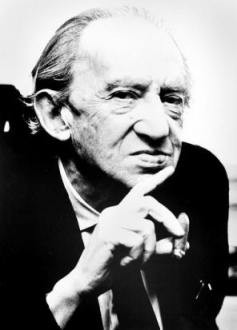
«La especificidad de György Lukács»: Vincent Charbonnier
 Université de Nice-Sophia Antipolis
Actuel Marx en Ligne nº 12 (13/10/2002)
Desaparecido desde hace algo más de treinta años, Lukács es un ilustre desconocido del marxismo del s. XX[i]. Es conocido sobretodo por sus primeros textos pero demasiado frecuentemente reducido a ellos y su obra posterior es todavía hoy poco conocida aunque ella representa un esfuerzo real para intentar una renovación del marxismo. Este esfuerzo que merece una verdadera atención ha de ser evaluado y confrontado con nuestra propia modernidad, ya que estamos doblemente enfrentados a una mundialización del capitalismo cada vez más salvaje y a la necesidad de reconstruir una teoría crítica a la altura de las circunstancias actuales.
«Capitalismo, Desenvolvimentismo e Barbárie»: José Paulo Netto
 Capitalismo, Desenvolvimentismo e Barbárie
Profº. Dr. José Paulo Netto (UFRJ)
Palestra proferida durante Oficina Regional Centro-Oeste da Associação Brasileira de Ensino e Pesquisa em Serviço Social (ABEPSS). Local: Universidade de Brasília (UnB). Data: 12 de setembro de 2012. Horário: de 9h às 12h.
Gravação e edição: Efrain Maciel e Silva
http://boletimef.org
«Apuntes para una discusión sobre El orden de El Capital»: Luis Alegre, Carlos Fernández Liria, Eduardo Maura y Jacobo Muñoz
 Pasajes. Revista de Pensamiento contemporáneo
«Working With Cultural-Historical Activity Theory»: Wolff-Michael Roth, Luis Radford & Lionel LaCroix
 Abstract: This article focuses on the experiences of two researchers, Wolff-Michael ROTH and Luis RADFORD, using cultural-historical activity theory in mathematics education. The aim is to provide insights into the ways these researchers see and engage with activity theory, how they have come to adopt and expand it, and some of the challenges and concerns that they have had using it. These questions are not usually addressed within typical scientific papers. Yet, they are important for understanding both the dynamics of research and the practical use of cultural-historical activity theory. Since the format of research report papers is not necessarily well suited to convey personal experiences and thinking, the present article takes the form of a conversation, which provides an effective vehicle for exploring and articulating these matters. This provides a basis for understanding more deeply the underlying assumptions of this theory; its dynamics and how it is applied in research of mathematics practice, thinking, and learning; and insights into the manner in which experienced researchers grapple with the theoretical dimensions of their research.
Key words: cultural-historical activity theory; dialectical thinking; Leont’ev; Vygotsky; mathematics education; objectification; subjectification
“No podemos llegar al socialismo por la acumulación gradual de reformas”: Michael Löwy
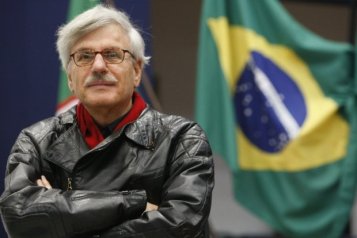 Entrevista con Michael Löwy :: “La experiencia de la Comuna de París inspiró a la Revolución Rusa y aun hoy en día es un ejemplo de autoemancipación revolucionaria”
Michael Löwy estuvo en Brasil a finales de 2012 para promocionar el libro “La teoría de la revolución en el joven Marx”, que fue publicado en Francia en 1970 y hasta ahora no se había editado en portugués.
Durante su estancia en Brasil participó en muchos eventos y trató temas diversos, como literatura y la cuestión ecológica. Nada que pueda sorprender en el perfil de un investigador que se mueve con desenvoltura entre el estudio de los clásicos y el análisis de la coyuntura actual, además de su militancia política de izquierda. En esta entrevista, echa mano de los conceptos que aprendió de los clásicos (principalmente Marx y Walter Benjamin) para discutir sobre la crisis que atraviesa el capitalismo y los movimientos reivindicativos que han surgido en las diferentes partes del mundo. Además, explica los principios y limitaciones del “ecosicialismo”, con la legitimidad que le otorga haber sido uno de los autores del Manifiesto que lo defiende.
Brasileño residente en Francia desde 1969, Löwy es director de investigaciones en el CNRS, profesor en la Écoles de Hautes en Sciences Sociales. Sólo en portugués es autor de más de 20 libros.
Reading Marx’s Capital with David Harvey

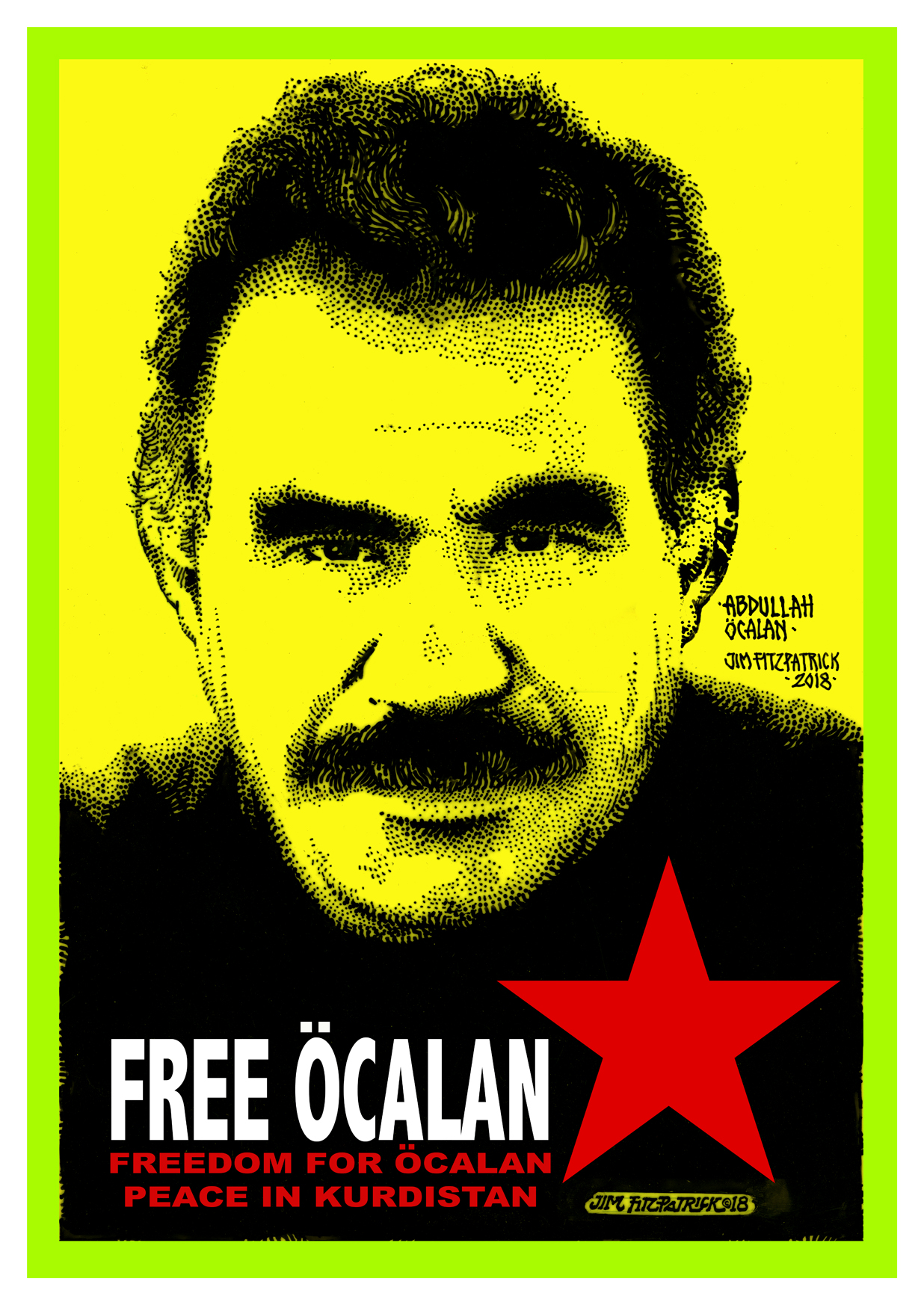
Free Öcalan


Fundación Infancia y Aprendizaje

Colección de libros Marxismo Crítico

Historical Materialism


CIPEC (Centro de Investigación en Pensamiento Crítico)

Centro para la Investigación como Crítica Práctica

Memoria Revista de Crítica Militante

Revista Laberinto






Marx desde cero





 marxismocritico.com