
Archivo
«Simón Bolívar y nuestra Independencia» : Conferencia de Néstor Kohan
 Conferencia de Néstor Kohan «Simón Bolívar y nuestra Independencia» pronunciada en el marco del Seminario del Partido de los Trabajadores de Méjico, 2013, dónde Kohan presenta las principales tesis de su último libro «Simón Bolívar y nuestra Independencia. Una mirada latinoamericana» publicado en abril de 2013 por la Editorial Yulca. más info. www.editorialyulca.com
«Primitive Accumulation: From Adam Smith to Angela Merkel»: Michael Perelman
 The barbaric wave of austerity crashing across Europe and much of the rest of the world both resembles and differs from the classical period of primitive accumulation which deprived masses of people of their means of production. Although landgrabs continue in this modern version of primitive accumulation, the central thrust is the destruction of all public wealth in the interest of capital. Another difference is that classical political accumulation reflected the optimism associated with a new form of making wealth, while viciousness of modern primitive accumulation seems to be an attempt to recapture the vitality of early capitalism. However, despite the short-term benefits of such cannibalistic policies for capital, in the end the result will be detrimental to the capitalists, as well as the rest of society.
Michael Perelman is a Marxist economist and economic historian and a professor of economics at California State University, Chico. He has has written numerous books and academic articles on the topic of primitive accumulation, including The Invention of Capitalism: The Secret History of Primitive Accumulation (2000).
«Si nosotros seguimos luchando se pueden perfilar posibilidades en el horizonte de que cambie el sistema»: Miren Etxezarreta
 Cada dia 15 de cada mes, Imatges per a la Solidaritat ofrece una entrevista para el análisis y debate. Esperamos que la variedad de temas ofrecidos a través de estas entrevistas resulte gratamente positivo para el enriquecimiento personal de cada uno.
En el blog: laentrevistadelmes.blogspot.com.es/ puedes ver todas las entrevista que hemos realizado hasta la fecha. Llevamos más de tres años publicando una entrevista mensual y ¡esperamos poder seguir haciéndolo!
Leer más…
«The Incoherence of ‘Transitional Society’ as a Marxian Concept»: Andrew Kliman
 I will examine two key aspects of Evgeny Preobrazhensky’s concept of ‘primitive socialist accumulation’: the notions that (a) the essential differences between socialism and capitalism are nationalised property and economic planning, and that (b) a transition from capitalism to socialism can take place through the extension of nationalised property and economic planning. Drawing on the work of Karl Marx and Raya Dunayevskaya, I will argue, first, that state property and economic planning are not the essential differences, and second, that Preobrazhensky’s conception is one example of the view that political and legal changes are the determining factors in social change. That view, I will contend, inverts Marx’s conception according to which political and legal relations correspond to and are determined by the mode of production, not vice-versa. If this latter view is accepted, I will further argue, the idea of a transitional society between capitalism and socialism is incoherent. This does not mean that social transformation must be instantaneous; what it means is that socialism cannot exist, partly or wholly, until the mode of production is revolutionised and that this cannot take place by political and/or legal means.
Leer más…
«Primitive Accumulation, Migrant Workers and Social Reproduction in the Age of Austerity»: David McNally
 The Age of Austerity ushered in by the global crisis of 2008-9 centrally involves cheapening the reproduction of labour-power by means of reducing both private wages and the social wage administered by the state. These policies have decided class, gender, racial and generational dimensions. To properly elucidate these dimensions, however, requires that we also grasp ongoing primitive accumulation as a crucial ‘moment’ in the austerity agenda. To accomplish this means addressing the role of the reproduction of the global reserve army of labour, and of precarious migrant workers, in the restructuring of labour-power on a world scale.
In order to develop the theory of primitive accumulation in these directions, this paper returns to tensions in Marx’s account of the social reproduction of labour-power. Here I argue that not only does Marx’s conceptualization require a gender analysis, but that it also needs to be developed with respect to the problematic of labour migration. I show where Marx points to ways in which we might do this. The analysis presented underlines the decisive importance of an anti-racist defence of migrant workers for any effective working class politics in the Age of Austerity.
David McNally is Professor of Political Science at York University and a leading member of the New Socialist Group (www.newsocialist.org). He has written extensively on the critique of political economy. His publications include Global Slump: The Economics and Politics of Crisis and Resistance and Monsters of the Market: Zombies, Vampires and Global Capitalism.
Leer más…
«Crisis capitalista, política económica y tendencias de reconfiguración del orden mundial»: Claudio Katz
 Crisis capitalista, política económica y tendencias de reconfiguración del orden mundial.
Segunda sesión temática Economía mundial, economías nacionales y crisis capitalista.
Conferencia Latinoamericana y Caribeña de Ciencias Sociales.
Miércoles 7 de noviembre de 2012 en el Aula magna de la Casa de la Primera Imprenta de América.
«Eurozone. A Crisis of Financialised Capitalism»: Costas Lapavitsas
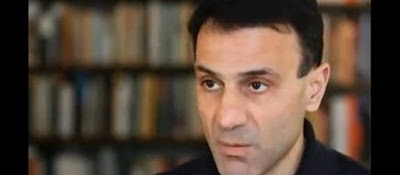 Keynote Lecture by Professor Costas Lapavitsas.
Dictatorship of Failure: Interdisciplinary Perspectives on the European Political and Economic Crisis. Symposium organised at the Helsinki Collegium for Advanced Studies, 15 November 2012.
Helsinki Collegium for Advanced Studies
«Desde su orígen, la UE es un proyecto del capital» : Miren Etxezarreta
 Conferencia sobre la Europa del Euro de la economista Miren Etxezarreta, en el marco de las Jornadas Desbanka.
«Alternatives al model de societat capitalista»: Josep Manel Busqueta

Josep Manel Busqueta, Miembro de
Seminario Taifa de Economía Crítica
Lugar: Salón de Actos de la Facultad de Ciencias Sociales
Carrer De Albalat dels Tarongers, Campus dels Tarongers. 46021 Valencia
Seminario 2013: Caminando por otra senda (apuntes para la transformación social)
«Primitive accumulation versus contested reproduction»: Michael A. Lebowitz
 May 4, 2013 — Links International Journal of Socialist Renewal — If we don’t understand a system as it is fully developed [its «being»] and thus its critical characteristics, we cannot investigate the «becoming» of those characteristics.
This is why Marx discussed primitive (or original) accumulation of capital only at the end of volume 1 of Capital. Exclusive focus upon the emergence of the new elements, however, is not real history. «Becoming» is two sided: it is both a coming into being and a passing away. The concept of primitive accumulation explores only the former; it considers the new being born but not the old struggling to remain alive. It is, in short, one-sided. Not only does it fail to explore on its own the struggle of the old for its reproduction but it also does not consider the interaction, the morbid symptoms and dysfunction when two sets of productive relations are engaged in contested reproduction with respect to their control of the elements of production.
What is lost? The centrality of class struggle — the struggle of two sides and the conditions thereby in which history is made. The paper considers various historical phenomena using the concept of contested reproduction.
Entrevista a Alain Badiou «El Militante Fiel»
 Entrevista a Alain Badiou «El Militante Fiel»
«Para entender O capital»: David Harvey
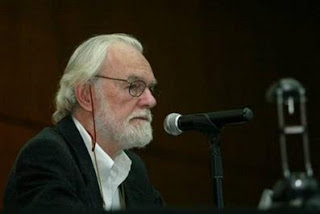 O Geógrafo David Harvey esteve em Porto Alegre para apresentar a conferência «Para entender ‘O capital'», por ocasião do lançamento de seu livro homônimo. A mediação é do historiador Mathias Luce.
O evento integra o projeto «Marx: a criação destruidora», organizado em torno da publicação da edição definitiva do Volume 1 d’O capital, pela Boitempo Editorial. Apoio:
A conferência, ocorrida no dia 25 de março de 2013 no Teatro da Associação Médica do Rio Grande do Sul-AMRIGS, teve realização da Boitempo Editorial e da Fundação Lauro Campos, com apoio da Câmara Municipal de Porto Alegre.
«La importancia de Marx ante la crisis»: Conferencia de Enrique Dussel
 Enrique Dussel nació el 24 de diciembre de 1934, en el pueblo de La Paz, Mendoza, Argentina. Exiliado político desde 1975 en México, hoy ciudadano mexicano, es profesor en el Departamento de Filosofía en la Universidad Autónoma Metropolitana (UAM, Iztapalapa, ciudad de México), y en el Colegio de Filosofía de la Facultad de Filosofía y Letras de la UNAM (Ciudad Universitaria). Licenciado en filosofía (Universidad Nacional de Cuyo, Mendoza, Argentina), doctor en filosofía por la Universidad Complutense de Madrid, doctor en historia en La Sorbonne de Paris y una licencia en teología en Paris y Münster. Ha obtenido doctorados honoris causa en Freiburg (Suiza), en la Universidad de San Andrés (La Paz, Bolivia) y en la Universidad de Buenos Aires (Argentina). Fundador con otros del movimiento Filosofía de la Liberación. Trabaja especialmente el campo de la Ética y la Filosofía Política.
«La sal de la tierra: Una aproximación histórica»: David Prieto
 Después de la Segunda Guerra Mundial Estados Unidos se encuentra en una situación de embriaguez imperialista por la gran demostración de poderío militar realizada, a la par que es consciente de que a pesar de haber obligado a Japón a firmar la capitulación tras las masacres de Hiroshima y Nagasaki, fueron los soviéticos, comunistas, quienes entraron primero en Berlín, con lo que ello conlleva, y quienes desde su bloque oriental también mantienen una gran influencia a nivel mundial ejerciendo una amenaza constante sobre la hegemonía capitalista-imperialista.
Esto provoca en terreno norteamericano una rememoración de la época del “Temor Rojo” (1919-1920), que comandada por el entonces Fiscal General A. Mitchell Palmer y su recién creado FBI, persiguió a todo lo que sonara a socialista, anarquista o «radical» encarcelando a varios miles de personas sin juicio previo y explusando del país a cientos de inmigrantes por su filiación política (H. Zinn, por ejemplo, nombra a Goldman y Berkman entre estxs):
Segunda sesión del Seminario Marx Revisitado: «Michael Heinrich, ¿Cómo leer El Capital de Marx?»: Luis Arizmendi y Alejandro Fernando González
 2da. Sesión 20 de marzo:
Michael Heinrich, ¿Cómo leer El Capital de Marx? Indicaciones de lectura y comentario del comienzo de El Capital, Escolar y Mayo Editores, 2011. Comentan: Mtro. Luís Arizmendi y Lic. Fernando González
Reading Marx’s Capital with David Harvey

Free Öcalan


Fundación Infancia y Aprendizaje

Colección de libros Marxismo Crítico

Historical Materialism


CIPEC (Centro de Investigación en Pensamiento Crítico)

Centro para la Investigación como Crítica Práctica

Memoria Revista de Crítica Militante

Revista Laberinto






Marx desde cero





 marxismocritico.com