
«The German Debate on the Monetary Theory of Value. Considerations on Jan Hoff’s Kritik der klassischen politischen Ökonomie»: Kolja Lindner
Philology, the ‘love of the word’, is an academic discipline that threatens to turn the textscollected in critical editions into intellectual playgrounds. For the important task that consists in trying to arrive at as coherent an understanding of a text as possible by considering everything its author has written always trails a certain danger in its wake: it can all too easily become an academic exercise in textual criticism and commentary. When what is at stake is critical social theory, this variant on ‘art for art’s sake’ is especially risky: it can transform scientific critique into contemplative scholarship. That said, critical social theories must also, in view of the rich textual corpus now at our disposal, run the risks of philology.
Marx’s oeuvre offers philologists several different avenues of attack. Thus it has not only appeared in different editions (in Germany, both the MEW—Marx-Engels-Werke, as well as the second edition of the MEGA, Marx-Engels-Gesamtausgabe), but also in divergent translations across the globe. Moreover, it presents us with an open-ended theory that, if Althusser is right, can be broken down into different stages. Even the last of them, according to Althusser, attempts to formulate a critique of political economy that is not always theoretically coherent, and is on the whole extremely complex (cf. Althusser 1996, 27). As for the propagandistic simplification and textual canonisation that state socialism inflicted on Marx, it certainly did his work no service. The upshot is that there is no body of critical social theory that stands more to gain from discriminating philology than Marx’s.
Confronted, however, with such variegated, ambiguous, and manipulated texts, philological criticism must bring theoretical and political criteria to bear if it is neither to degenerate into an activity pursued for its own sake nor lose sight of what Marx actually wrote. Such criteria will also provide the kind of interpretive framework that is the sine quanon for a coherent understanding of Marx. Given the scope and richness of his work, it is only natural to seek one such criterion in its chronological development, that is, the theoretical progress that Marx is supposed to have made as his thought unfolded, the assumption being that later texts offer a more mature critique of political economy than their predecessors. With regard to, say, the relationship between the 1844 Manuscripts and Volume I of Capital, published over twenty years later, this assumption is hardly debatable. On the other hand, there is good reason to ask whether Capital represents a higher stage in the critique of political economy than any and all of Marx’s earlier texts. For the fact is that his critique developed in extremely uneven, precarious fashion over the course of his career.
The way Marx introduces the capital form of value in Volume I of his magnum opus is a
case in point. After having developed the categories of commodity, money, and exchange in
Part One of Capital, he begins Part Two by affirming that, besides the form of simple
commodity exchange, C-M-C, ‘we find. . . another, specifically different form, M-C-M, the
transformation of money into commodities, and the change of commodities back again into
money, or buying in order to sell’ (Marx 1975, vol. 35). That one simply ‘finds’ the capital
form suggests that there is an external, contingent relationship between capital and simple
circulation as analysed in Part One. This interpretation has its origins in Engels’ lapse, the
concept of ‘simple commodity production’.
The German Debate on the Monetary Theory of Value
Translated from the German by G. M. Goshgarian
Reading Marx’s Capital with David Harvey

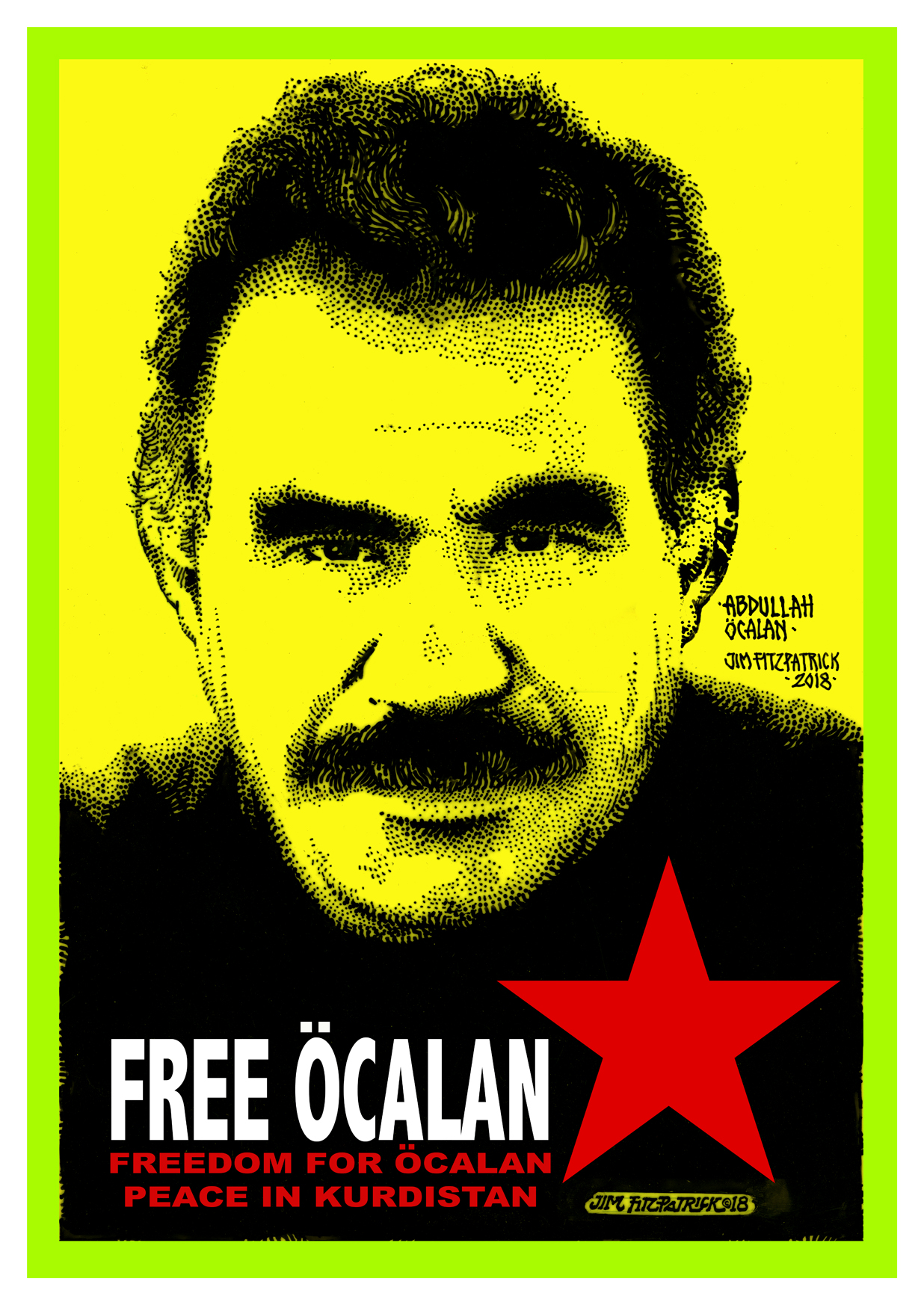
Free Öcalan


Fundación Infancia y Aprendizaje

Colección de libros Marxismo Crítico

Historical Materialism


CIPEC (Centro de Investigación en Pensamiento Crítico)

Centro para la Investigación como Crítica Práctica

Memoria Revista de Crítica Militante

Revista Laberinto






Marx desde cero




 marxismocritico.com
I like the article contents because it fits with my interpretative preferences, but admitedly they are not solid arguments. My question is: What do we -including marxist theory- gain or loose if we abandon concepts like «use value», «labor value» as measuring units, in a world where «monetary value» defines the real exchange flows and their accounts? «Use values» are defined in the moment of using the merchandise, for example, an screwdriver may be good only for certain kind of screws and harmful for others, so it depends on the consumer particular instant. By the other hand, «labor value» depends on technology, which changes very fast and it may produce devaluation of unsold products, capital actions, unemployment, etc. May somebody help me with some clarifications about this points?