
Archivo
«Marx inédito. Colonialismo . Cuaderno de Londres Nº XIV, 1851»: Néstor Kohan y Marcelo Delgadillo.
Conversatorio sobre el libro «COLONIALISMO. Cuaderno NºXIV de Londres». Texto inédito de Karl Marx. Presentaciòn de Néstor Kohan y Walter Delgadillo. La Paz. Vicepresidencia del Estado Plurinacional de Bolivia, 7 de octubre de 2019.
«Marx Inédito: Colonialismo. Cuaderno de Londres Nº XIV, 1851»: Néstor Kohan y Marcelo Delgadillo
 Diálogo sobre el libro «COLONIALISMO. Cuaderno NºXIV de Londres». Texto inédito de Karl Marx. Presentaciòn de Néstor Kohan y Walter Delgadillo. La Paz. Vicepresidencia del Estado Plurinacional de Bolivia, 7 de octubre de 2019. Leer más…
«Ilyenkov»: Alexander Rozhkov
 Documental sobre la vida del filósofo ruso realizada por Alexander Rozhkov con subtítulos en inglés. Leer más…
«Artes y Educación»: Pablo del Río
 Intervención de Pablo del Río Pereda en la Mesa de Debate ‘Artes y Educación’, celebrada en la Universidad Pablo de Olavide con motivo del II Encuentro Mil Formas de Mirar y Hacer: Artes y Educación.
Samir Amin: The organic intellectual
 Taking as its point of departure this observation, itself a feature of 50 books by Samir Amin, the film depicts the audacious struggles of, as well as interviews with, addresses by and special moments involving this most outstanding intellectual of the South. In the film Samir Amin discusses the political economy of development, capitalism and imperialism, as well as the resistance of workers and peoples.
In addition, the film is structured around the testimonies of: Isabelle Eynard Amin, Francois Houtart, Isabelle del Almeida, Ibrahima Thioub, Isham el Makhood, Fatou Sow, Cherif Salif Sy, Bernard Founou,Eric Koebe, Floriant Rochat, Lau Kin Chi, Rémy Herrera, Yash Tandon, Taoufik ben Abdallah, Ebrima Sall, Gustave Massiah and Aziz Salmone Fall. Samir Amin is, moreover, shown in the company of Mamdouh Habashi, Issa Shivji, Firoze Manji, Krishna Murty Padmanabhan, Sandeep Chachra, Luciana Castellina, Tina Ebro, Pedro Paez, Shahida El Baz, Helmi Shaarawi, Tawhida Shaarawi, Mohamed Nour El Din, Salwa El Antari, Aziz S. Fall, Saad El Taweel, Mary El Taweel and Gabriele Habashi. This bilingual (English-French) cinematic homage is enhanced by some images from the film The Dispossessed by Mathieu Roy, and also by several other sequences from throughout the world illustrating poetically.
«In our era, when we consider the destructive (ecological and military) might at the disposal of the powers-that-be, the risk, denounced by Marx in his time, that war will end up destroying all the opposing camps, is real. On the other hand, there is a second path that demands the lucid and organized intervention of the internationalist front of workers and peoples.»
—Samir Amin
«Maestros detrás de las ideas. Lucidez y congruencia»: Adolfo Sánchez Vázquez
Fuente: TV UNAM
In Memoriam Adolfo Sánchez Vázquez
 Semblanza de la vida y obra del filósofo marxista hispano-mexicano Adolfo Sánchez Vázquez, elaborada por la Lic. Julia Peñaloza, miembro del Centro de Documentación en Filosofía Latinoamericana e ibérica de la Universidad Autónoma Metropolitana – Unidad Iztapalapa.
«Fetichización progresiva del capital»: Enrique Dussel
Video:
«Marx according to MEGA2 : A biographical approach»: Michael Heinrich
 Conferencia de Michael Heinrich (HTW, Berlin). Michael Heinrich-en (HTW, Berlin) hitzaldia. Lecture of Michael Heinrich (HTW, Berlin). Congreso internacional Karl Marx ( 1818-2018 ), crítica de la economía política. Celebrado en Bilbao los días 1,2 y 3 de mayo del 2018. Leer más…
«Walter Benjamin. La revolución y los intelectuales»: Enzo Traverso
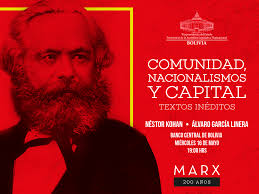
«Karl Marx: textos inéditos»: García Linera, Néstor Kohan
 KARL MARX: TEXTOS INEDITOS (García Linera, Néstor Kohan, presentación en La Paz, Bolivia, 2018)
Presentación del volumen KARL MARX 200 AÑOS. TEXTOS INÉDITOS (COMUNIDAD, NACIONALISMOS Y CAPITAL). Álvaro García Linera, Néstor Kohan. Banco Central de Bolivia, La Paz, mayo de 2018. Leer más…
«Karl Marx en el segundo siglo»: Enrique Dussel
 Enrique Dussel, filósofo mexicano, en el marco del 50 aniversario de CLACSO, presenta la charla «Marx en el segundo siglo» en ocasión de la celebración también, de los 200 años de Karl Marx. Leer más…
«Cicle 150 anys Das Kapital – La fórmula trinitaria: interés, renta del suelo y salario»: Clara Ramas San Miguel
 El 2017 fa 150 anys que es va publicar el primer volum de «El Capital», l’obra més important de Karl Marx i una de les més influents de l’història de l’economia. És per això que des de Post Crash UPF vam organitzar un cicle de xerrades, entre el 19 i el 25 d’abril, on treballarem, principalment, diversos capítols del primer i tercer volum de l’obra. Per ajudar-nos a aprofundir en l’obra comptarem amb la participació de diversos experts en la matèria: des de Madrid, Clara Ramas, doctorada per l’UCM, i Xabier Arrizabalo, professor de la Universitat Complutense, i des del Seminari Taifa de Barcelona, Xavier García i Antoni Puig. Leer más…
«The global woman’s strike»: Tariq Ali talks to Cinzia Arruzza
 Tariq Ali talks to Cinzia Arruzza, Assistant Professor at the New School and organiser of the International Women’s Strike US, about the background and demands of the international women’s strike planned for March 8, on International Women’s Day. They further discuss social and political movements in the US and Italy and their influence on the respective political systems.
Leer más…
«Decolonialidad del poder»: Juan José Bautista
 Esta es una de las aulas de la Ruta pedagógica «Decolonialidad del poder» que puedes encontrar en nuestro portal http://www.comunalizarelpoder.com.ve. En esta oportunidad el pensador boliviano plantea la necesidad de reconocer y construir marcos categoriales propios de nuestra América Latina, que nos permitan pensar los procesos y horizontes de vida desde las perspectivas decoloniales. El paso por comprendernos como una comunidad pluriversa hace que cobre valor la cosmovisión propia de nuestros orígenes, no solo para identificar que hubo y que hay sino para tener perspectivas de posibilidad de la vida. Leer más…
Reading Marx’s Capital with David Harvey

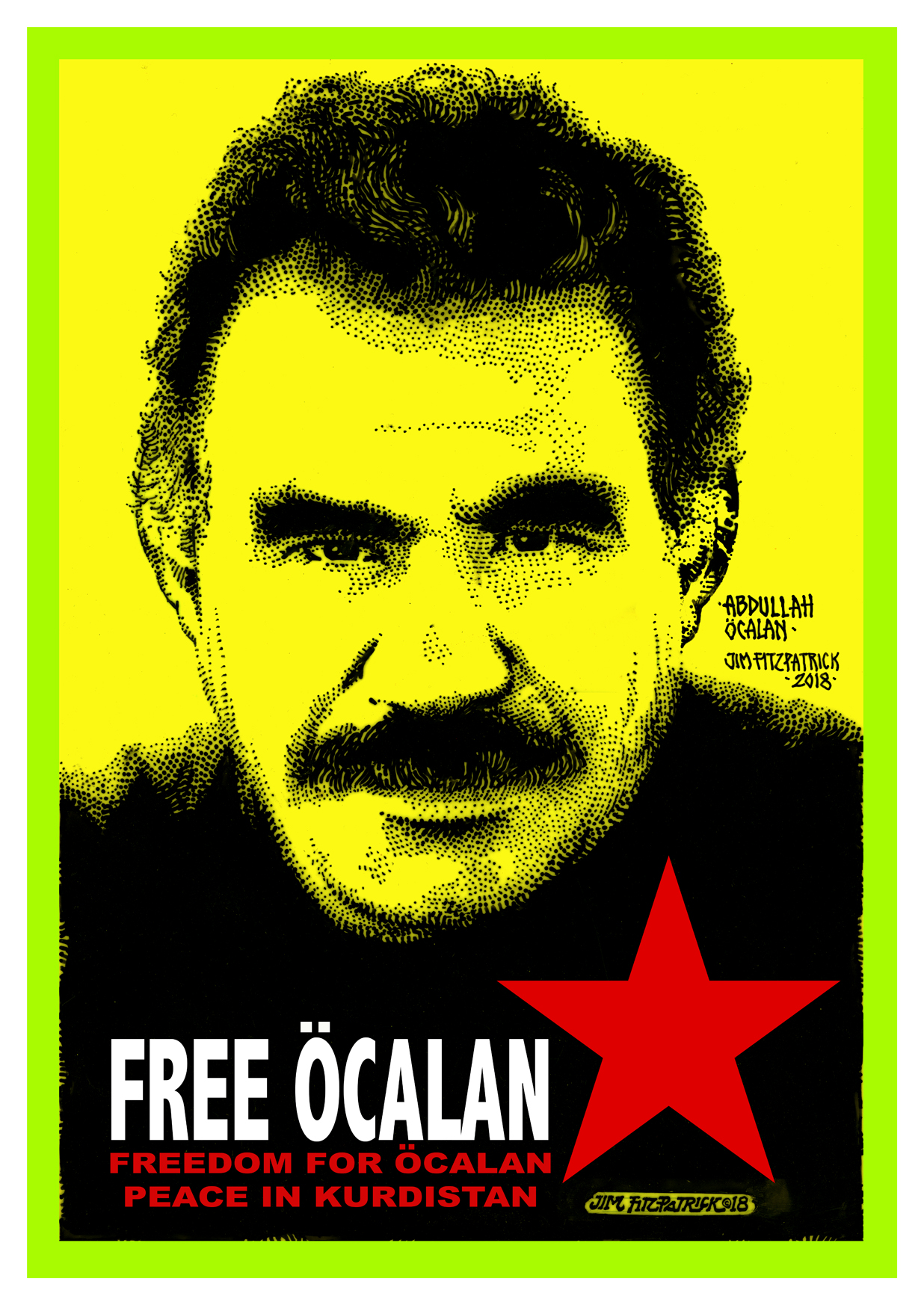
Free Öcalan


Fundación Infancia y Aprendizaje

Colección de libros Marxismo Crítico

Historical Materialism


CIPEC (Centro de Investigación en Pensamiento Crítico)

Centro para la Investigación como Crítica Práctica

Memoria Revista de Crítica Militante
Revista Laberinto





Marx desde cero




 marxismocritico.com