
Archivo
Reedición de «Dialéctica de lo abstracto y lo concreto en «El Capital» de Marx»: Evald Ilyenkov
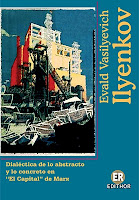 Título: Dialéctica de lo abstracto y lo concreto en «El Capital» de Marx
«Money, Marx, and Gold» entrevista a Alan Freeman
 The guest this week is the Heterodox or Marxist Economist Alan Freeman. We talk about why gold is still relevant in this Late Capitalist moment even though we’re off the gold standard. And we discuss gold’s special relationship to money.
«Market Mystification in Capitalist and Market Socialist Societies»: Bertell Ollman
 I. A LACK OF TRANSPARENCY
Amidst all the turmoil and exultation that marked the final days of the German Democratic Republic, an East German worker was heard to say, «What bothered us most about the Government is that they treated us like idiots». In the capitalist lands, of course, people are first made into idiots, so when they are treated as such few take notice. The difference is one of transparency.
One major virtue of centrally planned societies, then, even undemocratic ones, even ones that don’t work very well, is that it is easy to see who is responsible for what goes wrong. It is those who made the plan. The same cannot be said of market economies which have as one of their main functions to befuddle the understanding of those who live in them. This is essential if people are to misdirect whatever frustration and anger they feel about the social and economic inequality, unemployment, idle machines and factories, ecological destruction, widespread corruption and exaggerated forms of greed that are the inevitable byproducts of market economies. But to the extent this is so, only a critique of market mystification will enable us to put the blame where it belongs, which is to say—on the capitalist market as such and the class that rules over it, in order to open people up to the need for creating a new way of organizing the production and distribution of social wealth.
«La Dialéctica de la Tasa de Ganancia y los Precios en la Conceptualización del Capital de Marx»:Mario Robles L. Báez
 Marx señala claramente que el objeto de su trabajo científico-filosófico es el concepto de capital en cuanto el sujeto económico que domina y rige el movimiento de la sociedad capitalista. La presentación de los resultados de sus investigaciones sobre el capital se encuentra en varios de sus manuscritos originales, algunos de los cuales Marx mismo publicó después de una exhaustiva reelaboración. En El Capital, quizás su obra más importante y completa sobre la presentación de este concepto, el capital es concebido como un universal concreto y, por lo tanto, como una totalidad, que se desenvuelve a sí mismo,conteniendo dentro de sí las partes, diferenciaciones o momentos, que lo componen y determinan. Como tal, éste es puesto allí como el resultado tanto del texto como un todo como del conjunto de momentos y categorías que conforman su estructura lógica de presentación, donde sus momentos no sólo son articulados sistemáticamente de manera dialéctica, sino además su orden de presentación no coincide con aquellos que corresponden a su surgimiento y desenvolvimiento histórico. Después de Marx, para los economistas políticos marxistas ha sido, sin embargo, una tarea difícil comprender plenamente este concepto, debido sobre todo a que la sociedad capitalista es una realidad invertida, producida y dominada por el capital y que, por lo tanto, el capital mismo se les presenta como un objeto muy peculiar de investigación. Esta dificultad se ha hecho evidente por las diferentes apreciaciones opuestas entre sí, no sólo de la naturaleza ontológica de la concepción del capital mismo, sino también del método de presentación de suestructura lógica que se ha manifestado en una larga y continua controversia sobre los diferentes momentos de determinación que la conforman y de su articulación dialéctica en los diferentes textos en que Marx presenta este concepto.
«On Marx’s Theory of Money»: Duncan K. Foley
 The Theory of Money and the Theory of Value
The most important point to emerge from Marx’s theory of money is the idea that money is a form of value. The difficulty with this idea is that we are more familiar with money itself than with value in other forms. But value does appear in forms other than money. For example, the balance sheet of a capitalist firm estimates the value of goods in process and of fixed capital which has not yet been depreciated, as well as the value of inventories of finished commodities awaiting sale. Each of these aggregations of commodities has a value, usually expressed as the equivalent of a certain amount of money, but it is clear that neither goods in process nor fixed capital is money. Marx views the value of commodities in this sense as analytically prior to money; money can be explained according to Marx only on the basis of an understanding of the value of commodities.
«The German Debate on the Monetary Theory of Value. Considerations on Jan Hoff’s Kritik der klassischen politischen Ökonomie»: Kolja Lindner
Philology, the ‘love of the word’, is an academic discipline that threatens to turn the textscollected in critical editions into intellectual playgrounds. For the important task that consists in trying to arrive at as coherent an understanding of a text as possible by considering everything its author has written always trails a certain danger in its wake: it can all too easily become an academic exercise in textual criticism and commentary. When what is at stake is critical social theory, this variant on ‘art for art’s sake’ is especially risky: it can transform scientific critique into contemplative scholarship. That said, critical social theories must also, in view of the rich textual corpus now at our disposal, run the risks of philology.
Marx’s oeuvre offers philologists several different avenues of attack. Thus it has not only appeared in different editions (in Germany, both the MEW—Marx-Engels-Werke, as well as the second edition of the MEGA, Marx-Engels-Gesamtausgabe), but also in divergent translations across the globe. Moreover, it presents us with an open-ended theory that, if Althusser is right, can be broken down into different stages. Even the last of them, according to Althusser, attempts to formulate a critique of political economy that is not always theoretically coherent, and is on the whole extremely complex (cf. Althusser 1996, 27). As for the propagandistic simplification and textual canonisation that state socialism inflicted on Marx, it certainly did his work no service. The upshot is that there is no body of critical social theory that stands more to gain from discriminating philology than Marx’s.
«La economía de la sociedad capitalista y sus crisis recurrentes»: Foladori Guillermo y Melazzi Gustavo
 Este trabajo tiene su origen en un compromiso con quienes crean la riqueza a disposición de la humanidad: los trabajadores.
Pero el disfrute de esa riqueza ha sido y es extremadamente desigual. Cualquier propuesta ética, de justicia social, está obligada a enfrentar esta realidad. Pero es imposible hacerlo sin tener claro el funcionamiento del sistema en que vivimos, el capitalismo. De allí la necesidad de un material sencillo pero riguroso, que explique a fondo la economía y la sociedad, para construir entre todos una real alternativa.
Esperamos que quienes participen de la rebeldía frente a las pavorosas injusticias que nos rodean, y comprometen incluso la vida en el planeta, encuentren en este trabajo una ayuda
que esclarezca y consolide actitudes.
Seminario «La actualidad de Marx» UNAM-12 de diciembre 2011
 Descripción: Seminario La actualidad de Karl Marx Lunes 12 de diciembre de 2011 Plusvalor y trabajo vivo en Marx Enrique Dussel Universidad Autónoma Metropolitana, México COORDINADORES Alejandro Valle Baeza, José Guadalupe Sandoval, Carlos Morera
Leer más…
«Desarrollo y ambivalencias de la teoría económica de Marx»: Michael Heinrich
 Resumen
Con la profunda crisis económica a la que nos enfrentamos desde 2008 ha aumentado también el interés por la teoría marxiana en todo el mundo. Pero esto verdaderamente no es algo que deba sorprender: mientras que en la teoría económica de Marx las crisis desempeñan un papel importante, en la economía convencional son prácticamente ignoradas. en ésta aparecen como meros accidentes, que podrían ser evitados por medio de mercados flexibles (ésa es la creencia de los economistas neoclásicos) o por medio de una política económica adecuada (la creencia de los keynesianos).
«Some reflections on Marx’s theory of value»: Gilbert Faccarello
Two controversies concerning Marx’s theory of value were of particular importance during the 1960s and 1970s. The first is well known and has attracted most of the attention of Marxian scholars during these decades: I allude to the celebrated ‘transformation problem’ and to the spirited debates that followed the publication of Sraffa’s Production of Commodities by Means of Commodities. The second one, however, is much less well known among economists but is also of fundamental importance: it was more methodological in character and centred mainly on Marx’s ‘logic’ and the relationship between Marx and Hegel.
At first sight these two considerations are disconnected and involve very different problems in Marx’s writings. The first controversy seems in fact to be mainly technical and mathematical in character, and the second chiefly philosophical. However it has become more and more evident that the fundamental problems they raise are linked and this is precisely what I have tried to do (Faccarello, 1983a, 1983b). My line of argument is simple. As a result of the Sraffian controversies it is obvious that the ‘transformation problem’ is destined never to find a solution, since the theory of production prices is ‘self-sufficient’. But it is also evident that what is traditionally ‘transformed’, that is, the system of ‘labour values’, can no longer be considered as an unproblematic starting point for the entire theoretical construction; old questions have again been raised in this new context and such central concepts as ‘abstract labour’ or ‘socially necessary labour’ have proved to be unclear and in need of unambiguous definition. The problem thus faced is that of reinterpreting Marx’s statements on value and of trying again to grasp, possibly in a new way, the definition(s) and significance(s) of the related concepts.
«Some reflections on the dependence of prices on Labour-Values»: Diego Guerrero
 Resumen
Con frecuencia se cree, de una manera bastante esquizofrénica, que una teoría del valor solo debe resolver la cuestión de los “precios relativos” (un problema microeconómico), siendo principalmente la teoría del dinero de la pieza necesaria para la determinación monetaria o del nivel absoluto de los precios (un problema macroeconómico). Por una parte, la determinación del nivel de precios se encuentra teóricamente antes de cualquier consideración del mercado de dinero, mientras que por otro lado ninguna teoría del valor puede aspirar a ser completa sin la determinación del nivel absoluto de los valores. Se verá en este trabajo que sólo la teoría del valor trabajo (TVL) puede realizar ambas tareas, produciendo así la integridad y la unidad de la teoría económica.
Palabras clave: teoría del valor trabajo, precios relativos, valores absolutos.
«Realisation in Marx’s Theory of Value: A Reply to Kincaid»: Ben Fine and Alfredo Saad-Filho
 Abstract
In a review of our work, Kincaid suggests that we are ‘productivist’, reducing interpretation of Marx and capitalism to production at the expense of the relatively independent role that can be played by the value-form in general and by the money-form in particular. In response, we argue that he distorts interpretation of our work through this prism of production versus exchange, unduly emphasises the independence of exchange to the point of underconsumptionism, and simplistically collapses the mediation between production and exchange in the restructuring that accompanies the accumulation of capital.
Keywords: Marx, capital, profit, composition of capital, money, value theory, Kincaid
«Capital in general and the structure of Marx’s Capital»: Michael Heinrich
 ROMAN ROSDOLSKY’S The Making of Marx’s Capital (1977), originally published in 1968, exercised a considerable and lasting sway over the debate on Capital in West Germany which began in the wake of the student movement . Although interpretations based on Rosdolsky’s approach had the merit of undermining economistic and positive readings of Capital, this was frequently at the cost of a philosophical obfuscation of the social and economic substance of Marx’s critique of political economy . Capital, so it would seem had to be read through two sets of spectacles,’ the first consisting of certain understandings of the dialectical presentation from Hegel’s Logic, and the second of a number of methodological ideas from the Grundrisse, especially Rosdolsky’s elaboration of the concept ‘capital in general’ . Ironically, the ebbing away of debate about Capital with the break-up of the student left in the mid 1970s, coincided with the first publication of many of the manuscripts which formed the immediate preparatory work to Capital, as well as better edited versions of already familiar manuscripts, in the shape of the new complete Marx-Engels edition, the Marx-Engels Gesamtausgabe (MEGA) .
Leer más…
«The four levels of abstraction of Marx’s concept of ‘Capital'»: Roberto Fineschi
 1. Introduction
Marx began to work out his own theory of capital in the fifties and particularly in the Manuscripts of 1857/58 (generally known as Grundrisse). Philological results have shown that, before, his analysis was still linked to Ricardo’s – in the Misery of Philosophy although already with important exceptions1 – or only faced problems at the “surface” – he studied e.g. different monetarist schools at the beginning of the fifties – but without coming to an independent organic outline of the matter. The process of research continued in the Manuscripts of 1857/58 as well, but there, it went together with the beginning of the exposition, or presentation.
While writing this manuscript, Marx defined progressively the structure of the whole “capital”, setting out a process that, however, did not finish with the Grundrisse. Relevant parts of the theory were changed or improved in Manuscripts of 1861/63, above all as regards the central concepts of market values and production prices, and in Manuscripts of 1863/65, where we have the only extensive exposition of credit and bank system. Moreover we could consider as well, that a proper terminological and conceptual distinction among value, use value, and value form as part of the framework representing the real starting point of his theory – the commodity – is reached only in the second German edition of Capital Book I (1872), even if this had been latently present since the Manuscripts of 1857/58.
Leer más…
«The quantitative determination of abstract labour and values»: Diego Guerrero
 Abstract
In this paper we show first of all how to calculate the magnitude of the vector of labour values without having recourse previously to the vector of direct (abstract or concrete) labour that is usually considered as a necessary condition for it. We show that, apart from its total volume, which is supposed here to be equal to the total volume of concrete labour, the magnitude of direct abstract labour per unit of commodity is not needed for the calculation of values, either as one of the ingredients of value (to be added to a second ingredient: the amount of indirect abstract labour embodied in the means of production) or as a “coefficient of labour” that becomes value once vertically integrated. We will show then, beginning from unit values, how to compute the vector of abstract labour, both per unit of output and as a fraction of total labour, and their respective “coefficients of reduction” by means of which they can be considered a multiple of the quantities of concrete labour. Both things are discussed at the theoretical level and also by means of a numerical example that helps to understand the implications of the new definitions. The main implication is that, though “physical” data suffice to determine the vector of “relative” values (or any of their infinite multiples), labour is not redundant for a theory of value because the latter requires the determination of “absolute” values as a unique vector, for which the magnitude of total labour expended is needed.
As a second aim of the paper, we intend to show that Rubin’s ideas on both the
qualitative and quantitative determination of abstract labour and the role of exchange, demand, and social need in the quantitative definition of values—ideas that have often been misunderstood—are a necessary presupposition of the modern, correct quantification of abstract labour and value.
Reading Marx’s Capital with David Harvey

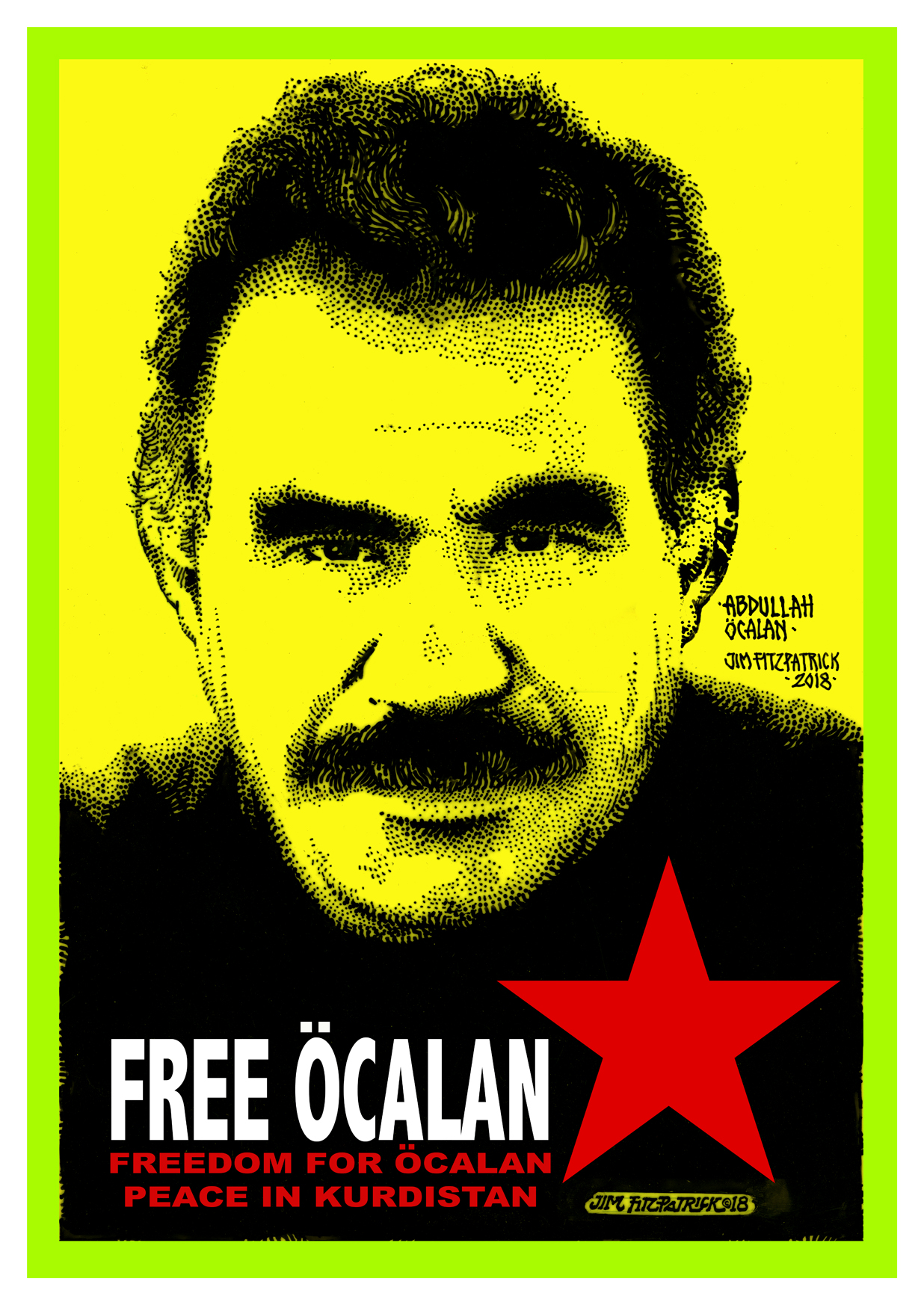
Free Öcalan


Fundación Infancia y Aprendizaje

Colección de libros Marxismo Crítico

Historical Materialism


CIPEC (Centro de Investigación en Pensamiento Crítico)

Centro para la Investigación como Crítica Práctica

Memoria Revista de Crítica Militante

Revista Laberinto






Marx desde cero





 marxismocritico.com