
Archivo
«Revolution at Point Zero: Housework, Reproduction, and Feminist Struggle»: Silvia Federici
Film of the Public Lecture by Silvia Federici about her new book: Revolution at Point Zero: Housework, Reproduction, and Feminist Struggle (PM Press, 2012)
Presented by Bristol Radical History Group
http://www.brh.org.uk/
Written between 1974 and the present, Revolution at Point Zero collects forty years of research and theorizing on the nature of housework, social reproduction, and women’s struggles on this terrain—to escape it, to better its conditions, to reconstruct it in ways that provide an alternative to capitalist relations. In this talk Silvia outlines the ideas within this book in a clear and lucid way. Indeed, as Federici reveals, behind the capitalist organization of work and the contradictions inherent in «alienated labor» is an explosive ground zero for revolutionary practice upon which are decided the daily realities of our collective reproduction. Beginning with Federici’s organizational work in the Wages for Housework movement, the essays collected here unravel the power and politics of wide but related issues including the international restructuring of reproductive work and its effects on the sexual division of labor, the globalization of care work and sex work, the crisis of elder care, the development of affective labor, and the politics of the commons.
Rosa Luxemburg (Margarethe von Trotta, 1986)
 Sinopsis: Con gran rigor histórico, narra un retrato de la líder socialista Rosa Luxemburg, desde fines del siglo XIX hasta su muerte en 1919. El guión de cuatro partes y un prólogo presenta a Rosa durante prisión en Wronke, en 1917. La primera parte retrocede a fines del siglo pasado y comienzos del actual. Rosa Luxemburgo se halla al principio de su carrera como periodista de cuestiones políticas y militante del partido socialista. Más que el éxito profesional, desea ser una mujer al lado de Leo Jogiches, su amante y compañero de lucha. Luego de una breve estadía en Varsovia, adonde acude Rosa para prestar su apoyo a la primera Revolución Rusa, se ve detenida y encarcelada por este motivo, hasta que los compañeros del Partido Socialista alemán obtienen su rescate. En 1906, regresa a Berlín. A partir de ese momento, su historia es narrada en forma cronológica hasta su muerte en enero de 1919. Estas informaciones históricas acerca de la revolucionaria Rosa Luxemburgo constituyen una parte importante en el film. Pero igual importancia posee la descripción del mundo de esta mujer.
«Capitalismo, Desenvolvimentismo e Barbárie»: José Paulo Netto
 Capitalismo, Desenvolvimentismo e Barbárie
Profº. Dr. José Paulo Netto (UFRJ)
Palestra proferida durante Oficina Regional Centro-Oeste da Associação Brasileira de Ensino e Pesquisa em Serviço Social (ABEPSS). Local: Universidade de Brasília (UnB). Data: 12 de setembro de 2012. Horário: de 9h às 12h.
Gravação e edição: Efrain Maciel e Silva
http://boletimef.org
«Gramsci & Hegemony»: Peter D Thomas
 Gramsci & Hegemony | Peter D Thomas | Counterforum | London | 3 May 2010
«El fetichismo de la mercancía»: Reinaldo Carcanholo
 “El carácter fetichista de la mercancía y su secreto”, una sección del primer volumen del “El Capital” (Carlos Marx, 1867) presentado por el economista brasileño Reinaldo Carcanholo.
«Estranhamento e Exploração: A Ontologia de Marx nos Grundrisse»: Mario Duayer
 Mario Duayer foi um dos tradutores dos Grundrisse de Marx direto do original em alemão para o português, agora publicado pela editora Boitempo. Como parte do lançamento do livro, Duayer foi convidado a discutir esta importante obra escrita entre os anos de 1857 e 1858, mas que veio a público somente no século XX. Entre os temas discutidos, Duayer colocou especial ênfase na subordinação, no pensamento de Marx nos Grundrisse, da exploração ao estranhamento social. Exploramos uns aos outros porque em primeiro lugar nos estranhamos socialmente. É a alienação como sociabilidade que permite a existência da exploração. A ontologia de Marx, portanto, não é somente uma ode ao fim da exploração, mas propriamente ao fim do estranhamento ou da alienação, ou do outro que me é externo e indiferente. Duayer aproveita também para comentar o relativismo ontológico de Thomas Khun sobre a co-existência de diferentes paradigmas, e mostra como as ideias de Marx, Lúckacs, Roy Bhaskar e Moishe Postone oferecem uma visão que contrasta com os recentes avanços de epistemologias pós-modernas.
«Finance, crisis and the left alternatives»: Alfredo Saad-Filho
 Alfredo Saad-Filho, Dept. Head of Development studies at the University of London, England, says that we have a situation of malfunction, but there is not the political will to replace capitalism. In his recent talk in Vancouver, He says that he wants to see people claim the right to a different future. He says it is inconceivable that people will accept all the inequalities, the difficulties, the crisis and the waste that we have today. He also says that there is more than enough to satisfy everyone needs globally: Today there is no need or reason why people starve in different parts of the world (October-2010)
«The Dynamics of the Crisis»: Guglielmo Carchedi
 Download the slides from here http://www.isj.org.uk/index.php4?id=815&issue=134
«El papel de las ideas en la construcción de alternativas»: Perry Anderson
 Conferencia de Perry Anderson «El papel de las ideas en la construcción de alternativas», La Habana 2003.
Entrevista a Bolivar Echeverría por Fernando Rojas
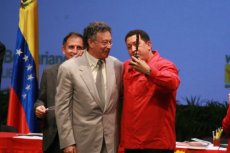 Entrevista a Bolivar Echeverría por Fernando Rojas
«Intervista sull’attualità di Marx»: Marcello Musto
 Intervista di Marcello Musto a Rainews24 in occasione della presentazione del suo libro «Ripensare Marx e i marxismi»
«Crisis Theory and the Current Conjuncture»: David Harvey
 Lecture by David Harvey, Department of Anthropology, City University of New York, given Wednesday, November 9, 2010 at the University of Wisconsin-Madison. Organized by the A.E. Havens Center for the Study of Social Structure and Social Change, havenscenter.org
DAVID HARVEY is Distinguished Professor at the City University of New York (CUNY) and Director of The Center for Place, Culture and Politics. Professor Harvey is a leading theorist in the field of urban studies whom Library Journal called «one of the most influential geographers of the later twentieth century.» He was formerly professor of geography at Johns Hopkins, a Miliband Fellow at the London School of Economics, and Halford Mackinder Professor of Geography at Oxford. His reflections on the importance of space and place (and more recently «nature») have attracted considerable attention across the humanities and social sciences. His highly influential books include Social Justice and the City (1973); The Limits to Capital (1982); The Condition of Postmodernity (1989); Justice, Nature, and the Geography of Difference (1996); Spaces of Hope (2000); and Spaces of Capital: Towards a Critical Geography (2001); The New Imperialism (2003); and Spaces of Global Capitalism (2006). His most recent book is The Enigma of Capital and the Crises of Capitalism (Oxford University Press, 2010).
«Beyond the Market: Radical Alternatives to Market Socialism»: David McNally
 DAVID MCNALLY is Professor of Political Science at York University, Toronto. He is the author of five previous books: Political Economy and the Rise of Capitalism (1988); Against the Market: Political Economy Market Socialism and the Marxist Critique (1993); Bodies of Meaning: Studies on Language, Labor and Liberation (2001); Another World is Possible: Globalization and Anti-Capitalism (2002; second revised edition 2006); and Monsters of the Market: Zombies, Vampires and Global Capitalism (forthcoming 2010). His articles have appeared in many journals, including Historical Materialism, Capital and Class, History of Political Thought, New Politics, Studies in Political Economy, and Review of Radical Political Economics. His book on the economic crisis, Global Slump: The Economics and Politics of Crisis and Resistance, will be published by PM Press in November. David McNally is also a long-time activist in socialist, anti-poverty and migrant justice movements.
«Gramsci: reminiscencia de la autonomía ideológica como verdadero objetivo de la lucha política»: Lucio Óliver, Massimo Modonesi y Elvira Concheiro
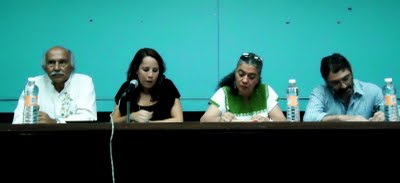 El pensamiento gramsciano es fundamental para comprender la vitalidad de la lucha contrahegemónica civil. Así se coincidió en la mesa redonda Homenaje a Gramsci, organizada por el doctor Lucio Óliver, y en donde participaron el maestro Massimo Modonesi, coordinador del Centro de Estudios Sociológicos y la doctora en sociología Elvira Concheiro.
“Marx at the Margins: Nationalism, Ethnicity, and Non-Western Societies”: Kevin B. Anderson
 Table of Contents:
Introduction
A Note on Marx’s Relationship to Engels
A Note on Sources
Acknowledgments
Abbreviations
Chapter 1: Colonial Encounters in the 1850s: The European Impact on India, Indonesia, and China
Chapter 2: Russia and Poland: The Relationship of National Emancipation to Revolution
Chapter 3: Race, Class, and Slavery: The Civil War as a Second American Revolution
Chapter 4: Ireland: Nationalism, Class, and the Labor Movement
Chapter 5: From the Grundrisse to Capital: Multilinear Themes
Chapter 6: Late Writings on Non-Western and Precapitalist Societies
Conclusion
Appendix: The Vicissitudes of the Marx-Engels Gesamtausgabe (MEGA), from the 1920s to Today
References
Index
(See below for more detailed table of contents.)
Leer más…
Reading Marx’s Capital with David Harvey

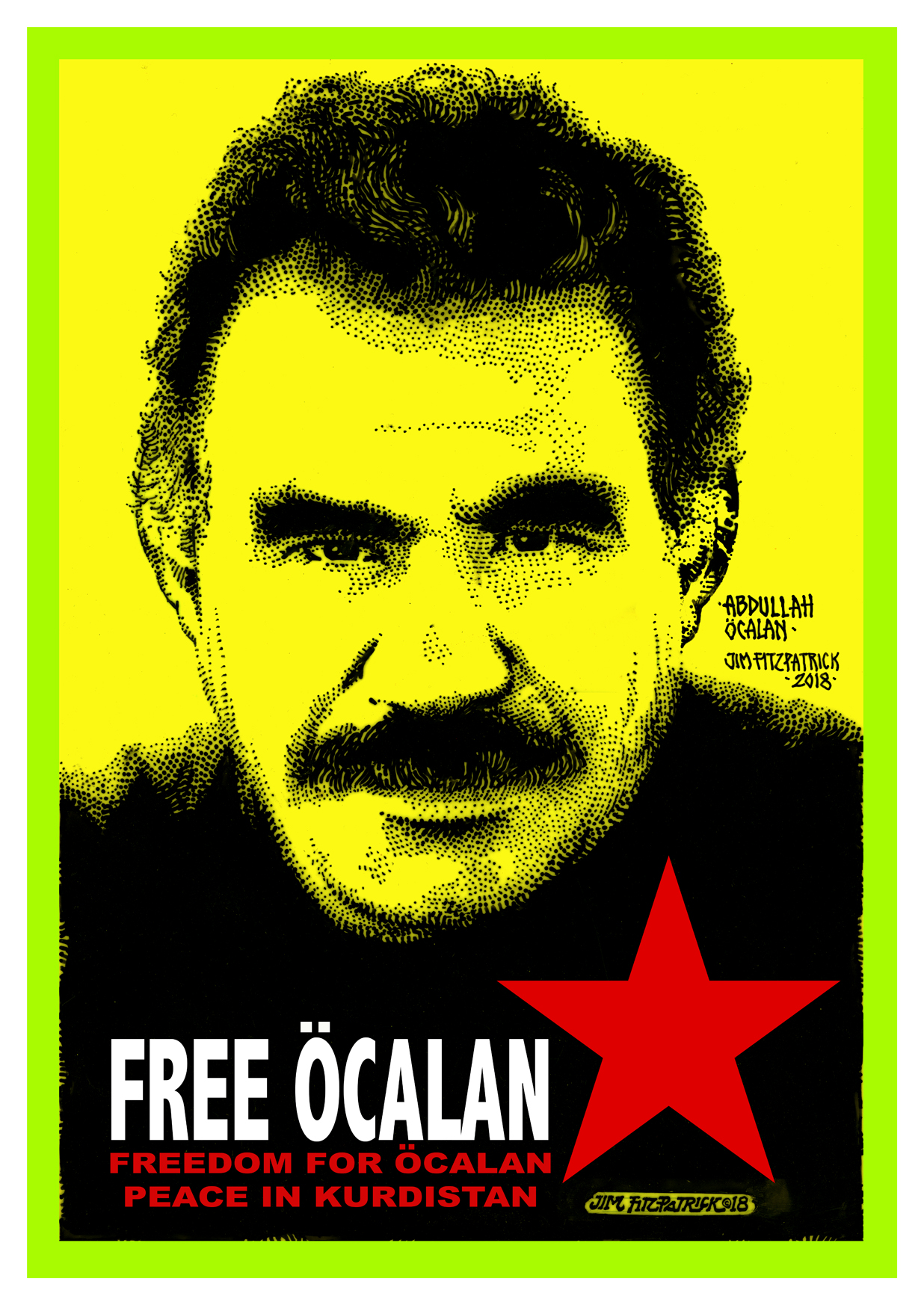
Free Öcalan


Fundación Infancia y Aprendizaje

Colección de libros Marxismo Crítico

Historical Materialism


CIPEC (Centro de Investigación en Pensamiento Crítico)

Centro para la Investigación como Crítica Práctica

Memoria Revista de Crítica Militante
Revista Laberinto





Marx desde cero





 marxismocritico.com