
Archivo
«Primitive accumulation versus contested reproduction»: Michael A. Lebowitz
 May 4, 2013 — Links International Journal of Socialist Renewal — If we don’t understand a system as it is fully developed [its «being»] and thus its critical characteristics, we cannot investigate the «becoming» of those characteristics.
This is why Marx discussed primitive (or original) accumulation of capital only at the end of volume 1 of Capital. Exclusive focus upon the emergence of the new elements, however, is not real history. «Becoming» is two sided: it is both a coming into being and a passing away. The concept of primitive accumulation explores only the former; it considers the new being born but not the old struggling to remain alive. It is, in short, one-sided. Not only does it fail to explore on its own the struggle of the old for its reproduction but it also does not consider the interaction, the morbid symptoms and dysfunction when two sets of productive relations are engaged in contested reproduction with respect to their control of the elements of production.
What is lost? The centrality of class struggle — the struggle of two sides and the conditions thereby in which history is made. The paper considers various historical phenomena using the concept of contested reproduction.
«Rethinking Microeconomics: A Proposed Reconstruction»: Anwar Shaikh
 I. Introduction
Microeconomics is important because individual agents make choices, and choices have personal and social consequences. Incentives do matter, and they do affect individual choices. But it does not follow that individual decision making is characterized by the rules of so-called rational choice and rational expectations or by the reductive incentives they embody. Nor does it follow that aggregates can be analyzed in terms of representative agents. The historical, empirical and analytical evidence against this set of hypotheses is overwhelming. One purpose of this paper is to survey this evidence. But a larger purpose is to demonstrate that the central empirical findings of microeconomics do not require any such foundation, because they can be derived from a wide range of individual decision making modes. Aggregates are shown to be «robustly indifferent» to their microfoundations because shaping structures such as budget constraints and social influences which generally play decisive roles in producing aggregate patterns.
Once it is understood that very different types of microfoundations can give rise to the same market-level or economy-wide patterns, we can partition microeconomics into two types of propositions. Empirically grounded propositions which can be derived from a wide variety of microfoundations: downward sloping demand curves, differential income elasticities for necessary goods, income-driven consumption functions, etc. And propositions which depend on the specific characterization of individual behavior: where the assumed foundation is rational choice, this latter set includes the usual theorems on the efficiency, harmony and general optimality of market processes. The advantage of proceeding in this manner is that it greatly expands the room for the possible characterizations of individual economic behavior while retaining key microeconomic
patterns which play an important role in economic analysis.
«Para entender O capital»: David Harvey
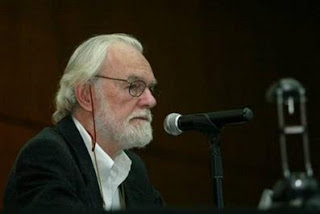 O Geógrafo David Harvey esteve em Porto Alegre para apresentar a conferência «Para entender ‘O capital'», por ocasião do lançamento de seu livro homônimo. A mediação é do historiador Mathias Luce.
O evento integra o projeto «Marx: a criação destruidora», organizado em torno da publicação da edição definitiva do Volume 1 d’O capital, pela Boitempo Editorial. Apoio:
A conferência, ocorrida no dia 25 de março de 2013 no Teatro da Associação Médica do Rio Grande do Sul-AMRIGS, teve realização da Boitempo Editorial e da Fundação Lauro Campos, com apoio da Câmara Municipal de Porto Alegre.
«Marx, Kalecki , Keynes y la estrategia socialista: la superioridad de la economía política del trabajo sobre la economía política del capital»: John Bellamy Foster
 Para ver con perspectiva histórica el estancamiento económico que afecta a los EEUU y a otras economías capitalistas avanzadas hay que retrotraerse a la grave desaceleración de 1974-75, que marcó el fin de la prosperidad de posguerra. La interpretación dominante de la recesión de mediados de los 70 dice que el pleno empleo de la primera época keynesiana sentó las bases de la crisis al robustecer la posición del trabajo en relación con el capital. [1] Según han venido sosteniendo muchos destacados economistas de izquierda cuya visión no difiere en este punto de la corriente académica dominante, el problema era la existencia de una clase capitalista “demasiado débil” y una clase obrera “demasiado fuerte”. [2] Con distintas pruebas empíricas, se atribuía comúnmente la caída a un aumento de la participación salarial en el ingreso, con la consiguiente contracción de los beneficios empresariales. Lo que ha venido en llamarse “teoría de la crisis por contracción de beneficios”. [3]
La Monthly Review jugó un papel clave en la introducción de una variante radical de la perspectiva de la “contracción de beneficios causada por el pleno empleo” en los EEUU publicando en su número de octubre de 1974 el artículo seminal de Raford Boddy y James Crotty “Class Conflict, Keynesian Policies, and the Business Cycle” [Conflicto de clase, políticas keynesianas y ciclo económico] [4] Ese artículo iluminaba el bien establecido hecho de que los salarios y los costes de mano de obra por unidad crecen cuando se acerca el pico máximo del ciclo económico, apuntando indiciariamente al colapso del auge. Sin embargo, los autores pasaron a sugerir que el incremento de la participación salarial en el ingreso en condiciones de pleno empleo era responsable en buena medida del gran declive económico entonces en curso. “Los capitalistas –escribían—, guiados por algo más que su instinto de clase, piensan que el pleno empleo sostenido es manifiestamente absurdo… La maximización de beneficios precisa evitar el pleno empleo sostenido”. Al sostener eso, los autores opusieron su perspectiva a la del gran economista marxista polaco Michał Kalecki, así como a las posiciones de Josef Steindl y Howard Sherman. [5]
Segunda sesión del Seminario Marx Revisitado: «Michael Heinrich, ¿Cómo leer El Capital de Marx?»: Luis Arizmendi y Alejandro Fernando González
 2da. Sesión 20 de marzo:
Michael Heinrich, ¿Cómo leer El Capital de Marx? Indicaciones de lectura y comentario del comienzo de El Capital, Escolar y Mayo Editores, 2011. Comentan: Mtro. Luís Arizmendi y Lic. Fernando González
«Crisis Theory, the Law of the Tendency of the Profit Rate to Fall, and Marx’s Studies in the 1870s»: Michael Heinrich
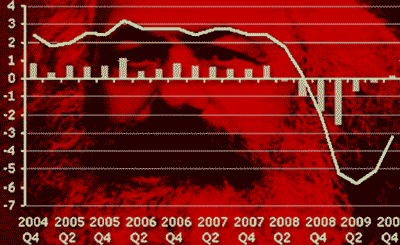 The development of crisis theory within the Marxian tradition has been central to much of our work in the last several years. The view that the various fragmentary references to crisis theory in the three volumes of Capital constitute a fully developed coherent structure, which only requires diligent exegesis, is a view that has never seemed sensible to us.
Recent research into the evolution of Marx’s manuscripts in connection with the production of the Marx-Engels-Gesamtausgabe (MEGA), the historical-critical edition of the complete writings of Karl Marx and Friedrich Engels, has confirmed our understanding in a very exciting way. It is now clear that Marx never ceased to develop his thinking on the phenomena of crises in capitalism, and never ceased to discard earlier formulations; for example, at the end of his life he was focused on questions of credit and crisis. Monthly Review rarely presents its readers with discussions of economic theory at a relatively high degree of abstraction; this, however, is such an occasion. We trust that the author’s exemplary clarity will permit ready access to readers with any degree of interest in Marx’s theory; for those who wish to become familiar with the conceptual outline of Marx’s work, we cannot do better than to recommend the author’s An Introduction to the Three Volumes of Karl Marx’s Capital (Monthly Review Press, 2012). —The Editors
Radical economic theories of the current economic crisis
 Private Debt and the Current Crisis
Presentación del libro «Estado, biopoder y exclusión. Análisis desde la lógica del capital» de Jaime Osorio
 Sobre el libro: El capital como relación social y los procesos que despliega para reproducirse, que caracterizamos como lógica del capital, constituyen los fundamentos que atraviesan y otorgan sentido a los trabajos que conforman este libro. Los estudios sobre el capital han tendido a destacar su dimensión económica, quedando relegada su dimensión política, la que aquí se tiende a privilegiar, pero sin fracturar su unidad. Desde esta perspectiva se abordan temas centrales de debates clásicos en las ciencias sociales y las humanidades, como el Estado y el poder, así como otros más recientes, referidos al biopoder y la exclusión. El libro se inicia con el desarrollo de un tema epistémico-filosófico altamente polémico, en torno a la totalidad, asumiendo la lógica del capital como la actividad unificante que otorga sentido y unidad a los procesos de la actual vida societal, en debate con posiciones posmodernas y positivistas que niegan, por razones diversas, su pertinencia. Finaliza el libro con una explicación de las razones por las cuales el aguijón productivista que caracteriza el capitalismo en general, pierde fuerza en el capitalismo latinoamericano.
“16 Tesis de Economía Política. Tesis IV″: Enrique Dussel
 “Sistemas económicos no-equivalenciales. Propiedad y gestión heterónoma del excedente“: cuarta conferencia de Enrique Dussel sobre la crítica de la economía política de Marx de su curso «16 Tesis de Economía Política”
«Entrevista a Andrew Kliman»: Esteban Mercatante
 A continuación publicamos una conversación con el marxista norteamericano Andrew Kliman. Kliman es autor de Reclaiming Marx’s “Capital”, que defiende el llamado enfoque temporalista de la teoría del valor de Marx, y de The Failure of capitalist production. The Underlying causes of the Great Recession [El fracaso de la producción capitalista, las causas subyacentes de la Gran Recesión]. Es profesor en la Universidad de Pace. En esta oportunidad conversamos sobre su visión de la crisis, su teoría sobre la ley del valor, y sus opiniones sobre la situación del marxismo en los EE.UU.
Entrevista realizada en Julio de 2012
1- Recientemente publicaste The Failure of Capitalist Production [El fracaso de la producción capitalista], que es el resultado de una investigación sobre el funcionamiento de la economía norteamericana durante las últimas tres décadas. ¿Cuál es el principal resultado de tu investigación?
La Gran Recesión estaba a la espera de ocurrir. Había problemas no resueltos en el sistema de producción capitalista que se habían estado acumulado durante un tercio de siglo. La tasa de ganancia cayó y nunca llegó a recuperarse de forma sostenida, lo que derivó en tasas de crecimiento e inversión persistentemente débiles, lo cual a su vez resultó en cargas de deuda crecientes. Y estos problemas indujeron a los gobiernos a resolverlos o velarlos con políticas que permitieron una acumulación de deudas aún mayor.
«In Marx’s Laboratory. Critical Interpretations of the Grundrisse» Edited by Riccardo Bellofiore, Guido Starosta and Peter D. Thomas
 Edited by Riccardo Bellofiore, University of Bergamo, Italy, Guido Starosta, National University of Quilmes, Argentina, and Peter D. Thomas, Brunel University, London In Marx’s Laboratory. Critical Interpretations of the Grundrisse provides a critical analysis of the Grundrisse as a crucial stage in the development of Marx’s critique of political economy. Stressing both the achievements and limitations of this much-debated text, and drawing upon recent philological advances, this volume attempts to re-read Marx’s 1857-58 manuscripts against the background of Capital, as a ‘laboratory’ in which Marx first began to clarify central elements of his mature problematic. With chapters by an international range of authors from different traditions ofinterpretation, including the International Symposium on Marxian Theory, this volume provides an in-depth analysis of key themes and concepts in the Grundrisse, such as method, dialectics and abstraction; abstract labour, value, money and capital; technology, the ‘general intellect’ and revolutionary subjectivity, surplus-value, competition, crisis; and society, gender, ecology and pre-capitalist forms.
«The interpretation of Capital: an interview with Michael Heinrich»: Xiaoping Wei
 Apart from your recent article, which has been translated into Chinese, which books have you written?
My first book, my PhD thesis, was Die Wissenschaft vom Wert (The Science of Value). It was first published in 1991 and a considerably extended edition appeared in 1999. After all the discussions of the late 1960s and 1970s, it was an attempt to determine the peculiar scientific kernel of Marx’s project of a Critique of Political Economy. I was occupied with the difference, on the one hand between early and late Marx, on the other hand with the difference between Marx and classical political economy but also with the difference between Marx and modern neoclassical economics. I tried to describe Marx’s fundamentally new project of critique of political economy, a project, which was not only meant to add a new theory to the existing theories, but to practice a critique of a whole science, to articulate a scientific revolution. But in this project of Marx’s you can also find some ambivalences: on the one hand, Marx broke with the old field of economic science, on the other in some of his inquiries he remained in this field, without realizing it. The simultaneity of break with this field, leaving this field and remaining in this field, caused certain problems in Marx’s theory, for example the well known “transformation problem.” The transformation from values to prices of production I can understand as a problem which is caused by this incomplete break with the field of political economy. It is not really a problem of Marx’s new theory; it is a problem of a mixture between old elements (which Marx had already criticized) and new elements.
Leer más…
“El tipo de ciudad en que queremos vivir está ligado al tipo de personas que queremos ser”: David Harvey
 En el prefacio de Rebel Cities (Ciudades rebeldes), empiezas describiendo tu experiencia en París durante los ’70: “Edificios gigantes, carreteras, viviendas públicas desalmadas y mercantilización monopolizada sobre las calles amenazando con absorber el viejo París… París desde los ’60 en adelante estaba simplemente en medio de una crisis existencial. El viejo no podía durar. Además, fue también en 1967 cuando Henry Lefebvre escribió su ensayo fundamental «Sobre el derecho a la ciudad”. ¿Puedes hablar sobre este período de los ’60 y ’70? ¿Cómo te interesaste por el paisaje urbano? ¿Y cuál fue el ímpetu para escribir Rebel Cities?
En todo el mundo se mira a los ’60, históricamente, como un período de crisis urbana. En los Estados Unidos, por ejemplo, fue un momento en el que muchas ciudades centrales se incendiaron. Hubo revueltas y casi revoluciones en ciudades como Los Angeles, Detroit y por supuesto después del asesinato del doctor Martin Luther King en 1968, alrededor de 120 ciudades estadounidenses vivieron una inquietud social y acción rebelde más o menos masivas. Menciono esto sobre Estados Unidos, porque lo que estaba en efecto ocurriendo era que la ciudad se estaba modernizando. Se estaba modernizando en base al automóvil; se estaba modernizando en base a las áreas residenciales. La Vieja Ciudad, o lo que había sido el centro político, económico y cultural de la ciudad durante los ’40 y ’50, estaba quedándose atrás. Recuerda, estas tendencias estaban teniendo lugar en todo el mundo capitalista avanzado. Así que no era sólo en Estados Unidos. Había serios problemas en Gran Bretaña y Francia, donde un modo de vida más antiguo estaba siendo desmantelado –un modo de vida sobre el que creo que nadie debería ser nostálgico-, pero este antiguo modo de vida estaba siendo desplazado y sustituido por un nuevo modo de vida basado en la comercialización, la propiedad, la especulación con la propiedad, la construcción de carreteras, el automóvil, la suburbanización, y con todos estos cambios vimos un aumento de la desigualdad y la inquietud social.
«The Failure of Capitalist Production: Underlying Causes of the Great Recession»: Andrew Kliman
 Economist Andrew Kliman discusses his book «The Failure of Capitalist Production: Underlying Causes of the Great Recession» (Pluto 2012). Many analyses of the Great Recession have been put forward from theories of unregulated finance, to Neoliberalism, to rising inequality. Kliman’s book is the first to put forward, based on in-depth empirical analysis of US data, that Marx’s theory of the Tendency of the Rate of Profit to Fall can explain these events. This talk will also present some of Kliman’s most recent work on the contentious issues of wages and inequality.
Kliman’s conclusions have immediate political implications. Short of a socialist transformation the only way to escape the ‘new normal’ of stagnation is to restore profitability through full-scale destruction of the value of existing capital assets, something not seen since the Depression of the 1930’s.
«Crisis theory and the great recession»: Riccardo Bellofiore
 Riccardo Bellofiore – Crisis theory and the great recession: a personal journey from Marx to Minsky
*****
DPU: http://dpu.mirovni-institut.si/index.php
FB stran: https://www.facebook.com/pages/Delavs…
Reading Marx’s Capital with David Harvey

Free Öcalan



Fundación Infancia y Aprendizaje

Colección de libros Marxismo Crítico

Historical Materialism


CIPEC (Centro de Investigación en Pensamiento Crítico)

Centro para la Investigación como Crítica Práctica

Memoria Revista de Crítica Militante

Revista Laberinto






Marx desde cero





 marxismocritico.com