
Archivo
«The Incoherence of ‘Transitional Society’ as a Marxian Concept»: Andrew Kliman
 I will examine two key aspects of Evgeny Preobrazhensky’s concept of ‘primitive socialist accumulation’: the notions that (a) the essential differences between socialism and capitalism are nationalised property and economic planning, and that (b) a transition from capitalism to socialism can take place through the extension of nationalised property and economic planning. Drawing on the work of Karl Marx and Raya Dunayevskaya, I will argue, first, that state property and economic planning are not the essential differences, and second, that Preobrazhensky’s conception is one example of the view that political and legal changes are the determining factors in social change. That view, I will contend, inverts Marx’s conception according to which political and legal relations correspond to and are determined by the mode of production, not vice-versa. If this latter view is accepted, I will further argue, the idea of a transitional society between capitalism and socialism is incoherent. This does not mean that social transformation must be instantaneous; what it means is that socialism cannot exist, partly or wholly, until the mode of production is revolutionised and that this cannot take place by political and/or legal means.
Leer más…
«Capital simbólico y clases sociales»: Pierre Bourdieu
 Bourdieu, Pierre. Es uno de los principales sociólogos y antropólogos contemporáneos, autor entre otros muchos de libros como El oficio del sociólogo (en colaboración con J.C Chamboredon y J:C Passeron), La distinción, El sentido práctico, La reproducción. Elementos para una teoría de la enseñanza, etc. Director de la revista Actes de la recherche en sciences sociales y de numerosos trabajos colectivos de investigación, como el publicado bajo el título La misère du monde, así como de incisivas denuncias contra las manipulaciones mediáticas, se destaca también por su militante solidaridad con las luchas de los trabajadores y, más recientemente, ante la guerra en los Balkanes, por una clara postura de condena tanto a la agresión de la NATO como la “limpieza étnica” lanzada contra los kosovares por el régimen de Milosevic.
«Primitive Accumulation, Migrant Workers and Social Reproduction in the Age of Austerity»: David McNally
 The Age of Austerity ushered in by the global crisis of 2008-9 centrally involves cheapening the reproduction of labour-power by means of reducing both private wages and the social wage administered by the state. These policies have decided class, gender, racial and generational dimensions. To properly elucidate these dimensions, however, requires that we also grasp ongoing primitive accumulation as a crucial ‘moment’ in the austerity agenda. To accomplish this means addressing the role of the reproduction of the global reserve army of labour, and of precarious migrant workers, in the restructuring of labour-power on a world scale.
In order to develop the theory of primitive accumulation in these directions, this paper returns to tensions in Marx’s account of the social reproduction of labour-power. Here I argue that not only does Marx’s conceptualization require a gender analysis, but that it also needs to be developed with respect to the problematic of labour migration. I show where Marx points to ways in which we might do this. The analysis presented underlines the decisive importance of an anti-racist defence of migrant workers for any effective working class politics in the Age of Austerity.
David McNally is Professor of Political Science at York University and a leading member of the New Socialist Group (www.newsocialist.org). He has written extensively on the critique of political economy. His publications include Global Slump: The Economics and Politics of Crisis and Resistance and Monsters of the Market: Zombies, Vampires and Global Capitalism.
Leer más…
«Crisis capitalista, política económica y tendencias de reconfiguración del orden mundial»: Claudio Katz
 Crisis capitalista, política económica y tendencias de reconfiguración del orden mundial.
Segunda sesión temática Economía mundial, economías nacionales y crisis capitalista.
Conferencia Latinoamericana y Caribeña de Ciencias Sociales.
Miércoles 7 de noviembre de 2012 en el Aula magna de la Casa de la Primera Imprenta de América.
«La poética de Lotman: Opacidades y transparencias»: Adolfo Sánchez Vázquez
 Si para caracterizar la obra de Yuri Lotman en una primera aproximación se nos preguntara qué se propone en sus investigaciones —particularmente en sus dos trabajos fundamentales: La estructura del texto artístico y Análisis del texto poético— y qué medios emplea para alcanzar lo que se ha propuesto, diríamos que se ha empeñado en resolver problemas planteados por el formalismo ruso, no resueltos a juicio suyo, y que para ello se ha valido de la contribución de los propios formalistas rusos y de los hallazgos de la lingüística estructural, la semiótica y la teoría de la información.
Del formalismo ruso a la semiótica
Como es sabido, la tarea central para los formalistas rusos era la búsqueda de la especificidad del lenguaje poético o de las cualidades intrínsecas del hecho literario (lo que Jakobson llamaría la literariedad). Su atención se concentraba por ello en el acceso intrínseco, inmanente a la obra literaria, descartando todo enfoque extrínseco (psicológico o sociológico). Para ellos, la obra sólo existía como forma, y por esto se descartaban los aspectos significativos o semánticos que constituían tradicionalmente el contenido. Lo que pasaba al primer plano era el problema de cómo está construida la obra y, por ello, como diría también Jakobson, el único héroe para la ciencia literaria era el procedimiento mediante el cual —o los cuales— se transforma el material verbal para que —como lenguaje poético— cumpla una función estética.
«Eurozone. A Crisis of Financialised Capitalism»: Costas Lapavitsas
 Keynote Lecture by Professor Costas Lapavitsas.
Dictatorship of Failure: Interdisciplinary Perspectives on the European Political and Economic Crisis. Symposium organised at the Helsinki Collegium for Advanced Studies, 15 November 2012.
Helsinki Collegium for Advanced Studies
«Las causas de la crisis: las finanzas y la tasa de ganancia»: Alan Freeman
 En los últimos meses hemos visto un creciente debate entre los marxistas en torno a la tasa de ganancia de EE UU y su relación con la presente crisis. Resulta paradójico, ya que en su mayor parte los marxistas rechazan el propio relato de Marx sobre la relación entre la acumulación y la tasa de rentabilidad; de hecho, recientemente, Michael Heinrich ha argumentado que Marx no tenía ninguna teoría de la crisis y que no hay ninguna base para suponer que la acumulación capitalista conduzca a una caída de la tasa de ganancia. Sin embargo, existe un amplio acuerdo con Duménil y Lévy que después del descenso prolongado de posguerra, la tasa de beneficio en EEUU comenzó a aumentar en la década de 1980, recuperándose al final de los años 1990 y marcando el comienzo de una nueva fase de expansión en EEUU.
Andrew Kliman, en Una crisis de la producción capitalista/1, ha provocado una controversia considerable con la afirmación contraria, basada en un razonamiento coherente y con una amplia evidencia empírica, según la cual la tasa de ganancia en EEUU ha continuado su tendencia a la baja.
«The four laws of ecology and the four anti-ecological laws of capitalism»: John Bellamy Foster
 Climate & Capitalism is pleased to publish, with permission from John Bellamy Foster and Monthly Review Press, this excerpt from Chapter 6 of The Vulnerable Planet.
In the first part of the chapter, Foster discusses the “qualitative transformation in the level of human destructiveness” that characterized capitalist production after World War II. This transformation included massive increases in the use of synthetics that could not be readily reabsorbed by nature, accompanied by a radical expansion in the use of all forms of energy, particularly fossil fuels. These changes in the patterns of production, he writes, are “the chief reason for the rapid acceleration of the ecological crisis in the postwar period.”
In the rest of the chapter, published here, he discusses the factors that underlie capitalism’s ever-growing conflict with nature.
«Desde su orígen, la UE es un proyecto del capital» : Miren Etxezarreta
 Conferencia sobre la Europa del Euro de la economista Miren Etxezarreta, en el marco de las Jornadas Desbanka.
«El Poder, la Actividad y la Plenitud Humana»: Andy Blunden
 La Teoría de la Actividad es antes que nada una teoría sobre la plenitud humana. «Plenitud humana» es la traducción que se suele hacer de la palabra griega eudaimonia, el concepto central de la ética de Aristóteles. En su calidad de corriente del pensamiento científico, la Teoría de la Actividad tiene el gran mérito de que su concepto central –el «proyecto colaborativo», al que se refiere también como «una actividad»– es a la vez un concepto descriptivo, explicativo y normativo.
Es decir, la Teoría de la Actividad es una teoría científica que es simultáneamente una teoría ética. No solo vemos el mundo como formado por proyectos colaborativos, y usamos los proyectos colaborativos en la consecución de la plenitud humana, sino que también propugnamos la colaboración como norma de la vida secular. La forma en que las personas deberían relacionarse es colaborando unas con otras en proyectos.
«From the Oil Crisis to the Great Recession: Five crises of the world economy»: J. A. Tapia Granados
 ABSTRACT — This article makes the case that the global economy has gone through five crises since the 1970s to the present. This implies not only that the world economy is a real entity, but also that the usual view that poses national economies as units of economic analysis is an approach with major limitations. The paper discusses the concept of “economic crisis” and provides data indicating that the world economy, not national economies, is the major unit to be analysed when trying to understand the economic reality of our time, and particularly the reality of crises. These crises are discrete, countable phenomena, distinctive states of an entity that can be properly called world economy, or world capitalism. Data on capital formation, on growth of the world output, of monetary aggregates, of unemployment rates and on industrial activity indicate five major “dips” of the global economy, i.e., world recessions, in (i) the mid 1970s, (ii) the early 1980s, (iii) the early 1990s, (iv) the early 2000s, and (v) the Great Recession that provisionally can be dated 2007-2009. To a large extent business cycle chronologies of national economies such as those produced by the NBER, the OECD, or other institutions are largely consistent with these five crises of the world economy which, obviously, had different manifestations in different nations and economic regions.
«Alternatives al model de societat capitalista»: Josep Manel Busqueta

Josep Manel Busqueta, Miembro de
Seminario Taifa de Economía Crítica
Lugar: Salón de Actos de la Facultad de Ciencias Sociales
Carrer De Albalat dels Tarongers, Campus dels Tarongers. 46021 Valencia
Seminario 2013: Caminando por otra senda (apuntes para la transformación social)
«Primitive accumulation versus contested reproduction»: Michael A. Lebowitz
 May 4, 2013 — Links International Journal of Socialist Renewal — If we don’t understand a system as it is fully developed [its «being»] and thus its critical characteristics, we cannot investigate the «becoming» of those characteristics.
This is why Marx discussed primitive (or original) accumulation of capital only at the end of volume 1 of Capital. Exclusive focus upon the emergence of the new elements, however, is not real history. «Becoming» is two sided: it is both a coming into being and a passing away. The concept of primitive accumulation explores only the former; it considers the new being born but not the old struggling to remain alive. It is, in short, one-sided. Not only does it fail to explore on its own the struggle of the old for its reproduction but it also does not consider the interaction, the morbid symptoms and dysfunction when two sets of productive relations are engaged in contested reproduction with respect to their control of the elements of production.
What is lost? The centrality of class struggle — the struggle of two sides and the conditions thereby in which history is made. The paper considers various historical phenomena using the concept of contested reproduction.
«The German Ideology Never Took Place»: Terrell Carver
 The German Ideology (Die Deutsche Ideologie) by Karl Marx and Friedrich (or Frederick) Engels has a very well established scholarly and interpretive reception. However, this dates from long after the authors’ deaths (in 1883 and 1895, respectively), and began with the archival and editorial work of D.B. Ryazanov in the early 1920s, the initial publication of the ‘chapter’ ‘I. Feuerbach’ in Russian (1924) and German (1926), and the first ‘complete’ publication as a single volume in 1932. Since that time there have been numerous further editions and translations, the latest of which is in Marx-Engels Jahrbuch 2003, edited by Inge Taubert and Hans Pelger.[2] Currently a new edition is planned as MEGA2 I-5 in the ongoing scholarly publication of the complete works of Marx and Engels.[3]
While The German Ideology is well known to have been editorially constructed from uncorrected manuscripts, which are famously eccentric and difficult to decipher, it is worth reconsidering exactly what intellectual and political significance has been assigned to these manuscripts and exactly how their publication as The German Ideology has represented and reinforced some of these judgements. Thus there are two large-scale areas of enquiry here. The first is into the framing of the manuscript works from 1845-6 as important and worth reading at all, and the second is into their construction as a ‘book’ of canonical status by Marx and Engels (only), beginning with the ‘chapter’ ‘I. Feuerbach’.
Coloquio «Karl Marx a 195 años de su nacimiento. El regreso del topo»
 Título: Karl Marx a 195 años de su nacimiento
El regreso del topo
Fecha: 2013-05-06 al 2013-05-09
Lugar: Auditorio del CEIICH, Torre II de Humanidades 4º piso, Circuito Escolar, Ciudad Universitaria
Lunes 6
10:00 horas
Inauguración
Norma Blazquez Graf /CEIICH, UNAM
Elvira Concheiro /CEIICH, UNAM
Jaime Ortega / FFyL, UNAM
José G. Gandarilla /CEIICH, UNAM
10:20 horas
Conferencia. Bienvenido, Carlos
Pablo González Casanova /IIS, UNAM
12:10 horas
Conferencia. El Manifiesto Comunista en América Latina. Una historia de su recepción y de su difusión, a través de sus traducciones, ediciones y apropiaciones.
Horacio Tarcus / FCS, UBA
16:00 horas
La Comuna de París y las Revoluciones del siglo XX
Horacio Crespo /FFyL, UNAM
Alfonso Vázquez / FFyL, UNAM
Fernando González / PPELA, UNAM
Elvira Concheiro / CEIICH, UNAM
Reading Marx’s Capital with David Harvey

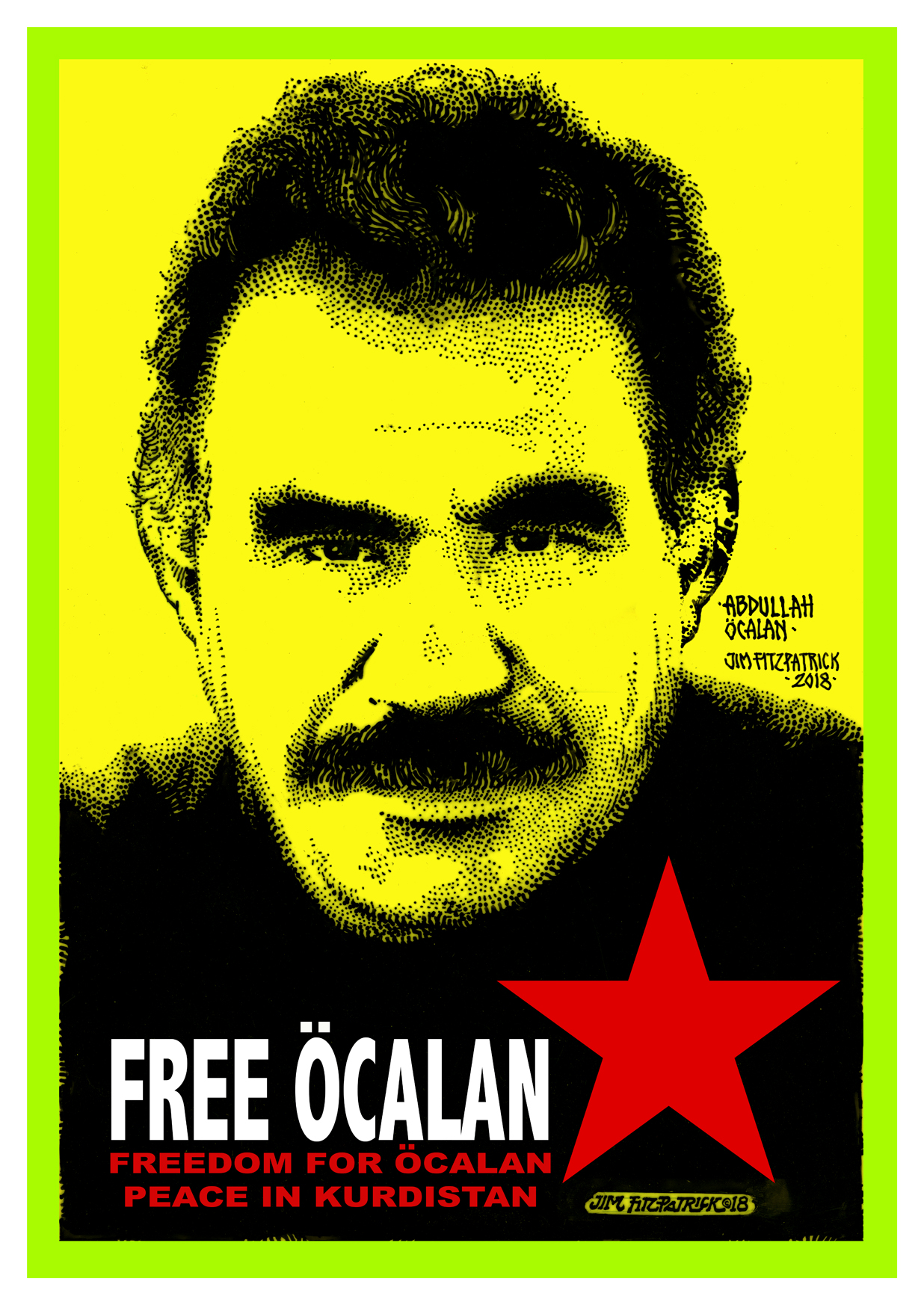
Free Öcalan


Fundación Infancia y Aprendizaje

Colección de libros Marxismo Crítico

Historical Materialism


CIPEC (Centro de Investigación en Pensamiento Crítico)

Centro para la Investigación como Crítica Práctica

Memoria Revista de Crítica Militante

Revista Laberinto






Marx desde cero





 marxismocritico.com