
Archivo
Comentarios a «El estilo literario de Marx» de Ludovico Silva: Tiempos equívocos
 En esta ocasión comentamos el texto de Ludovico Silva, llamado «El estilo literario de Marx«, en el cual se desmitifica el marxismo ortodoxo, y ayuda a repensar el estilo literario de Marx, profundizando en sus categorías.
«Marx on the Concept of the Proletariat: An Ilyenkovian Interpretation»: Siyaves Azeri
 The notion of “concept” and the concept of “class” plays a central role in Marx’s and Marxist analysis of society and human activity. There is a large body of study about concepts, their formation and development, which has been made, in great extent, by Soviet psychologists from cultural-historical tradition that have been inspired by works of Lev Vygotsky. Yet, the achievements of the scientific works of these scholars have not been fully incorporated toward developing an epistemological-philosophical theory that aims at a proper understanding of concepts. Evald Ilyenkov is one of the major figures that has undertaken this task and has made great contribution to a Marxist philosophical theory of concepts and conceptual systems. Yet, his early tragic death has left his task unfulfilled. This paper is an attempt toward a first step of furthering and deepening Ilyenkov’s philosophical analysis of concepts. To this end, Marx’s concept of class will be analyzed with the use of Ilyenkovian approach to concepts. The paper attempts to show that contradiction is an essential aspect of conceptual and real development. It also aims at showing that the contradictory nature of concepts, on the other hand, reveals the normative aspect of conceptual activity: concepts and thus conceptual systems are not only contradictory but also normative. Normativity is a necessary aspect of conceptual development in that it put concepts into work, that is, it facilitates the resolution of contradictions that are inherent in reality and thus causes development of both the real and the conceptual realms; this development will reveal itself in form of a new, higher form of contradiction.
«Los Movimientos Sociales»: Conferencia impartida por Enrique Dussel, Héctor Díaz Polanco y Tariq Alí
 Conferencia impartida por Enrique Dussel, Héctor Díaz Polanco y Tariq Alí, en la XIII Feria Internacional del Libro de la Ciudad de México, 20 de octubre de 2013.
«Vivir la tesis 11»: Richard Levins
 Cuando era un crío siempre tuve claro que, cuando me hiciera un hombre, sería a la vez un científico y un rojo. Más que enfrentarme al problema de cómo compaginar la militancia con la actividad académica, tendría dificultades para separarlas. Antes siquiera de saber leer, mi abuelo solía leerme el Ciencia e Historia para Niños y niñas (Science and History for Girls and Boys), de Bad Bishop Brown’s. Estaba convencido de que todo trabajador socialista debería estar familiarizado, como mínimo, con la cosmología, la evolución y la historia. Yo nunca separé la historia, en la que todos participamos activamente, de la ciencia, esa investigación sobre cómo son las cosas. Mi familia había abandonado la religión organizada hacía cinco generaciones, pero mi padre me hacía sentarme a estudiar la Biblia todos los viernes porque era una parte importante de la cultura que nos rodeaba y algo importante para mucha gente, un relato fascinante de cómo las ideas se desarrollan en condiciones cambiantes, y porque todo ateo debería conocerla igual que los creyentes.
«Social and Physical Form: Ilyenkov on the Ideal and Marx on the Value-Form»: Andrew Chitty
 E.V. Ilyenkov’s philosophy represents an extraordinarily ambitious attempt to use the idea that human social activity has determinate ‘forms’ to achieve three different goals: an account of the categories of thought, an account of our knowledge of the natural world, and an account of human consciousness. Overarching these goals, and incorporating them, is another: that of giving an account of mind based on social activity.
Ilyenkov’s conception of the ideal, or of ideality, plays a central role in this project. We could go as far as to say that for Ilyenkov ‘ideality’ is the most fundamental feature of human mindedness. By demonstrating that ideality is an objective yet non-physical feature of social activities, and of the things used and produced by social activities, Ilyenkov aims to show that an elementary human mindedness inheres in these activities and things, which makes possible the fully-fledged human mindedness that characterises individual reflective human beings.
Presentación del libro: «El discreto encanto de la modernidad. Ideologías contemporáneas y su crítica» de Stefan Gandler
 Miércoles 23 de Octubre
18:00 horas- Salón de actos de la UNAM
Facultad de Filosofía y Letras, UNAM
Ante la ideología contemporánea, instituida en ambos lados del Atlántico y que reza sin cesar el credo de la superioridad europea, o la letanía de la inferioridad del otro mundo, apodado tercero, resulta cada vez más urgente ese “cepillar a contrapelo” indicado por Walter Benjamin a todo aquel que quiera saber qué se esconde detrás del discreto encanto de la modernidad.
Participan: Julio Bolvinik, Mauricio Pilatowsky, Marco Aurelio García Barrios y Stefan Gandler
«Por un materialismo ecológico»: Alfred Schmidt
 RESUMEN
Alfred Schmidt actualiza en este texto su análisis de la obra de Marx que había hecho originalmente en su famoso libro El concepto de naturaleza en Marx (primera edición en alemán 1962). Al contextualizar su estudio en el entorno de los debates posteriores a la publicación de su libro, sobre “conciencia ecológica”, “límites del crecimiento”, “civilización alternativa”, “técnica blanda” o “crisis ecológica”, reafirma algunas posturas del texto original, comola defensa deMarx en contra de la falsa acusación de ser parte de una ideología ingenuamente progresista, típica de del siglo XIX. Al mismo tiempo relativiza, sin anularlo, el modo de pensar orientado a la praxis e historia humanas, al subrayar la influencia, por lo general subestimada, de Feuerbach sobreMarx. Un materialismo ecológico podría partir entonces de ciertas reflexiones de Feuerbach sobre la sensualidad emancipada y la relación contemplativa con la naturaleza.
Palabras clave: Praxis, sensualidad emancipada, ecología, materialismo, Marx, Feuerbach, theoría crítica.
Web Conference with Riccardo Bellofiore
 Riccardo Bellofiore has been one of the most astute analysts of the Euro Crisis. In this web conference we discuss what went wrong in the global economy, the link between the global and European crisis, saving the EU, the role of trade unions and politics in the EU crisis and the economic situation in Italy.
«La precarización del trabajo turístico»: entrevista a Daniel Albarracín
 Ernest Cañada | Alba Sud
Análisis de cómo está evolucionando en España la ocupación y las relaciones laborales en el sector turístico, y en especial en la hotelería. Lejos de las visiones apologéticas, las investigaciones de la FECOHT muestran que durante la crisis se ha agudizado el deterioro en la calidad del empleo turístico.
Daniel Albarracín Sánchez es Doctor en Sociología (UCM) y Licenciado en Ciencias Económicas y empresariales (UAM). Su tesis doctoral trató sobre la sociedad salarial de servicios y la crisis que las atraviesa. Es especialista en relaciones laborales y políticas sociales. Trabaja como técnico del Gabinete Federal de Estudios de la Federación de Comercio, Hostelería, Turismo y Juegos de Comisiones Obreras (FECOHT). Ha publicado numerosos trabajos en el campo de la economía europea y española, política económica y las relaciones laborales, y en particular sobre el ámbito turístico, como por ejemplo, Las relaciones laborales en los establecimientos hoteleros (FECOHT-CCOO, Madrid, 2009), el comercio o la inmigración. Participa también como docente en un máster de economía en la UCM. Anteriormente trabajó para la Fundación CIREM como investigador durante seis años e impartió clases de sociología en la Universidad Carlos III, Getafe.
Aprovechamos su conocimiento al detalle de qué está ocurriendo con el empleo y las condiciones laborales en el sector turístico y en especial hotelero, para conversar extensamente en Madrid sobre todas estas cuestiones.
A tribute to Norman Geras (1943- 2013)
 (‘The Legacy of Rosa Luxemburg’ (1976) and the author, Norman Geras)
The respected writer, thinker and groundbreaking blogger, Professor Norman Geras has died in Cambridge. Geras contributed greatly to the study of Rosa Luxemburg in the UK and internationally, most notable with his ‘The Legacy of Rosa Luxemburg’ (UK: New Left Books, 1976), but also since then in numerous articles, reviews and blog posts.
Just a few months ago, Professor Geras appealed to readers of his blog to donate money in support of the effort to publish Luxemburg’s Collected Works in English, writing:
“Rosa Luxemburg wrote that ’Freedom is always… freedom for the one who thinks differently’. She was a partisan of the idea of democratic pluralism within the socialist movement. Her ideas on this topic also had their limitations, but hers was a humane and powerful voice, within the Marxist tradition, for taking the values of freedom and democracy seriously.”
(http://normblog.typepad.com/normblog/2012/12/rosa-luxemburg-appeal.html)
In tribute to Professor Geras and to his work, here is a selection of his vast contribution to the study of Rosa Luxemburg:
«The Trade Deficit: Beyond the Myth of Currency Manipulation»: Anwar Shaikh
 The US has run a massive trade deficit for over 30 years. In recent times, there has been a growing chorus of commentators who seek to place the blame on our trading partners, most notably China, just as in an earlier time others had targeted Japan and Germany. It is said that the problem stems not from our reduced international competitiveness, but rather from the manipulation of exchange rates by our more successful trading partners.
This claim is not based on any direct evidence, but rather on an inference derived from standard international trade theory, which predicts that free trade will automatically lead to balanced trade. From this particular theoretical perspective, our large and persistent large trade deficit must be rooted in some obstacles to free trade. The large surpluses of our trading partners such as China then make them natural candidates for our opprobrium. Of course, if the standard theory is incorrect, this line of inference collapses. I wish to argue that the standard theory is wrong, on both theoretical and empirical grounds, and that free trade does not automatically eliminate trade imbalances. On the contrary, free trade reflects international competitiveness, and persistent trade deficits are symptoms of persistent competitive weakness.
«Sexual Violence and Neoliberalism»: Tithi Bhattacharya, Jennifer Roesch and Silvia Federici
 Historical Materialism NY 2013
Listen to audio from this panel here: http://wearemany.org/a/2013/04/sexual-violence-and-neoliberalism
Sponsored by Historical Materialism Conference 2013 – New York
Video & Editing: Adriano Contreras
Find books in the Historical Materialism book series from Haymarket Books at http://www.haymarketbooks.org
«Pedagogia histórico-crítica e psicologia histórico-cultural»: Newton Duarte e Lígia Márcia Martins
 A pedagogia histórico-crítica e a psicologia histórico-cultural
Prof. Dr. Newton Duarte e Profª. Drª. Lígia Márcia Martins
Curso realizado nos dias 27 e 28 de agosto de 2013 durante o VI EBEM.
Leitura recomendada para aprofundamento do curso:
DUARTE, Newton. A individualidade para si: contribuições a uma teoria histórico-crítica da formação do indivíduo. 3. ed. rev. ampl. Campinas: Autores Associados: 2013. 272 p.
MARTINS, Lígia Márcia. O desenvolvimento do psiquismo e a educação escolar: contribuições à luz da psicologia histórico-cultural e da pedagogia histórico-crítica. Campinas: Autores Associados: 2013. 336 p.
«The Connection of Mind and Nature: Marx’s 1878 Notebooks on Geology»: Martin Hundt
 A review by a German Marx scholar of the newly published Vol. IV/ 26 of the Marx-Engels Gesamtausgabe (Complete Writings). Marx made these notes, some of which bear upon ecological issues, in 1878. This was just before his Ethnological Notebooks on non-Western and precapitalist societies, in which he studied numerous indigenous peoples. – Editors
The appearance of a new MEGA volume [IV/ 26] – What was Marx looking for in geological studies?
These texts were in the archives for 134 years: at first in the archive of Friedrich Engels, and thereafter for a long time in the archive of the SPD [Social Democratic Party] in Berlin. It was [Soviet Marx editor David] Riazanov, in 1925, who first pointed out their significance. In 1933 they were rescued from the clutches of the Nazis — and taken to Copenhagen, Amsterdam, and London.
«La jornada laboral capitalista y la jornada laboral socialista»: Michael A. Lebowitz
 A medida que el primero de mayo se acerca, vale la pena recordar cuatro aspectos sobre ese día:
1. Para los y las trabajadoras el primero de mayo no es la celebración de un día feriado estatal, ni un regalo, sino que conmemorara la lucha —desde abajo— de las y los trabajadores.
2. Inicialmente, el primero de mayo se centraba en la lucha por una jornada laboral mas corta.
3. La lucha para una jornada laboral mas corta no es una lucha aislada sino una lucha contra la explotación capitalista.
4. La lucha contra la explotación capitalista es una parte esencial pero no es la única parte de la lucha general contra el capitalismo.
Hoy quiero exponer algunas ideas que se refieren tanto a la jornada laboral capitalista como a la socialista y espero que ellas puedan ser útiles en la lucha actual en Venezuela y que sirvan, de manera más inmediata, a los debates de hoy.
Leer más…
Reading Marx’s Capital with David Harvey

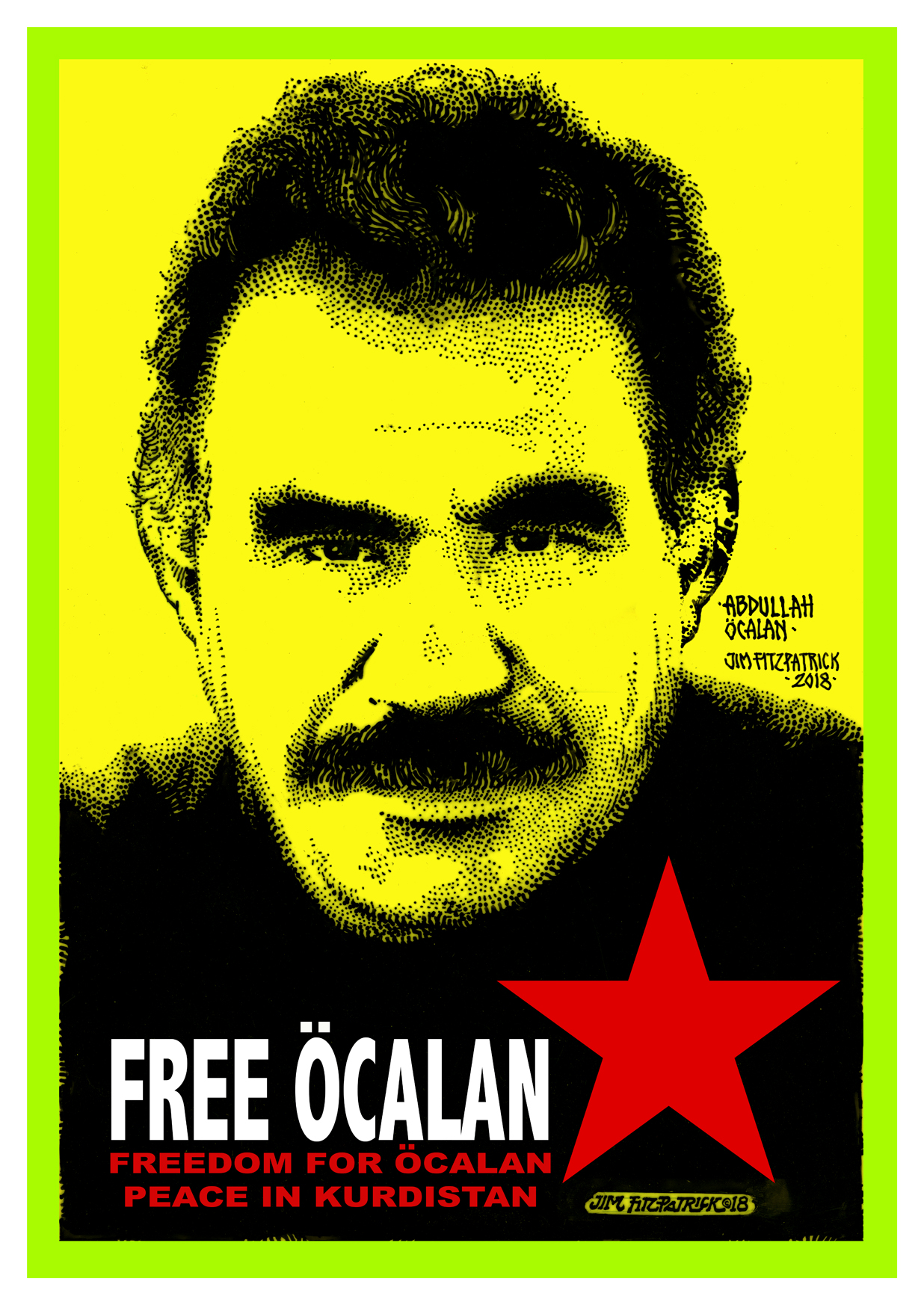
Free Öcalan


Fundación Infancia y Aprendizaje

Colección de libros Marxismo Crítico

Historical Materialism


CIPEC (Centro de Investigación en Pensamiento Crítico)

Centro para la Investigación como Crítica Práctica

Memoria Revista de Crítica Militante

Revista Laberinto






Marx desde cero





 marxismocritico.com