
«The Universal»: E. V. Ilyenkov
 What is the “universal”?
What should one understand by this word if vagueness and misunderstanding are to be avoided at least while reading two adjacent paragraphs? In the literal sense of the word “vseobshchee” (universal) means “obshchee vsem” (common to all). “Vsem” (all) stands for the individuals whose infinite multitude makes up the first-glance impression of the world we live in or speak about. But this is perhaps all that is indisputable and similarly understood by one and all about the “universal.”
Leaving aside for now the properly philosophical controversies about the “universal,” it will be noted that the very term “obshchee” (universal) is applied rather haphazardly in living language because it has among its “denotations” not only different or non-coincident, but directly opposite and mutually exclusive, objects and designations. The Dictionary of the Modern Russian Language recounts twelve such meanings, with two hardly compatible ones found at the extremes of the spectrum. “Common,” even though to some two, not to mention “all,” is that which belongs to the composition of either, as does the quality of being bipedal and mortal to Socrates and Caius or velocity to electron and train, and cannot exist separately from these two individuals. Also understood as “common” is that which exists apart from these two individuals, precisely as a thing or yet another individual, like common ancestor, common – one for two (for all), field, common motor-car or kitchen, common friend or acquaintance, and so on, and so forth.
Apparently, the same word, the same “sign” does not serve in these cases to designate at all the same thing. Whether this should be regarded as one of the “imperfections” of the natural language or, contrariwise, the advantage of flexibility that the natural language has over the rigid definitions of artificial languages, this remains a fact and a fairly typical one, and, therefore, calls for an explanation.
In the case of the absolute non-ambiguity of a term, the definition (and application) is assumed for the ideal of the “language of science.” The science which seeks an accurate definition of universal logical categories is duty-bound to come to terms with this “ambiguity” of the term “common” in the living language, – at least, in order not to be misunderstood whenever the “common” and “general” come under discussion.
Of course, the fact of ambiguity can be merely brushed off by assuming one of the opposite
meanings for the initial one and declaring the other as illegitimate and, subsequently, discarding it on account of the “non-scientific character” of the natural language. But then one would have to coin another term, another “sign” to designate this “illegitimate” meaning and thereupon try to clarify the relationship of the newly-devised sign to the term “common,” i.e., to revive, even though in a different verbal form, the former problem.
Let us make an assumption and grant that one can use “common” as connoting solely the abstract oneness, the identical, or the invariant which can be revealed in the composition of two (or more) sensuously perceived individual “facts” (“extra-lingual facts”). Let us further assume that it has been agreed upon not to use (nor to imply) the meaning that the word has in the word combinations “common field,” “common ancestor,” “common friend (foe),” and so on. Then, the word is quite plainly used to define a solitary object (individual) which exists and is conceived apart from, and independently of, the individuals to which it presents itself as something “common.”
Reading Marx’s Capital with David Harvey

Free Öcalan


Fundación Infancia y Aprendizaje
Colección de libros Marxismo Crítico

Historical Materialism


CIPEC (Centro de Investigación en Pensamiento Crítico)

Centro para la Investigación como Crítica Práctica

Memoria Revista de Crítica Militante
Revista Laberinto






Marx desde cero
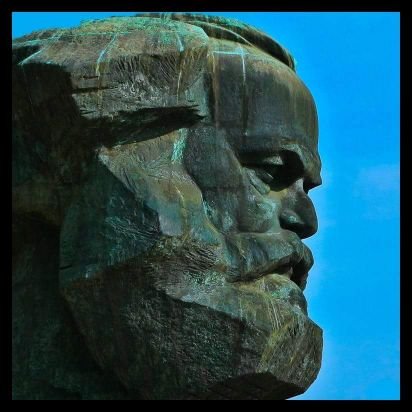





 marxismocritico.com